
Others like the strangest secret Features >>
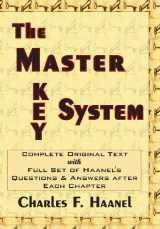


About the Book
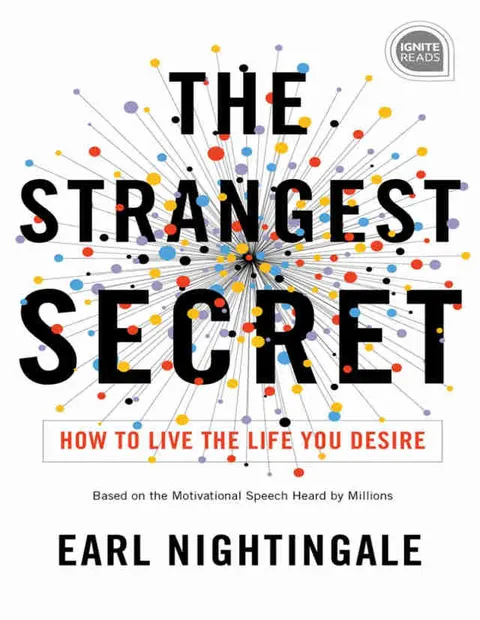
The Strangest Secret is a self-help book by Earl Nightingale that explores the idea that the key to success lies in one's mindset and ability to set and achieve goals. Nightingale argues that by changing one's thoughts and beliefs, one can unlock the secret to living a successful and fulfilling life. The book emphasizes the importance of having a positive attitude, setting clear goals, and taking action to achieve them.
Kenneth E. Hagin
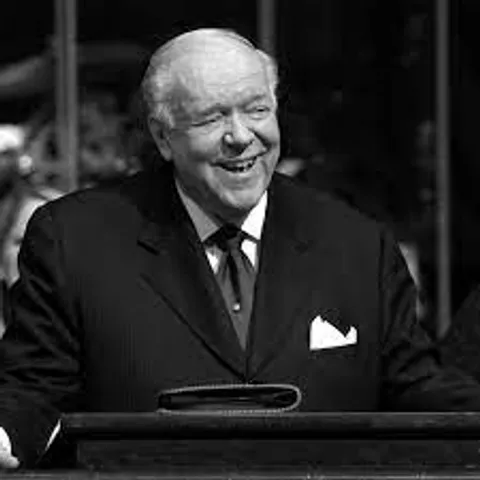 Rev. Kenneth Erwin Hagin was born on Aug. 20, 1917, in McKinney, Texas. Rev. Hagin was sickly as a child, suffering from a deformed heart and an incurable blood disease. He was not expected to live and became bedfast at age 15. In April 1933 during a dramatic conversion experience, he reported dying three times in 10 minutes, each time seeing the horrors of hell and then returning to life.
In August 1934, Rev. Hagin was miraculously healed, raised off a deathbed by the power of God and the revelation of faith in God’s Word. Jesus appeared to Rev. Hagin eight times over the next several years in visions that changed the course of his ministry. In 1967, he began a regular radio broadcast that continues today as Rhema for Today.
In 1968 Rev. Hagin published the first issues of The Word of Faith. That magazine, now produced nine times a year, has a circulation of over 200,000. The publishing outreach he founded, Faith Library Publications, has circulated worldwide more than 75 million copies of books by Rev. Hagin, Kenneth W. Hagin, Lynette Hagin, Craig W. Hagin, and several other authors. Faith Library Publications also has produced millions of audio and video teachings.
Other outreaches of Kenneth Hagin Ministries include Rhema Praise, a weekly television broadcast hosted by Revs. Kenneth and Lynette Hagin; Rhema Correspondence Bible School; Rhema Alumni Association; Rhema Ministerial Association International; the Rhema Prayer and Healing Center; and the Rhema prison ministry.
In 1974 Rev. Hagin founded what is now Rhema Bible Training College. The school has campuses all over the world and continues to expand.
Until shortly before his death, Rev. Hagin continued to travel and teach throughout the United States and into Canada conducting All Faiths’ Crusades and other special meetings.
Known as the “father of the modern faith movement,” Rev. Hagin was a dynamic preacher, teacher, and prophet. His teachings and books are filled with vivid stories that show God’s power and truth working in his life and the lives of others. He will be remembered not only as a great minister but as a great family man—for his family was his heart. He was there at every milestone ready to talk, to answer, to pray. He was a man whose belly laugh filled the room at the sight of one of his grandchildren or great-grandchildren.
Rev. Kenneth Erwin Hagin was born on Aug. 20, 1917, in McKinney, Texas. Rev. Hagin was sickly as a child, suffering from a deformed heart and an incurable blood disease. He was not expected to live and became bedfast at age 15. In April 1933 during a dramatic conversion experience, he reported dying three times in 10 minutes, each time seeing the horrors of hell and then returning to life.
In August 1934, Rev. Hagin was miraculously healed, raised off a deathbed by the power of God and the revelation of faith in God’s Word. Jesus appeared to Rev. Hagin eight times over the next several years in visions that changed the course of his ministry. In 1967, he began a regular radio broadcast that continues today as Rhema for Today.
In 1968 Rev. Hagin published the first issues of The Word of Faith. That magazine, now produced nine times a year, has a circulation of over 200,000. The publishing outreach he founded, Faith Library Publications, has circulated worldwide more than 75 million copies of books by Rev. Hagin, Kenneth W. Hagin, Lynette Hagin, Craig W. Hagin, and several other authors. Faith Library Publications also has produced millions of audio and video teachings.
Other outreaches of Kenneth Hagin Ministries include Rhema Praise, a weekly television broadcast hosted by Revs. Kenneth and Lynette Hagin; Rhema Correspondence Bible School; Rhema Alumni Association; Rhema Ministerial Association International; the Rhema Prayer and Healing Center; and the Rhema prison ministry.
In 1974 Rev. Hagin founded what is now Rhema Bible Training College. The school has campuses all over the world and continues to expand.
Until shortly before his death, Rev. Hagin continued to travel and teach throughout the United States and into Canada conducting All Faiths’ Crusades and other special meetings.
Known as the “father of the modern faith movement,” Rev. Hagin was a dynamic preacher, teacher, and prophet. His teachings and books are filled with vivid stories that show God’s power and truth working in his life and the lives of others. He will be remembered not only as a great minister but as a great family man—for his family was his heart. He was there at every milestone ready to talk, to answer, to pray. He was a man whose belly laugh filled the room at the sight of one of his grandchildren or great-grandchildren.
god filled your bible with poems
I define poetry as an effort to share a moving experience by using language that is chosen and structured differently from ordinary prose . Sometimes it rhymes. Sometimes it doesn’t. Sometimes it has a regular cadence. Sometimes it doesn’t. But almost always the poet has experienced something — something horrible or wonderful or ordinary — and he feels that he must share it. Using words differently from ordinary prose is the poet’s way of trying to awaken something of his experience (and perhaps even more) in the reader. God Speaks in Poems It has always boggled my mind that so much of the Bible is poetry. God inspired this, and he did not have to do it this way. How much of God’s inspired word is poetry? Leland Ryken answers, One-third of the Bible is not too high an estimate. Whole books of the Bible are poetic: Job, Psalms, Proverbs, Song of Solomon. A majority of Old Testament prophecy is poetic in form. Jesus is one of the most famous poets of the world. Beyond these predominantly poetic parts of the Bible, figurative language appears throughout the Bible, and whenever it does, it requires the same type of analysis given to poetry. That is a lot of poetry — language that is chosen and structured differently from ordinary prose . God can raise the dead by any means he pleases. He can waken dull hearts to the reality of his beauty any way he desires. And one of the ways he pleases to do it is by inspiring his spokesmen to write poetry. Resist the Inexpressible Paradoxically, poetry is an expression of the fact that there are great things that are inexpressible. There is no one-to-one correspondence between the depths of human experience and the capacities of language to capture that experience. There are experiences that go beyond the ability of language to express them. For the poet, this limitation of language does not produce silence; it produces poetry. Poetry is a kind of verbal resistance to the impenetrability of human experience. The poet will at least try. Say It with a Poem For example, can we even begin to imagine what it felt like for the fathers and mothers of the children in Bethlehem to lose their little ones when Herod’s murder squad arrived and slaughtered all of them under two years old? Perhaps not. But there was one year (inspired by the loss of a son in our church) when I said: I will try. And I will try with a poem. It has come to be called The Innkeeper . I imagine a father who not only lost two sons that horrible night, but also his wife and his arm. He made room for Joseph and Mary. But he had no idea what it would cost him to embrace the Son of God. Jesus comes back to visit him just before going to the cross. The poem describes the meeting. Slow Communication Is Not Popular We do not live in a day when poetry is in vogue. Perhaps it has never been in vogue. Shaped by smartphones and soundbites, we are impatient with communication that forces us to slow down. Poetry, by definition, is a kind of communication that cannot be fully appreciated on the first reading. Suppose a poem has a structure of cadence and rhyme and form. Two or three attempts are needed to make the path familiar enough to allow the eyes to be lifted. Then, when the reader is comfortably in the flow, he begins to see so much more than when he was too distracted by the form. So poetry books will seldom be best-sellers. And God has mercifully put all kinds of writing in the Bible besides poetry. He knows better than I do that some people prefer stories (like our Gospels) and others prefer arguments (like the epistle to the Romans). So I will understand if you are not a poetry-lover. But don’t limit yourself too quickly. People change. Times change. This may be the season for you to slow down and reconsider.