
Others like paradise lost Features >>
-160.webp)
The Genesis 6 Conspiracy (How Secret Societies And The Descendants Of Giants Plan To Enslave Humankind)
When Do I See God
Heaven: Your Real Home

The Prophesied End-Time
The Post Rapture Church
Rapture, Revelation, And The End Times
I Walked In Heaven With Jesus

Living In The End Times - Study

End Of Days
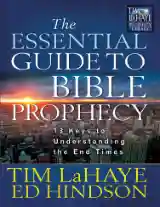
The Essential Guide To Bible Prophecy
About the Book
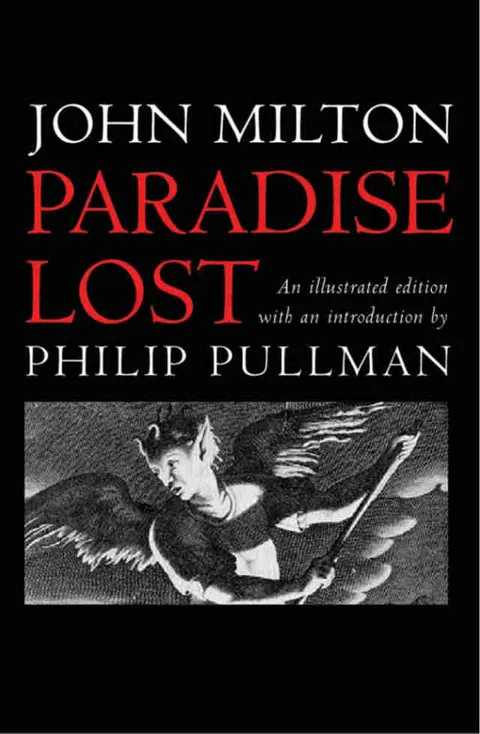
"Paradise Lost" by John Milton is an epic poem that tells the story of the Fall of Man, focusing on the temptation of Adam and Eve by Satan and their expulsion from the Garden of Eden. The poem explores themes of free will, disobedience, and redemption, as well as the nature of good and evil. Through vivid imagery and powerful language, Milton presents a complex portrait of humanity's relationship with God and the consequences of choosing sin over obedience.
David Livingstone
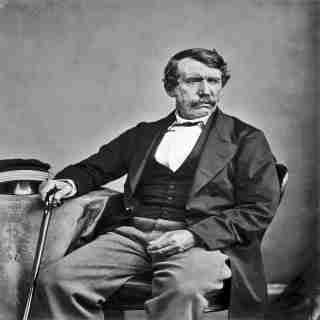 "[I am] serving Christ when shooting a buffalo for my men or taking an observation, [even if some] will consider it not sufficiently or even at all missionary."
With four theatrical words, "Dr. Livingstone, I presume?"—words journalist Henry Morton Stanley rehearsed in advance—David Livingstone became immortal. Stanley stayed with Livingstone for five months and then went off to England to write his bestseller, How I Found Livingstone. Livingstone, in the meantime, got lost again—in a swamp literally up to his neck. Within a year and a half, he died in a mud hut, kneeling beside his cot in prayer.
Berlin Congress spurs African independent churches
The whole civilized world wept. They gave him a 21-gun salute and a hero's funeral among the saints in Westminster Abbey. "Brought by faithful hands over land and sea," his tombstone reads, "David Livingstone: missionary, traveler, philanthropist. For 30 years his life was spent in an unwearied effort to evangelize the native races, to explore the undiscovered secrets, and to abolish the slave trade." He was Mother Teresa, Neil Armstrong, and Abraham Lincoln rolled into one.
Highway man
At age 25, after a childhood spent working 14 hours a day in a cotton mill, followed by learning in class and on his own, Livingstone was captivated by an appeal for medical missionaries to China. As he trained, however, the door to China was slammed shut by the Opium War. Within six months, he met Robert Moffat, a veteran missionary of southern Africa, who enchanted him with tales of his remote station, glowing in the morning sun with "the smoke of a thousand villages where no missionary had been before."
For ten years, Livingstone tried to be a conventional missionary in southern Africa. He opened a string of stations in "the regions beyond," where he settled down to station life, teaching school and superintending the garden. After four years of bachelor life, he married his "boss's" daughter, Mary Moffat.
From the beginning, Livingstone showed signs of restlessness. After his only convert decided to return to polygamy, Livingstone felt more called than ever to explore. During his first term in South Africa, Livingstone made some of the most prodigious—and most dangerous—explorations of the nineteenth century. His object was to open a "Missionary Road"—"God's Highway," he also called it—1,500 miles north into the interior to bring "Christianity and civilization" to unreached peoples.
Explorer for Christ
On these early journeys, Livingstone's interpersonal quirks were already apparent. He had the singular inability to get along with other Westerners. He fought with missionaries, fellow explorers, assistants, and (later) his brother Charles. He held grudges for years. He had the temperament of a book-reading loner, emotionally inarticulate except when he exploded with Scottish rage. He held little patience for the attitudes of missionaries with "miserably contracted minds" who had absorbed "the colonial mentality" regarding the natives. When Livingstone spoke out against racial intolerance, white Afrikaners tried to drive him out, burning his station and stealing his animals.
He also had problems with the London Missionary Society, who felt that his explorations were distracting him from his missionary work. Throughout his life, however, Livingstone always thought of himself as primarily a missionary, "not a dumpy sort of person with a Bible under his arms, [but someone] serving Christ when shooting a buffalo for my men or taking an observation, [even if some] will consider it not sufficiently or even at all missionary."
Though alienated from the whites, the natives loved his common touch, his rough paternalism, and his curiosity. They also thought he might protect them or supply them with guns. More than most Europeans, Livingstone talked to them with respect, Scottish laird to African chief. Some explorers took as many as 150 porters when they traveled; Livingstone traveled with 30 or fewer.
On an epic, three-year trip from the Atlantic Ocean to the Indian Ocean (reputedly the first by a European) Livingstone was introduced to the 1,700-mile-long Zambezi. The river was also home to Victoria Falls, Livingstone's most awe-inspiring discovery. The scene was "so lovely," he later wrote, that it "must have been gazed upon by angels in their flight."
Despite its beauty, the Zambezi was a river of human misery. It linked the Portuguese colonies of Angola and Mozambique, the main suppliers of slaves for Brazil, who in turn sold to Cuba and the United States. Though Livingstone was partially driven by a desire to create a British colony, his primary ambition was to expose the slave trade and cut it off at the source. The strongest weapon in this task, he believed, was Christian commercial civilization. He hoped to replace the "inefficient" slave economy with a capitalist economy: buying and selling goods instead of people.
The ill-fated Zambezi expedition
After a brief heroic return to England, Livingstone returned to Africa, this time to navigate 1,000 miles up the Zambezi in a brass-and-mahogany steamboat to establish a mission near Victoria Falls. The boat was state-of-the-art technology but proved too frail for the expedition. It leaked horribly after repeatedly running aground on sandbars.
Livingstone pushed his men beyond human endurance. When they reached a 30-foot waterfall, he waved his hand, as if to wish it away, and said, "That's not supposed to be there." His wife, who had just given birth to her sixth child, died in 1862 beside the river, only one of several lives claimed on the voyage. Two years later, the British government, which had no interest in "forcing steamers up cataracts," recalled Livingstone and his mission party.
A year later, he was on his way back to Africa again, this time leading an expedition sponsored by the Royal Geographical Society and wealthy friends. "I would not consent to go simply as a geographer," he emphasized, but as biographer Tim Jeal wrote, "It would be hard to judge whether the search for the Nile's source or his desire to expose the slave trade was his dominant motive." The source of the Nile was the great geographical puzzle of the day. But more important to Livingstone was the possibility of proving that the Bible was true by tracing the African roots of Judaism and Christianity.
For two years he simply disappeared, without a letter or scrap of information. He reported later that he had been so ill he could not even lift a pen, but he was able to read the Bible straight through four times. Livingstone's disappearance fascinated the public as much as Amelia Earhart's a few generations later.
When American journalist Henry Stanley found Livingstone, the news exploded in England and America. Papers carried special editions devoted to the famous meeting. In August 1872, in precarious health, Livingstone shook Stanley's hand and set out on his final journey.
When Livingstone had arrived in Africa in 1841, it was as exotic as outer space, called the "Dark Continent" and the "White Man's Graveyard." although the Portuguese, Dutch, and English were pushing into the interior, African maps had blank unexplored areas—no roads, no countries, no landmarks. Livingstone helped redraw the maps, exploring what are now a dozen countries, including South Africa, Rwanda, Angola, and the Republic of the Congo (formerly Zaire). And he made the West aware of the continuing evil of African slavery, which led to its being eventually outlawed.
"[I am] serving Christ when shooting a buffalo for my men or taking an observation, [even if some] will consider it not sufficiently or even at all missionary."
With four theatrical words, "Dr. Livingstone, I presume?"—words journalist Henry Morton Stanley rehearsed in advance—David Livingstone became immortal. Stanley stayed with Livingstone for five months and then went off to England to write his bestseller, How I Found Livingstone. Livingstone, in the meantime, got lost again—in a swamp literally up to his neck. Within a year and a half, he died in a mud hut, kneeling beside his cot in prayer.
Berlin Congress spurs African independent churches
The whole civilized world wept. They gave him a 21-gun salute and a hero's funeral among the saints in Westminster Abbey. "Brought by faithful hands over land and sea," his tombstone reads, "David Livingstone: missionary, traveler, philanthropist. For 30 years his life was spent in an unwearied effort to evangelize the native races, to explore the undiscovered secrets, and to abolish the slave trade." He was Mother Teresa, Neil Armstrong, and Abraham Lincoln rolled into one.
Highway man
At age 25, after a childhood spent working 14 hours a day in a cotton mill, followed by learning in class and on his own, Livingstone was captivated by an appeal for medical missionaries to China. As he trained, however, the door to China was slammed shut by the Opium War. Within six months, he met Robert Moffat, a veteran missionary of southern Africa, who enchanted him with tales of his remote station, glowing in the morning sun with "the smoke of a thousand villages where no missionary had been before."
For ten years, Livingstone tried to be a conventional missionary in southern Africa. He opened a string of stations in "the regions beyond," where he settled down to station life, teaching school and superintending the garden. After four years of bachelor life, he married his "boss's" daughter, Mary Moffat.
From the beginning, Livingstone showed signs of restlessness. After his only convert decided to return to polygamy, Livingstone felt more called than ever to explore. During his first term in South Africa, Livingstone made some of the most prodigious—and most dangerous—explorations of the nineteenth century. His object was to open a "Missionary Road"—"God's Highway," he also called it—1,500 miles north into the interior to bring "Christianity and civilization" to unreached peoples.
Explorer for Christ
On these early journeys, Livingstone's interpersonal quirks were already apparent. He had the singular inability to get along with other Westerners. He fought with missionaries, fellow explorers, assistants, and (later) his brother Charles. He held grudges for years. He had the temperament of a book-reading loner, emotionally inarticulate except when he exploded with Scottish rage. He held little patience for the attitudes of missionaries with "miserably contracted minds" who had absorbed "the colonial mentality" regarding the natives. When Livingstone spoke out against racial intolerance, white Afrikaners tried to drive him out, burning his station and stealing his animals.
He also had problems with the London Missionary Society, who felt that his explorations were distracting him from his missionary work. Throughout his life, however, Livingstone always thought of himself as primarily a missionary, "not a dumpy sort of person with a Bible under his arms, [but someone] serving Christ when shooting a buffalo for my men or taking an observation, [even if some] will consider it not sufficiently or even at all missionary."
Though alienated from the whites, the natives loved his common touch, his rough paternalism, and his curiosity. They also thought he might protect them or supply them with guns. More than most Europeans, Livingstone talked to them with respect, Scottish laird to African chief. Some explorers took as many as 150 porters when they traveled; Livingstone traveled with 30 or fewer.
On an epic, three-year trip from the Atlantic Ocean to the Indian Ocean (reputedly the first by a European) Livingstone was introduced to the 1,700-mile-long Zambezi. The river was also home to Victoria Falls, Livingstone's most awe-inspiring discovery. The scene was "so lovely," he later wrote, that it "must have been gazed upon by angels in their flight."
Despite its beauty, the Zambezi was a river of human misery. It linked the Portuguese colonies of Angola and Mozambique, the main suppliers of slaves for Brazil, who in turn sold to Cuba and the United States. Though Livingstone was partially driven by a desire to create a British colony, his primary ambition was to expose the slave trade and cut it off at the source. The strongest weapon in this task, he believed, was Christian commercial civilization. He hoped to replace the "inefficient" slave economy with a capitalist economy: buying and selling goods instead of people.
The ill-fated Zambezi expedition
After a brief heroic return to England, Livingstone returned to Africa, this time to navigate 1,000 miles up the Zambezi in a brass-and-mahogany steamboat to establish a mission near Victoria Falls. The boat was state-of-the-art technology but proved too frail for the expedition. It leaked horribly after repeatedly running aground on sandbars.
Livingstone pushed his men beyond human endurance. When they reached a 30-foot waterfall, he waved his hand, as if to wish it away, and said, "That's not supposed to be there." His wife, who had just given birth to her sixth child, died in 1862 beside the river, only one of several lives claimed on the voyage. Two years later, the British government, which had no interest in "forcing steamers up cataracts," recalled Livingstone and his mission party.
A year later, he was on his way back to Africa again, this time leading an expedition sponsored by the Royal Geographical Society and wealthy friends. "I would not consent to go simply as a geographer," he emphasized, but as biographer Tim Jeal wrote, "It would be hard to judge whether the search for the Nile's source or his desire to expose the slave trade was his dominant motive." The source of the Nile was the great geographical puzzle of the day. But more important to Livingstone was the possibility of proving that the Bible was true by tracing the African roots of Judaism and Christianity.
For two years he simply disappeared, without a letter or scrap of information. He reported later that he had been so ill he could not even lift a pen, but he was able to read the Bible straight through four times. Livingstone's disappearance fascinated the public as much as Amelia Earhart's a few generations later.
When American journalist Henry Stanley found Livingstone, the news exploded in England and America. Papers carried special editions devoted to the famous meeting. In August 1872, in precarious health, Livingstone shook Stanley's hand and set out on his final journey.
When Livingstone had arrived in Africa in 1841, it was as exotic as outer space, called the "Dark Continent" and the "White Man's Graveyard." although the Portuguese, Dutch, and English were pushing into the interior, African maps had blank unexplored areas—no roads, no countries, no landmarks. Livingstone helped redraw the maps, exploring what are now a dozen countries, including South Africa, Rwanda, Angola, and the Republic of the Congo (formerly Zaire). And he made the West aware of the continuing evil of African slavery, which led to its being eventually outlawed.
the majesty of god mastered him: john calvin
In 1538, the Italian Cardinal Sadolet wrote to the leaders of Geneva trying to win them back to the Roman Catholic Church after they had turned to the Reformed teachings. John Calvin’s response to Sadolet uncovers the root of Calvin’s quarrel with Rome that would determine his whole life. Here’s what Calvin wrote to the cardinal: “[Your] zeal for heavenly life [is] a zeal which keeps a man entirely devoted to himself, and does not, even by one expression, arouse him to sanctify the name of God ” ( John Calvin: Selections from His Writings , 89). The issue for Calvin was not, first, the well-known sticking points of the Reformation: justification, priestly abuses, transubstantiation, prayers to saints, and papal authority. All those would come in for discussion. But beneath all of them, the fundamental issue for Calvin, from the beginning to the end of his life, was the issue of the centrality and supremacy and majesty of the glory of God. Calvin goes on and says to Sadolet that what he should do — and what Calvin aims to do with all his life — is “set before [man], as the prime motive of his existence, zeal to illustrate the glory of God ” ( Selections , 89). This would be a fitting banner over all of John Calvin’s life and work — zeal to illustrate the glory of God . The essential meaning of Calvin’s life and preaching is that he recovered and embodied a passion for the absolute reality and majesty of God. Captive to Glory What happened to John Calvin to make him a man so mastered by the majesty of God? And what kind of ministry did this produce in his life? He was born July 10, 1509, in Noyon, France, when Martin Luther was 25 years old and had just begun to teach the Bible in Wittenberg. When he was 14, his father sent him to study theology at the University of Paris, which at that time was untouched by the Reformation and steeped in Medieval theology. But five years later (when Calvin was 19), his father ran afoul of the church and told his son to leave theology and study law, which he did for the next three years at Orleans and Bourges. His father died in May of 1531, when Calvin was 21. Calvin felt free then to turn from law to his first love, which had become the classics. He published his first book, a commentary on Seneca, in 1532, at the age of 23. But sometime during these years he was coming into contact with the message and the spirit of the Reformation, and by 1533 something dramatic had happened in his life. Calvin recounts, seven years later, how his conversion came about. He describes how he had been struggling to live out the Catholic faith with zeal when I at length perceived, as if light had broken in upon me, in what a sty of error I had wallowed, and how much pollution and impurity I had thereby contracted. Being exceedingly alarmed at the misery into which I had fallen . . . as in duty bound, [I] made it my first business to betake myself to thy way [O God], condemning my past life, not without groans and tears. God, by a sudden conversion, subdued and brought my mind to a teachable frame. . . . Having thus received some taste and knowledge of true godliness, I was immediately inflamed with [an] intense desire to make progress. ( Selections , 26) What was the foundation of Calvin’s faith that yielded a life devoted utterly to displaying the glory and majesty of God? The answer seems to be that Calvin suddenly, as he says, saw and tasted in Scripture the majesty of God. And in that moment, both God and the word of God were so powerfully and unquestionably authenticated to his soul that he became the loving servant of God and his word the rest of his life. Henceforth he would be a man utterly devoted to displaying the majesty of God by the exposition of the word of God. Compelled to Geneva What form would that ministry take? Calvin knew what he wanted. He wanted the enjoyment of literary ease so he could promote the Reformed faith as a literary scholar. That is what he thought he was cut out for by nature. But God had radically different plans. In 1536, Calvin left France, taking his brother Antoine and sister Marie with him. He intended to go to Strasbourg and devote himself to a life of peaceful literary production. But one night, as Calvin stayed in Geneva, William Farel, the fiery leader of the Reformation in that city, found out he was there and sought him out. It was a meeting that changed the course of history, not just for Geneva, but for the world. Calvin tells us what happened in his preface to his commentary on Psalms: Farel, who burned with an extraordinary zeal to advance the gospel, immediately learned that my heart was set upon devoting myself to private studies, for which I wished to keep myself free from other pursuits, and finding that he gained nothing by entreaties, he proceeded to utter an imprecation that God would curse my retirement, and the tranquillity of the studies which I sought, if I should withdraw and refuse to give assistance, when the necessity was so urgent. By this imprecation I was so stricken with terror, that I desisted from the journey which I had undertaken. ( Selections , 28) The course of his life was irrevocably changed. Not just geographically, but vocationally. Never again would Calvin work in what he called the “tranquillity of . . . studies.” From now on, every page of the 48 volumes of books and tracts and sermons and commentaries and letters that he wrote would be hammered out on the anvil of pastoral responsibility. Unrelenting Exposition Once in Geneva, what kind of ministry did his commitment to the majesty of God produce? Part of the answer is that it produced a ministry of incredible steadfastness — a ministry, to use Calvin’s own description of faithful ministers of the word, of “invincible constancy” ( Sermons from Job , 245). But that is only half the answer. The constancy had a focus: the unrelenting exposition of the word of God. Calvin had seen the majesty of God in the Scriptures. This persuaded him that the Scriptures were the very word of God. He said, “We owe to the Scripture the same reverence which we owe to God, because it has proceeded from Him alone, and has nothing of man mixed with it” ( John Calvin: A Collection of Distinguished Essays , 162). His own experience had taught him that “the highest proof of Scripture derives in general from the fact that God in person speaks in it” ( Institutes of the Christian Religion , 1.7.4). These truths led to an inevitable conclusion for Calvin. Since the Scriptures are the very voice of God, and since they are therefore self-authenticating in revealing the majesty of God, and since the majesty and glory of God are the reason for all existence, it follows that Calvin’s life would be marked by “invincible constancy” in the exposition of Scripture. He wrote tracts, he wrote the great Institutes , he wrote commentaries (on all the New Testament books except Revelation, plus the Pentateuch, Psalms, Isaiah, Jeremiah, and Joshua), he gave biblical lectures (many of which were published as virtual commentaries), and he preached ten sermons every two weeks. But all of it was exposition of Scripture. In his last will and testament, he said, “I have endeavored, both in my sermons and also in my writings and commentaries, to preach the Word purely and chastely, and faithfully to interpret His sacred Scriptures” ( Selections , 35). This was the ministry unleashed by seeing the majesty of God in Scripture. The Scriptures were absolutely central because they were absolutely the word of God and had as their self-authenticating theme the majesty and glory of God. But out of all these labors of exposition, preaching was supreme. God’s Voice in Every Verse Calvin’s preaching was of one kind from beginning to end: he preached steadily through book after book of the Bible. He never wavered from this approach to preaching for almost 25 years of ministry in St. Peter’s church of Geneva — with the exception of a few high festivals and special occasions. “On Sunday he took always the New Testament, except for a few Psalms on Sunday afternoons. During the week . . . it was always the Old Testament.” To give you some idea of the scope of Calvin’s pulpit, he began his series on the book of Acts on August 25, 1549, and ended it in March 1554. After Acts he went on to the Epistles to the Thessalonians (46 sermons), Corinthians (186 sermons), the Pastoral Epistles (86 sermons), Galatians (43 sermons), Ephesians (48 sermons) — until May 1558. Then there is a gap when he was ill. In the spring of 1559, he began the Harmony of the Gospels and was not finished when he died in May 1564. On the weekdays during that season he preached 159 sermons on Job, 200 on Deuteronomy, 353 on Isaiah, 123 on Genesis, and so on. One of the clearest illustrations that this was a self-conscious choice on Calvin’s part was the fact that on Easter Day, 1538, after preaching, he left the pulpit of St. Peter’s, banished by the City Council. He returned in September 1541, over three years later, and picked up the exposition in the next verse. Divine Majesty of the Word Why this remarkable commitment to the centrality of sequential expository preaching? Three reasons are just as valid today as they were in the sixteenth century. First, Calvin believed that the word of God was a lamp that had been taken away from the churches. He said in his own personal testimony, “Thy word, which ought to have shone on all thy people like a lamp, was taken away, or at least suppressed as to us.” Calvin reckoned that the continuous exposition of books of the Bible was the best way to overcome the “fearful abandonment of [God’s] Word” ( Selections , 115). Second, biographer T.H.L. Parker says that Calvin had a horror of those who preached their own ideas in the pulpit. He said, “When we enter the pulpit, it is not so that we may bring our own dreams and fancies with us” ( Portrait of Calvin , 83). He believed that by expounding the Scriptures as a whole, he would be forced to deal with all that God wanted to say, not just what he might want to say. Third, he believed with all his heart that the word of God was indeed the word of God , and that all of it was inspired and profitable and radiant with the light of the glory of God. In Sermon number 61 on Deuteronomy, he challenged pastors of his day and ours: Let the pastors boldly dare all things by the word of God . . . . Let them constrain all the power, glory, and excellence of the world to give place to and to obey the divine majesty of this word . Let them enjoin everyone by it, from the highest to the lowest. Let them edify the body of Christ. Let them devastate Satan’s reign. Let them pasture the sheep, kill the wolves, instruct and exhort the rebellious. Let them bind and loose thunder and lightning, if necessary, but let them do all according to the word of God . ( Sermons on the Epistle to the Ephesians , xii) The key phrase here is “the divine majesty of this word.” This was always the root issue for Calvin. How might he best show forth for all of Geneva and all of Europe and all of history the majesty of God? He answered with a life of continuous expository preaching. This is why preaching remains a central event in the life of the church five hundred years after Calvin. If God is the great, absolute, sovereign, mysterious, all-glorious God of majesty whom Calvin saw in Scripture, there will always be preaching, because the more this God is known and the more this God is central, the more we will feel that he must not just be analyzed and explained — he must be acclaimed and heralded and magnified with expository exultation.