
Others like the prophesied end-time Features >>
God's End-Time Calendar

Deciphering End Time Prophetic Codes
The Prophetic Future Concealed In Israel’s Festivals
The Greatness Of The Soul
Prophetic Guide To The End Time
The Essential Guide To Bible Prophecy
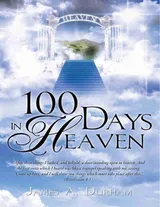
100 Days In Heaven

Angels And Demons
A New Heaven And A New Earth: Reclaiming Biblical Eschatology
Heavenly Visitation
About the Book
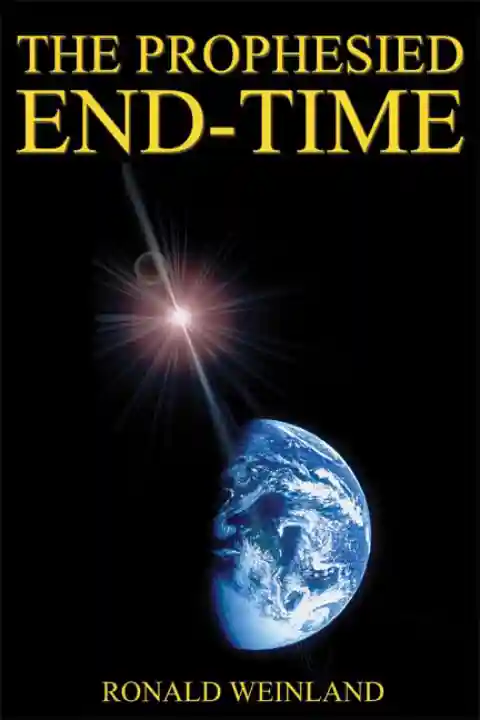
"The Prophesied End-Time" by Ronald Weinland is a non-fiction book that explores biblical prophecies regarding the end times, specifically focusing on events leading up to the return of Jesus Christ. Weinland interprets various prophecies from the book of Revelation and other biblical texts to illustrate his belief in the imminent arrival of the end times and the significance of current world events in relation to these prophecies. Throughout the book, Weinland discusses the importance of spiritual preparation and understanding of biblical prophecy in order to navigate the turbulent times ahead.
Billy Graham
Billy Graham (born November 7, 1918, Charlotte, North Carolina, U.S.—died February 21, 2018, Montreat, North Carolina), American evangelist whose large-scale preaching missions, known as crusades, and friendship with numerous U.S. presidents brought him to international prominence.
Conversion and early career
The son of a prosperous dairy farmer, Billy Graham grew up in rural North Carolina. In 1934, while attending a revival meeting led by the evangelist Mordecai Ham, he underwent a religious experience and professed his “decision for Christ.” In 1936 he left his father’s dairy farm to attend Bob Jones College (now Bob Jones University), then located in Cleveland, Tennessee, but stayed for only a semester because of the extreme fundamentalism of the institution. He transferred to Florida Bible Institute (now Trinity College), near Tampa, graduated in 1940, and was ordained a minister by the Southern Baptist Convention. Convinced that his education was deficient, however, Graham enrolled at Wheaton College in Illinois. While at Wheaton, he met and married (1943) Ruth Bell, daughter of L. Nelson Bell, a missionary to China.
By the time Graham graduated from Wheaton in 1943, he had developed the preaching style for which he would become famous—a simple, direct message of sin and salvation that he delivered energetically and without condescension. “Sincerity,” he observed many years later, “is the biggest part of selling anything, including the Christian plan of salvation.” After a brief and undistinguished stint as pastor of Western Springs Baptist Church in the western suburbs of Chicago, Graham decided to become an itinerant evangelist. He joined the staff of a new organization called Youth for Christ in 1945 and in 1947 served as president of Northwestern Bible College in Minneapolis, Minnesota.
Evangelism
Graham’s emergence as an evangelist came at a propitious moment for 20th-century Protestants. Protestantism in the United States was deeply divided as a result of controversies in the 1920s between fundamentalism and modernism (a movement that applied scholarly methods of textual and historical criticism to the study of the Bible). The public image of fundamentalists was damaged by the Scopes Trial of 1925, which concerned the teaching of Charles Darwin’s theory of evolution in public schools in Tennessee; in his writings about the trial, the journalist and social critic H.L. Mencken successfully portrayed all fundamentalists as uneducated country bumpkins. In response to these controversies, most fundamentalists withdrew from the established Protestant denominations, which they regarded as hopelessly liberal, and retreated from the larger society, which they viewed as both corrupt and corrupting. Although Graham remained theologically conservative, he refused to be sectarian like other fundamentalists. Seeking to dissociate himself from the image of the stodgy fundamentalist preacher, he seized on the opportunity presented by new media technologies, especially radio and television, to spread the message of the gospel.
In the late 1940s Graham’s fellow evangelist in Youth for Christ, Charles Templeton, challenged Graham to attend seminary with him so that both preachers could shore up their theological knowledge. Graham considered the possibility at length, but in 1949, while on a spiritual retreat in the San Bernardino Mountains of southern California, he decided to set aside his intellectual doubts about Christianity and simply “preach the gospel.” After his retreat, Graham began preaching in Los Angeles, where his crusade brought him national attention. He acquired this new fame in no small measure because newspaper magnate William Randolph Hearst, impressed with the young evangelist’s preaching and anticommunist rhetoric, instructed his papers to “puff Graham.” The huge circus tent in which Graham preached, as well as his own self-promotion, lured thousands of curious visitors—including Hollywood movie stars and gangsters—to what the press dubbed the “canvas cathedral” at the corner of Washington and Hill streets. From Los Angeles, Graham undertook evangelistic crusades around the country and the world, eventually earning international renown.
Despite his successes, Graham faced criticism from both liberals and conservatives. In New York City in 1954 he was received warmly by students at Union Theological Seminary, a bastion of liberal Protestantism; nevertheless, the theologian Reinhold Niebuhr, a professor at Union and one of the leading Protestant thinkers of the 20th century, had little patience for Graham’s simplistic preaching. On the other end of the theological spectrum, fundamentalists such as Bob Jones, Jr., Carl McIntire, and Jack Wyrtzen never forgave Graham for cooperating with the Ministerial Alliance, which included mainline Protestant clergy, in the planning and execution of Graham’s storied 16-week crusade at Madison Square Garden in New York in 1957. Such cooperation, however, was part of Graham’s deliberate strategy to distance himself from the starchy conservatism and separatism of American fundamentalists. His entire career, in fact, was marked by an irenic spirit.
Graham, by his own account, enjoyed close relationships with several American presidents, from Dwight Eisenhower to George W. Bush. (Although Graham met with Harry Truman in the Oval Office, the president was not impressed with him.) Despite claiming to be apolitical, Graham became politically close to Richard Nixon, whom he had befriended when Nixon was Eisenhower’s vice president. During the 1960 presidential campaign, in which Nixon was the Republican nominee, Graham met in Montreaux, Switzerland, with Norman Vincent Peale and other Protestant leaders to devise a strategy to derail the campaign of John F. Kennedy, the Democratic nominee, in order to secure Nixon’s election and prevent a Roman Catholic from becoming president. Although Graham later mended relations with Kennedy, Nixon remained his favourite politician; indeed, Graham all but endorsed Nixon’s reelection effort in 1972 against George McGovern. As Nixon’s presidency unraveled amid charges of criminal misconduct in the Watergate scandal, Graham reviewed transcripts of Oval Office tape recordings subpoenaed by Watergate investigators and professed to be physically sickened by his friend’s use of foul language.
Legacy of Billy Graham
Graham’s popular appeal was the result of his extraordinary charisma, his forceful preaching, and his simple, homespun message: anyone who repents of sins and accepts Jesus Christ will be saved. Behind that message, however, stood a sophisticated organization, the Billy Graham Evangelistic Association, incorporated in 1950, which performed extensive advance work in the form of favourable media coverage, cooperation with political leaders, and coordination with local churches and provided a follow-up program for new converts. The organization also distributed a radio program, Hour of Decision, a syndicated newspaper column, “My Answer,” and a magazine, Decision. Although Graham pioneered the use of television for religious purposes, he always shied away from the label “televangelist.” During the 1980s, when other television preachers were embroiled in sensational scandals, Graham remained above the fray, and throughout a career that spanned more than half a century few people questioned his integrity. In 1996 Graham and his wife received the Congressional Gold Medal of Honor, the highest civilian award bestowed by the United States, and in 2001 he was made an Honorary Knight Commander of the Order of the British Empire (KBE). Graham concluded his public career with a crusade in Queens, New York, in June 2005.
Graham claimed to have preached in person to more people than anyone else in history, an assertion that few would challenge. His evangelical crusades around the world, his television appearances and radio broadcasts, his friendships with presidents, and his unofficial role as spokesman for America’s evangelicals made him one of the most recognized religious figures of the 20th century.
enjoy your possessions before they possess you
Take an inventory of your life. What do you own right now? Whatever possessions you have are no accident, and not a product of mere happenstance. At the micro level, Jesus promises to care for even the minutest everyday details, like pocket money and food and clothes. As we see in Scripture, in these small possessions, God calls us to live with moral standards because we are susceptible to sinning our way into big problems (like unreasonable consumer debt). God calls us to be wise with money and to work and live economically fruitful lives, and to be careful with our possessions. At the macro level, all wealth distribution and re-distribution is the work of our sovereign God (Ecclesiastes 5:18–6:2). All of our possessions are his, and he gives (and takes away) as he sees fit. God makes the poor and he makes the rich (1 Samuel 2:7). So how does God decide to distribute wealth in the lives of his creatures? This plays out in many different ways. God may give you many possessions, but not give you the power to enjoy those gifts — a great tragedy (Ecclesiastes 6:1–2). God may give you accumulated wealth, and give you the power to enjoy those gifts — a great blessing (Ecclesiastes 5:19, Proverbs 10:22). God may give you possessions, but through future persecution, he may take all those possessions away from you in the end (Hebrews 10:34). God may call you to a life of unalleviated poverty (2 Corinthians 6:10; 8:9). God may give you a life of wealth (2 Chronicles 32:29). God may give you a life in the middle — neither poverty nor wealth (Proverbs 30:8). God may bless you with great wealth, then take it all away and reduce your portfolio to ash, and then restore you with doubled wealth (Job). God may make you wealthy and then call you to voluntary poverty in order to show the world that he is your greatest treasure (Matthew 19:21; Mark 10:21; Luke 18:22). None of these situations is normative, if God sovereignly dispenses possessions to us as he sees fit (which he does). When it comes to possessions, our experiences will vary greatly. But no matter how much (or how little) we possess, there are four things that will help us rightly enjoy the gifts God has given us. 1. Money is temporary. Money existed before us, and it will exist after us, too. The streams of commerce have been flowing for millennia, and one day we will be gone and the currents of economic stimulus will flow to the next generation. We exist in time with money and possessions, but everything of value we own will be passed on to others. Which means in a very real sense, money is temporary. It carries the face of a Caesar or a president to remind us its value is as temporary as world rulers and the rise and fall of nations. So give back to Caesar what is Caesar’s. In other words, the Christian is called to possess all things as though we don’t possess anything (1 Corinthians 7:30). Hold the money, use the money, save the money, steward the money. But also recognize the cash in our wallets is the Monopoly money of this present age. The cash itself has no eternal face value. We entered this life with empty hands, we leave it with empty hands, and to live in the middle with a lust for cash is like holding a sharp dagger backwards and gutting our own souls (1 Timothy 6:6–10). This is true of cars and houses, too. C.S. Lewis said the secret to genuinely delighting in one’s own house is through sacrifice, through a certain crucifixion of the self’s relationship to it. We sacrifice our house, we release our grip on it, and then it becomes an object of joy. When it comes to possessions, true delight is found on the other side of disinterest (Letters 2.788). The takeaway: We don’t boast in our possessions; we boast that God possesses us (Jeremiah 9:23–24). Here our stewardship comes into focus. Material blessing is our temporary stewardship, but delighting in God and his gifts is our true and eternal vocation. 2. Enjoy your possessions now. As we have seen, we don’t always know what God is doing in our lives when it comes to our material possessions. He has different plans for us all. But he intends all of his children to enjoy the gifts he has given us. If you have pants, a shirt, and a sandwich you can be content in life, and if you can be content with a little, you can enjoy God’s goodness to you in every one of the millions of simple gifts he gives to you every day (1 Timothy 6:8). In fact, few things in this life are better than to enjoy your life and the good gifts from God in a spirit of fear and obedience and faith toward God (Ecclesiastes 8:15; 9:7–10; 10:19; 12:13). If you are prone to grumble more than express gratitude, pray and ask that God would give you the power to enjoy his gifts rightly — a gift in itself. As the book of Ecclesiastes makes clear: One of the rarest and most precious gifts is the gift of enjoying our daily gifts. 3. Enjoy your possessions by sharing them. The man who cannot enjoy God’s good gifts every day is often the man who wrongly thinks he must own gifts before enjoying them. We don’t have to own something to find joy in it. Beautiful art is intended to be shared in museums and galleries, not to be locked in the secluded basement of a billionaire. The delight of exclusivity is a delusion — a false delight. Christians get this. The delight of sharing is what drove the early church to share everything they owned (Acts 2:45; 4:32; 1 John 3:17). They gave money. They cared for the poor. They helped the missionaries. A group of wealthy women funded gospel work (Luke 8:2–3). There is a special delight in our possessions when we don’t think of them as “mine” but make use of them to increase the delight of others. 4. Enjoy what you do not own. Finally — and perhaps the whole reason why I wrote this article in the first place — God calls us to enjoy what we can never possess. I cannot own  many of the greatest gifts God has given me. I do not own my wife; I do not own my kids; I don’t own my time, or the oceans, or the rain, or the sunshine, or the majestic mountain ranges — certainly not in any sense in which I own  my minivan (my name is on the title). The man who loves the ocean so much that he sells all that he has and buys a beachfront property with his own private sand and closes it off from others so that he can exclusively use it is the man whose joy will die by exclusivity. He cannot enjoy possessions because the possessions possess him. On the other hand, the man who buys beachfront property in order to freely share that property with his friends and family will find his joy doubled. By his seaside generosity, this man will bless many others in great ways. But perhaps the most blessed of all is the man who doesn’t need to own beachfront property at all. He has learned to enjoy every beach in the world for its sheer beauty. He is freed from the desire to enjoy only what he possesses. This seems to be the way Romans 1 pushes us to contemplate. To be truly human is to express a Godward gratitude in the delights of creation. And if that is true, then we discover that what it means to delight in this world is a category that explodes all the categories of what the world promises us in possession. Old Tom Bombadil The beautiful literary example of a man who delights in what he doesn’t possess is found in the character Tom Bombadil, tucked into the early storyline of Tolkien’s The Lord of the Rings. In the epic unfolding storyline, Tom Bombadil is a mysterious figure who is quick to laughter and who seems to live in a blessed state of joy. But his life also bears no impact on the central drama that is unfolding around him. (Thus, Tom Bombadil never appears in the movies.) Tom’s role in the overall story is subtle and easy to miss. Early in the journey, Frodo and company wander into his lands, into a respite of joy in stark contrast to the darkness they would soon face. “Who is Tom Bombadil?” a curious Frodo later asks Tom’s wife, Goldberry. “He is the Master of wood, water, and hill.” “Then all this strange land belongs to him?” “No, indeed!” No, indeed! The woods, the water, and the hills that fill Tom Bombadil with delight are not his to possess — they are his to tend and to enjoy. To be sure, Tom is not an allegory against owning property, nor is he an allegory for passivism. As Tolkien also makes clear, it will take warfare against Sauron to stop the encroaching evil in order to preserve the lifestyle that Tom and Goldberry enjoy. As if we need the confirmation, Tolkien makes it clear in his letters that Tom is an intentional enigma. Tom incarnates a contrast. Tom represents a soul that has been freed from the greed of possession in order to delight in created beauty. He has renounced control and therefore finds the means of power to be valueless, too. As a result, Tom Bombadil can hold Frodo’s great ring of power with no danger to himself or anyone else. The ring wields no power over Tom because Tom has no interest in possessing the power of the ring. When the lust for possession is broken, when gratitude takes its place, and when one can simply delight in the glories of creation, then some of evil’s darkest schemes in the human heart are broken. Tom Bombadil is a model of delighting in what we do not possess, and then of sharing what we do possess — like dinner fellowship around the yellow cream, honeycomb, white bread and butter at his table. May we shine like such glad-hearted, grateful enigmas in our own world.