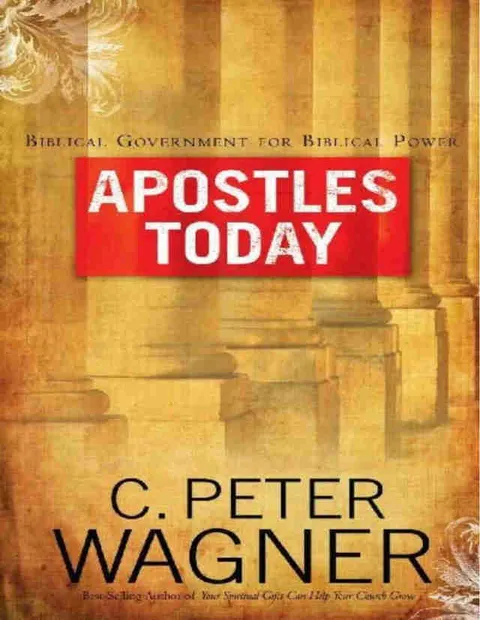

Others like angels and demons Features >>
Angels - Gods Supernatural Agents
Angels On Assignment As Told By Roland H. Buck

Satan's Rebellion And Fall
The Last Hours Of Jesus - From Gethsemane To Golgotha
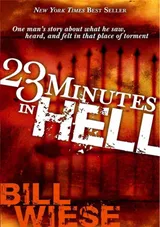
23 Minutes In Hell
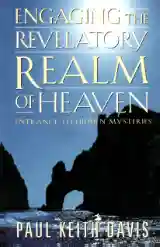
Engaging The Revelatory Realm Of Heaven: Entrance To Hidden Mysteries

Jerusalem Countdown
I Walked In Heaven With Jesus
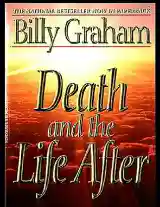
Death And The Life After

From Daniel To Doomsday
About the Book
"Angels and Demons" by Benny Hinn explores the spiritual realm of angels and demons, touching on topics such as their roles in the world, how they interact with humans, and how to recognize their presence in our lives. Hinn offers insights, teachings, and personal experiences related to these spiritual beings, encouraging readers to deepen their understanding and connection with the supernatural world.
Smith Wigglesworth
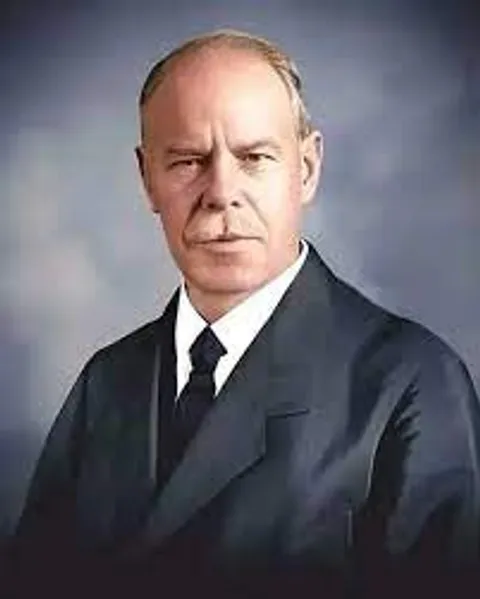 Smith Wigglesworth was born in 1859 to a very poor family. His father did manual labor, for very little pay. Smith himself went to work at the age of six to help with the family income. At six he was pulling turnips and at seven he was working in a woolen mill twelve hours a day. His parents did not know God, but Smith hungered in his heart to know Him. Even as a youngster he would pray in the fields. His grandmother was the critical Christian in his life. She was a Wesleyan Methodist and would take Smith to meetings with her. At one of these meetings there was a song being sung about Jesus as the lamb and Smith came into the realization of God's love for him and his decision to believe Christ for his salvation was decided that day. He was immediately filled with the desire to evangelize and led his own mother to Christ.
Smith has various church experiences as he was growing up. He first went to an Episcopal church and then at thirteen a Wesleyan Methodist church. When he was sixteen he became involved in the Salvation Army. He felt deeply called to fast and pray for lost souls. He saw many people come to Christ. At seventeen a mentor shared with him about water baptism and he decided to be baptized. The Salvation Army was experiencing a tremendous level of the power of God in those days. He describes meetings where "many would be prostrated under the power of the Spirit, sometimes for as long as twenty-four hours at a time." They would pray and fast and cry out for the salvation of fifty or a hundred people for the week and they would see what they had prayed for.
At eighteen Smith left the factory and became a plumber. He moved to Liverpool when he was twenty and continued to work during the day and minister during his free time. He felt called to minister to young people and brought them to meetings. These were destitute and ragged children, whom he would often feed and care for. Hundreds were saved. Smith was often asked to speak in Salvation meetings and he would break down and weep under the power of God. Many would come to repentance in those meetings through this untrained man. At twenty-three he returned back Bradford and continued his work with the Salvation Army.
In Bradford Smith met Mary Jane Featherstone, known as Polly, the daughter of a temperance lecturer. She left home and went to Bradford to take a servants job. One night she was drawn to a Salvation Army meeting. She listened to the woman evangelist, Gipsy Tillie Smith, and gave her heart to Christ. Smith was in that meeting and saw her heart for God. Polly became an enthusiastic Salvationsist and was granted a commission by General Booth. They developed a friendship, but Polly went to Scotland to help with a new Salvationist work. She eventually moved back to Bradford and married Smith, who was very much in love with her.
The couple worked together to evangelize the lost. They opened a small church in a poor part of town. Polly would preach and Smith would make the altar calls. For a season, however, Smith became so busy with his plumbing work that his evangelistic fervor began to wane. Polly continued on, bringing Smith to conviction. One day while Smith was working in the town of Leeds he heard of a divine healing meeting. He shared with Polly about it. She needed healing and so they went to a meeting, and Polly was healed.
Smith struggled with the reality of healing, while being ill himself. He decided to give up the medicine that he was taking and trust God. He was healed. They had five children, a girl and four boys. One morning two of the boys were sick. The power of God came and they prayed for the boys and they were instantly healed. Smith struggled with the idea that God would use him to heal the sick in general. He would gather up a group of people and drive them to get prayer in Leeds. The leaders of the meeting were going to a convention and left Smith in charge. He was horrified. How could he lead a meeting about divine healing? He tried to pass it off to someone else but could not. Finally he led the meeting and several people were healed. That was it. From then on Smith began to pray for people for healing.
Smith had another leap to make. He had heard about the Pentecostals who were being baptized in the Holy Spirit. He went to meetings and was so hungry for God he created a disturbance and church members asked him to stop. He went to prayer and prayed for four days. Finally he was getting ready to head home and the vicar's wife prayed for him and he fell under the power of God and spoke in tongues. Everything changed after that. He would walk by people and they would come under the conviction of the Holy Spirit and be saved. He began to see miracles and healings and the glory of God would fall when he prayed and preached.
Smith had to respond to the many calls that came in and gave up his business for the ministry. Polly unexpectedly died in 1913, and this was a real blow to Smith. He prayed for her and commanded that death release her. She did arise but said "Smith - the Lord wants me." His heartbroken response was "If the Lord wants you, I will not hold you". She had been his light and joy for all the years of their marriage, and he grieved deeply over the loss. After his wife was buried he went to her grave, feeling like he wanted to die. When God told him to get up and go Smith told him only if you "give to me a double portion of the Spirit – my wife’s and my own – I would go and preach the Gospel. God was gracious to me and answered my request.” His daughter Alice and son-in-law James Salter began to travel with him to handle his affairs.
Smith would pray and the blind would see, and the deaf were healed, people came out of wheelchairs, and cancers were destroyed. One remarkable story is when He prayed for a woman in a hospital. While he and a friend were praying she died. He took her out of the bed stood her against the wall and said "in the name of Jesus I rebuke this death". Her whole body began to tremble. The he said "in the name of Jesus walk", and she walked. Everywhere he would go he would teach and then show the power of God. He began to receive requests from all over the world. He taught in Europe, Asia, New Zealand and many other areas. When the crowds became very large he began a "wholesale healing". He would have everyone who needed healing lay hands on themselves and then he would pray. Hundreds would be healed at one time.
Over Smith's ministry it was confirmed that 14 people were raised from the dead. Thousands were saved and healed and he impacted whole continents for Christ. Smith died on March 12, 1947 at the funeral of his dear friend Wilf Richardson. His ministry was based on four principles " First, read the Word of God. Second, consume the Word of God until it consumes you. Third believe the Word of God. Fourth, act on the Word."
Smith Wigglesworth was born in 1859 to a very poor family. His father did manual labor, for very little pay. Smith himself went to work at the age of six to help with the family income. At six he was pulling turnips and at seven he was working in a woolen mill twelve hours a day. His parents did not know God, but Smith hungered in his heart to know Him. Even as a youngster he would pray in the fields. His grandmother was the critical Christian in his life. She was a Wesleyan Methodist and would take Smith to meetings with her. At one of these meetings there was a song being sung about Jesus as the lamb and Smith came into the realization of God's love for him and his decision to believe Christ for his salvation was decided that day. He was immediately filled with the desire to evangelize and led his own mother to Christ.
Smith has various church experiences as he was growing up. He first went to an Episcopal church and then at thirteen a Wesleyan Methodist church. When he was sixteen he became involved in the Salvation Army. He felt deeply called to fast and pray for lost souls. He saw many people come to Christ. At seventeen a mentor shared with him about water baptism and he decided to be baptized. The Salvation Army was experiencing a tremendous level of the power of God in those days. He describes meetings where "many would be prostrated under the power of the Spirit, sometimes for as long as twenty-four hours at a time." They would pray and fast and cry out for the salvation of fifty or a hundred people for the week and they would see what they had prayed for.
At eighteen Smith left the factory and became a plumber. He moved to Liverpool when he was twenty and continued to work during the day and minister during his free time. He felt called to minister to young people and brought them to meetings. These were destitute and ragged children, whom he would often feed and care for. Hundreds were saved. Smith was often asked to speak in Salvation meetings and he would break down and weep under the power of God. Many would come to repentance in those meetings through this untrained man. At twenty-three he returned back Bradford and continued his work with the Salvation Army.
In Bradford Smith met Mary Jane Featherstone, known as Polly, the daughter of a temperance lecturer. She left home and went to Bradford to take a servants job. One night she was drawn to a Salvation Army meeting. She listened to the woman evangelist, Gipsy Tillie Smith, and gave her heart to Christ. Smith was in that meeting and saw her heart for God. Polly became an enthusiastic Salvationsist and was granted a commission by General Booth. They developed a friendship, but Polly went to Scotland to help with a new Salvationist work. She eventually moved back to Bradford and married Smith, who was very much in love with her.
The couple worked together to evangelize the lost. They opened a small church in a poor part of town. Polly would preach and Smith would make the altar calls. For a season, however, Smith became so busy with his plumbing work that his evangelistic fervor began to wane. Polly continued on, bringing Smith to conviction. One day while Smith was working in the town of Leeds he heard of a divine healing meeting. He shared with Polly about it. She needed healing and so they went to a meeting, and Polly was healed.
Smith struggled with the reality of healing, while being ill himself. He decided to give up the medicine that he was taking and trust God. He was healed. They had five children, a girl and four boys. One morning two of the boys were sick. The power of God came and they prayed for the boys and they were instantly healed. Smith struggled with the idea that God would use him to heal the sick in general. He would gather up a group of people and drive them to get prayer in Leeds. The leaders of the meeting were going to a convention and left Smith in charge. He was horrified. How could he lead a meeting about divine healing? He tried to pass it off to someone else but could not. Finally he led the meeting and several people were healed. That was it. From then on Smith began to pray for people for healing.
Smith had another leap to make. He had heard about the Pentecostals who were being baptized in the Holy Spirit. He went to meetings and was so hungry for God he created a disturbance and church members asked him to stop. He went to prayer and prayed for four days. Finally he was getting ready to head home and the vicar's wife prayed for him and he fell under the power of God and spoke in tongues. Everything changed after that. He would walk by people and they would come under the conviction of the Holy Spirit and be saved. He began to see miracles and healings and the glory of God would fall when he prayed and preached.
Smith had to respond to the many calls that came in and gave up his business for the ministry. Polly unexpectedly died in 1913, and this was a real blow to Smith. He prayed for her and commanded that death release her. She did arise but said "Smith - the Lord wants me." His heartbroken response was "If the Lord wants you, I will not hold you". She had been his light and joy for all the years of their marriage, and he grieved deeply over the loss. After his wife was buried he went to her grave, feeling like he wanted to die. When God told him to get up and go Smith told him only if you "give to me a double portion of the Spirit – my wife’s and my own – I would go and preach the Gospel. God was gracious to me and answered my request.” His daughter Alice and son-in-law James Salter began to travel with him to handle his affairs.
Smith would pray and the blind would see, and the deaf were healed, people came out of wheelchairs, and cancers were destroyed. One remarkable story is when He prayed for a woman in a hospital. While he and a friend were praying she died. He took her out of the bed stood her against the wall and said "in the name of Jesus I rebuke this death". Her whole body began to tremble. The he said "in the name of Jesus walk", and she walked. Everywhere he would go he would teach and then show the power of God. He began to receive requests from all over the world. He taught in Europe, Asia, New Zealand and many other areas. When the crowds became very large he began a "wholesale healing". He would have everyone who needed healing lay hands on themselves and then he would pray. Hundreds would be healed at one time.
Over Smith's ministry it was confirmed that 14 people were raised from the dead. Thousands were saved and healed and he impacted whole continents for Christ. Smith died on March 12, 1947 at the funeral of his dear friend Wilf Richardson. His ministry was based on four principles " First, read the Word of God. Second, consume the Word of God until it consumes you. Third believe the Word of God. Fourth, act on the Word."
the only certain hope on earth
“It is the hope that kills you,” as many English football (soccer) fans say. Is it not better to have low expectations instead of hoping your team will do well, only to see those hopes dashed in sometimes cruel ways? The world has an idea of hope that sees it as an optimistic expectation that something good may happen in this life or, for the religious, the life to come. People cannot help but hope; it is part of our DNA as humans. We hope for good health, a good marriage, good weather, or an enjoyable holiday. Many even hope for a better life after the life they have lived on earth, which explains why so many claim that loved ones (including animals) are “smiling down” upon them after their death. Much of the hope that is found in the world lacks promise and certainty, which is like building a house on sand. Christian hope is very different from worldly hope. Christian hope is a Spirit-given virtue enabling us to joyfully expect what God has promised through Jesus Christ. It is, therefore, thoroughly Trinitarian. Height of Our Hope Christian hope looks to God because he is “the God of hope” (Romans 15:13). Because of the resurrection of Christ, Peter says that our “faith and hope are in God” (1 Peter 1:21). The degree to which we find God desirable and excellent will be the same to which hope plays a role in our lives. Our view of God will affect the hope we possess. A small god begets a small hope; but knowing God and Christ (John 17:3), which is eternal life, is ground for possessing a hope that bursts forth in our souls on a daily basis. The psalmist describes the blessed person as the one “whose help is the God of Jacob, whose hope is in the Lord his God” (Psalm 146:5). Consider the words of Thomas Aquinas on this: Wherefore the good which we ought to hope for from God properly and chiefly is the infinite good, which is proportionate to the power of our divine helper, since it belongs to an infinite power to lead anyone to an infinite good. Such a good is eternal life, which consists in the enjoyment of God Himself. For we should hope from Him for nothing less than Himself, since His goodness, whereby He imparts good things to His creature, is no less than His essence . Therefore the proper and principal object of hope is eternal happiness. ( Summa Theologica , II-II.17.2) In short, Aquinas is saying that our joy is connected to our hope, which is connected to our Savior, which is connected to our God. Christian hope exists only when we hope in the God and Father of our Lord Jesus Christ (1 Peter 1:13). The height of our hope is God himself. Certain as God’s Promises Certain conditions characterize biblical hope: it must be good, it must be in the future, it involves some degree of difficulty (for example, patient suffering), and it must be founded on God’s promises. Those who persevere, by faith, shall attain what we hope for: the sight of our Savior (Titus 2:13). “Christian hope is a Spirit-given virtue enabling us to joyfully expect what God has promised through Jesus Christ.” This hope of the blessed vision of Christ is based not only upon the fact that we know he will return, but also on the knowledge that God dwells in us. This explains Paul’s language in Romans 15:13, “May the God of hope fill you with all joy and peace in believing, so that by the power of the Holy Spirit you may abound in hope.” Hope arises from not only objective promises, but also an internal “pull” toward God and Christ by his Spirit. Thus, Christian hope is not about probable hope or about mere conjecture concerning things future, but about great certainty. Faith, Hope, and Love Faith in God through Christ by the Spirit gives rise to Christian hope. Faith and hope bear an intimate relation to one another (Romans 4:18–21; 5:2; 15:13; Galatians 5:5; Ephesians 1:18–19; Colossians 1:23; 1 Timothy 4:10; Hebrews 11:1; 1 Peter 1:21). Faith is the foundation of hope, so that hope without faith is no hope at all. We believe God in order to hope in what we believe. But faith also returns to hope to give it courage to persevere. If faith apprehends God’s promises, hope expects what he promises. In times of trouble, despair, and suffering, faith and hope feed on God and his promises. The difference between faith and hope is not easy to discern. Simply put, faith believes, but hope waits patiently. (Yet there is an aspect whereby faith also requires patience.) God is the object of hope, as it specifically focuses on his goodness to us in Christ. Faith not only looks to God but also trembles at his threatenings (when appropriate). Hope remains free of such fear. Faith and love can relate to a present or future object, but hope looks to the future alone. And of course, faith and hope also bear an intimate relation to love. If hope relates to faith in terms of our expectations, hope relates to love in terms of our desire. Love requires desire, so the more we desire the good, the more we will love it. Equally, hope requires desire. The more we desire what is promised, the more we hope for it. Since faith focuses on Christ, hope will always be present where there is true faith. And since faith focuses on Christ, love will always accompany faith and hope because God and Christ are the object of faith and hope — how can we not love the one we believe has saved us and promised so much for the future? Thus, faith, hope, and love give expression to our Christian life (1 Corinthians 13:13; Colossians 1:4). Hope That Purifies The life of hope yields many benefits to the Christian, such as the expectation of eternal life (Titus 1:2; 3:7), salvation (1 Thessalonians 5:8), heaven (Colossians 1:5), the resurrection (Acts 23:6), the gospel (Colossians 1:23), God’s calling (Ephesians 1:18; 4:4), and our inheritance (Ephesians 1:18). But there is also a “duty” bound up with hope, namely, purification of our souls: “Everyone who thus hopes in him purifies himself as he is pure” (1 John 3:3). This command follows one of the greatest promises of Christian hope: “Beloved, we are God’s children now, and what we will be has not yet appeared; but we know that when he appears we shall be like him, because we shall see him as he is” (1 John 3:2). Those who have the hope of being made like Christ in body and soul must also have the present desire to be pure . While in sanctification the accent is often on what God does, here in 1 John 3:3 the accent is on what we do. Christians, if they embrace a hope of seeing Christ face to face, are to purify themselves. In other words, hope has a moral effect. The pursuit of purity arises out of our possession of hope. Hope gives birth to sanctification; and as we are sanctified, we hope even more because we get closer to God. Besides John, Peter also makes this point. He speaks of the future promise of the new heavens and new earth to his readers (2 Peter 3:13), and then reasons, “Therefore, beloved, since you are waiting for these, be diligent to be found by [God] without spot or blemish, and at peace” (2 Peter 3:14). “Our joy is connected to our hope, which is connected to our Savior, which is connected to our God.” Likewise, Paul writes, “Since we have these promises, beloved, let us cleanse ourselves from every defilement of body and spirit, bringing holiness to completion in the fear of God” (2 Corinthians 7:1). The promises Paul speaks of include our adoption as sons and daughters, wherein God makes his dwelling and walks among us (2 Corinthians 6:16, 18). These promises are, of course, realized in this life, but they also await a type of consummation that we can all look forward to (see Romans 8:23). Christian hope has present realities, one of which includes our sanctification. In this matter, our faith clings ever so tightly to our hope, as we seek to be holy as God is holy. Hope Unlike the World’s In the church today, we have underemphasized the future motivation (our Christian hope) for how to live the sanctified life. As with the Lord’s Supper, we do not only look back to Christ’s death but also look now to the risen Christ and forward to the future blessings that await us. This is the purification of the truly hopeful. Our hope is unlike the world’s. The world’s hope is often vague, uncertain, a wish thrust up at the stars. But Christian hope is solid, certain, future, and cleansing. It lasts as long as the eternal God lives, and stands as tall as he stands. He is our hope, for apart from him, no such thing exists (Ephesians 2:13).