

Others like from daniel to doomsday Features >>




-160.webp)


About the Book
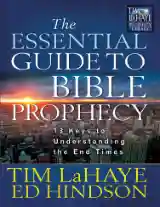
"From Daniel to Doomsday" by John Hagee explores the prophecies in the book of Daniel and how they relate to modern times. Hagee delves into biblical predictions about the end times and offers insights into how readers can navigate through uncertain times with faith and hope. The book serves as a guide for understanding biblical prophecy and finding peace in the midst of uncertainty.
Lee Strobel

to all who feel empty - invitation to the bored and disappointed
It was a small, flesh-colored growth on my cheek. The doctor said it was mild skin cancer and should be removed. But after looking at the biopsy, the hospital’s tumor board recommended a second procedure to remove more skin, to be sure they got it all. That’s when my fear started. What if the cancer has already spread? What if this is more serious than everyone is saying? What if it’s too late? At times like this, it’s tempting to seek comfort in being positive (“It will be okay”), in percentages (“Most of these cancers are nothing”), or in self-pity (“Why is this happening to me?”). But God invites us to a far better comfort: Come, everyone who thirsts, come to the waters; and he who has no money, come, buy and eat! Come, buy wine and milk. without money and without price. Why do you spend your money for that which is not bread, and your labor for that which does not satisfy? Listen diligently to me, and eat what is good, and delight yourselves in rich food. Incline your ear, and come to me; hear, that your soul may live; and I will make with you an everlasting covenant, my steadfast, sure love for David. (Isaiah 55:1–3) This invitation is for everyone who is emotionally thirsty and hungry, longing for peace and joy. It’s for everyone who feels bored, insecure, jealous, frustrated, impatient, disappointed, fearful. Fearful . That described me. So, God’s invitation was for me . “God satisfies us fully and lastingly by giving us himself.” And what does this invitation promise? God promises to satisfy and delight our hearts (Isaiah 55:2) with wine and milk and rich food (Isaiah 55:1). How does he do this? Not by giving us earthly comforts, since at best those give temporary, partial satisfaction. No: God satisfies us fully and lastingly by giving us himself . We can see this by comparing the beginning of the passage, where God says, “Come to the waters ,” with the end, where he says, “Come to me .” What God gives us is himself . Sit and Eat The prophet Hosea puts it this way: “Let us know; let us press on to know the Lord; his going out is sure as the dawn; he will come to us as the showers, as the spring rains that water the earth” (Hosea 6:3). We are dry, parched land, in need of rain. And God promises that when we press on to know him, he himself will come to us with the refreshing rain of his presence. And he says this promise is as certain as the sun rising tomorrow. So, when we are emotionally hungry and thirsty, it’s like God is inviting us to a banquet table piled high with sizzling chicken fajitas and hot, cheesy lasagna and apple pie à la mode and fresh-baked chocolate chip cookies and water and wine and milk. All we need to do is come, sit down, and eat. But if that’s true, then why are we ever emotionally hungry and thirsty? Why do we get bored, or jealous, or bitter, or insecure? And why was I feeling such fear? Why Such Fear? We often blame our circumstances. We think we lack joy and peace because we didn’t get the promotion, or because our children aren’t behaving, or because we’re stuck in traffic, or in my case, because I have skin cancer. But God says there’s a deeper reason. It’s that we’ve ignored his invitation, and taken our hunger to what is not bread (Isaiah 55:2). We’ve turned from God’s table to the world’s table, which at best has an occasional rotten, mushy banana, a day-old bowl of half-eaten oatmeal, or a glass of murky water. That’s why I was fearful. I was ignoring God’s table, with its unshakable promises of everlasting joy, and was trusting the world’s table, whose promises were being threatened by skin cancer. And that’s why we are: Bored: We are ignoring God’s table and looking for something exciting at the world’s table. But nothing looks promising. Grumpy: We were hoping something on the world’s table would satisfy us, but when we sat down, it ended up being a dry, half-eaten cracker. Disappointed: We’ve been trusting that something on the world’s table will satisfy us, but either it was taken away, or it didn’t end up being what we hoped for. Jealous: We’re sitting at the world’s table but are not satisfied with what we’ve been served, and we think that what someone else was served would make us happier. Whenever we feel emotional hunger and thirst, we do well to ask if we’ve moved from God’s guaranteed, all-satisfying table to the world’s uncertain, disappointing table. Buy Without Money But turning from God’s table not only leaves us hungry and thirsty. It also makes us guilty before God, because eating from the world’s table is sin. And sin requires a payment of punishment, which is why God says his food must be bought (Isaiah 55:1). But God also says that we have no money (Isaiah 55:1), because we can’t make up for our sin by being good enough. “When we press on to know God, he himself will come to us with the refreshing rain of his presence.” So, if we are going to enjoy God’s table, someone else must make the payment. And two chapters earlier we read that this is what the Messiah would do: “He was pierced for our transgressions; he was crushed for our iniquities” (Isaiah 53:5). Though we have no money, we can buy this food by trusting Jesus, who pays the penalty of our punishment by dying on the cross. God has given us the invitation, and he has paid the price. So, how do we get up from the world’s table and enjoy God’s table? Come to the Table Here are the steps God used to help me. First, I confessed my sin to God — that I had turned from his table to the world’s table, and I was fearful because the world’s promise of earthly comforts and long life was threatened by my skin cancer (1 John 1:9). Second, I admitted to God that I could not pay for my sins, and I thanked and praised him that Jesus fully paid for them on the cross (1 Peter 3:18). Third, I asked God to help me taste and experience how superior his banquet is to the world’s table (Psalm 43:3–4). Fourth, I set my heart on a few Scriptures that describe God’s banquet (John 8:31–32): Pleasure in him now and forever (Psalm 16:11). Joy unspeakable and full of glory (1 Peter 1:8). Life in Christ now, and gain when I die (Philippians 1:21). A heavenly, eternal dwelling made by God himself (2 Corinthians 5:1–4). Fifth, I prayed over these Scriptures, asking God to help me feel their reality and glory, until I experienced the Spirit changing and satisfying my heart (John 6:35). And that’s what he did. Over the next twenty minutes, I felt my faith strengthen and my fear disappear, as God used his word to give me a taste of his all-satisfying glory, which nothing, not even death, can threaten. Are you sitting at the world’s table, hungry and disappointed? If so, God is inviting you to his piled-high banquet table. He’s paid for the ticket, and is holding a seat for you. Enjoy the feast.