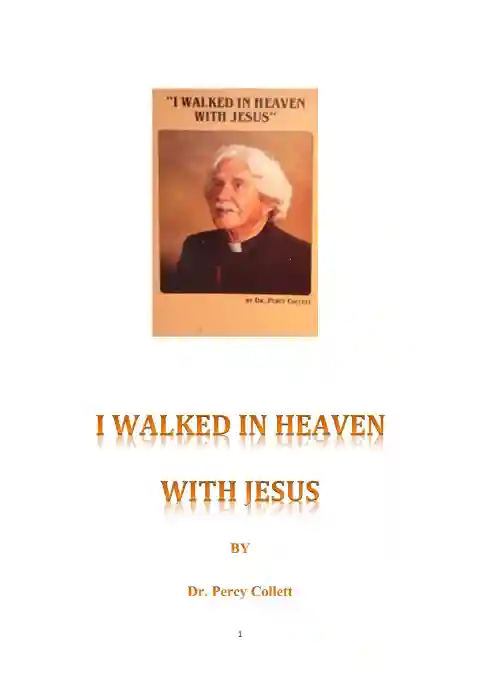

I Walked In Heaven With Jesus Order Printed Copy
- Author: Dr. Percy Collett
- Size: 9.22MB | 168 pages
- |
Others like i walked in heaven with jesus Features >>
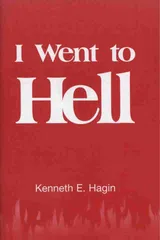
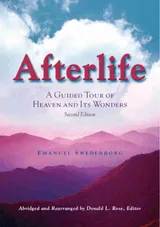
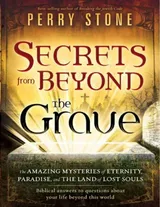
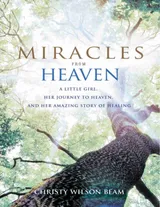

About the Book
"I WALKED IN HEAVEN WITH JESUS" is a personal account by Dr. Percy Collett detailing his near-death experience and the profound spiritual journey he undertook when he walked in heaven with Jesus. The book describes his encounters with angels, the beauty of heaven, and the messages he received from Jesus during his time in the afterlife. Dr. Collett's experience offers a glimpse into the awe-inspiring realms of heaven and the transformative power of faith.
Brother Yun
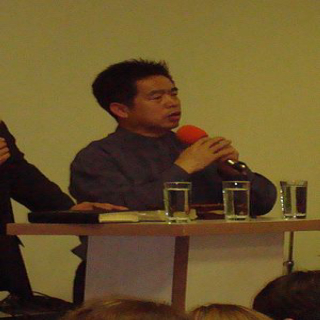 Brother Yun was born in February 1958 in the province of Henan. His original name was Liu Zhenying (刘振营).
Brother Yun became a believer at the age of 16. Soon after he became a Christian, God called him to be His witness in the west and south. As he was obedient to the calling, he eventually became a witness of Christ not just in the western and southern parts of China, but throughout China and in the nations beyond China as well.
Brother Yun was born into a poor family. His family’s financial situation took a turn for the worst when his father became ill with an asthmatic condition that led to lung cancer eventually. His life got worse when he became a Christian as he suffered severe trials and persecutions. In the midst of suffering for the Lord, however, he experienced miracle after miracle, which helped to strengthen his faith.
HOW BROTHER YUN BECAME A BELIEVER
In 1974, Brother Yun’s father became ill with lung cancer. His mother, who had been a Christian for many years but had become spiritually cold after the expulsion of Western missionaries during the Cultural Revolution, felt a deep sense of desperation because if her husband had died then, it would leave the family in dire straits. She thought of committing suicide. One evening, as she was lying in bed, she heard a voice saying to her that Jesus loved her. In tears and in repentance, she rededicated her life to God and gathered her family to pray for her husband. The next morning, her husband got better and as a result, everyone in the family, including Brother Yun, put their faith in God.
HIS HUNGER FOR THE WORD OF GOD
Brother Yun was 16 when he became a Christian. Soon after, he started hungering for the Word of God. However, his family did not have a Bible. He began asking his mother who Jesus was. In response, his mother would tell him that Jesus was the Son of God and that He had recorded all His teachings in the Bible.
Brother Yun wanted a Bible and his mother recalled that there was a man in another village who had one. So she brought him to see the man. The man was too afraid to show Brother Yun his Bible. So he suggested to the latter that he could pray and ask God for one.
Brother Yun decided to fast and pray for a Bible. For the next 100 days, he ate only one bowl of steamed rice everyday. One day at 4am, after fasting for 100 days, he saw a vision. In the vision, he was walking up a steep hill and trying to push a heavy cart at the same time. He was heading towards a village where he intended to beg for food for his family. He struggled greatly as he continued his climb uphill. The cart was about to roll back and fall on him when he saw three men walking down the hill in the opposite direction. One of them was a kind old man and he was pulling a large cart of fresh bread. When the old man saw Brother Yun, he asked him if he was hungry. He said ‘yes’ and started crying. The old man then took a red bag of bread from his cart and asked his two servants to give it to Brother Yun. As he put the bread into his mouth, it immediately turned into a Bible.
Upon waking up, Brother Yun began to search for the Bible. His search, however, was in vain. All of a sudden, he heard a faint knock on the door and someone was calling out his name. Immediately, he recognised the voice – it was the same voice he had heard in the vision. He quickly opened the door and standing before him were the two servants he had seen in the vision. One of them held a red bag in his hand. In this red bag was a Bible.
It was later that Brother Yun found out the names of the two men. One was Brother Wang while the other was Brother Sung. They were sent by an evangelist to give Brother Yun the Bible. The evangelist, who had suffered terribly during the Cultural Revolution and had nearly died while being tortured, had received a vision from God. In the vision, God showed him Brother Yun’s house and the location of his village. He was asked to give his Bible to Brother Yun. However, he did not obey God until three months later.
Brother Yun began to devour the Word of God. Even though he could hardly read, this did not deter him at all. When he had finished reading the entire Bible, he started to memorise one chapter per day. In 28 days, he had memorised the Gospel of Matthew. Then he went on to memorise the Book of Acts and so forth.
OBEDIENT TO THE CALL OF GOD
One morning at 4am, Brother Yun had a dream. In the dream, God asked him to be His witness in the west and south. In the same dream, he saw a young man from the south coming to his house. And so at daybreak, he told his mother to expect the young man’s visit and to ask him to wait for him. Then he sat off to a village he had never heard of in the west. The people in this village had been praying for him to visit as they had heard about how he had prayed for a Bible and got it.
When the meeting at the village concluded and Brother Yun got ready to leave, the villagers refused to let him go. So he stayed on and recited to them the first twelve chapters from the Book of Acts. After that, the villagers finally let him go. From the village to his house, it could take up to 2 hours to walk. Because he did not want to make the young man from the south wait too long, he decided to run home. All of a sudden, he found himself entering his village without any apparent time lapse. What should have taken him a few hours took him just a few moments. It was as if God had supernaturally transported him back to his village.
PERSECUTIONS AND MIRACLES IN HIS LIFE
Brother Yun was arrested by security police numerous times and was thrown into prison three times for sharing the gospel in communist China.
When Brother Yun was arrested the first time, he was only 17 years old. At that time, he was ministering at a meeting far away from home. After he was caught, he was thrown into a freezing cold prison cell. There was no heat in the cell and his winter coat had been thrown into the snow by the security police who had caught him. He began to sing Psalm 150 aloud. The more he sang, the more he was filled with joy. Gradually, his frozen hands and feet regained feeling and he no longer felt cold.
During his first imprisonment in Nanyang, Brother Yun felt that God wanted him to fast without food and water until he could see his family again. This fast lasted 74 days, which was humanly impossible but yet was made possible because he chose to obey God.
During those times when Brother Yun was in the hands of government officials, he was repeatedly beaten and tortured with electric batons. He was also kicked and trampled upon. Furthermore, he had needles being jabbed underneath his fingernails.
Once, Brother Yun was paraded through the streets with a red cross tied behind him for half a day. When night fell, he was locked and left alone inside a large interrogation room. The wooden cross was taken off his back but his hands were still tied up. All of a sudden, the rope that was used to tie his hands snapped by itself. He immediately walked out of the interrogation room and walked through the courtyard in the midst of onlookers. Nobody stopped him or said anything to him. It was as if God had blinded their eyes and they did not even recognise who he was.
Because the front gate was locked, the only way Brother Yun could get out was to climb over an eight-foot high cement wall. He climbed up as much as he could manage. Then he looked over the wall and saw that there was a ten-foot wide open tank directly below. Suddenly, he felt as if someone had lifted him up and thrown him over. He was thrown so far that he did not land in the tank.
Brother Yun’s 3rd imprisonment was a very dark period in his life as the prison guards in the maximum security prison were determined to prevent his escape. So they beat his legs to cripple him permanently. They had him beaten up everyday, even in his crippled state. One day, God instructed him to escape from the prison. This was confirmed by a brother-in-Christ. Thus, on May 5, 1997, he miraculously walked past dozens of prison guards and out of the maximum security prison. It was as if he had become invisible to the guards. He did not realise that his legs had been miraculously healed until later.
Throughout all the horrendous and painful experiences that Brother Yun went through, the word of the Lord kept coming to him, encouraging him and strengthening his faith.
BROTHER YUN’S MINISTRY
Brother Yun eventually escaped China and sought asylum in Germany in 2001. Since then, he has been continuing his ministry from there and has spoken to congregations internationally. He has founded “Back to Jerusalem” Movement and has been sending missionaries out from China to share the gospel in the least-reached nations.
Brother Yun’s life and ministry have impacted many lives. Thousands of people have become Christians through his ministry. It is thus inevitable that fellow Christians have allowed themselves to be used as instruments of wickedness to attack his reputation. The co-author of The Heavenly Man, Paul Hattaway has aptly put it this way, “Many of the great Christian leaders throughout history have been the subject of brutal attacks from other Christians.”
AFTERTHOUGHT
Brother Yun’s childlike faith and his prompt obedience to God’s call are exemplary. It is incredible that he has remained faithful to God despite the tremendous suffering and persecutions he has gone through.
Brother Yun was born in February 1958 in the province of Henan. His original name was Liu Zhenying (刘振营).
Brother Yun became a believer at the age of 16. Soon after he became a Christian, God called him to be His witness in the west and south. As he was obedient to the calling, he eventually became a witness of Christ not just in the western and southern parts of China, but throughout China and in the nations beyond China as well.
Brother Yun was born into a poor family. His family’s financial situation took a turn for the worst when his father became ill with an asthmatic condition that led to lung cancer eventually. His life got worse when he became a Christian as he suffered severe trials and persecutions. In the midst of suffering for the Lord, however, he experienced miracle after miracle, which helped to strengthen his faith.
HOW BROTHER YUN BECAME A BELIEVER
In 1974, Brother Yun’s father became ill with lung cancer. His mother, who had been a Christian for many years but had become spiritually cold after the expulsion of Western missionaries during the Cultural Revolution, felt a deep sense of desperation because if her husband had died then, it would leave the family in dire straits. She thought of committing suicide. One evening, as she was lying in bed, she heard a voice saying to her that Jesus loved her. In tears and in repentance, she rededicated her life to God and gathered her family to pray for her husband. The next morning, her husband got better and as a result, everyone in the family, including Brother Yun, put their faith in God.
HIS HUNGER FOR THE WORD OF GOD
Brother Yun was 16 when he became a Christian. Soon after, he started hungering for the Word of God. However, his family did not have a Bible. He began asking his mother who Jesus was. In response, his mother would tell him that Jesus was the Son of God and that He had recorded all His teachings in the Bible.
Brother Yun wanted a Bible and his mother recalled that there was a man in another village who had one. So she brought him to see the man. The man was too afraid to show Brother Yun his Bible. So he suggested to the latter that he could pray and ask God for one.
Brother Yun decided to fast and pray for a Bible. For the next 100 days, he ate only one bowl of steamed rice everyday. One day at 4am, after fasting for 100 days, he saw a vision. In the vision, he was walking up a steep hill and trying to push a heavy cart at the same time. He was heading towards a village where he intended to beg for food for his family. He struggled greatly as he continued his climb uphill. The cart was about to roll back and fall on him when he saw three men walking down the hill in the opposite direction. One of them was a kind old man and he was pulling a large cart of fresh bread. When the old man saw Brother Yun, he asked him if he was hungry. He said ‘yes’ and started crying. The old man then took a red bag of bread from his cart and asked his two servants to give it to Brother Yun. As he put the bread into his mouth, it immediately turned into a Bible.
Upon waking up, Brother Yun began to search for the Bible. His search, however, was in vain. All of a sudden, he heard a faint knock on the door and someone was calling out his name. Immediately, he recognised the voice – it was the same voice he had heard in the vision. He quickly opened the door and standing before him were the two servants he had seen in the vision. One of them held a red bag in his hand. In this red bag was a Bible.
It was later that Brother Yun found out the names of the two men. One was Brother Wang while the other was Brother Sung. They were sent by an evangelist to give Brother Yun the Bible. The evangelist, who had suffered terribly during the Cultural Revolution and had nearly died while being tortured, had received a vision from God. In the vision, God showed him Brother Yun’s house and the location of his village. He was asked to give his Bible to Brother Yun. However, he did not obey God until three months later.
Brother Yun began to devour the Word of God. Even though he could hardly read, this did not deter him at all. When he had finished reading the entire Bible, he started to memorise one chapter per day. In 28 days, he had memorised the Gospel of Matthew. Then he went on to memorise the Book of Acts and so forth.
OBEDIENT TO THE CALL OF GOD
One morning at 4am, Brother Yun had a dream. In the dream, God asked him to be His witness in the west and south. In the same dream, he saw a young man from the south coming to his house. And so at daybreak, he told his mother to expect the young man’s visit and to ask him to wait for him. Then he sat off to a village he had never heard of in the west. The people in this village had been praying for him to visit as they had heard about how he had prayed for a Bible and got it.
When the meeting at the village concluded and Brother Yun got ready to leave, the villagers refused to let him go. So he stayed on and recited to them the first twelve chapters from the Book of Acts. After that, the villagers finally let him go. From the village to his house, it could take up to 2 hours to walk. Because he did not want to make the young man from the south wait too long, he decided to run home. All of a sudden, he found himself entering his village without any apparent time lapse. What should have taken him a few hours took him just a few moments. It was as if God had supernaturally transported him back to his village.
PERSECUTIONS AND MIRACLES IN HIS LIFE
Brother Yun was arrested by security police numerous times and was thrown into prison three times for sharing the gospel in communist China.
When Brother Yun was arrested the first time, he was only 17 years old. At that time, he was ministering at a meeting far away from home. After he was caught, he was thrown into a freezing cold prison cell. There was no heat in the cell and his winter coat had been thrown into the snow by the security police who had caught him. He began to sing Psalm 150 aloud. The more he sang, the more he was filled with joy. Gradually, his frozen hands and feet regained feeling and he no longer felt cold.
During his first imprisonment in Nanyang, Brother Yun felt that God wanted him to fast without food and water until he could see his family again. This fast lasted 74 days, which was humanly impossible but yet was made possible because he chose to obey God.
During those times when Brother Yun was in the hands of government officials, he was repeatedly beaten and tortured with electric batons. He was also kicked and trampled upon. Furthermore, he had needles being jabbed underneath his fingernails.
Once, Brother Yun was paraded through the streets with a red cross tied behind him for half a day. When night fell, he was locked and left alone inside a large interrogation room. The wooden cross was taken off his back but his hands were still tied up. All of a sudden, the rope that was used to tie his hands snapped by itself. He immediately walked out of the interrogation room and walked through the courtyard in the midst of onlookers. Nobody stopped him or said anything to him. It was as if God had blinded their eyes and they did not even recognise who he was.
Because the front gate was locked, the only way Brother Yun could get out was to climb over an eight-foot high cement wall. He climbed up as much as he could manage. Then he looked over the wall and saw that there was a ten-foot wide open tank directly below. Suddenly, he felt as if someone had lifted him up and thrown him over. He was thrown so far that he did not land in the tank.
Brother Yun’s 3rd imprisonment was a very dark period in his life as the prison guards in the maximum security prison were determined to prevent his escape. So they beat his legs to cripple him permanently. They had him beaten up everyday, even in his crippled state. One day, God instructed him to escape from the prison. This was confirmed by a brother-in-Christ. Thus, on May 5, 1997, he miraculously walked past dozens of prison guards and out of the maximum security prison. It was as if he had become invisible to the guards. He did not realise that his legs had been miraculously healed until later.
Throughout all the horrendous and painful experiences that Brother Yun went through, the word of the Lord kept coming to him, encouraging him and strengthening his faith.
BROTHER YUN’S MINISTRY
Brother Yun eventually escaped China and sought asylum in Germany in 2001. Since then, he has been continuing his ministry from there and has spoken to congregations internationally. He has founded “Back to Jerusalem” Movement and has been sending missionaries out from China to share the gospel in the least-reached nations.
Brother Yun’s life and ministry have impacted many lives. Thousands of people have become Christians through his ministry. It is thus inevitable that fellow Christians have allowed themselves to be used as instruments of wickedness to attack his reputation. The co-author of The Heavenly Man, Paul Hattaway has aptly put it this way, “Many of the great Christian leaders throughout history have been the subject of brutal attacks from other Christians.”
AFTERTHOUGHT
Brother Yun’s childlike faith and his prompt obedience to God’s call are exemplary. It is incredible that he has remained faithful to God despite the tremendous suffering and persecutions he has gone through.
witnessing with gospel tracts
Gospel tracts and pamphlets are very important tools in evangelism. The printing press was a wonderful gift from God and has been used greatly for the glory of Jesus Christ. The printed page can greatly multiply our efforts in the service of the Lord and tracts can oftentimes go places where we cannot go. Be Careful About the Message The first consideration in the use of Gospel tracts is to be certain that the content is scriptural. There are three problems with many gospel tracts: 1. Many tracts do not contain a clear and biblical presentation of the gospel. Many refer to salvation in an unscriptural and confusing manner, such as "asking Jesus into my heart" or "giving my life to Christ." Salvation is not to give one's life to Christ, but is to trust the finished atonement of Christ. Nowhere in the New Testament do we see the Lord Jesus or the Apostles telling people to give their lives to Christ or to ask Jesus into their hearts. We need to follow the Bible very carefully in the terminology we use so that people are not confused and so they do not make false professions of faith. 2. The second serious drawback is that most tracts do not deal with repentance. Most don't even mention the word or even hint at the concept, yet the Lord Jesus Christ and His apostles preached repentance plainly and demanded it from those who would be saved. Salvation only comes by "repentance toward God, and faith toward our Lord Jesus Christ" (Acts 20:21). Any presentation of the gospel should include the fact that God "now commandeth all men every where to repent" (Acts 17:30). Whether or not the word "repentance" is used in a gospel tract, the idea should be. What is repentance? It is a turning, a change of direction (1 Thess. 1:9). When I receive Jesus Christ as my Lord and Savior, I am turning my back to the old life. 3. Another problem is that many simply do not give enough information. Large numbers of people in North America today are as ignorant of the true God of the Bible and of the basics of the Gospel of the Lord Jesus Christ as any Hindu in darkest Asia. It is crucial that we begin with the basics with these people, and that we explain biblical terms thoroughly, otherwise, when they hear terms such as "saved," "believe," "Christ," "God," "sin," they won't have the proper idea of what we are talking about, and any "profession" they make will be empty. The following are a few examples of gospel tracts that include repentance: "The Bridge to Eternal Life." This full-color pamphlet is also illustrated. [Detroit Baptist Theological Seminary, Majestic Media, 810-725-5800] "Have You Considered This?" [Dennis Costella, Fundamental Evangelistic Association, 1476 W. Herndon, Suite 104 Fresno, CA 93711, 559-438-0080. [Also available online at https://www.feasite.org/Tracts/fbconsdr.htm] "I'm a Pretty Good Person" is one of the many tracts published by the Fellowship Tract League. It is a good tract to show people that their good works and religion won't take them to heaven. [available from Sermon and Song Ministries, P.O. Box 109, Ravenna, OH 44266, www.sermonandsong.org; also available from Fellowship Tract League, P.O. Box 164, Lebanon, OH 45036, 513-494-1075, http://www.fellowshiptractleague.org/] "The Little Red Book." This 12-page pamphlet is illustrated and has been effective. [Little Red Book, P.O. Box 341, N. Greece, NY 14515 or P.O. Box 7195, Greensboro, NC 27417, LRB@frontiernet.net, 585-225-0715] "The Most Important Thing You Must Consider." This tract is strong on God's holiness and just punishment of sin and the necessity of repentance. [Faith Baptist Church, 105-01 37th Avenue, Corona, NY 11368 718-457-5651, http://www.studygodsword.com/fbcpress/tracts.html] "What Is Your Life?" This pamphlet is illustrated. [Operation Somebody Cares, 1131 Brentwood Drive, Collinsville, VA 24078, 276-647-5328, http://www.operationsomebodycares.com] "What Must I Do to Be Saved" by the late Evangelist John R. Rice. [Sword of the Lord, Box 1099, Murfreesboro, TN 37130. 800-247-9673, booksales@swordofthelord.com] "Why Should I Let You into My Heaven?" [Dean Myers, deanmyers2@juno.com] Liberty Baptist Church in Greenville, Michigan, has a wide range of helpful Gospel tracts. [Pastor Mike Austin, Liberty Baptist Church, 11845 W. Carson City Road, Greenville, MI 48838. 616-754-7151, pastor@libertygospeltracts.com, http://www.libertygospeltracts.com/] Mercy and Truth Ministries has some interesting small tracts. One is titled "You Can Get to Heaven from ---------" and an edition can be obtained for each state in the U.S. [Mercy and Truth Ministries, Lawrence, KS 66049, 875-887-2203] Pilgrim Fundamental Baptist Press publishes a tract that is designed to leave with a tip after a meal. On the outside it says, "Thank you and here are 2 tips for you!" On the inside it states that Tip #1 is a monetary token of appreciation for your service, and Tip #2 is a Gospel tract that explains how to be saved. It is large enough to hold a standard tract. [Pilgrim Fundamental Baptist Press, P.O. Box 1832, Elkton, MD 21922] Things to Remember When Passing Out Tracts Giving out tracts is something every born again believer can do, young or old. 1. Remember that it is each believer's responsibility to give out the gospel (see Matt. 28:19-20; Mk. 16:15; Luke 24:45-48; Acts 1:8; 2 Cor. 5:17-21; Phil. 2:16; 2 Tim. 4:5). 2. Remember that by giving out the gospel you are offering the greatest gift in the world. When we give out the gospel we are offering dead people life; we are offering poor people riches; we are offering sick people healing; we are offering lost people salvation. 3. It is wise to read the tracts first yourself before giving them out to others. This way you will know exactly what it says and you can refer to it when you talk to people. Also, by first reading tracts before giving them away you can see if the tract contains something that is not true or leaves out something important such as repentance. 4. Make a commitment to give out so many tracts each week. 5. Always be pleasant and polite. Remember that you are a complete stranger to the people you are approaching. Ask kindly, "May I give you something special to read?" or "I have some Good News for You" or "May I give you something that has been a blessing in my own life?" If they are busy ask them to put it in their pocket and read at home. 6. Keep in mind that the goal is not merely to give out tracts but to find opportunities to witness to people about the Lord Jesus Christ with the goal of leading them to salvation. Use the tracts to open the conversation, and when you find someone who is interested take the time to talk further with him and see if he or she is willing to meet again. We must remember that it is not enough to give out tracts; the objective is to see people come to Christ and baptized and discipled (Matt. 28:19-20). 7. Don't get upset or discouraged if someone says something against Jesus and the Bible or they mock you and what you are doing. "For unto you it is given in the behalf of Christ, not only to believe on him, but also to suffer for his sake" (Phil. 1:29; see also Matt. 5:11-12; Jn. 15:20; Luke 9:26). 8. Give out tracts to those who look like they might be interested and to those who don't. We cannot look upon the hearts of men and we cannot know who God might be dealing with. Jesus said preach the gospel to every creature (Mk. 16:15). "In the morning sow thy seed, and in the evening withhold not thine hand: for thou knowest not whether shall prosper, either this or that, or whether they both shall be alike good" (Ecc. 11:6). Ecclesiastes 11:1 says, "Cast thy bread upon the waters: for thou shalt find it after many days." This refers to the custom of casting seed on the marshy ground after a river such as the Nile had overflowed its banks, trusting that the seed will take root and bring forth a crop. "When the waters receded, the grain in the alluvial soil sprang up. 'Waters' express the seemingly hopeless character of the recipients of the charity; but it shall prove at last to have been not thrown away" (Jamieson, Fausset, Brown). 9. Be sure there is a name and address stamped on each tract so that if someone is interested they have a contact for further help. A gospel correspondence course is a good way to follow up on tract distribution. See the section on correspondence courses in our book "Ideas for Evangelism" for suggestions. This seems to be more effective in some places than others, but we have personally seen much fruit by this means. 10. One of the most important things about tract distribution is faithfulness and persistence. Some may be thrown away but others may find them. We have a man in our church who first got interested in Christ by reading a tract that was given to his friend. This has happened many times. God wants faithful workers. Don't get discouraged if nothing seems to be happening. We must do this work by faith, not by sight. Keep your eyes on the Lord and trust Him to accomplish His will and to give fruit and just continue to give out the gospel. "But this I say, He which soweth sparingly shall reap also sparingly; and he which soweth bountifully shall reap also bountifully" (2 Cor. 9:6). "Moreover it is required in stewards, that a man be found faithful" (1 Cor. 4:2). 11. Remember that our real enemy in tract distribution is not people, but the devil. He is the god of this world who is blinding the minds of the unbelievers (2 Cor. 4:4). Thus we must have on the whole armor of God as we go about this important work (Eph. 6:11-12). 12. Pray much for your tract distribution, both before and after. Pray that God will open the eyes of the people so that they desire to know Him and that they will read and understand the tracts. Updated July 21, 2008. First published January 15, 1998 by David Cloud, Fundamental Baptist Information Service, P.O. Box 610368, Port Huron, MI 48061. Used with permission.