
GIP Library icon

LOG IN TO REVIEW
About the Book


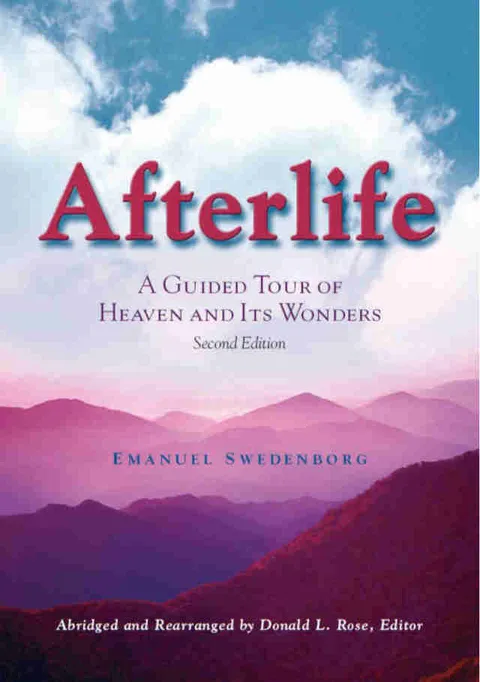
"Afterlife" by Emanuel S. is a thought-provoking novel that explores the idea of life after death through the eyes of the protagonist, Diana. She navigates the afterlife, where she must confront her past actions and make amends before she can move on. The book delves into themes of redemption, forgiveness, and the power of love in overcoming life's challenges.

Richard Wurmbrand

Richard Wurmbrand Richard Wurmbrand (1909 – 2001) was born in 1909 in Bucharist in the country of Romania. He was the youngest of four boys born in a Jewish family. He lived with his family in Istanbul for a short time. When he was 9, his father died and the Wurmbrands returned to Romania when he was 15. He was sent to study Marxism in Moscow. When he returned, he was already a Comintern Agent. A Comintern Agent was a member of the Communist International Organisation which intended to fight: Like other Romanian Communists, he was arrested and released several times. He married Sabina Oster on 26th October 1936. Wurmbrand and his wife went to live in an isolated village high in the mountains of Romania. But, as a athiest there was no peace to be found in his heart. So one day, when his heart was in a state of turmoil he cried out: “God, if perchance you exist, it is Your duty to reveal yourself to me.” Shorthly after he prayed that prayer, he met a German carpenter in his village who gave him a bible. The carpenter and his wife had been praying earnestly that God would bring a Jew to his village, because the carpenter wanted to bring a Jew to Christ, because Jesus was a Jew. So the carpenter gave him a Bible to read. Wurmbrand said, when he opened that Bible he could not stop weeping. He had read the Bible before but it had meant nothing to him. This time when he opened the Bible he could barely read it because of the copious amount of tears that filled his eyes. Sometime later he found out the carpenter and his wife had been praying earnestly for him. Wurnbrand said that every word that he read were like flames of love burning in his heart. He realized for the first ime in his life that there was a God of love who loved him, even though he had beeen living a bad life and had nurtured a hated towards the concept of a ‘loving’ God. The Power of Intercessory Prayer But now for the first time he knew that Jesus had suffered at the cross of Calvary for his sins and he was loved and accepted of God. Richard and his wife became believers in Jesus the Messiah. All the hatred that he had formerly held toward God was washed away under the blood of Christ and Richard and his wife Sabrina were born of the Spirit. That is the power of intercessory prayer! Richard prepared himself for the ministry. He was ordained as an Anglican minister in 1938 at the start of world war 2. Both Richard and his wife were arrested several times. They were beaten and hauled before a Nazi court. They suffered under the Nazi regime throughout world war 2. But Richard said, it was only a taste of what was to come. Russian Troups Enter Romania Towards the end of world war 2, Richard Wurmbrand became a Lutheran and he pastored a Lutheran church in Romania. But, the same year, 1 million Russian troups entered and occupied the entire territory of Romania. Within a very short space of time the Communists took over Romania. The reign of terror began. Out of fear 4,000 priests, pastors & ministers became Communists overnight. They confessed their allegience and loyalty to the new Communist Government because they all feared for their survival. Romania’s Resistance Harsh persecutions of any enemies of the Communist government started with the Soviet occupation in 1945. The Soviet army behaved as an occupation force (although theoretically it was an ally against Nazi Germany), and could arrest virtually anyone at will. Shortly after Soviet occupation, ethnic Germans (who were Romanian citizens and had been living as a community in Romania for 800 years) were deported to the Donbas coal mines. Despite the King’s protest, who pointed out that this was against international law, an estimated 70,000 men and women were forced to leave their homes, starting in January 1945, before the war had even ended. They were loaded in cattle cars and put to work in the Soviet mines for up to ten years as “reparations”, where about one in five died from disease, accidents and malnutrition. Once the Communist government became more entrenched, the number of arrests increased. All strata of society were involved, but particularly targeted were the pre-war elites, such as intellectuals, clerics, teachers, former politicians (even if they had left-leaning views) and anybody who could potentially form the nucleus of anti-Communist resistance. The existing prisons were filled with political prisoners, and a new system of forced labor camps and prisons was created, modeled after the Soviet Gulag. Some of the most notorious prisons included Sighet, Gherla, Piteşti and Aiud, and forced labor camps were set up at lead mines and in the Danube Delta. Underground Church Richard and his wife knew that Christianity and Communism were totally opposed to each other. They knew that a true follower of Christ cannot compromise. So they created an “Underground Church” movement to preach the pure gospel of Christ and to reach out to the unsaved people of Romania and secondly to reach out secretly to the Russian soldiers. They secretly printed thousands of Bibles and Christian literature and distributed it to the Russian soldiers. Many of the Russian soldiers were convicted and they gave their life to Christ. So the underground church grew. But, in 1948 the Secret Police arrested Wurmbrand and he was placed in solitary confinement for 3 years. He was then transferred to a group cell for the next five years. Whilst in prison he continued to win the other prisoners to Christ. After 8 years in prison he was released and he immediately resumed his work with the undergound church. A few years later, 1959, he was arrested again and was sentenced to 25 years in prison. However, after spending 5 years in prison an organisation called the Christian Alliance negotiated with the Communist Government and they managed to secure his release for a fee of $10,000. They quickly got Richard Wurmbrand out of Romania and took him to England, then to the USA. In 1966, Richard was called to Washington DC to give his testimony before the United States Senate. He took off his shirt to show the Senate the scars and the wounds that he received whilst he served time in prison under the Communist Government in Romania. The newspapers throughout the USA, Europe and Asia carried his story all across the world. Christian leaders called him the “Voice of the Underground Church.” In 1967, with a $100 old typewriter and 500 names and addresses, Richard Wurmbrand published the first issue of THE VOICE OF THE MARTYRS newsletter. This newsletter was dedicated to communicating the testimonies and trails facing our brothers and sisters in restricted nations worldwide. Richard wrote: “The message I bring from the Underground Church is: “Don’t abandon us!” “Don’t forget us!” “Don’t write us off!” “Give us the tools we need! We will pay the price for using them!” “This is the message I have been charged to deliver to the free church.” Richard Wurmbrand and his wife travelled throughout the world to establish a network of over 30 offices. Their primary aim was to call Christians to shoulder their responsibility and to demonstrate the real substance of their faith by supporting their brothers and sisters in Christ who are being persecuted in heathen lands. The VOICE OF THE MARTYRS newsletter continues to inform, and lead to action, Christians throughout the free world of the plight of those who suffer for their faith in Jesus Christ. Throughout their network of offices around the world, the newsletter is published in over 30 different languages. To this cause, VOICE OF THE MARTYRS presses on, serving in nearly 40 countries around the world where our brothers and sisters are systematically persecuted. The writer of the Book of Hebrews brings a convicting word to the Christian church: ” Remember them that are in bonds, as bound with them; and them that suffer adversity, as being yourselves also in the body.” (Hebrews 13:3) We have a responsibility to those who suffer for their faith in Christ. Today, there is an estimated 200 million Christians in heathen nations who are suffering persecution for their faith in Christ.

Reformation Day: Jesus Came Knocking

Sometime around A.D. 95, Jesus, through the apostle John, came metaphorically knocking on the door of the church in Laodicea with an unsurpassed invitation: “Behold, I stand at the door and knock. If anyone hears my voice and opens the door, I will come in to him and eat with him, and he with me.” (Revelation 3:20) Pulled out of its context, this verse can sound like Jesus was calling softly and tenderly. Paintings inspired by this verse tend to portray a gentle Jesus mildly knocking. In reality, he was anything but soft and tender, gentle and mild. This invitation came on the heels of a bracing rebuke and serious warning. Jesus was pounding on the Laodicean’s door with the urgency of emergency: “I know your works: you are neither cold nor hot. Would that you were either cold or hot! So, because you are lukewarm, and neither hot nor cold, I will spit you out of my mouth. For you say, I am rich, I have prospered, and I need nothing, not realizing that you are wretched, pitiable, poor, blind, and naked. I counsel you to buy from me gold refined by fire, so that you may be rich, and white garments so that you may clothe yourself and the shame of your nakedness may not be seen, and salve to anoint your eyes, so that you may see. Those whom I love, I reprove and discipline, so be zealous and repent.” (Revelation 3:15–19) Jesus was pounding on the door of a church whose trust in an idol put them in grave spiritual danger. Their prosperous tepidness made him want to gag. But because he loved these lukewarm Christians, he lovingly disciplined them with hard words and called them to zealous repentance and reformation. When Jesus Came Knocking in Wittenberg On October 31, 1517, Jesus, through a little-known German priest/professor named Martin Luther, came quite literally knocking on the Wittenberg door of the Roman Catholic Church. Unrestrained corruption of power and wealth was a sin-cancer that had metastasized in the Roman Catholic Church and spread to many of her leaders and, through them, into her doctrines and practices. This cancer was killing the church. She too had grown very prosperous and yet did not realize how wretched, pitiable, poor, blind, and naked she had become. She had not listened sufficiently to Jesus’s authoritative voice in the Scriptures, or to the prophetic voices of warning that he had repeatedly sent to her. The Lord was at the end of his patience. But because he loved his sin-diseased church whose idolatry put her in grave spiritual danger, he sent an unlikely messenger from an unlikely town — so very like the Lord — with a hard word of loving discipline. Professor Luther walked up to the door of the Castle Church in Wittenberg with a hammer, a few nails, and a parchment listing 95 stinging indictments against the Roman Catholic Church. Unlike what the Laodiceans received, Luther’s theses were not inerrant Scripture. In fact, later Luther knew a number of them did not go far enough. But still, they were a largely biblical call to zealous repentance, as the first thesis so clearly captures: When our Lord and Master Jesus Christ said, ‘Repent’ (Matthew 4:17), he willed the entire life of believers to be one of repentance. In the pounding of Martin’s hammer, Jesus came knocking. And his knocking set off a chain-reaction that exploded into the Protestant Reformation, a gospel detonation that is still shaking the world nearly 500 years later. A Reformation Detonation As a result of October 31, 1517, hundreds of millions of Christians all over the world have submitted to God’s word as their highest authority (Sola Scriptura) and his teaching that salvation is a gift given by God’s grace alone (Sola Gratia) through the instrument of faith alone (Sola Fide) in the death and resurrection of their one savior and mediator, Jesus Christ (Sola Christus), so that all glory would always redound to the Triune God alone (Sola Deo Gloria). Wherever the church opened the door to Jesus, repentance and reformation was like chemotherapy to the cancer of spiritual corruption and recovered belief in the gospel of Christ spread spiritual health through much of Europe, then on to the New World, Asia, and Africa. It spawned massive evangelism, church planting, Bible translation, and frontier missions efforts. And in its wake it brought about all manner of social good: stronger families, honest commerce, economic empowerment for the poor, hospitals and clinics for the sick, education for the masses, encouragement for the scientific enterprise, democratic forms of civic government, and on and on. When we really comprehend the massive floodgate of mercy that was opened to us because Jesus came knocking in Wittenberg, Reformation Day (October 31st) becomes a thanksgiving day — a day for feasting or perhaps for fasting and prayer for another reformation detonation in our lives and churches and nations. Is Jesus Knocking on Your Door? In fact, given the prosperity that most of us in the West are experiencing and the arid spiritual climate most of us live in, it may be that the best way we can observe Reformation Day is to do some serious, prayerful soul-searching. Have we allowed a Laodicean type of acedia to settle in? We know that significant portions of the Western church are diseased with various heresies. Do they provoke us to earnest prayer? And we should ask ourselves, is Jesus knocking — or pounding — on our door? Are we hearing him? Are we ignoring or even resisting him? Are we tolerating and justifying any idols? One clear symptom of idolatry is spiritual lukewarmness. Tepidness typically does not feel like a grave danger. It can feel like a tolerable and even nearly pleasant malaise. But it is deadly. In this state we do not realize how wretched, pitiable, poor, blind, and naked we are. And because Jesus loves sinful people like us, when we fall into such a state he comes knocking — hard. We often do not recognize it as him at first because he can come in the form of a messenger, sometimes an unlikely one. And the pounding of their hard words can make us defensive and mad. But let us listen carefully and drop our guard. The hard words are painful, especially to our pride. But Jesus (or his imperfect messenger) is not being mean or condemning us. It is the loving discipline of our Savior to warn us. Lukewarmness means spiritual life-threatening idolatry. The cure is for us to “be zealous and repent” (Revelation 3:19). If Jesus is knocking on our door, let us welcome him in fully that we may eat with him and he with us (Revelation 3:20). Accepting his unsurpassed invitation to joy through repentance and reformation may be the greatest way to celebrate Reformation Day. Article by Jon Bloom

Feedback
Suggestionsuggestion box
x