
Others like angels - gods supernatural agents Features >>
Angels On Assignment As Told By Roland H. Buck
Secrets From Beyond The Grave
-160.webp)
Imagine The God Of Heaven (Near-Death Experiences, God’s Revelation, And The Love You’ve Always Wanted)
Epic Battles Of The Last Days
-160.webp)
Proof Of Heaven: A Neurosurgeon's Journey Into The Afterlife
The Prophetic Future Concealed In Israel’s Festivals
Dancing With Angels
Engaging The Revelatory Realm Of Heaven: Entrance To Hidden Mysteries
Heaven: Your Real Home
Unveiling The End Times In Our Time
About the Book
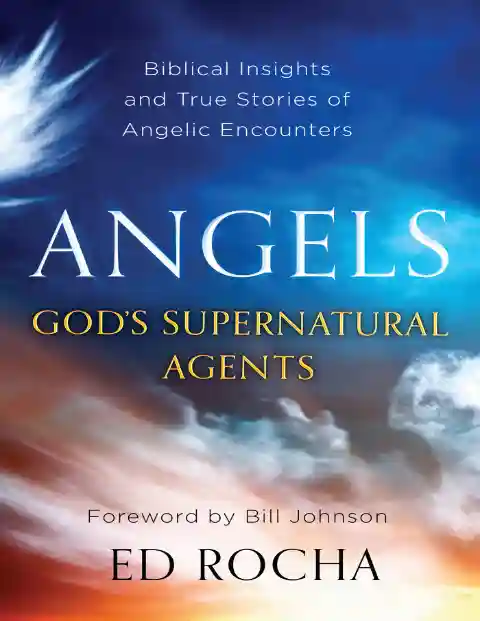
"Angels - God's Supernatural Agents" by Ed Rocha explores the role of angels in the spiritual realm and their interactions with humanity. The book discusses the different types of angels, their functions, and how they can assist believers in their daily lives. Rocha also provides practical insights on how to engage with angels and invite their support and protection. Ultimately, the book aims to deepen the reader's understanding of the supernatural realm and inspire a closer relationship with God's heavenly messengers.
John Alexander Dowie
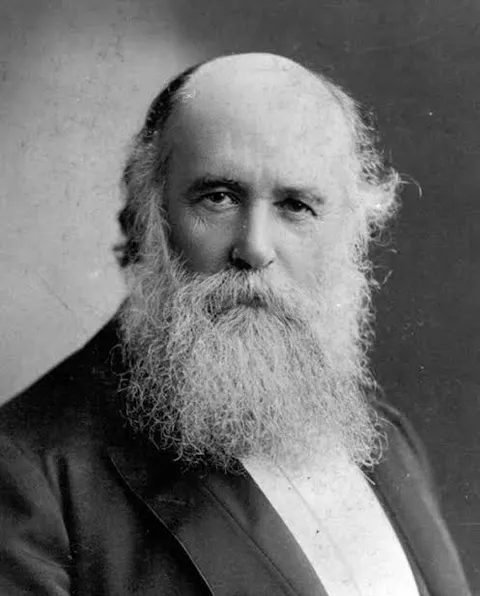 By John Alexander Dowie (1847 – 1907)
I sat in my study in the parsonage of the Congregational Church at Newtown, a suburb of the beautiful city of Sydney, Australia. My heart was very heavy, for I had visited the sick and dying beds of more than thirty of my flock, and I had cast the dust to its kindred dust into more than forty graves within a few weeks. Where, oh where, was He Who used to heal His suffering children? No prayer for healing seemed to reach His ear, and yet I knew His hand had not been shortened. Still it did not save from death even those for whom there was so much in life to live for God and others. Strong men, fathers, good citizens, and more than all, true Christians sickened with a putrid fever, suffered nameless agonies, passed into delirium, sometimes with convulsions, and then died.
Oh, what aching voids were left in many a widowed or orphaned heart. There were many homes where, one by one, the little children, the youths and the maidens lay stricken, and after a hard struggle with the foul disease, they too, lay cold and dead. It seemed sometimes as if I could almost hear the triumphant mockery of evil ringing in my ear whilst I spoke to the bereaved ones the words of Christian hope and consolation. Disease, the foul offspring of its father, Satan, and its mother Sin, was defiling and destroying the earthly temples of God’s children and there was no deliverance.
There I sat with sorrow-bowed head for my afflicted people, until the bitter tears came to relieve my burning heart. Then I prayed for some message, and oh, how I longed to hear some words from Him Who wept and sorrowed for the suffering long ago, a Man of Sorrows and Sympathies. The words of the Holy Ghost inspired In Acts 10:38, stood before me all radiant with light, revealing Satan as the Defiler, and Christ as the Healer. My tears were wiped away, my heart strong, I saw the way of healing, and the door thereto was opened wide, so I said, “God help me now to preach the Word to all the dying around, and tell them how Satan still defiles, and Jesus still delivers, for He is just the same today.”
A loud ring and several raps at the outer door, a rush of feet, and there at my door stood two panting messengers who said, “Oh, come at once, Mary is dying; come and pray. “With just a feeling as a shepherd has who hears that his sheep are being torn from the fold by a cruel wolf, I rushed from my house, ran without my hat down the street, and entered the room of the dying maiden. There she lay groaning and grinding her clenched teeth in the agony of the conflict with the destroyer. The white froth, mingled with her blood, oozing from her pale and distorted mouth. I looked at her and then my anger burned. “Oh,” I thought, “for some sharp sword of heavenly temper keen to slay this cruel foe who is strangling that lovely maiden like an invisible serpent, tightening his deadly coils for a final victory.”
In a strange way, It came to pass; I found the sword I needed was in my hands, and in my hand I hold it still and never will I lay It down. The doctor, a good Christian man, was quietly walking up and down the room, sharing the mother’s pain and grief. Presently he stood at my side and said, “Sir, are not God’s ways mysterious?” Instantly the sword was flashed in my hand, the Spirit’s sword, the Word of God. “God’s way?!” I said, pointing to the scene of conflict, “How dare you call that God’s way of bringing His children home from earth to Heaven? No sir, that is the devil’s work and it is time we called on Him Who came to destroy the work of the devil, to slay that deadly foul destroyer, and to save this child. Can you pray, Doctor, can you pray the prayer of faith that saves the sick?” At once, offended at my words, my friend was changed, and saying,” You are too much excited, sir, it is best to say ‘God’s will be done,’” and he left the room.
Excited?! The word was quite inadequate for I was almost frenzied with divinely imparted anger and hatred of that foul destroyer, disease, which was doing Satan’s will. “It is not so,” I exclaimed, “no will of God sends such cruelty, and I shall never say ‘God’s will be done’ to Satan’s works, which God’s own Son came to destroy, and this is one of them.” Oh, how the Word of God was burning in my heart: “Jesus of Nazareth went about doing good, and healing all that were oppressed of the devil; for God was with Him.” And was not God with me? And was not Jesus there and all His promises true? I felt that it was even so, and turning to the mother I inquired,” Why did you send for me?” To which she answered, “Do pray, oh pray for her that God may raise her up.” So we prayed.
What did I say? It may be that I cannot recall the words without mistake, but words are in themselves of small importance. The prayer of faith may be a voiceless prayer, a simple heartfelt look of confidence into the face of Christ. At such moment, words are few, but they mean much, for God is looking at the heart. Still, I can remember much of that prayer unto this day, and asking God to aid, I will attempt to recall it. I cried, “Our Father, help! and Holy Spirit, teach me how to pray. Plead Thou for us, oh, Jesus, Savior, Healer, Friend, our Advocate with God the Father. Hear and heal, Eternal One! From all disease and death, deliver this sweet child of yours. I rest upon the Word. We claim the promise now. The Word is true, ‘I am the Lord that heals thee.’ Then heal her now. The Word is true, ‘I am the Lord, I change not.’ Unchanging God, then prove Yourself the healer now. The Word is true. ‘These signs shall follow them that believe in My Name, they shall lay hands on the sick, and they shall recover.’ And I believe and I lay hands in Jesus’ Name on her and claim this promise now. Your Word is true. ‘The prayer of faith shall save the sick. Trusting in You alone. I cry. Oh, save her now, for Jesus’ sake. Amen!”
Then, the maid lay in sleep so deep and sweet that the mother asked in a low whisper, “Is she dead?” “No,” I answered, in a whisper lower still. “Mary will live; the fever is gone. She is perfectly well and sleeping as an infant sleeps.” I was smoothing the long dark hair from her now peaceful brow, and feeling the steady pulsation of her heart and cool moist hands. I saw that Christ had heard, and that once more, as long ago in Peter’s house, “He touched her and the fever left her.” Turning to the nurse, I said, “Get me at once, please, a cup of cocoa and several slices of bread and butter.” Beside the sleeping maid we sat quietly and almost silently until the nurse returned, and then I bent over her and snapping my fingers called, “Mary!”
Instantly she woke, smiled and said, “Oh, sir, when did you come? I have slept so long;” then stretching her arms out to meet her mother’s embrace, she said, “Mother, I feel so well.” “And hungry, too?” I asked, pouring some of the cocoa in a saucer and offering it to her when cooled by my breath. “Yes, hungry too,” she answered with a little laugh, and drank and ate again, and yet again until all was gone. In a few minutes, she fell asleep, breathing easily and softly. Quietly thanking God. We left her bed and went to the next room where her brother and sister also lay sick of the same fever. With these two, we prayed and they were healed too. The following day all three were well and in a week or so they brought me a little letter and a gift of gold, two sleeve links with my monogram, which I wore for many years. As I went away from the home where Christ as the Healer had been victorious, I could not but have somewhat in my heart of the triumphant song that rang through Heaven, and yet I was not a little amazed at my own strange doings, and still more at my discovery that He is just the same today.
Excerpt from the Sermons of John Alexander Dowie Champions of Faith by Gordon Lindsay
By John Alexander Dowie (1847 – 1907)
I sat in my study in the parsonage of the Congregational Church at Newtown, a suburb of the beautiful city of Sydney, Australia. My heart was very heavy, for I had visited the sick and dying beds of more than thirty of my flock, and I had cast the dust to its kindred dust into more than forty graves within a few weeks. Where, oh where, was He Who used to heal His suffering children? No prayer for healing seemed to reach His ear, and yet I knew His hand had not been shortened. Still it did not save from death even those for whom there was so much in life to live for God and others. Strong men, fathers, good citizens, and more than all, true Christians sickened with a putrid fever, suffered nameless agonies, passed into delirium, sometimes with convulsions, and then died.
Oh, what aching voids were left in many a widowed or orphaned heart. There were many homes where, one by one, the little children, the youths and the maidens lay stricken, and after a hard struggle with the foul disease, they too, lay cold and dead. It seemed sometimes as if I could almost hear the triumphant mockery of evil ringing in my ear whilst I spoke to the bereaved ones the words of Christian hope and consolation. Disease, the foul offspring of its father, Satan, and its mother Sin, was defiling and destroying the earthly temples of God’s children and there was no deliverance.
There I sat with sorrow-bowed head for my afflicted people, until the bitter tears came to relieve my burning heart. Then I prayed for some message, and oh, how I longed to hear some words from Him Who wept and sorrowed for the suffering long ago, a Man of Sorrows and Sympathies. The words of the Holy Ghost inspired In Acts 10:38, stood before me all radiant with light, revealing Satan as the Defiler, and Christ as the Healer. My tears were wiped away, my heart strong, I saw the way of healing, and the door thereto was opened wide, so I said, “God help me now to preach the Word to all the dying around, and tell them how Satan still defiles, and Jesus still delivers, for He is just the same today.”
A loud ring and several raps at the outer door, a rush of feet, and there at my door stood two panting messengers who said, “Oh, come at once, Mary is dying; come and pray. “With just a feeling as a shepherd has who hears that his sheep are being torn from the fold by a cruel wolf, I rushed from my house, ran without my hat down the street, and entered the room of the dying maiden. There she lay groaning and grinding her clenched teeth in the agony of the conflict with the destroyer. The white froth, mingled with her blood, oozing from her pale and distorted mouth. I looked at her and then my anger burned. “Oh,” I thought, “for some sharp sword of heavenly temper keen to slay this cruel foe who is strangling that lovely maiden like an invisible serpent, tightening his deadly coils for a final victory.”
In a strange way, It came to pass; I found the sword I needed was in my hands, and in my hand I hold it still and never will I lay It down. The doctor, a good Christian man, was quietly walking up and down the room, sharing the mother’s pain and grief. Presently he stood at my side and said, “Sir, are not God’s ways mysterious?” Instantly the sword was flashed in my hand, the Spirit’s sword, the Word of God. “God’s way?!” I said, pointing to the scene of conflict, “How dare you call that God’s way of bringing His children home from earth to Heaven? No sir, that is the devil’s work and it is time we called on Him Who came to destroy the work of the devil, to slay that deadly foul destroyer, and to save this child. Can you pray, Doctor, can you pray the prayer of faith that saves the sick?” At once, offended at my words, my friend was changed, and saying,” You are too much excited, sir, it is best to say ‘God’s will be done,’” and he left the room.
Excited?! The word was quite inadequate for I was almost frenzied with divinely imparted anger and hatred of that foul destroyer, disease, which was doing Satan’s will. “It is not so,” I exclaimed, “no will of God sends such cruelty, and I shall never say ‘God’s will be done’ to Satan’s works, which God’s own Son came to destroy, and this is one of them.” Oh, how the Word of God was burning in my heart: “Jesus of Nazareth went about doing good, and healing all that were oppressed of the devil; for God was with Him.” And was not God with me? And was not Jesus there and all His promises true? I felt that it was even so, and turning to the mother I inquired,” Why did you send for me?” To which she answered, “Do pray, oh pray for her that God may raise her up.” So we prayed.
What did I say? It may be that I cannot recall the words without mistake, but words are in themselves of small importance. The prayer of faith may be a voiceless prayer, a simple heartfelt look of confidence into the face of Christ. At such moment, words are few, but they mean much, for God is looking at the heart. Still, I can remember much of that prayer unto this day, and asking God to aid, I will attempt to recall it. I cried, “Our Father, help! and Holy Spirit, teach me how to pray. Plead Thou for us, oh, Jesus, Savior, Healer, Friend, our Advocate with God the Father. Hear and heal, Eternal One! From all disease and death, deliver this sweet child of yours. I rest upon the Word. We claim the promise now. The Word is true, ‘I am the Lord that heals thee.’ Then heal her now. The Word is true, ‘I am the Lord, I change not.’ Unchanging God, then prove Yourself the healer now. The Word is true. ‘These signs shall follow them that believe in My Name, they shall lay hands on the sick, and they shall recover.’ And I believe and I lay hands in Jesus’ Name on her and claim this promise now. Your Word is true. ‘The prayer of faith shall save the sick. Trusting in You alone. I cry. Oh, save her now, for Jesus’ sake. Amen!”
Then, the maid lay in sleep so deep and sweet that the mother asked in a low whisper, “Is she dead?” “No,” I answered, in a whisper lower still. “Mary will live; the fever is gone. She is perfectly well and sleeping as an infant sleeps.” I was smoothing the long dark hair from her now peaceful brow, and feeling the steady pulsation of her heart and cool moist hands. I saw that Christ had heard, and that once more, as long ago in Peter’s house, “He touched her and the fever left her.” Turning to the nurse, I said, “Get me at once, please, a cup of cocoa and several slices of bread and butter.” Beside the sleeping maid we sat quietly and almost silently until the nurse returned, and then I bent over her and snapping my fingers called, “Mary!”
Instantly she woke, smiled and said, “Oh, sir, when did you come? I have slept so long;” then stretching her arms out to meet her mother’s embrace, she said, “Mother, I feel so well.” “And hungry, too?” I asked, pouring some of the cocoa in a saucer and offering it to her when cooled by my breath. “Yes, hungry too,” she answered with a little laugh, and drank and ate again, and yet again until all was gone. In a few minutes, she fell asleep, breathing easily and softly. Quietly thanking God. We left her bed and went to the next room where her brother and sister also lay sick of the same fever. With these two, we prayed and they were healed too. The following day all three were well and in a week or so they brought me a little letter and a gift of gold, two sleeve links with my monogram, which I wore for many years. As I went away from the home where Christ as the Healer had been victorious, I could not but have somewhat in my heart of the triumphant song that rang through Heaven, and yet I was not a little amazed at my own strange doings, and still more at my discovery that He is just the same today.
Excerpt from the Sermons of John Alexander Dowie Champions of Faith by Gordon Lindsay
God Will Give You the Energy
Do you “manage” your energy? A growing chorus of experts have been pointing out the limits of managing our time and commending we pay more attention to managing our energy. According to Tony Schwartz, one of the leading voices for energy-management, Between digital technology and rising complexity, there’s more information and more requests coming at us, faster and more relentlessly than ever. Unlike computers, however, human beings aren’t meant to operate continuously, at high speeds, for long periods of time. Rather, we’re designed to move rhythmically between high and low electrical frequencies. Our hearts beat at varying intervals. Our lungs expand and contract depending on demand. It’s not sufficient to be good at inhaling. Indeed, the more deeply you exhale, the calmer and more capable you become. (Tony Schwartz, Manage Your Day-to-Day, 51) I don’t know Schwartz’s religious commitments, but I appreciate the acknowledgment that we are “designed.” Yes, we truly are designed: finite creatures fearfully and wonderfully formed by the infinite Creator. Wisdom entails recognizing that we have limits, and locating them. And yet, as Schwartz continues, “Instead, we live linear lives, progressively burning down our energy reservoirs throughout the day. It’s the equivalent of withdrawing funds from a bank account without ever making a deposit. At some point, you go bankrupt.” Supernatural Work Schwartz’s observation may be insightful, but his solution is thin — and inadequate for those of us who not only acknowledge we’re designed, but claim to know our Designer: “The good news is that we can influence the way we manage our energy. By doing so skillfully, you can get more done in less time, at a higher level of quality, in a more sustainable way.” Many of us may have much to learn about better managing our energy in modern times, but as Christians we have much better and deeper good news to offer than influence, management, and greater productivity. “We are not resigned to our energy ups and downs as entirely the product of natural forces, of cause and effect, of rest and recovery, of nourishment and exercise.” To begin with, we do not see our own energy as a closed system. We are not resigned to our energy ups and downs as entirely the product of natural forces, of cause and effect, of rest and recovery, of nourishment and exercise. The natural factors are important; we minimize and ignore them to our detriment, even peril. But as Christians, we are supernaturalists. We know that our world is not a closed system. Neither is our body. God can, and often does, intervene into the normal course of our lives. Jesus Christ upholds the universe, moment by moment, with his powerful word (Hebrews 1:3; Colossians 1:17). And not only can he uphold, and replenish, our energy with his own, but it’s actually a repeated (and often overlooked) theme in the letters of Paul. Fierce Work Ethic The end of the first chapter of Colossians is where it most recently caught my attention. This is a well-worn passage for many of us in which Paul captures the heart of his ministry as an apostle — which, in this instance, is not distinct to his apostleship but shared by us all in some sense, especially pastors and elders: Him [Christ] we proclaim, warning everyone and teaching everyone with all wisdom, that we may present everyone mature in Christ. For this I toil, struggling with all his energy that he powerfully works within me. (Colossians 1:28–29) Paul had a fierce work ethic. No one in the Scripture talks more about work — and specifically hard work — than the apostle Paul. Maybe he would have acknowledged that he had some unusual wiring. Perhaps it was his life of singleness that freed him for extraordinary ministry output. He not only claimed “far greater labors” than his detractors (2 Corinthians 11:23), but compared himself to the other apostles, saying, “I worked harder than any of them” (1 Corinthians 15:10). Again and again, however, Paul puts his uncommon exertions of energy forward not as an exception to admire but as an example to follow — within the capacity God has given each, and with the understanding that every Christian can grow and expand our capacity for productive labor. Christ Who Energizes As he worked harder than anyone, Paul shared “the secret” of his remarkable energy and contentment “in any and every circumstance” (Philippians 4:12). In Colossians 1:29, he says that he labors “with all his energy that he powerfully works within me,” but Philippians 4:13 explains how: “I can do all things through him who strengthens me.” The him is “the Lord,” meaning Christ, from verse 10, which is why some translations make it plain: “through Christ who strengthens me.” Paul identifies Christ here as the particular person of the Godhead who gives him strength. “Jesus knows what it’s like to press up against the limits of our flesh and blood and the bounds of finitude in our created world.” A quick turn to 1 Timothy 1:12 confirms that Paul indeed has Christ Jesus our Lord specifically in mind as the supplier of his strength: “I thank him who has given me strength, Christ Jesus our Lord.” Similarly, Ephesians 6:10 confirms this connection of human strength provided supernaturally by Christ himself, the God-man — the particular person of the Godhead who Christians confess as “Lord”: “be strong in the Lord and in the strength of his might.” Finally, 2 Timothy 2:1 makes the same connection between spiritual strength and Jesus as the source: “be strengthened by the grace that is in Christ Jesus.” Paul not only claims to be strengthened by divine power — infinitely precious as that is. Paul speaks with more specificity. He testifies to divine-human power, to having Jesus’s own energy — “all his energy” — worked in him, and done so “powerfully,” by Christ himself. With His Own Energy When God strengthens us as Christians — when he shatters unbelieving notions of a closed system, not only supplying energy for us through natural means but by supernatural grace — he does so specifically through our brother and fellow human, Jesus Christ, truly God and truly man. The King of kings and Lord of lords, seated in power as sovereign of the universe, is not only God but man. Humanity sits on heaven’s throne. Jesus knows what it’s like to press up against the limits of our flesh and blood and the bounds of finitude in our created world. He knows what it’s like to have limited capacity, and limited time, and end the day with unfinished tasks. He knows what it’s like to be wearied physically (John 4:6) and what it’s like to need and carve out time for rest (Mark 6:31). He knows what it’s like to have work to accomplish (John 4:34; 5:36; 17:4). He had energy enough to work (almost) tirelessly, even on the Sabbath, when he encountered those in need (Luke 13:14–17; John 5:16–17; Mark 2:27–28). Through his works, his output of human energy, he not only bore witness to his Father (John 5:36; 9:3–5) and demonstrated whose he was (John 8:39–41; 10:25, 32) but also presented himself as the giver and focus of our faith (John 10:37–38; 14:10–11). “No one in the Scripture talks more about work — and specifically hard work — than the apostle Paul.” This same Jesus not only calls us his brothers but also fellow “laborers” (Matthew 9:37–38; Luke 10:7) and bids us to work with the energy we have for the good of others (Matthew 5:16). But he also does not leave us to our own energy. He doesn’t abandon us to what verve we can muster on our own, what we can produce merely through wise (and important) energy-management. He works in us — and does so powerfully, Paul says — to give us his own energy for the work to which he calls us. Ask Him for Energy As Christians, we will do well to learn to steward the energy God gives us naturally through diet, exercise, and rest. It would be irresponsible and foolish for us to treat lightly the God-created gifts of food and sleep, and presume that he will energize us apart from these natural means. But oh, how foolish it would be to ignore or neglect Jesus’s amazing offer: that he himself, the God-man, would work his own powerful energy in us. How could we not make this a regular rhythm of our lives, to both faithfully steward and humbly acknowledge the limits of our own energy, and ask Jesus regularly to fill us with his own energy to fulfill the callings which he’s given us? Here, at last, we can lay down our weary sense of independence, and work hard in the strength he supplies. Article by David Mathis