
Others like overcoming the spirit of poverty Features >>
-160.webp)
Debt-Free Living (Eliminating Debt In A New Economy)
The Empowered Investor
31 Reasons People Do Not Receive Their Financial Harvest
Financial Excellence

Do You Fit The Profile Of A Prosperous Believer?

The Wealth And Poverty Of Nations - Why Some Are So Rich And Some So Poor

Thoughts On Stewardship

Everyday Millionaire

Wealth Building 101

Financial Security In The Last Days
About the Book
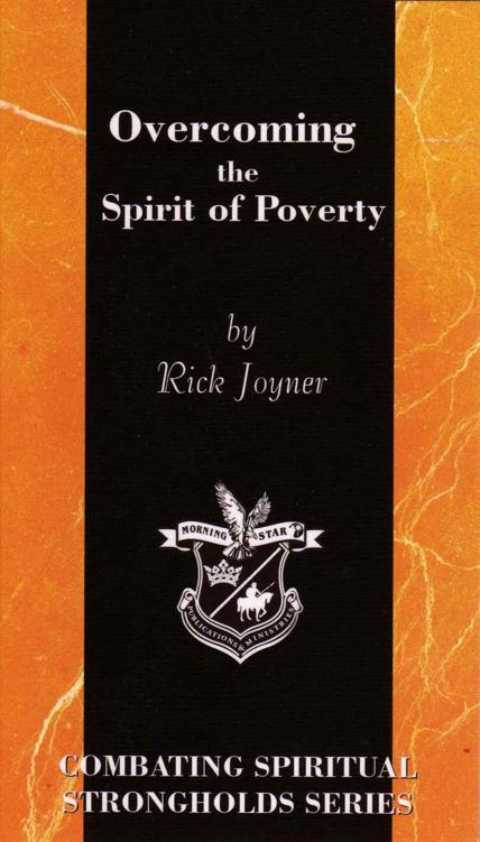
"Overcoming The Spirit Of Poverty" by Rick Joyner provides practical and spiritual guidance for breaking free from a poverty mindset and living a life of abundance and prosperity. The book offers insights on how to overcome obstacles, develop a mindset of abundance and generosity, and secure a prosperous future. Joyner's teachings challenge readers to tap into their potential and step into a life of financial freedom and fulfillment.
Henry Alline
 Henry Alline’s early years
He was born and received his early education in Newport, Rhode Island and his family moved to Nova Scotia in 1760, when he was 12 years old. When he was nine he began to read theological works and became somewhat mystical, but after years of soul-searching and spiritual conflict he was powerfully converted in 1775, simultaneously receiving a call to the ministry.
Alone and desperate he prayed until…’redeeming love broke into my soul… with such power that my whole soul seemed to be melted down with love…and my will turned of choice after the infinite God. A year later he began to preach.
His preaching career
His preaching career lasted until his death eight years later. He was an itinerant preacher in Nova Scotia and Prince Edward Island in an ever-widening circuit, beginning what became known as the ‘New Light’ movement and which is still the greatest revival that Canada has ever seen. He preached the new birth powerfully and effectively and his admirers compared him to George Whitefield and John the Baptist.
Considered an emotional and dangerous fanatic by some and a ‘ravager of congregations,’ the Congregationalists withdrew his right to preach in their churches, so he spoke in barns, houses and the open air. In all he began eight ‘New Light’ Congregational churches based on his non-Arminian but anti-Calvinist views of free-will and predestination, and his strong rejection of outward religious form.
Ironically, despite his indifference regarding baptism, his major 19th century influence was amongst the Baptists of eastern Canada, many of whom were his converts.
Despite possibly unorthodox views and methods, his ministry was without doubt that of an extraordinary revivalist.
Alline’s sermon style was always simple and extemporary, using a few simple, understandable points to help the unchurched to grasp the simple truths of the gospel. As with other itinerant revivalists, his objective was to lead the hearers to a point of decision – to accept or reject Christ as Saviour and Lord, which opened the door to the “new birth.”
Doubtless, his sermons were repeated over time, but he was never in one place long enough for his listeners to notice.
Alline also employed the ministry of prayer and of singing, writing many hymns which were helpful in communicating the gospel. A collection was gathered after his death and was reprinted at least four times in the United States, and several were included in the standard hymnals of the 19th century.
Henry Alline’s early years
He was born and received his early education in Newport, Rhode Island and his family moved to Nova Scotia in 1760, when he was 12 years old. When he was nine he began to read theological works and became somewhat mystical, but after years of soul-searching and spiritual conflict he was powerfully converted in 1775, simultaneously receiving a call to the ministry.
Alone and desperate he prayed until…’redeeming love broke into my soul… with such power that my whole soul seemed to be melted down with love…and my will turned of choice after the infinite God. A year later he began to preach.
His preaching career
His preaching career lasted until his death eight years later. He was an itinerant preacher in Nova Scotia and Prince Edward Island in an ever-widening circuit, beginning what became known as the ‘New Light’ movement and which is still the greatest revival that Canada has ever seen. He preached the new birth powerfully and effectively and his admirers compared him to George Whitefield and John the Baptist.
Considered an emotional and dangerous fanatic by some and a ‘ravager of congregations,’ the Congregationalists withdrew his right to preach in their churches, so he spoke in barns, houses and the open air. In all he began eight ‘New Light’ Congregational churches based on his non-Arminian but anti-Calvinist views of free-will and predestination, and his strong rejection of outward religious form.
Ironically, despite his indifference regarding baptism, his major 19th century influence was amongst the Baptists of eastern Canada, many of whom were his converts.
Despite possibly unorthodox views and methods, his ministry was without doubt that of an extraordinary revivalist.
Alline’s sermon style was always simple and extemporary, using a few simple, understandable points to help the unchurched to grasp the simple truths of the gospel. As with other itinerant revivalists, his objective was to lead the hearers to a point of decision – to accept or reject Christ as Saviour and Lord, which opened the door to the “new birth.”
Doubtless, his sermons were repeated over time, but he was never in one place long enough for his listeners to notice.
Alline also employed the ministry of prayer and of singing, writing many hymns which were helpful in communicating the gospel. A collection was gathered after his death and was reprinted at least four times in the United States, and several were included in the standard hymnals of the 19th century.
We Need More Holy Fools
A man is trapped in a car, rushing down a hill toward a cliff. The doors are locked. The brakes are out. The steering barely works. Far ahead, he can see other cars hurtling into the abyss. How far they fall, he does not know. What they find at the bottom, he cannot imagine. But he does not seek to know; he does not try to imagine. Instead, he paints the windshield, climbs into the back seat, and puts in his headphones. This image, adapted from Peter Kreeft, captures my life in January 2008, as I walked down a college sidewalk in Colorado. The car was my body; the hill, time; the cliff, death. I was, as we all are, rushing toward the moment when my pulse would stop. And though unsure of what would come afterward, I found a thousand ways to look away. “The Lord looks down from heaven on the children of man, to see if there are any who understand, who seek after God” (Psalm 14:2). Like so many other children of men, I neither understood nor sought, I neither asked nor knocked, but let myself tumble through time without a thought of eternity. I was a “fool,” to put it bluntly (Psalm 14:1). And I desperately needed another kind of fool to wake me up. Puncturing the Daydream Few people, perhaps, would look at a normal Western life like mine — busy, successful, spiritually indifferent — and say, “folly.” But could it be because the folly is socially acceptable? Might we modern Western men and women have made a silent pact to ignore eternity? “Might we modern Western men and women have made a silent pact to ignore eternity?” Blaise Pascal, seventeenth-century Christian polymath, thought so. When Pascal looked round at his modern country, neighbors, and self, he saw a collective pathology, a shared insanity: “Man’s sensitivity to little things and insensitivity to the greatest things are marks of a strange disorder,” he said ( Christianity for Modern Pagans , 203). We cultivate hobbies, and follow celebrities, and read the news without knowing why we exist. We stumble through an unthinkably vast cosmos, circled round by unthinkably intricate wonders, too distracted to ask, “Who made this?” We develop firm opinions about politics, and care not whether souls live forever, and where. We look often into our mirrors and seldom into our deep and fallen hearts. A strange disorder indeed. And so, Pascal walked around with needles in hand, seeking to puncture the daydream of secular or religiously nominal apathy to eternity. His unfinished book Pensées (abridged and explained in Kreeft’s masterful Christianity for Modern Pagans ) may have been his sharpest needle. What Is a Life ‘Well-Lived’? Our lives here are hemmed in by mystery and uncertainty. We live on a small rock in an immense universe. We know little about where we came from or where we’re going. We struggle even to understand ourselves. But a few matters remain clear and unmistakable, including the great fact that, one day, we will die. Our car hurtles down the hill, lower today than yesterday. The abyss awaits. And what then? For secular or nominally religious countrymen like Pascal’s, and ours, the options are two: “the inescapable and appalling alternative of being annihilated or wretched throughout eternity” (191). Either Christianity is false, and our flickering candle goes out forever — or Christianity is true, and, awakening to life’s meaning too late, we fall “into the hands of a wrathful God” (193). A society like ours would lead us to believe that eighty years “well lived” (whatever that means) filled with “personal meaning” (whatever that means) makes for a good life; we need seek no more. To Pascal, those were the words of one who had painted the windshield black. Death, rightly reckoned with, functions like the final scene of a tragic play: it reaches its fingers back into all of life, disfiguring every moment, darkly witnessing that all is not well. “The last act is bloody, however fine the rest of the play,” Pascal writes. “They throw earth over your head and it is finished forever” (144). Stand above the hole in the ground, the dust from which we came and to which we’ll return (Genesis 3:19), and consider: “That is the end of the world’s most illustrious life” (191). “We ourselves are an enigma, wrapped in a world of mystery, headed inevitably for the grave.” We ourselves are an enigma, wrapped in a world of mystery, headed inevitably for the grave. Such a dire plight might send us searching for wisdom, if it weren’t for our insane “solution.” Insanity of Our ‘Solutions’ How do we — mortal men and women, nearing the cliff’s edge — typically respond to our plight? “We run heedlessly into the abyss after putting something in front of us to stop us seeing it” (145). We deny. We divert. We distract. Until one day we die. Of course, no one ever says, “I will distract myself because I don’t want to consider my death and what may come afterward.” We suppress the truth more subconsciously than that (Romans 1:18). Instinctively, we avoid the “house of mourning,” or else dress it with euphemisms, for fear of facing, terribly and unmistakably, that “this is the end of all mankind” — that this is our end (Ecclesiastes 7:2). Summarizing Pascal, Kreeft writes, If you are typically modern, your life is like a rich mansion with a terrifying hole right in the middle of the living-room floor. So you paper over the hole with a very busy wallpaper pattern to distract yourself. You find a rhinoceros in the middle of your house. The rhinoceros is wretchedness and death. How in the world can you hide a rhinoceros? Easy: cover it with a million mice. Multiply diversions. (169) Eighty years may seem like a long time to distract yourself from the most fundamental questions of life and death. But with hearts like ours, in a world like ours, it is not too long. Make a career. Raise a family. Build wealth. Plan vacations. Get promoted. Watch movies. Collect sports cards. Read the news. Play golf. Resist uncomfortable questions. We hang a curtain over the cliff’s edge that keeps us from seeing the abyss. But not from rushing into it. Sanest People in the World Our chosen “solution,” then, only aggravates our dire plight. Our distractions sedate us on the way to death rather than sending us searching for some escape. Which means the world has a desperate need for people like Pascal, men and women whom we might call (to use a phrase from church history) holy fools . The term holy fools drips with the same irony Paul used when he spoke of “the foolishness of God” (1 Corinthians 1:25) and said, “We are fools for Christ” (1 Corinthians 4:10). In truth, holy fools are the world’s sanest people. They have felt the sting of sin and death. They have found deliverance in Jesus Christ. And now they are trying to tell the world. With Pascal, they see that “there are only two classes of people who can be called reasonable: those who serve God with all their heart because they know him and those who seek him with all their heart because they do not know him” (195). And so, holy fools call people into the “folly” that is our only sanity. They come to those caught in distraction, lost in diversion, and they serve, love, persuade, and prod. They risk reputation and comfort, willing to look foolish in the eyes of a wayward world. They bring eternity into everyday conversations with cashiers, neighbors, and other parents at the park. Boldly and patiently, courageously and graciously, they say, “See your death. See your sin. And seek him with all your heart.” To those bent on diversion, holy fools may seem imbalanced, extreme, awkward, pushy. But not to everyone. Some, as they hear of the Christ these fools preach, will catch a glimmer of “the power of God and the wisdom of God” (1 Corinthians 1:24). And they will become another fool for him. Give Us More Fools for Christ Pascal (and the apostle Paul) make me feel that I am not yet the fool I ought to be. Too often, I prefer social decorum to holy discomfort, this-worldly niceness to next-worldly boldness. But they also make me feel a keen gratitude for the holy fools among us, and a longing to be more like them. For I owe my life to one. In January 2008, as my little car rushed down the hill, and as I did what I could to cover my eyes, someone stopped me on the sidewalk. I would later learn that he belonged to a campus ministry widely known for sharing Jesus with students — widely known, but not widely loved. Their message was, to most, foolishness — and their way of stopping others on the sidewalk, a stumbling block. But to me that day, by grace, it looked like the wisdom of God. In time, I would realize that my various diversions could not deliver me from death. Nor could a life “well lived” forgive my sins or undig my grave. Only Jesus could. It took a holy fool to make me sane, and oh how the world needs more.