
GIP Library icon

LOG IN TO REVIEW
About the Book


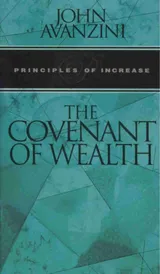
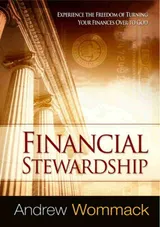
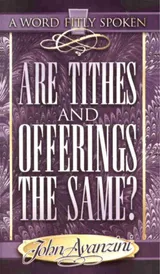
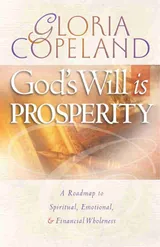
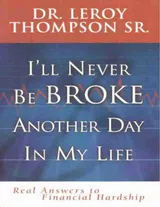
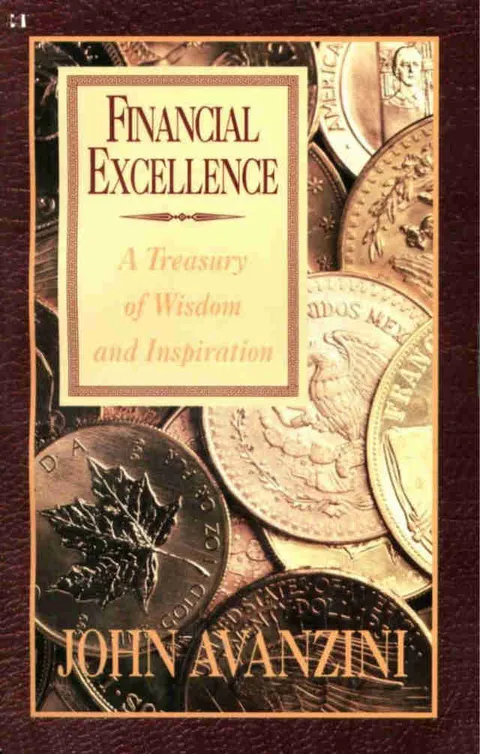
"Financial Excellence" by John Avanzini provides practical and biblical principles for achieving financial success and abundance. The book offers insights into managing money, investing wisely, and cultivating a mindset of prosperity. Avanzini emphasizes the importance of faith, diligence, and generosity in building wealth and achieving financial freedom.

C.S. Lewis

C.S. Lewis C.S. Lewis was a prolific Irish writer and scholar best known for his 'Chronicles of Narnia' fantasy series and his pro-Christian texts. Who Was C.S. Lewis? Writer and scholar C.S. Lewis taught at Oxford University and became a renowned Christian apologist writer, using logic and philosophy to support the tenets of his faith. He is also known throughout the world as the author of The Chronicles of Narnia fantasy series, which have been adapted into various films for the big and small screens. Early Life Clive Staples Lewis was born in Belfast, Ireland, on November 29, 1898, to Flora August Hamilton Lewis and Albert J. Lewis. As a toddler, Clive declared that his name was Jack, which is what he was called by family and friends. He was close to his older brother Warren and the two spent much time together as children. Lewis was enraptured by fantastic animals and tales of gallantry, and hence the brothers created the imaginary land of Boxen, complete with an intricate history that served them for years. Lewis' mother died when he was 10, and he went on to receive his pre-college education at boarding schools and from a tutor. During WWI, he served with the British army and was sent home after being wounded by shrapnel. He then chose to live as a surrogate son with Janie Moore, the mother of a friend of Lewis' who was killed in the war. Teaching Career at Oxford and Wartime Broadcasts Lewis graduated from Oxford University with a focus on literature and classic philosophy, and in 1925 he was awarded a fellowship teaching position at Magdalen College, which was part of the university. There, he also joined the group known as The Inklings, an informal collective of writers and intellectuals who counted among their members Lewis' brother Warren and J.R.R. Tolkien. It was through conversations with group members that Lewis found himself re-embracing Christianity after having become disillusioned with the faith as a youth. He would go on to become renowned for his rich apologist texts, in which he explained his spiritual beliefs via platforms of logic and philosophy. Lewis began publishing work including Spirits in Bondage in 1919 and the satirical Dymer in 1926. After penning other titles — including The Allegory of Love (1936), for which he won the Hawthornden Prize — he released in 1938 his first sci-fi work, Out of the Silent Planet, the first of a space trilogy which dealt sub-textually with concepts of sin and desire. Later, during WWII, Lewis gave highly popular radio broadcasts on Christianity which won many converts; his speeches were collected in the work Mere Christianity. Books and Film Legacy Lewis was a prolific author of fiction and nonfiction who wrote dozens of books over the course of his career. His faith-based arguments as seen in texts like The Great Divorce (1946) and Miracles (1947) are held in high regard by many theologians, scholars and general readers. His satirical fiction novel The Screwtape Letters (1942) is also a beloved classic. Lewis also continued his love affair with classic mythology and narratives during his later years: His book Till We Have Faces: A Myth Retold (1956) featured the story of Psyche and Cupid. He also penned an autobiography, Surprised by Joy: The Shape of My Early Life (1955). Lewis' landmark series, The Chronicles of Narnia, has seen a number of on-screen iterations, including a cartoon version of The Lion, The Witch and the Wardrobe that was released in 1979 and a 1989 film series. Additionally, in 2005, a big-screen adaptation of The Lion, The Witch and the Wardrobe hit movie theaters, starring Tilda Swinton as the witch Jadis and Liam Neeson as the voice of Aslan. Two more Narnia films were brought to theaters as well: Prince Caspian (2008) and The Voyage of the Dawn Treader (2010). A movie version of The Silver Chair was slated to hit theaters in the near future, with filming starting in the winter of 2018. Lewis' relationship with his wife, Joy, has also been depicted in Shadowlands, presented as a play and two films; one of the film versions was directed by Richard Attenborough and starred Anthony Hopkins as Lewis. 'The Chronicles of Narnia' During the 1940s, Lewis began writing the seven books that would comprise The Chronicles of Narnia children's series, with The Lion, The Witch and the Wardrobe (1950) being the first release. The story focused on four siblings who, during wartime, walk through an armoire to enter the magical world of Narnia, a land resplendent with mythical creatures and talking animals. Throughout the series, a variety of Biblical themes are presented; one prominent character is Aslan, a lion and the ruler of Narnia, who has been interpreted as a Jesus Christ figure. (Lewis would assert that his Narnia stories weren't a direct allegory to the real world.) Though the book received some negative reviews, it was generally well-received by readers, and the series retained its international popularity over the following decades. Marriage In 1954, Lewis joined the faculty of Cambridge University as a literature professor, and in 1956 he married an American English teacher, Joy Gresham, with whom he had been in correspondence. Lewis was full of happiness during the years of their marriage, though Gresham died of cancer in 1960. Lewis grieved deeply for his wife and shared his thoughts in the book A Grief Observed, using a pen name. Death In 1963, Lewis resigned from his Cambridge position after experiencing heart trouble. He died on November 22, 1963, in Headington, Oxford.

Trade Self-Help for God-Help

They set out to get help from a higher power. The lion needed courage. The tinman needed a heart. The scarecrow needed a brain. The little girl longed to return home. But at journey’s end, they came to the unfortunate discovery: The Wizard of Oz was no wizard at all. He relied on screens and microphones. His wand was broken. He had only pins and needles to give. Yet, all was not lost. Our four heroes realized that what each had sought, each already possessed. Along the way, Tinman loved, Lion risked, Scarecrow thought. Dorothy carried the ability to travel home wherever she went. They discovered that they did not need an all-powerful Oz behind the curtain. What each truly needed he already held within. Whether or not Frank Baum meant it or not, Wizard of Oz is an apt parable of the generations-old self-help movement in our increasingly post-Christian West. The Oz, many say, has nothing to offer. God, the wisdom of modern man finally confirms, is a fraud. Yet, some rush to tell us, all is not lost. After sobering from the opiate of the masses, they tell us to awaken to reality: what we’ve needed all along already resides within each of us. Truth in Self-Help Some professing Christians are promoting self-help resources at alarming rates. As can happen when biting into that pizza roll too quickly, we can lose the ability to taste differences. We chew pop-psychology’s ideology of self-reliance and discern no real difference from Christianity, which builds upon God-dependence. We swallow both indiscriminately and wonder why our stomachs hurt. Before we look at the differences between the ideologies, first a question: Can we learn anything from the self-help movement? Why does this placebo help some? Many will line up to testify of its cure-all power. What’s in the snake oil? At least one true ingredient: self-help acknowledges our personal agency. Self-help assumes that you can indeed do something to help yourself. It too rejects the deceit that we drift helplessly downstream from our past or current circumstances. We are not leaves floating down from trees. The me of yesterday doesn’t have to be the me of tomorrow. We can learn discipline. We can “take control” of various aspects of our lives, escape addictions, and overcome fears. At least self-help affirms what God always has: we can, even now, reap a different harvest by sowing a different crop. It properly highlights the truth that we can — and must — own some measures of responsibility for our lives. We each can choose, as Luther once said, many things under heaven. And each decision will have consequences. Self-help advice rescues some from the fatalistic, paternalistic, dehumanizing worldviews (so common today) that deny a crucial component of God’s world: “So God created man in his own image, in the image of God he created him; male and female he created them” (Genesis 1:27). Diagnosing the Difference The ineptitude of the self-help philosophy becomes apparent when we contrast it with God-help. Note three differences, among others. 1. On Whom Do You Rely? Self-help gurus have little to sell us other than ourselves. In stopping at mere personal agency, they send us to build a new life while denying us straw for our bricks. Sure, they interject themselves to get us going (for a small fee, of course), but the real power resides within. The god they point to stoops down to fit into every mirror we see. Returning to our childhood optimism, “I think I can, I think I can,” this endless search to find your true potential borrows from the oldest heresy: “And you will be like God” (Genesis 3:5). Claiming to be wise, these gurus exchange the glory of the immortal God for images of successful man. Believe in yourself. Clutch the scepter of your life. You can do all things through you who gives you strength. As if God, looking down from heaven without any mercy, thundered, “Just figure it out!” Promoters of self-help have not been tutored in that school that Paul had: We were so utterly burdened beyond our strength that we despaired of life itself. Indeed, we felt that we had received the sentence of death. But that was to make us rely not on ourselves but on God who raises the dead. (2 Corinthians 1:8–9) The illusions of self-help shatter when suffering weighs so heavily on our backs that we despair of life itself. Pain reminds us that we are still but creatures — for the gods do not bleed. But all affliction is a choice friend when it teaches us to sing, “I lift up my eyes to the hills. From where does my help come? My help comes from the Lord, who made heaven and earth” (Psalm 121:1–2). The shoulders of him alone, who carried the cross and willingly bled for the treason of our self-reliance, can bear all of our further needs. 2. What Help Do You Get? When we look within for help, we receive only temporal solutions to what amounts to eternal problems. That alcohol addiction is not first and foremost a sin because it destroys one’s family and poisons oneself. All transgression, as we shall all soon discover, is against God: “Against you, you only, have I sinned and done what is evil in your sight” (Psalm 51:4). God has the first grievance, though the shrapnel certainly strikes others as well. Self-dependence may subdue some of the symptoms of sin — you stop drinking, overeating, or committing adultery — but a life of sin against God remains unaddressed and ultimately unaltered. Whereas self-help can tidy a sinking ship, “godliness is of value in every way, as it holds promise for the present life and also for the life to come” (1 Timothy 4:8). Grace trains the Christian to say “No!” to theft, anger-issues, pornography, pride, laziness, and say, “Yes!” to self-control, uprightness, and godly lives in the present (Titus 2:11–12) — all while steering us home and preparing us for heaven, not hell. 3. Who Gets the Glory? When we trust in self — and actually succeed— we get the glory. I am smarter, more disciplined, better. When we become self-made men and women, and not God-made men and women, we run from disordered lives into the arms of pride. Having escaped the cobra, we encounter the bear. And this tempts the self-reliant to look down on others who aren’t successful, and, whether they ever succumb to temptation or not, they never bother looking up to God. But the man who makes God his trust has a very different victory song: Not in my bow do I trust, nor can my sword save me. But you have saved us from our foes and have put to shame those who hate us. In God we have boasted continually, and we will give thanks to your name forever. (Psalm 44:6–8) The Christian, awake to the reality that he has no good apart from his God (Psalm 16:2), speaks repeatedly, “Not to me, O God, not to me, but to your name give glory” (Psalm 115:1). Christ is his boast. Christ is his refrain. He wants every triumph to add another jewel to the crown of his King. Make the Trade Self-help gives me my own small, fleeting glory. God-help offers us deep, everlasting joy, secure in his unfading glory. Self-help offers a temporal good (at best). God-help gives eternal good with the temporal thrown in. Self-help relies on my discipline, my resolve, and my effort. God-help builds upon a child’s cry to his father, leaning on one’s eternal family, and trusting God’s unfailing promises. God-help sustains me with daily bread from heaven. Self-help cannibalizes me, for it can find no other food. God-help ends in salvation, glory, and the conquering of the world, the flesh, and the devil. Self-help addresses the coughs and sneezes of this life but leaves me, at the end of it, without hope, without forgiveness, and without God in this world. So, trade self-help for God-help. God does not help those who, unmindful of him, help themselves. He works for those who wait for him (Isaiah 64:4). In the end, self-help is sheer folly. It sends us to work on Babel, rent a room in Gomorrah, eat grass with the mad king, and speak over ourselves, “Take up your bed and rise.” The placebo works only for so long, but all shall fall eventually — and “great shall be the fall.” But those who trust in Christ have Almighty God working in them, unsearchable promises to guide them, a heaven to journey to, and a Savior to glorify along the way. Article by Greg Morse

Feedback
Suggestionsuggestion box
x