
Financial Security In The Last Days Order Printed Copy
- Author: Perry Stone
- Size: 3.87MB | 137 pages
- |
Others like financial security in the last days Features >>
About the Book
"Financial Security in the Last Days" by Perry Stone explores biblical principles and practical advice for navigating economic challenges and uncertainties in the end times. The book offers insights into how to maintain financial stability, make wise investments, and prepare for an uncertain future, while also emphasizing the importance of faith and trust in God's provision.
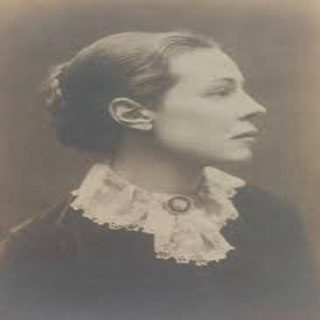
Sophie Scholl
Sophia Scholl was a German student, active in the White Rose â a non-violent resistance group to Hitler and the Nazi party. In 1943, she was caught delivering anti-war propaganda and, with her brother Hans Scholl, was executed for high treason. Sophie Scholl has become an important symbol of anti-Nazi resistance in Germany.
Sophie Scholl was born in Forchtenberg, Germany on 9 May 1921. She was the fourth out of six children. Her father Robert was the Burgermeister (Mayor) of Forchtenberg am Kocher, in Baden-WĂźrttemberg.
She was brought up as a Lutheran Christian, and her childhood was relatively happy and carefree. However, in 1933, Hitler came to power and began controlling all aspects of German society. Initially, Sophie was unaffected, but her father and brothers were critical of the Nazi regime and this political criticism filtered through to leave a strong impression on the young Sophie.
At the age of twelve, she joined a pseudo-Nazi organisation, the League of German Girls. Initially, Sophie enjoyed the activities of the group, and she was promoted to Squad Leader. However, after her initial enthusiasm with the activities of the group, Sophie became uneasy about the conflict between her conscience and the creeping Nazi ideology of the organisation. In 1935, Nuremberg Laws were passed which increased the discrimination against Jews, banning them from many public places. Sophie complained when two of her young Jewish friends were barred from joining the League of German Girls. She was also reprimanded for reading from the âBook of Songsâ by the banned Jewish writer Heinrich Heine. Scholl indicated her rebelliousness by replying, that Heine was essential for understanding German literature. These incidents and the bans against Jews led to Sophie taking a much more critical attitude to the Nazi regime. She began choosing friends more carefully â people who were politically sympathetic to her viewpoint.
In 1937, her brothers and some of her friends were arrested for participating in the German Youth Movement. This incident left a strong impression on Sophie and helped to crystallise her opposition to the Nazi regime. In 1942, her father was later sent to prison for making a critical remark about Hitler. He referred to Hitler as âGodâs Scourge.â
Sophie was an avid reader and developed an interest in philosophy and theology. She developed a strong Christian faith which emphasised the underlying dignity of every human being. This religious faith proved an important cornerstone of her opposition to the increasingly all-pervading Nazi ideology of German society. Sophie also developed a talent for art â drawing and painting, and she became acquainted with artistic circles which, in Nazi terms, were labelled degenerate.
In 1940, after the start of the Second World War, she graduated from her Secondary School and became a kindergarten teacher at the Frobel Institute. However, in 1941, she was conscripted into the auxiliary war service working as a nursery teacher in Blumberg. Sophie disliked the military regime of war service and started to become involved in passive resistance to the war effort.
After six months in the National Labour Service, in May 1942, she enrolled in the University of Munich as a student of biology and philosophy. With her brother Hans, she became associated with a group of friends who shared similar artistic and cultural interests but also developed shared political views, which increasingly opposed the Nazi regime they lived in. She came into contact with philosophers such as Theodor Haecker, who posed questions of how individuals should behave under a dictatorship.
The White Rose Movement
The White Rose was an informal group who sought to oppose the war and Nazi regime. It was founded in early 1942 by Hans Scholl, Willia Graf and Christoph Probst. They wrote six anti-Nazi resistance leaflets and distributed them across Munich. Initially, Sophie was not aware of the group, but when she found out her brotherâs activities, she was keen to take part. Sophie participated in distributing leaflets and carrying messages. As a woman, she was less likely to be stopped by the SS.
The leaflets of the White Rose contained messages, such as
âNothing is so unworthy of a nation as allowing itself to be governed without opposition by a clique that has yielded to base instinctâŚWestern civilization must defend itself against fascism and offer passive resistance, before the nationâs last young man has given his blood on some battlefield.â
However, there was a pervasive police state which kept a high degree of surveillance on any resistance activity. After leaflets had been found at the University of Munich, the local Gestapo stepped up its efforts to catch the resistors. Hans, Willi and Alex also began painting anti-Nazi slogans on buildings in Munich.
On 18 February 1943, Sophie and other members of the White Rose were arrested for distributing anti-war leaflets. The leaflets were seen by Jakob Schmidt, a local Nazi party member. Sophie and Hans were interrogated by Nazi officials and, despite trying to protect each other, just four days later were sent to court. The trial was presided over by Roland Freisler, chief justice of the Peopleâs Court of the Greater German Reich. Freisler was an ardent Nazi; with great vigour and a manic intensity, he frequently roared denunciations at the accused.
Despite the hostility and appearing in court with a broken leg after her interrogation. Sophie replied to the court:
âSomebody, after all, had to make a start. What we wrote and said is also believed by many others. They just donât dare express themselves as we did.â
She also said:
âYou know the war is lost. Why donât you have the courage to face it?â
No defence witnesses were called and, after a very short trial, the judge passed a guilty verdict, with a sentence of death. The sentence was to be carried out early the next morning by guillotine.
Walter Roemer, the chief of the Munich district court, supervised the execution, he later described Sophieâs courage in facing her execution. He reports that Sophieâs last words were:
âHow can we expect righteousness to prevail when there is hardly anyone willing to give himself up individually to a righteous cause. Such a fine, sunny day, and I have to go, but what does my death matter, if through us, thousands of people are awakened and stirred to action?â
The guards were impressed with the courage of the resistors and relaxed the rules to allow Hans, Christoph and Sophie to meet before their execution.
After the execution of Sophie, Hans and Christoph, the Gestapo continued their relentless investigation. Other members of the White Rose were caught and executed. Many students from the University of Hamburg were either executed or sent to concentration camps.
Legacy of Sophie Scholl
In a poll to find the greatest German, Sophie and her brother were voted to be fourth. Amongst the young generation, under 40, they were the most popular. On February 22, 2003, a bust of Sophie Scholl was unveiled by the government of Bavaria in the Walhalla temple. In 2005, a movie about Sophie Schollâs last days was made featuring Julia Jentsch (Sophie Scholl: The Final Days)
Motivations of Sophie Scholl
Several factors inspired Sophie Scholl to take part in this highly dangerous resistance. Firstly, her family shared a dislike of the Nazi regime. Both her brothers and father had been arrested for making critical comments. Her father said to the family:
âWhat I want for you is to live in uprightness and freedom of spirit, no matter how difficult that proves to be,â (link)
She lived in a family environment which encouraged opposition to Hitler.
Sophie had a strong Christian faith and was motivated after hearing speeches by anti-Nazi pastors. She read two volumes of Cardinal John Henry Newmanâs sermons which made a strong impression on Sophie, especially his sermon on the âtheology of conscience.â During her interrogation, she referred to this ideology as a defence.
âI am, now as before, of the opinion that I did the best that I could do for my nation. I, therefore, do not regret my conduct and will bear the consequences that result from my conduct.â
Official examination transcripts (February 1943); Bundesarchiv Berlin, ZC 13267, Bd. 3
Her boyfriend Fritz Hartnagel was on the Eastern Front; he reported to Sophie the dreadful conditions of war, the German failure at Stalingrad and also witnessing war crimes undertaken by German and SS forces.
Reports of mass killings of Jews were also widely shared amongst members of the White Rose. This features in the second White Rose pamphlet.
âSince the conquest of Poland 300,000 Jews have been murdered, a crime against human dignityâŚGermans encourage fascist criminals if no chord within them cries out at the sight of such deeds. An end in terror is preferable to terror without end.â
Sophie Scholl and other members of the White Rose remain a potent symbol of how people can take a courageous action to resist, even the most brutal totalitarian regime.
Citation: Pettinger, Tejvan. âBiography of Sophie Schollâ, Oxford, UK â www.biographyonline.net. Published 12th Aug 2014. Last updated 8th March 2017.
God, Make Us Bold About Jesus
Itâs been said that the content of a prayer shapes the one who prays it, because we tend to pray what we love, and what we love makes us who we are. And this is not only true of individuals, but of churches too. Like when the early church once prayed, Now, Lord, look upon their threats and grant to your servants to continue to speak your word with all boldness, while you stretch out your hand to heal, and signs and wonders are performed through the name of your holy servant Jesus. (Acts 4:29â30) Of all the things they might have prayed â and of all things churches should pray at various times â the fledging church in the early pages of Acts wanted God to give them boldness: âGrant to your servants to continue to speak your word with all boldness.â We as twenty-first-century pastors and churches can learn from this first-century prayer, but to do so, we need to first go back one chapter. Words Filled with Jesus The apostles Peter and John were walking to the temple one afternoon when they encountered a lame man. He had been lame from birth. The man was doing what he was always doing: asking for money from people passing by. But on this particular day, something unexpected happened. The man passing by responded, âI have no silver and gold, but what I do have I give to you. In the name of Jesus Christ of Nazareth, rise up and walk!â (Acts 3:6). In an instant, the man was healed. He leapt up and began to walk. He entered the temple âwalking, leaping, and praising Godâ (Acts 3:8). The scene drew a crowd, so Peter did what Peter was always doing. He preached. His sermon was full of crystal-clear witness to the person and purpose of Jesus. He is the Holy and Righteous One (verse 14), the Author of Life and the one whom God has raised from the dead (verse 15). Jesus is the reason, the only reason, why the lame man was healed (verse 17). Then Peter proceeds to show that the Hebrew Scriptures had long foretold Jesus, from Moses in Deuteronomy and Godâs promise to Abraham in Genesis, to all the prophets âfrom Samuel and those who came after himâ (Acts 3:24). It has always been about Jesus, and peopleâs response, now, must unequivocally be to repent (Acts 3:19, 26). New World Breaking In These Jewish leaders were âgreatly annoyed because [Peter and John] were teaching the people and proclaiming in Jesus the resurrection from the deadâ (Acts 4:2). The problem wasnât only that Peter and John were witnessing to Jesusâs own resurrection, but that they were saying Jesusâs resurrection has led to the inbreaking of the resurrection age. As Alan Thompson writes, âIn the context of Acts 3â4, Jesusâs resurrection anticipates the general resurrection at the end of the age and makes available now, for all those who place their faith in him, the blessings of the âlast daysââ (The Acts of the Risen Lord Jesus, 79). That, in fact, was what the healing of the lame man was declaring. The new creation had invaded the old. âJesus is the climax of all of Godâs saving purposes, and we cannot ignore this without eternal consequences.â In the resurrection of Jesus, everything has changed. He is the climax of all of Godâs saving purposes, and we cannot ignore this without eternal consequences. This message ruffled the feathers of the Jewish leaders, and so they arrested Peter and John and put them on trial for all that happened that day. âBy what power or by what name did you do this?â they demanded (Acts 4:7). Peter, filled with the Holy Spirit, and again with a crystal-clear witness, says the lame man was healed because of Jesus. Jesus is the Messiah who was crucified and raised, and who was foretold in the Hebrew Scriptures. Specifically, Peter says that Jesus is the stone mentioned in Psalm 118:22, the stone that would be rejected by the builders but then become the cornerstone. The stakes could not be higher. Only in Jesus could one be saved (Acts 4:12). Outdone by Fishermen The Jewish leaders were astonished. They could not reconcile Peter and Johnâs boldness with the fact that they were âuneducated, common menâ (Acts 4:13). These were neither teachers nor even pupils, but fishermen. Fishermen. That agitated the Jewish leaders all the more. These unskilled regular Joes, as it were, had been teaching the people! And now they ventured to interpret the Hebrew Scriptures before these skilled Jewish interpreters, telling them who Jesus was, according to the Scriptures, and who they were, according to the Scriptures. These Jewish leaders saw their âboldnessâ (Acts 4:13), but this wasnât merely a reference to their emotional tone. Peter and Johnâs boldness wasnât mainly about their zeal or behavior â it was about what they had to say. This kind of boldness is repeatedly connected to speech in Acts, so much so that another way to render âboldnessâ in many passages would be âto speak freely or openly.â Thatâs what Peter and John had done. They had spoken clearly, freely, openly, boldly about Jesus from the Hebrew Scriptures â and they had done so under intense intimidation. As they watched this unfold, even the Jewish leaders began to connect some dots. âThey recognized that they had been with Jesusâ (Acts 4:13). So how did these untrained fishermen learn to interpret the Scriptures like that? How could they speak so confidently about the meaning of Scripture when they had never been taught? Well, because they had been taught â by Jesus himself. They had been with Jesus, and so they were unusually bold. They spoke of Jesus clearly, both of his person and work, on the grounds of what the Scriptures say, even when it might have cost them their lives. Voices Lifted Together This is the boldness the church pleads for in Acts 4:29â30. The Jewish leaders had warned and threatened Peter and John to stop talking about Jesus, but eventually they had to release the men from custody. Peter and John went straight to their friends to report what happened. These friends of Peter and John, the nascent church in Jerusalem, âlifted their voices together to Godâ (Acts 4:24). Their corporate prayer was as rich with the Old Testamentâs witness to Jesus as Peterâs sermon was. They knew the person of Jesus. They knew why he had come. And they knew how unpopular this message would be. And what did they pray? They did not pray for articulate positions on the current cultural issues, nor for increased dialogue with those of other faiths, nor for the ability to refute this or that ism, nor for the development of a particularly Christian philosophy or culture (all things we might pray for at certain times in the church). None of these are part of the churchâs prayer in Acts 4. Rather, they prayed for boldness to speak the word of God. They asked God to give them the kind of speech Peter and John had modeled â to testify clearly about who Jesus is from the word of God, no matter the cost, as the new creation continues to invade the old. Do our churches ever pray like this today? Do we lack a similar heart? A similar perspective? Or both? And yet our cities need our boldness every bit as much as Jerusalem did in Peter and Johnâs day. They need the crystal-clear witness of who Jesus is and what he has come to do. Praying for Revival What if the church of Jesus Christ, in all her local manifestations, was marked by a singular passion to know Jesus and make him known? This is the true priority of the church in every age and culture. âThe best, most important thing we ever have to say is what we have to say about Jesus.â We are all about Jesus, and the best, most important thing we ever have to say is what we have to say about him. Our failures to live up to this calling are reminders of our need for revival â of our need to plead with God for boldness. Like the early church, may our heart continually beat to testify to Jesusâs glory and to what he demands of the world. Church, this is who we are. Recover it, as needed, and live it out â even though itâs the last thing our society wants to hear from us. Our society wants the church to be âhelpfulâ on societyâs terms â what J.I. Packer called the ânew gospel,â a substitute for the biblical gospel, in his introduction to Owenâs The Death of Death in the Death of Christ. Whereas the chief aim of the biblical gospel is to teach people to worship God, Packer explains, the concern of the substitute only wants to make people feel better. The subject of the biblical gospel is God and his ways; the subject of the substitute is man and the help God offers him. The market demands the substitute, and those who refuse to cater to it are at the risk of being considered irrelevant or worse. Against that mounting pressure, we should pray that we would speak clearly, freely, openly, boldly about Jesus from the Bible, no matter the cost. Would this not be the sign of revival? Would God not answer our prayers like he did for that first church? When they had prayed, the place in which they were gathered together was shaken, and they were all filled with the Holy Spirit and continued to speak the word of God with boldness. (Acts 4:31) Article by Jonathan Parnell Pastor, Minneapolis, Minnesota