
Others like overcoming the spirit of poverty Features >>
Debt-Free Living (Eliminating Debt In A New Economy)
The Empowered Investor
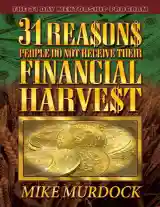
31 Reasons People Do Not Receive Their Financial Harvest

Financial Excellence

Do You Fit The Profile Of A Prosperous Believer?
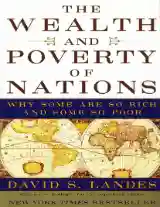
The Wealth And Poverty Of Nations - Why Some Are So Rich And Some So Poor

Thoughts On Stewardship

Everyday Millionaire

Wealth Building 101

Financial Security In The Last Days
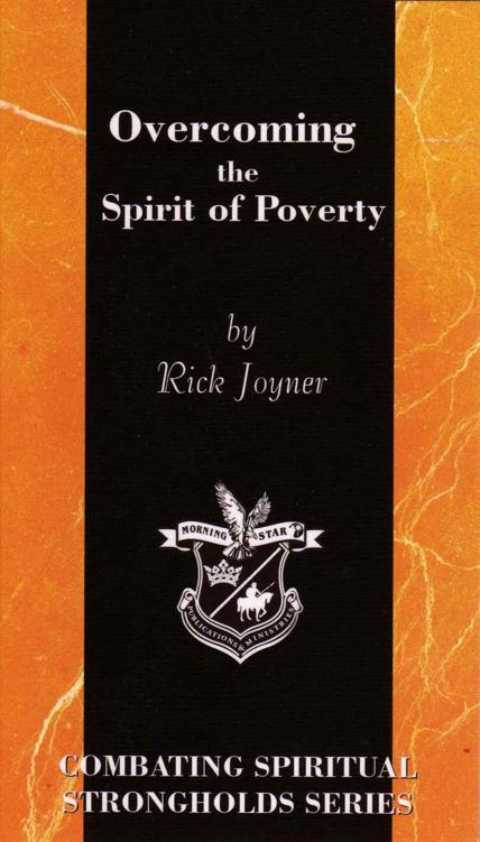
About the Book
"Overcoming The Spirit Of Poverty" by Rick Joyner provides practical and spiritual guidance for breaking free from a poverty mindset and living a life of abundance and prosperity. The book offers insights on how to overcome obstacles, develop a mindset of abundance and generosity, and secure a prosperous future. Joyner's teachings challenge readers to tap into their potential and step into a life of financial freedom and fulfillment.
Andrew Fuller
Fuller was born in Soham, Cambridgeshire, England, where in 1775 he was ordained pastor of the Baptist church. Originally schooled in the hyper-Calvinist theology then prevalent in parts of the Particular Baptist denomination, he became convinced in 1775 that the hyper-Calvinist position was not scriptural. In 1785 he published The Gospel Worthy of All Acceptation, which did much to prepare his denomination for accepting this missionary obligation. As pastor in Kettering, Northamptonshire, from 1783, Fuller became firm friends with John Sutcliff of Olney, John Ryland of Northampton, and later the young William Carey. The strengthening missionary vision of this group bore fruit on October 2, 1792, when the Particular Baptist Society for Propagating the Gospel among the Heathen (later known as the Baptist Missionary Society) was formed in the home of one of Fullerâs deacons in Kettering. Fuller was appointed secretary. Until his death he combined the demands of a busy pastorate with managing the affairs of the BMS. He traveled extensively to raise funds for the society, especially in Scotland, which he visited five times.
Brian Stanley, âFuller, Andrew,â in Biographical Dictionary of Christian Missions, ed. Gerald H. Anderson (New York: Macmillan Reference USA, 1998), 230-231.
This article is reprinted from Biographical Dictionary of Christian Missions, Macmillan Reference USA, copyright © 1998 Gerald H. Anderson, by permission of Macmillan Reference USA, New York, NY. All rights reserved.
Pastor, apologist, and promoter of missions
Though not university trained, Andrew Fuller was recognized by his contemporaries as the preeminent Baptist theologian of their day and was awarded honorary doctor of divinity degrees by both Princeton (1798) and Yale (1805). Fullerâs published works, preaching ministry and churchmanship was, perhaps, the primary mediating agency between the transatlantic evangelical revival and the English Particular (or âCalvinistâ) Baptists who had distanced themselves from what was largely at the start an Anglican renewal movement. Fuller was also well known as a co-founder of the Baptist Missionary Society (or, the Particular Baptist Society for the Propagation of the Gospel Amongst the Heathen [est. 1792]), on whose behalf he itinerated regularly in the British Isles, lobbied the East India Company, and wrote numerous letters and magazine articles during his twenty-two year tenure as its first general secretary. He was an opponent of the British slave trade and, though a dissenting non-Anglican, an acquaintance of William Wilberforce and other members of the Clapham sect, who were key allies in Parliament. He was a pastorsâ pastor who exerted no small influence for evangelical doctrine and a missionary vision through the many ordination sermons he preached. From 1782 until his death in 1815 he served as pastor of the Kettering Baptist Church and was frequent chairman of the Northamptonshire Association, a consortium which included the likes of William Carey, Samuel Pearce, John Sutcliffe, and John Ryland, Jr.
Fuller was born in 1754 at Wicken, Cambridgeshire, to non-conformist parents who worked a dairy farm. In 1775, six years after his own conversion experience, he was inducted as pastor of the forty-seven member church in Soham, where he had received his baptism and was a member. In 1776 he married his first wife, Sarah Gardiner, with whom he had eleven children, only three surviving beyond early childhood. Sarah would die in 1792, less than two months before the founding of the British Missionary Society (BMS). During this seven year pastorate, Fuller immersed himself in the literary culture of Anglo-American evangelical Calvinism. He cultivated his theological perspective and ministry philosophy by ardently studying the Scriptures alongside the works of the Reformers, seventeenth-century Puritans (especially John Owen), early English Baptists like John Bunyan and John Gill, as well as the writings of American Congregationalist philosopher-theologian and pastor, Jonathan Edwards. Fuller also acknowledged in his most popular book, The Gospel Worthy of All Acceptation (1781), the influence of the lives of John Eliot and David Brainerd, both late missionaries to the native Americans. The Gospel Worthy was Fullerâs remonstration against the hyper-Calvinism that negated the propriety of evangelistic appeals. By the 1790s, evangelical (or âstrictâ) Calvinism was known in England as âFullerismâ (vs. âHighâ or hyper-Calvinism). The Gospel its Own Witness (1800) was Fullerâs refutation of Deism. Fuller gained a reputation by these two books, especially, for publically, clearly and systematically opposing in print whatever widely held doctrines he believed were undermining the church and its mission.
In the Northamptonshire Assocation Fuller was a member of a thriving intellectual community most influenced by Edwards. In 1784 John Sutcliff initiated a âconcerts of prayerâ movement similar to the program suggested by Edwards in An Humble Attempt to Promote Explicit Agreement and Visible Union of Godâs People in Extraordinary Prayer (1748). Baptist congregations prayed monthly for the spread of the gospel and the kingdom of Christ to the ends of the earth through all denominations. In 1791, Sutcliff, Fuller and Samuel Pearce each preached at significant events (Sutcliff and Fuller at the association meeting of pastors, Pearce at William Careyâs ordination) on the duty of the church to evangelize the whole inhabitable globe. Fuller based his appeal on the eternal truth of the gospel, the eternal relevance of the gospel, the eternal power of the gospel, and the circumstances of the age that made missionary endeavors possible and obligatory.(1) Careyâs much touted association sermon from Isaiah 54:2-3 in May of 1792 did not arise in a vacuum. The influence was mutual between Carey and Fuller, both being influenced by Robert Hall, Sr. and Samuel Pearce (who had been inspired by the Methodist Thomas Coke in Birmingham).
On October 2, 1792, the BMS was formed with Fuller its first secretary and the assumption that its support would come largely from the churches of the Northamptonshire Association. When the society sent Carey and John Thomas to India the following year, Fuller preached their commissioning service from John 20:21 (âAs the Father has sent me, even so I [Christ] am sending you.â). Fuller believed the missionâs raison dâĂȘtre was the uniqueness of Christ and Christian responsibility to proclaim him. Bible translation and evangelism should take priority. Hindus were not desiring or seeking the Christian Scriptures. But to ignore and neglect anyone in an unconverted state is inconsistent with the love of God and man. In addition, God had promised the messiah the inheritance of the nations (An Apology for the Late Christian Missions to India, 1808). The church is obligated to employ means and make an effort as the means God uses to fulfill that promise to Christ. Obstacles are merely a test to sincerity of faith.
Fuller spent up to ten hours per day in correspondence and reporting for the BMS. He contributed articles to Evangelical Magazine, Missionary Magazine, Quarterly Magazine, Protestant Dissentersâ Magazine, Biblical Magazine, and Theological Miscellany. He sought financial support via letters and by an average of three months of vigorous itineration each year among various evangelical churches in Scotland, Ireland, Wales and England. John Ryland, Jr. wrote of Fullerâs style, that he, ââŠalways disliked violent pressing for contributions, and attempting to outvie other societies: he chose rather to tell a plain, unvarnished tale; and he generally told it with good effect.â(2) Through written correspondence he âpastoredâ the missionaries in the field while maintaining a decentralized approach to mission administration. He believed the missionaries were more capable of governing themselves and that the time required for correspondence made central control impractical anyway.
The security of the unlicensed Baptist missionary societyâs place in the British Empire was frequently tenuous up to 1813. Fuller occasionally had to petition Parliament or the Board of Control for continued tolerance of the BMS. Muslim irritation at the Christian missionary presence and the conversion of some Indians from Islam had been blamed for the Vellore Mutiny of 1806. Thomas Twining had openly claimed efforts at conversion were contradictory to âthe mild and tolerant spirit of Christianity.â Fuller responded to Twining and other English defenders of Hinduism with his three-part Apology for the Late Christian Missions to India (1808) in which he argued for a toleration of religion that allows all religious views as well as efforts to persuade through reasonable means. He attributed several social ills, like ritual infanticide and sati, to Hinduism, and commended the missionaries for trying to put an end to such practices. Fuller was also a critic of the âdetestable trafficâ of the African slave trade, asserting it made England deserving of ruin at the hands of the French (from whose invasion he urged prayer that God would mercifully protect England). The prosperity of the empire should not come at the expense of other human beings. Patriotism must âharmonizeâ with âgood will toward [other] men.â(3) On the other hand, Fuller often counseled BMS missionaries not to become âentangledâ in political concerns which were âonly affairs of this lifeâ and endangered colonial toleration of the mission.(4) Because Jesus accomplished âmoral revolutionâ in the heart, loyalty to the British government, rather than republicanism, should be encouraged as far as it is compatible with Christian commitments.(5)
Fuller, the pastor of families in England and abroad, counseled missionary families to nurture a deep spirituality for the sake of attaining the character commensurate with the nature of the gospel and their mission. Fuller knew the vicissitudes of even the Christian heart, and the âspiritual advantageâ of engaging in mission. Reflecting in his diary on July 18, 1794, he wrote:
Within the last year or two, we have formed a missionary society; and have been enabled to send out two of our brethren to the East Indies. My heart has been greatly interested in this work. Surely I never felt more genuine love to God and to his cause in my life. I bless God that his work has been a means of reviving my soul. If nothing comes of it, I and many others have obtained a spiritual advantage.(6)
Fuller died in 1815. The epitaph stone for Fuller in the Kettering meeting house says he devoted his life for the prosperity of the BMS.(7) One biographer has said Fuller âlived and died a martyr to the mission.â(8) After December, 1794, he was assisted in life by his second wife, Ann Coles. Fuller also spent himself itinerating for the British and Foreign Bible Society after it was founded in 1804. His many occasional writings and sermon manuscripts reveal a love for the gospel message itself and the life-orienting impact of Bible texts such as Matthew 28:16-20 and Mark 16:15-16; John 12:36 and 20:21; and Romans 10:9, 14-17. Fuller is noted today for making a significant contribution to the revitalization of Particular (Calvinist) Baptist life in late eighteenth century England as well as for being a key figure in the historic turn toward a proliferation of free Protestant missionary societies at the beginning of the Great Century.
Do You Exercise for the Wrong Reasons
âWhen I run, I feel Godâs pleasure.â Such were the memorable words of Olympic sprinter and Christian missionary Eric Liddell (1902â1945), at least through the lens of Chariots of Fire , the 1981 Oscar-winning film that told his story. Perhaps youâve heard his inspiring line in terms of life calling. In what vocation  do you feel Godâs pleasure? What role or occupation does it seem he made you to fulfill? However, with the last generation of research in view, it might be interesting to introduce Liddell to the fairly recent discovery of endorphins, and ask how much they played a part in his feeling Godâs pleasure as a runner. My experience as a very amateur runner is that you donât have to be a pro to âfeel Godâs pleasureâ in, and because of, intense bodily exertion. God made endorphins to help us feel his joy. Godâs Grace in Exercise God made us to move, and to do so vigorously. And he wired our brains to reward and reinforce it. Regular human movement has been assumed throughout history, but the innovations and seeming progress of modern life have made a sedentary lifestyle more typical than ever before. Weâve never needed to state the obvious about exercise as much as we do today â not just for earthly health, but for the sake of spiritual soundness and strength. âEndorphins are a gift from God, put there by him to lead us to himself.â The word endorphins  is simply a shortened form of the phrase âendogenous morphine.â In other words, these are morphine-like chemicals that originate within our bodies. They âinhibit the transmission of pain signals; they may also produce a feeling of euphoria.â And they are a gift from God, put there by him to lead us to himself. It wasnât until as recently as 1974 that two independent groups first discovered and documented this long-undiscovered divine kindness tucked quietly inside the human brain. Endorphins, and their effect of bodily pleasure, subconsciously incline humans toward certain activities, like raucous laughter or spicy foods. But in particular, the most notable and discussed is âvigorous aerobic exercise.â As John Piper cites in When I Donât Desire God , Either brief periods of intense training or prolonged aerobic workouts raise levels of chemicals in the brain, such as endorphins, adrenaline, serotonin, and dopamine, that produce feelings of pleasure. (203) And the holy pursuit of pleasure is an unblushing Christian concern throughout the pages of Scripture, and most pointedly so in the words of Christ himself. For Joy in God Have you seriously considered how physical  exertion can be a means, among others, of your spiritual  health and joy? God made our bodies with an enigmatic connection to our souls. How God stirs our souls in worship and Bible meditation often has tangible and unpredictable effects in our bodies. And what we eat and drink, and how we sleep, in our physical bodies affects our level of contentment in the soul. According to professor David Murray, âExercise and proper rest patterns generate about a 20 percent energy increase in an average day, while exercising three to five times a week is about as effective as anti-depressants for mild to moderate depressionâ ( Reset , 79). âGlorifying God with our bodies is not mainly about what we donât do.â God not only means for us to enjoy the long-term benefits of regular bodily exertion, but also the immediate effects that bolster and energize our emotions that day. And having our souls happy in God (with whatever little supplement we can get from exercise) is the premier way to fight and defeat the alluring lies of sin. Author and pastor Gary Thomas testifies, âUnderstanding my body as an instrument of service to God is giving me renewed motivation to take better care of it in the face of my cravings and lazinessâ ( Every Body Matters , 20). For Love of Others But regular bodily exertion not only can assist our personal pursuit of joy in God, and fight against joy-destroying sin, but also ready us to move beyond self-focus and have our hearts primed to meet the needs of others. The beneficiary of exercise that is truly Christian is not just me, but my family, my neighbors, my church, my coworkers, and anyone else God puts in my life to bless in word and deed. As Piper explains elsewhere, Today, my main motive for exercise is purity and productivity. By purity, I mean being a more loving person (as Jesus said, âlove your neighbor,â Matthew 22:39). By productivity, I mean getting a lot done (as Paul said, âabounding in the work of the Lord,â 1 Corinthians 15:58). . . . In short, I have one life to live for Jesus (2 Corinthians 5:15). I donât want to waste it. My approach is not mainly to lengthen it, but to maximize purity and productivity now. Precisely because âwe are his workmanship, created in Christ Jesus for good works, which God prepared beforehand, that we should walk in themâ (Ephesians 2:10), we want to cultivate our bodies so that they are a help, rather than a hindrance, in the cause of love. We want our bodies to be an aid, not a net neutral, in readying us to sacrifice our own comforts to do good for others, at home and around the world. For Godâs Own Joy Yet exercise not only can contribute to the matrix of our joy, and in doing so help ready us to meet the needs of others, but what goes unsaid far too often is that glorifying God with our bodies is not mainly about what we donât do . Itâs easy to focus on the many unrighteous acts from which we should abstain, but glorifying him in our bodies is first and foremost a positive pursuit and opportunity. And, as in the parable of the talents, our bodies are gifts from him to grow and develop, not bury and let languish. âThe biblical take on exercise is not âLife is short; let your body go,â but, âHarness the body God gave you.ââ God is not opposed to our bodily existence; neither is he uninterested. He is for the body.  âThe body is . . . for the Lord, and the Lord for the bodyâ (1 Corinthians 6:13). And not only is he for the body  in this age, but also in the age to come. The very next verse reads, âGod raised the Lord and will also raise us up by his powerâ (1 Corinthians 6:14). The creative brilliance and glory of Godâs design in the human body will not be discarded at Christâs second coming. Our future is embodied. Faithful Christian theology does not diminish the importance of our bodies, but heightens it â from Godâs creative design, to his ongoing affirmation, to his promise to raise them, to his calling to use them. Feel His Pleasure The biblical take on exercise is not âLife is short; let your body go.â Rather, with Godâs revealed truth ringing in our ears, we say, âLife is too short to not harness the body God gave me.â Our assignment in this age is a vapor. We are âa mist that appears for a little time and then vanishesâ (James 4:14). Too much is at stake, and our days are too few, to limp our way through by not leveraging our bodies (as weâre able) as the gifts from God they are. Join me in learning what itâs like to feel the pleasure of God.