
Others like formula for humility Features >>
-160.webp)
Discovering God's Will For Your Life

Quantum Glory

Slaying The Giants In Your Life

Armed And Dangerous By John Ramirez
Getting Anger Under Control
A Christian
.epub-160.webp)
Falling Upward: A Spirituality For The Two Halves Of Life
-160.webp)
Endued With Power: How To Activate The Gifts Of The Holy Spirit In Your Life

Bible Foods That Heal
Free At Last From Oppression
About the Book
"Formula for Humility" by Dag Heward-Mills explores the concept of humility and its importance in personal and spiritual growth. The book provides practical strategies for cultivating humility in everyday life, drawing from biblical teachings and personal anecdotes. Heward-Mills emphasizes the transformative power of humility in relationships, leadership, and overall well-being.
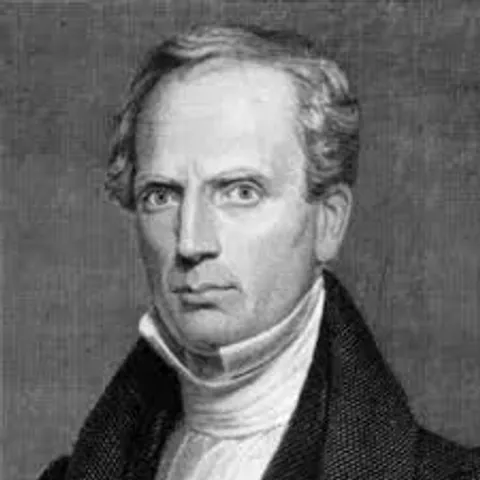
Charles Finney
 Childhood and Teen years
Charles Grandison Finney was born the year after Wesley died on 29th August, 1792 in Warren, Connecticut. In 1794 his family moved to New York state, eventually settling at Henderson, near Lake Ontario. Although he received only a brief formal education he decided to study law and joined the practice of a local lawyer, Benjamin Wright. He was also very musical, played the cello and directed the choir at the local Presbyterian Church pastured by Rev. George Gale.
His conversion
His conversion on October 10th 1821 reads like something out of the book of Acts. Smitten with conviction from Bible reading he decided to ‘settle the question of my soul’s salvation at once, that if it were possible, I would make my peace with God.’ (Autobiography)
This conviction increased to an unbearable level over the next couple of days and came to an head when he was suddenly confronted with an ‘inward voice.’ He was inwardly questioned about his spiritual condition and finally received revelation about the finished work of Christ and his own need to give up his sins and submit to Christ’s righteousness.
As he sought God in a nearby wood he was overwhelmed with an acute sense of his own wickedness and pride but finally submitted his life to Christ. Back at work that afternoon he was filled with a profound sense of tenderness, sweetness and peace. When work was over and he bade his employer goodnight, he then experienced a mighty baptism in the Holy Spirit, which was recorded as vividly as the day he experienced it, though it was penned some fifty years later.
The next morning Finney announced to a customer that he was leaving his law studies to become a preacher of the Gospel.
Charles Finney licensed to preach
He was licensed to preach in 1823 and ordained as an evangelist in 1824. His penetrating preaching was quite different from many local ministers and included an obvious attempt to break away from the traditional and, as he saw it, dead, orthodox Calvinism. He married to Lydia Andrews in October 1824 and was also joined by Daniel Nash (1774-1831), known popularly as ‘Father Nash.’ Undoubtedly Nash’s special ministry of prayer played a great part in Finney’s growing success as an evangelist.
Things really took off when he preached in his old church, where Rev. Gale still ministered. Numerous converts and critics followed! Similar results were experienced in nearby towns of Rome and Utica. Soon newspapers were reporting his campaigns and he began drawing large crowds with dramatic responses.
Soon he was preaching in the largest cities of the north with phenomenal results. Campaign after campaign secured thousands of converts.
The high point of Finney’s revival career was reached at Rochester, New York, during his 1830-1 meetings. Shopkeepers closed their businesses and the whole city seemed to centre on the revivalist. Responding to his irresistible logic and passionate arguments many of his converts were lawyers, merchants and those from a higher income and professional status.
His Preaching
Finney openly preached a modified Calvinism, influenced with his own theology of conversion and used what were perceived to be ‘revivalistic techniques.’
These ‘means’ included the use of the anxious bench (a special place for those under conviction), protracted meetings, women allowed to pray in mixed meetings, publicly naming those present resisting God in meetings and the hurried admission of new converts into church membership. Opponents viewed his preaching of the law as ‘scare tactics’ and his persuasive appeals for sinners to come to Christ for salvation were seen as over-emphasising the responsibility of men and ignoring the sovereignty of God.
His theology and practise soon became known as the ‘New Measures’ and attracted many opponents from the Old School Presbyterians led by Asahel Nettleton (himself no stranger to true revival and , the revivalistic Congregationalists headed by Lyman Beecher.
Pastor at Chatham Street Chapel
Finney accepted an appointment as pastor of Chatham Street Chapel in New York City in 1832 where he remained until 1837. It was during this time that he delivered a series of sermons published in 1835 as ‘Lectures on Revivals of Religion.’ Here he clearly stated his views regarding revivals being products of the correct use of human means. Such was the controversy that he left the Presbyterian denomination and joined the Congregationalists in 1836.
Oberlin College
The next year he became professor of theology at Oberlin College (Ohio) where he taught until his death. He was President here from 1851 until 1866, but still continued regular revival meetings in urban settings (twice in England, 1848, 1851) until 1860. During his stay at Oberlin he produced his, Lectures to Professing Christians (1836), Sermons on Important Subjects (1839) and his famous Memoirs.
The Father of Modern Revivalism
There is no doubt that Charles Grandison Finney well-deserves the title ‘The Father of Modern Revivalism.’ He was an evangelistic pioneer whose model was followed by a long line of revivalists from D. L. Moody to Billy Graham. His writing have made a massive impact on the entire evangelical world and particularly the ‘Lectures on Revivals’ which has, arguably, ignited more fires of revival than any other single piece literature in evangelical history.
This ‘Prince of Revivalists’ passed away peacefully at Oberlin on Sunday, 16th August, 1875 aged almost 83 years.
Bibliography: I Will Pour Out My Spirit, R. E. Davies, 1997; Ed: A. Scott Moreau, Baker Evangelical Dictionary of World Missions, 2000; Dictionary of Evangelical Biography 1730-1860, Vol. 1, 1995.
Tony Cauchi
Childhood and Teen years
Charles Grandison Finney was born the year after Wesley died on 29th August, 1792 in Warren, Connecticut. In 1794 his family moved to New York state, eventually settling at Henderson, near Lake Ontario. Although he received only a brief formal education he decided to study law and joined the practice of a local lawyer, Benjamin Wright. He was also very musical, played the cello and directed the choir at the local Presbyterian Church pastured by Rev. George Gale.
His conversion
His conversion on October 10th 1821 reads like something out of the book of Acts. Smitten with conviction from Bible reading he decided to ‘settle the question of my soul’s salvation at once, that if it were possible, I would make my peace with God.’ (Autobiography)
This conviction increased to an unbearable level over the next couple of days and came to an head when he was suddenly confronted with an ‘inward voice.’ He was inwardly questioned about his spiritual condition and finally received revelation about the finished work of Christ and his own need to give up his sins and submit to Christ’s righteousness.
As he sought God in a nearby wood he was overwhelmed with an acute sense of his own wickedness and pride but finally submitted his life to Christ. Back at work that afternoon he was filled with a profound sense of tenderness, sweetness and peace. When work was over and he bade his employer goodnight, he then experienced a mighty baptism in the Holy Spirit, which was recorded as vividly as the day he experienced it, though it was penned some fifty years later.
The next morning Finney announced to a customer that he was leaving his law studies to become a preacher of the Gospel.
Charles Finney licensed to preach
He was licensed to preach in 1823 and ordained as an evangelist in 1824. His penetrating preaching was quite different from many local ministers and included an obvious attempt to break away from the traditional and, as he saw it, dead, orthodox Calvinism. He married to Lydia Andrews in October 1824 and was also joined by Daniel Nash (1774-1831), known popularly as ‘Father Nash.’ Undoubtedly Nash’s special ministry of prayer played a great part in Finney’s growing success as an evangelist.
Things really took off when he preached in his old church, where Rev. Gale still ministered. Numerous converts and critics followed! Similar results were experienced in nearby towns of Rome and Utica. Soon newspapers were reporting his campaigns and he began drawing large crowds with dramatic responses.
Soon he was preaching in the largest cities of the north with phenomenal results. Campaign after campaign secured thousands of converts.
The high point of Finney’s revival career was reached at Rochester, New York, during his 1830-1 meetings. Shopkeepers closed their businesses and the whole city seemed to centre on the revivalist. Responding to his irresistible logic and passionate arguments many of his converts were lawyers, merchants and those from a higher income and professional status.
His Preaching
Finney openly preached a modified Calvinism, influenced with his own theology of conversion and used what were perceived to be ‘revivalistic techniques.’
These ‘means’ included the use of the anxious bench (a special place for those under conviction), protracted meetings, women allowed to pray in mixed meetings, publicly naming those present resisting God in meetings and the hurried admission of new converts into church membership. Opponents viewed his preaching of the law as ‘scare tactics’ and his persuasive appeals for sinners to come to Christ for salvation were seen as over-emphasising the responsibility of men and ignoring the sovereignty of God.
His theology and practise soon became known as the ‘New Measures’ and attracted many opponents from the Old School Presbyterians led by Asahel Nettleton (himself no stranger to true revival and , the revivalistic Congregationalists headed by Lyman Beecher.
Pastor at Chatham Street Chapel
Finney accepted an appointment as pastor of Chatham Street Chapel in New York City in 1832 where he remained until 1837. It was during this time that he delivered a series of sermons published in 1835 as ‘Lectures on Revivals of Religion.’ Here he clearly stated his views regarding revivals being products of the correct use of human means. Such was the controversy that he left the Presbyterian denomination and joined the Congregationalists in 1836.
Oberlin College
The next year he became professor of theology at Oberlin College (Ohio) where he taught until his death. He was President here from 1851 until 1866, but still continued regular revival meetings in urban settings (twice in England, 1848, 1851) until 1860. During his stay at Oberlin he produced his, Lectures to Professing Christians (1836), Sermons on Important Subjects (1839) and his famous Memoirs.
The Father of Modern Revivalism
There is no doubt that Charles Grandison Finney well-deserves the title ‘The Father of Modern Revivalism.’ He was an evangelistic pioneer whose model was followed by a long line of revivalists from D. L. Moody to Billy Graham. His writing have made a massive impact on the entire evangelical world and particularly the ‘Lectures on Revivals’ which has, arguably, ignited more fires of revival than any other single piece literature in evangelical history.
This ‘Prince of Revivalists’ passed away peacefully at Oberlin on Sunday, 16th August, 1875 aged almost 83 years.
Bibliography: I Will Pour Out My Spirit, R. E. Davies, 1997; Ed: A. Scott Moreau, Baker Evangelical Dictionary of World Missions, 2000; Dictionary of Evangelical Biography 1730-1860, Vol. 1, 1995.
Tony Cauchi
marriage and divorce: a scriptural examination of the subject of divorce and remarriage of divorced believers
"The Pharisees also came unto him, tempting him, and saying unto him, Is it lawful for a man to put away his wife for every cause? And he answered and said unto them, Have ye not read, that he which made them at the beginning made them male and female, And said, For this cause shall a man leave father and mother, and shall cleave to his wife: and they twain shall be one flesh? Wherefore they are no more twain, but one flesh. What therefore God hath joined together, let not man put asunder." Matthew 19:3-6. This is the answer of our Lord Jesus Christ Himself to a question which is as old as sin itself is in the world. It is a very difficult question, one which cannot be answered by a simple "yes" or "no", or by a general statement containing all angles and various aspects of the question. The question of divorce is an age-old question, already presenting itself to the children of Israel in the time of Moses. Now the Bible is very clear on the matter of divorce itself, and if it were merely a question of who are permitted to obtain a divorce, we could answer it in a sentence or two, and be through with the matter entirely. But a second question arises which is more complicated and on which there is by no means uniformity of opinion or agreement among sincere and earnest Bible students. This is the question of the remarriage [of] these divorced persons. Some people say, "yes, the innocent party is allowed to remarry", while other ones say that either one of the parties is free to remarry. But there are others who say that neither of the parties are ever to be remarried again during the life of the other mate. Now both sides claim to have Scripture to substantiate their positions, and many on both sides, we must agree, are equally sincere. Calls for Re-Examination But while men disagree and argue the matter, the evil grows apace, and the divorce rate mounts and rises with alarming speed, leaving in its wake an ever-increasing trail of broken homes, juvenile delinquency, immorality, and crime. Surely there is something wrong somewhere. Somewhere along the line there has been a break-down of God's original purpose in the establishment of the Christian home. In answer to the question of the Pharisees, therefore, the Lord Jesus Christ said: "From the beginning it was not so. And I say unto you, Whosoever shall put away his wife, except it be for fornication, and shall marry another, committeth adultery." Matthew 19:8-9 Not So From Beginning Our Lord Jesus says, "from the beginning it was not so." God never intended the remarriage of divorced persons, for God never intended that there should ever be a divorce, and without divorce, of course, there could be no opportunity of the remarriage of the divorced ones. Somewhere along the line, therefore, something must have happened. Of course, we know what it was in a general way, for it was sin which came in and perverted God's plan, and brought about this lamentable condition which is causing such a problem today. Divorce is always wrong. Divorce is the result of sin—sin on the part of at least one of the parties in the marriage contract, and oftentimes on the part of both. Trace to Its Source In this series of messages we wish, therefore, to study the following aspects of this growing and serious evil: 1. The Scope of this divorce evil. 2. The Cause of this evil. 3. The Scriptural teaching on this question of divorce and remarriage. 4. The prevention of this evil. 5. Certain special cases. Before we take these up in detail, however, I want to give a word of explanation. I approach the subject with great fear and trembling, and only after putting off the matter of bringing this series longer than I possibly should have done. I realize that what I shall have to say from the Scriptures may not prove too welcome to a great host of individuals, that it will be painful to others, and I wish sincerely that I could avoid the entire situation, but as a faithful preacher of the gospel of the Lord Jesus Christ, I simply have no choice in this matter. If I am to be faithful to my commission and to the Word of God, it must be dealt with by the faithful servant of the Lord. May I also make clear that I do not mean in any way to legislate but only to bring what I believe to be the clear teaching of the Word of God, brought to you with the deepest sympathy and with the deepest desire to help those who have fallen into this evil, and especially to prevent it from being repeated by those who are facing this problem. I am very deeply conscious of the fact that in many, many cases, probably the majority of cases, little can be done to correct the evil and the heartache, since circumstances usually prevent the making of restitution or the undoing of the damage which has already been done. These instances have, of course, our deepest sympathy. It is only after much exercise in prayer that we attack this problem once again, recognizing the delicacy of the subject which we are to discuss. We want to be just as straightforward and strict as the Bible, yet do it in love and deep tenderness and sympathy for all those who may be affected, rather than blame or condemn, or sit in judgment upon them. Seek Prevention We shall, therefore, aim at prevention of this evil, rather than the cure. The average case of divorce and remarriage is so involved that in most cases there is no possibility of restitution or reconciliation. In such cases we can only extend our deepest sympathy, without in any sense justifying the mistake. We can pray for such who are victims of this blighting evil, and can only advise such to make the best of a bad bargain, and bear their cross in humble repentance, and be willing to pay the price of "reaping that which they have sown." It is, therefore, the rather in the hope of preventing the disaster of divorce that we bring these messages; for once it has occurred, it is rarely possible to undo the damage. It usually results in such a tangle and such a mess of complicated situations that no human can unravel it. And what a mess men and women get themselves into! Probably the most frequent problems and questions we receive in our daily mail at the Radio Bible Class are questions by our listeners seeking help and advice in matters of domestic problems. Some of the letters literally make us weep as we read them, and often we remark among ourselves, "How in the world is it possible for people to become so involved and get themselves into such a tangled mess!", and then they expect us to solve it for them, and write to us in desperation for our help. In many, many cases we can only sympathize and promise to pray for them, and advise them to accept their penalty in a spirit of repentance and submission for after the damage is done, there is usually little that we can do. Many Helped These situations are pathetic, and we feel badly because we cannot be a greater help and assistance to them. But there is also an encouraging angle to all of this work, for we receive many, many letters of quite another kind. Years ago we brought several radio messages on this subject, and printed them in a booklet of which hundreds of thousands have been distributed. We have received since then countless letters of appreciation from folks who were prevented from making the mistake of an unscriptural marriage or an unscriptural divorce, and as a result of reading this booklet have been spared the heartache of this unpleasant experience. We receive countless letters like the following: "I want to thank you for the timely alarm your booklet on marriage sounded in my life. I was about to enter into an unscriptural marriage when I read your booklet, just in the nick of time. Yes, I say, in the nick of time, for I was about to marry into what I know now was an unholy union. As I look back now, I shudder to think what the result would have been if I had not received your message just in time. Thank God for putting it into my hands at the time that He did." Because of numerous letters and testimonies like this one, we feel that we must bring another series on this subject in the hope of preventing similar tragedies. Again let me emphasize, we have only sympathy for those who are suffering today, because they either did not know God's Word, or they were disobedient to their own convictions. We shall pray for you, and wish we could help you, but our main purpose as I stated before, is to prevent it from happening by a frank, scriptural discussion of the matter as we see it in the Word of God. Not Sentiment We approach the subject solely from the scriptural standpoint. My own sympathies are not to be the judge; my own sentiments are not to be my guide. It must be the Word of God. Many and many a time I have wished that I could follow my own sympathies and sentiments and help people, and possibly let down the bars just a little bit when I realized what loneliness and self-restraint following the Bible rule would inflict on these unfortunate victim's of someone else's sin, but we dare not go beyond the "Thus saith the Lord." To the task, therefore, and may the Lord give us divine wisdom and understanding, and a heart of faith to believe and abide by His Word, and sympathy at all times. The Nature of Sin First of all then, we want to look at the nature of this evil. We shall not waste time by quoting statistics to prove the appalling increase in the divorce rate in the past generation. The facts are all too evident, recognized by everyone, and if you want detailed statistics, you have but to write to the Department of Vital Statistics in Washington, and they will give you all of the information you desire on this particular subject. First of all then, the nature of the sin of divorce. The breakup of the home by divorce is a sin against at least five things. It is a sin against: 1. God 2. Society 3. The Home 4. The Family 5. Self It is first of all then a sin against Almighty God. In Matthew 5:31, Jesus quotes a passage often used to justify divorce. "It hath been said, Whosoever shall put away his wife, let him give her a writing of divorcement." Matt. 5:31 Now in this verse Jesus refers to the law of Moses as quoted from Deut. 24:1 where Moses plainly says: "When a man hath taken a wife, and married her, and it come to pass that she find no favour in his eyes, because he hath found some uncleanness in her: then let him write her a bill of divorcement, and give it in her hand, and send her out of his house. And when she is departed out of his house, she may go and be another man's wife." Deut. 24:1-2 Now, of course, if this were the only Scripture in the entire Bible, it could easily be argued that a divorce is permitted and the divorced party is again allowed to remarry, and indeed, this Scripture is constantly brought up and used to justify the remarriage of divorced individuals. But this was under the law, and only PERMITTED it, but never justified it. It was still wrong. This is perfectly evident from Jesus' words in Matthew 5:32 where He says: "BUT I say unto you, That whosoever shall put away his wife, saving for the cause of fornication, causeth her to commit adultery: and whosoever shall marry her that is divorced committeth adultery." Matt. 5:32 Now the important word here is B-U-T. Jesus admits that under the law divorce and remarriage was "suffered", and then He adds BUT — BUT I say unto you, it is still wrong. To understand this seeming contradiction, we turn to Matthew 19:8. In this chapter our Saviour says: "From the beginning it was not so." Only one man and only one woman were originally permitted during the life of both individuals. The Pharisees, like so many today, looking for a loop-hole to justify divorce and remarriage, therefore refer Jesus to these words of Moses, and I read: "They [the Pharisees] say unto him, Why did Moses then command to give a writing of divorcement, and to put her away?" Matt. 19:7 Now notice very carefully the answer of our Lord Jesus: "He saith unto them, Moses because of the hardness of your hearts SUFFERED you to put away your wives: BUT FROM THE BEGINNING IT WAS NOT SO. AND I SAY UNTO YOU, Whosoever shall put away his wife, except it be for fornication, and shall marry another, committeth adultery: and whosoever marrieth her which is put away doth commit adultery." Matt. 19:8-9 Now this explains the entire situation. Jesus said it was not meant to be so originally at all. Moses suffered the people of Israel to divorce the wife. Notice that carefully. He SUFFERED it, but never endorsed it, and never justified it. And then our Lord Jesus Christ, speaking with Divine authority, adds the rule which now applies, and supersedes the rule of Moses: "BUT I SAY UNTO YOU." Our Saviour says it is still wrong, it is still a sin, except for one cause — fornication, unfaithfulness on the part of the husband or wife. This unfaithfulness constitutes the one and only ground for Scriptural divorce we find anywhere, but never the ground for remarriage. We shall go into detail concerning this in our coming messages. Chapter Two Divorce is always the result of sin. If sin had not entered, there would never have been a broken home, no divorce, no abandoned children. Behind every divorce, therefore, there is the great monster of sin — sin on the part of at least one of the parties involved, and too often sin on both sides. Divorce is a sin again God, a sin against society, a sin against the family, and a sin against one's self. The growing evil of divorce has left a sordid trail of broken homes, juvenile delinquency, and moral corruption in its wake. In an effort to stem the tide, and prevent the tragedy from being repeated in the lives of others before it is too late we bring this series of difficult messages. The Original Home Marriage is a divine institution. We have the record of the first marriage in history in Genesis 2, where the inspired record reads as follows: "And the LORD God said, It is not good that man should be alone; I will make him an helpmeet for him... And the LORD God caused a deep sleep to fall upon Adam, and he slept: and he took one of his ribs, and closed up the flesh thereof; And the rib, which the Lord God had taken from man, made he a woman, and brought her unto the man. And Adam said, This is now bone of my bones, and flesh of my flesh: she shall be called Woman, because she was taken out of Man. Therefore shall a man leave his father and his mother, and shall cleave unto his wife: and they shall be one flesh." Gen. 2:18, 21-24 Here we have the record of the first wedding, where a man and woman not previously married, are wedded by the Lord God, and blessed by Him. When God made them, He made them a pair and not a harem. One man — Adam; and one woman — Eve. And as far as we know from the record, they remained in that relationship, until the death of both. God created them male and female — not male and females created He them. Never Changed This relationship between husband and wife was never intended to be dissolved during the life of both. But after sin entered, things began to change and the problem of divorce immediately arose. During the past two decades the rate has increased with such alarming speed and rapidity, that in a generation or two if the present rate continues, the whole sanctity of marriage will have disappeared and the race will be little different than the animals about us. Cause of Broken Homes Before taking up the Bible teaching on the reasons on which divorce may be obtained, we want to spend a little time on the Causes of Divorce. If we can attack this evil at its source, we shall be able to avert many, many tragedies. There are many contributing causes for the increase of broken homes, but we shall mention the most common and the most serious ones which have come to our attention in many years of dealing and counseling with people, in regard to this matter. The first cause of the broken home we wish to mention is immature marriage. By this we mean marriage at an age before the parties are sufficiently mature to understand the seriousness and the obligations and the responsibilities of married life. We cannot, of course, set an age, since some people mature earlier than others. However, it is far safer to wait than to rush into it, and then to rue it afterwards. Closely associated with immaturity in marriage is the short engagement and the hasty marriage so common in these days. Nothing but a miracle can prevent tragedy where youngsters and oldsters as well, marry after only a few days, or at best a few weeks of superficial acquaintance. A step as serious as marriage should be undertaken only after the most solemn and careful, thorough consideration. Apart from your conversion to the Lord Jesus Christ, marriage is the most important decision of your entire life. May we state here again, that what we have to say has its special application to those of you who claim to be believers in the Lord Jesus Christ. We can, of course, not expect those who disclaim the authority of the Bible, and who have not received Christ as their Saviour to submit themselves to the Word of the Lord, until they too are believers. Marriage Without Prayer The second cause for the broken home is failure to pray about your marriage. I, of course, am now speaking of Christians again, believers. These words are especially to you who profess to know the Lord Jesus and in your case marriage should never be considered until after you have prayed about it definitely, alone and together, and sought God's will in regard to your life's mate. Yet how few think about praying about this all-important matter. You pray about your home, your job, your health, your business, your crops, — why not about this most important matter of marriage? How few lovers have learned to pray together about their plans for their married life. Nothing can insure a happy future married life like seeking the Lord's leading together in the matter and being sure that God is bringing you together when it happens. No Christian should ever dare to enter the marriage contract without fervent prayer, for he will only be courting disaster. Mixed Marriages The third and most frequent cause of broken homes and divorces is the matter of "mixed marriage", resulting in clashes of personality, incompatability, and strife. By a mixed marriage, we mean several things; such as, first of all, marriage between believers and unbelievers. By mixed marriage we also mean the marriage of persons of different nationality and race, whose interests and sentiments are so diverse as to be sure to cause unhappiness and strife. Now we realize that this is a very delicate subject, especially today when we hear so much of tolerance and the wiping out of social, racial, and religious barriers and discriminations. But what I have to say is by no means born of discrimination, and casts no aspersion on any group or class whatsoever. It applies to all of them. I merely assert that where the habits and the customs, the national, racial and religious differences of persons, are such that they prevent unity in the home of worship and cooperation, and oneness of purpose, they can only bring divorce and separation. Inter-marriage of persons of different faiths so divergent that they prevent the fellowship together in one place and on one authority, only tends further to the breakup of the home. The Unequal Yoke The Bible leaves no room for doubt concerning God's will in regard to the marriage of believers with unbelievers. In 2nd Corinthians 6:14 we read: "Be ye not unequally yoked together with unbelievers: for what fellowship hath righteousness with unrighteousness? and what communion hath light with darkness? And what concord hath Christ with Belial? or what part hath he that believeth with an infidel? And what agreement hath the temple of God with idols? for ye are the temple of the living God; as God hath said, I will dwell in them, and walk in them; and I will be their God, and they shall be my people. Wherefore come ye out from among them, and be ye separate, saith the Lord, and touch not the unclean thing; and I will receive you. And will be a Father unto you, and ye shall be my sons and daughters, saith the Lord Almighty." 2 Cor. 6:14-18 Marriage between believers and unbelievers then is strictly and absolutely forbidden in the Scriptures. They have too few things in common to assure any hope of happiness. And in the same connection, marriage between two professing Christians of different faiths and races is equally dangerous. Where the religious beliefs, the national or racial temperaments are so radically different that unity of worship and devotion and oneness of purpose in raising a family are impossible, or exceedingly difficult, only sorrow and disaster can be expected. The happiest marriages are those which remain in their own compatible circle, and upon the same general social level. Young people, may I warn you in the name of the Lord, to avoid the mixed marriage. Childless Marriage Another cause of the broken home is childless marriages. The marriage institution was given by God for two main purposes: 1. Mutual help and fellowship 2. Perpetuation of the race First of all then, marriage was given by God for the purpose of fellowship. He said definitely in Genesis 2: "...It is not good that man should be alone; I will make him an help meet for him." Gen. 2:18 They are to work together and mutually assist one another. This is all implied in the word "help meet". For this reason, of course, marriage should only be contracted between parties whose interests and ideals, customs and desires, religious beliefs, and national tendencies are similar enough to allow the fullest agreement and fellowship between them. The second purpose for the establishment of the home is for the perpetuation of the race. The very first command which God gave to man after He had created him, was: "Be fruitful, and multiply, and replenish the earth, and subdue it." Gen. 1:28 God wants husbands and wives to become fathers and mothers. That is the primary purpose of marriage, the rearing of a family of children to the glory of God. To refuse this great purpose of God, to refuse to do so when possible, is to thwart the very purpose of God, to stifle the normal instinct of fatherhood and the longing passion of motherhood, and can only result in frustration, and the expression of those otherwise normal impulses and desires for parenthood in other sinful outlets. The modern program of birth control, planned families, and race suicide are not only quite foreign to the Word of God, but a prime cause of the broken home today. The normal instinct of every normal woman is to become a mother, and the family and marriage is God's method of fulfilling this desire. Scripture Teaching All through the Scriptures the blessing and dignity of motherhood is extolled and exalted, and the refusal to assume the responsibilities and blessings of parenthood are vigorously condemned. David says in Psalm 128: "Blessed is every one that feareth the LORD; that walketh in his ways. For thou shalt eat the labour of thine hands: happy shalt thou be, and it shall be well with thee. Thy wife shall be as a fruitful vine by the sides of thy house: thy children like olive plants round about thy table. Behold, that thus shall the man be blessed that feareth the LORD." Psalm 128:1-4 It surely is a far cry from those days to these in which we live now, when civilization looks upon families of children as a calamity, a burden to be avoided, and considers marriage as little more than legalized license to give vent to man's desire for expression of this basic instinct of parenthood, without assuming its responsibilities. It is time some of us raised our voices against this modern extreme of birth control, planned families, and infanticide. Refusal of the responsibilities of parenthood is thus an all too frequent cause of unfaithfulness and divorce. Now we have time for just one other cause of the broken home. So far we have seen four causes of the broken home: 1. Immature, early marriage. 2. Hasty marriages. 3. Mixed marriages. 4. Childless marriages. Last but not least, is the breakdown of the family altar in the average home. The simple home of yesteryear has been invaded by the magazine, the funny paper, the radio, and television, and the altar fires have gone out. Some one has said "the family that PRAYS together— STAYS together." Let me repeat that, because it can bear repetition: "The family that prays together stays together." Chapter Three The Bible recognizes only one single ground for divorce among professing believers: fornication, or adultery. The two terms, fornication, and adultery, are used interchangeably, to describe unfaithfulness on the part of either one of a married couple. There is no other ground for divorce given in the Scriptures anywhere. The Bible knows absolutely nothing about divorce on the ground of incompatibility, mental cruelty, and the like. Except in those questionable cases of prenuptial impediment or deliberate fraud of such a character as to make the relationship of husband and wife utterly impossible, so that there has in reality never been a marriage, the Bible countenances no dissolution of the marriage relationship except on the ground of unfaithfulness. Even then divorce is not commanded, but permitted. If the innocent party has sufficient grace, forgiveness, and the love of God in his or her heart, and is spiritual enough to forgive and seek to save the home in spite of justifiable grounds for divorce, so much the better, and so much to the credit of the mate, who like Jesus could forgive and forget. We come today to a different problem however. In our past messages we have discussed the evils of divorce and some of the more important causes for divorce. Today we wish to take up the question of separation of husband and wife short of actual divorce. For our Scripture we refer you to 1st Corinthians, chapter 7: "I say therefore to the unmarried and widows, It is good for them if they abide even as I. But if they cannot contain, let them marry: for it is better to marry than to burn. And unto the married I command, yet not I, but the Lord, Let not the wife depart from her husband: But and if she depart, let her remain unmarried, or be reconciled to her husband: and let not the husband put away his wife. But to the rest speak I, not the Lord: If any brother hath a wife that believeth not, and she be pleased to dwell with him, let him not put her away. And the woman which hath an husband that believeth not, and if he be pleased to dwell with her, let her not leave him. For the unbelieving husband is sanctified by the wife, and the unbelieving wife is sanctified by the husband: else were your children unclean; but now are they holy. But if the unbelieving depart, let him depart. A brother or a sister is not under bondage in such cases: but God hath called us to peace. For what knowest thou, O wife, whether thou shalt save thy husband? or how knowest thou, O man, whether thou shalt save thy wife? " 1 Cor. 7:8-16 This passage, you will notice, is divided into two distinct sections, the first dealing with the matter of the remarriage of divorced couples which we shall deal with in our coming messages. The second section deals with quite another problem. It is introduced by Paul with these words: "But to the rest speak I, not the Lord." Now many have taken this to mean that what follows is not of equal authority with verse 10, where Paul says: "And unto the married I command, yet not I, but the Lord." But there is really no contradiction here at all. In the first instance Paul only repeats what Scripture had already taught beforehand, that divorce is always wrong, but when it does occur the parties should remain single or be reconciled to one another. This as we shall see was no new revelation. But then Paul introduces a new problem, on which the Bible had not spoken previously until now, Paul brings this as a new revelation. And so he says, "And to the rest speak I, not the Lord." The meaning, of course, is plain. This is a new revelation of a problem which had not arisen before, and was not found in the Word of the Lord. The problem simply was this. Paul had preached the gospel in Corinth, and many had believed and been saved. In many instances only one member of the family had believed, and as a result a situation arose where the husband was a believer, a Christian, while the wife remained an unbeliever, or vice versa. This resulted in an unhappy and tragic situation. The believing wife, or husband, seeking to please God could not continue in her sinful life with her unbelieving mate. Their interest now were utterly at variance. The unbelieving mate wanted to live in the world, indulge in sinful practices, visit worldly places of pleasure and amusement, while the believing mate, husband or wife, could not conscientiously go along but desired rather to meet with God's people, be busy with spiritual things, go to prayer meeting instead of the theatre, to church instead of the tavern. The result could only be conflict and unhappiness and friction. The Great Question Now the question which arose naturally was this: What is a believer to do in such a case? Is a believing wife justified in leaving her unsaved husband? Living with the unbeliever would entail unhappiness and might hinder her Christian fellowship. Now sentiment would say, of course, "Leave him". Many would justify a separation under these conditions. But what is God's revelation through Paul? It is very simply stated by him in this chapter. Believer Not To Leave The believer is to remain with her mate, husband or wife, as long as the unbeliever does not depart. There is no mistaking the revelation. "If any brother hath a wife that believeth not, and she be pleased to dwell with him, let him not put her away. And the woman [a believer] which hath an husband that believeth not, and if he be pleased to dwell with her, let her not leave him." 1 Cor. 7:12, 13 Comment hardly seems necessary as the language is as plain as language can possibly be. The believer is to "stick it out", and to bear the cross. It may mean hardship, testing, and unhappiness, but if he or she is a real Christian, they will be willing to pay the price and prove the reality of their testimony by being the least in all cases, bearing the burden as an evidence of the grace of God in their own hearts. Now that does seem exceedingly severe, and it truly is very severe. It really puts one's Christianity to the test. But when we consider the reasons which Paul gives for such action, and what is involved, I think that you will see the advisability of this command. Why Not Leave And so Paul gives his reasons WHY the believer should stay with the unbelieving mate in spite of everything. We repeat Paul's words: "For the unbelieving husband is sanctified by the wife and the unbelieving wife is sanctified by the husband: else were your children unclean; but now are they holy." 1 Cor. 7:14 The difficulty so many have with this verse is due to the use of the word, "sanctified". What does Paul mean, "the unbelieving husband is sanctified by the wife." What does Paul mean by these words? Does it mean that an unbeliever is "saved" just because he is married to a believer? Certainly this cannot be the meaning. No one believes this nor does the Bible teach any such doctrine. Then what does it mean? Three Meanings of "Sanctify" All will be clear if we will just remember that "sanctification" can mean any one of three things in Scripture. Certain objects and things and persons are said to be "sanctified" in the Bible. God sanctified the seventh day (Genesis 2:3). All the first-born in Israel were to be sanctified (Exodus 13:23). The tabernacle in the wildenness was sanctified (Exodus 29:44). The altar, the laver, and accessories of the tabernacle are also said to be sanctified (Lev. 8:11). We might go on and on, but from these you will see immediately that the use of the word, "sanctify" here means simply "a setting apart" from other things or objects, for a particular privilege. It means to be separated, set apart for a particular purpose. In no sense does it mean salvation or sinlessness. Certainly a tabernacle cannot be said to be saved, or a day cannot be said to be saved, or a tabernacle or an altar said to be sinless. The second meaning of the word, sanctification, is to be set aside for salvation. This is said only of believers. We who have believed, are positionally sanctified in Christ through faith. All believers, therefore, are positionally sanctified, set apart, as being perfect in Him, through faith. The third meaning of "sanctification" refers to practical holiness, or our growth day by day in grace, being conformed to the image of Christ, a daily, progressive mortifying of the flesh, and the old man, and a growing up in Him, in holiness of walk, conversation, and conduct. Now the meaning of the words, "the unbelieving husband is sanctified by the wife", refers to the first meaning which we gave of sanctification. The unbeliever by his association with the believer is "sanctified", placed in a position of privilege, set apart in a place where the influence of a believing mate may ultimately result in his salvation. That is the reason the believer is not to "leave" the unbeliever. As long as she continues to live with him, she can influence him for God. But if she leaves him, she loses all contact, and cuts off her one great opportunity of ultimately winning him for the Lord Jesus. If they separate, her opportunity is ended and gone. Therefore, for the sake of, and in the hope of winning her husband, or of the believing husband winning the wife for Christ, they are to remain with them. Very, very true — it may be difficult and hard, but no cost is too great if we can win them for Christ, for even Jesus was willing to suffer the agonies of Calvary in order to save us. This is the reason then that a believing wife or husband should never leave their unbelieving mate. And so Paul concludes this section: "For what knowest thou, O wife, whether thou shalt save thy husband? or how knowest thou, O man, whether thou shalt save thy wife?" 1 Cor. 7:16 But Children Also And what is true of the husband and wife, is still more true if there be children in the home, and that is exactly what verse 14 means: "Else were your children unclean; but now are they holy." Now the word for "holy" is the very same word which is used for "sanctified" in the original, and may just as well be translated: "else were your children unclean: but now are they sanctified." As long as the home is intact, the children are in the place of privilege, and under the influence of a Christian, believing parent. They are "holy"—"sanctified", that is, "set apart", because of the believing father or mother. This does not, of course, mean that the children are saved because they have a Christian father or mother, but it greatly increases the possibility that they will be saved, due to their influence. They are, therefore, in the position of privilege, sanctified, set apart in a place where they are under the influence of the gospel. But if the home is broken up, think of its effect on those children. Some may go with the unbelieving parent, and you will lose your influence over them completely and permanently. Or even though, they remain with the believer, the stigma of a broken home will be a real obstacle in influencing them for Christ. And so we may sum up the teaching as follows. A believer in the hope and with the prayer for the salvation of her or his mate, and the children, should remain with the unbelieving husband or wife for the sake of winning the family for Christ. But if the unbeliever depart, there is nothing the believer can do. Paul says very definitely: "But if the unbelieving depart, let him depart. A brother or sister is not in bondage in such cases: but God has called us to peace." 1 Cor. 7:15 There may be cases where it were better for the family, especially for the children, if they could be free from the ungodly influence of an unbelieving parent. But the believer is not to be the one to effect that separation. Only if the unbeliever departs, is the believer justified in his or her position. And so, my Christian friend, if I have described the situation which exists in your home, I pray that what we have said may help you to do God's will, and not take the easy path of least resistance out of your difficulty. Remember that there are souls at stake, precious souls for eternity. Your loved ones' destinies hinge on your decision. If you will be obedient, if you will bear your cross, God will own your sacrifice, and give you a crown, I am sure. Think twice, and pray thrice, before you act. Amen. Chapter Four "Now concerning the things whereof ye wrote unto me: It is good for a man not to touch a woman. Nevertheless, to avoid fornication, let every man have his own wife, and let every woman have her own husband." 1 Cor. 7:1-2 A very serious question had arisen in the church at Corinth, and the members of the church had written a letter to Paul concerning this question, as indicated by verse 1: "Now concerning the things whereof ye wrote unto me." There seemed to be some ascetically inclined persons in Corinth, who intimated that marriage was sinful, or if not exactly sinful, there was at least an added, additional virtue in remaining single, and leading a celibate life. To this Paul answers, that neither state is more holy than the other. Let each man (and woman) be persuaded in their own mind, and so he says: "It is good for a man not to touch a woman. Nevertheless, to avoid fornication, let every man have his own wife, and let every woman have her own husband." It is entirely a personal matter, as far as Paul is concerned, and we are accountable to God alone in this decision. But there was another matter which, in the mind of Paul, was far more serious. It was the matter of divorce and the remarriage of divorced people. He says, therefore, in verse 10: "And unto the married I command, yet not I, but the Lord, Let not the wife depart from her husband: But and if she depart, let her remain unmarried, or be reconciled to her husband: and let not the husband put away his wife." 1 Cor. 7:10-11 Now you will notice that two things are stated in this passage. First of all, there should be no divorce. The language is crystal clear, when Paul says, "Let not the wife depart from her husband." "Let not the husband put away his wife." Divorce then is an evil which should never even be thought of or mentioned among believers. But the fact is that it does come up, and Scripture, taking this into consideration, because of the weakness of human nature, has permitted divorce on one ground only, and that is marital unfaithfulness of one party in the marriage. And that naturally brings up the second matter. When divorce on this Scriptural ground is obtained, what about the question of remarriage of the parties concerned? To this Paul replies: "But and if she depart, let her remain unmarried, or be reconciled to her husband." 1 Cor. 7:11 This seems to sum up clearly, as briefly as possible, the teaching on this hotly debated question. Is remarriage of divorced persons sanctioned in the Bible? Before we look at the New Testament passages, bearing on this subject, may I again repeat that we bring these messages without any desire to add to the heartaches and the burdens and the sorrows of those who have been unfortunately enmeshed and ensnared in this tragedy, whether innocent or guilty. We bring them only with a desire to be of help, and especially to prevent the tragedy from occurring where it still can be prevented. I have nothing but sympathy and forgiveness in my heart, and want to extend to all who have made this mistake and are truly repentant, the full forgiveness of the One who said to a fallen woman in John 8:11: "Neither do I condemn thee: go and sin no more." Condemnation, therefore, is the farthest from our hearts, and what we say is first of all a firm and sincere conviction from the Word of God, and second, from a sincere desire to be of help in this matter which is, as all will agree, one of the most serious and most pressing problems of society today. And then too, what we say is especially for those who are believers and want to know, and to do the will of the Lord, in all things. The Great Question Now for the burning question. What do the Scriptures teach concerning the remarriage of divorced individuals? There is, of course, a difference if remarriage is contracted in ignorance of God's Word, or in open violation of a knowledge of the Bible teaching. We must deal differently with those who commit this sin, in ignorance, and those who rush into it willfully, with their eyes wide open. It is, therefore, to acquaint you with the Bible revelation on this subject that we bring this message. There are only six passages in the New Testament directly dealing with this subject, so it should not be too difficult to ascertain the teaching of the Scriptures in the matter. Four of these passages occur in the Gospels and are the words of the Lord Jesus Christ Himself: (Matthew 5:31-32; Matthew 19:8-9; Mark 10:11-12; and Luke 16:18). There are two additional passages found in the epistles of Paul: (Romans 7:2-3; and 1st Corinthians 7:39-40). To arrive at the Scriptural answer we must take all of these passages together and not base any interpretation on one single passage to the exclusion of the others. The first two passages are found in Matthew. "It hath been said, Whosoever shall put away his wife, let him give her a writing of divorcement: But I say unto you, That whosoever shall put away his wife, SAVING FOR THE CAUSE OF FORNICATION, causeth her to commit adultery: and whosoever shall marry her that is divorced committeth adultery." Matt. 5:31-32 "He saith unto them, Moses because of the hardness of your hearts SUFFERED you to put away your wives: but from the beginning it was not so. And I say unto you, Whosoever shall put away his wife, except it be for fornication, and shall marry another, committeth adultery: and whoso marrieth her which is put away doth commit adultery." Matt. 19:8-9 Two Things Stated You will notice that two things are clearly stated here. One is crystal clear, of course, and the other is one which raises a question. The clear teaching is that Jesus recognized only one ground for divorce: fornication, marital unfaithfulness of either party. This is clear, and was in answer to the question of the Pharisees in verse 3: "Is it lawful for a man to put away his wife for EVERY cause?" Matt. 19:3 Now the thing we must note is the last three words of that verse: FOR EVERY CAUSE? FOR EVERY CAUSE? These Pharisees recognized that fornication was a Scriptural ground for divorce, but what they wanted to know was the opinion of our Lord about other causes, beside unfaithfulness. That is the key to this passage, and Jesus' answer to this question is NO. To the question, "Is a man allowed to put away a woman for any cause?" He answers, "Absolutely NO!" There is only one ground for separation. This answered the question, but then Jesus adds another truth when He says in both Matthew 5 and Matthew 19: "Whosoever shall marry her that is divorced committeth adultery." Matt. 5:32 "Whosoever shall put away his wife, except it be for fornication, and shall marry another, committeth adultery: and whoso marrieth her which is put away doth commit adultery." Matt. 19:9 Now this was something the Pharisees had not asked of the Lord, but Jesus felt it important enough to add to His answer concerning the one cause of divorce. Two Schools Now there are two schools of thought in regard to the interpretation of these verses. There are those who claim that the phrase, "except for fornication" gives only the ground for divorce, but does not give the privilege of remarriage of either divorced person. They point out that the answer was in reply to the question concerning the GROUND for separation, and not remarriage. Unfaithfulness, then, is not a ground for remarriage of either party according to this opinion. However, there are others who claim that Jesus implies that the innocent party is free to remarry again. But who is the innocent party, and who is the guilty one? This is the important question. In all the years of our ministry we have seldom found one who would admit that they were the guilty party. They are all innocent, according to their testimony, and to hear their side of the story. If these were the only two Scriptures, therefore, there might be some doubt as to which of these views is collect. There are, however, four other passages bearing on this same subject which should settle the question beyond dispute. We shall quote them in the order in which they occur. First in order is Mark 10:11-12, in which the Lord Jesus Christ speaks as follows: "And he saith unto them, Whosoever shall put away his wife, and marry another, committeth adultery against her. And if a woman shall put away her husband, and be married to another, she committeth adultery." Mark 10:11-12 Here you will notice, Jesus states in simple terms that divorce gives neither party the right to remarry. No cause for the divorce is stated whatsoever, since it is implied that the only Scriptural cause is unfaithfulness, and is understood by all. No mention, therefore, is made or any difference put between the innocent or the guilty parties. This again is repeated by the Lord Jesus Christ in Luke 16:18: "Whosoever putteth away his wife, [no cause stated—it is again assumed that it was for the one Scriptural cause] and marrieth another, committeth adultery: and whosoever marrieth her that is put away from her husband committeth adultery." Luke 16:18 Notice very carefully in this passage again, that the man who put away his wife, (presuming it was for the only Scriptural cause, for no other cause is recognized), and remarries, is just as guilty of transgression as the guilty one is. Further Proof But there is still more. In Romans 7 Paul, in illustrating the relationship of the believer to Christ under grace uses the figure of the marriage relationship and says: "For the woman which hath an husband is bound by the law to her husband so long as he liveth; but if the husband be dead, she is loosed from the law of her husband. So then if, while her husband liveth, she be married to another man, she shall be called an adulteress: but if her husband be dead, she is free from that law; so that she is no adulteress, though she be married to another man." Romans 7:2-3 Again in this instance there is no mention made whatsoever of the cause for the divorce, and no distinction made between the guilty party. But to clinch it all, we have one more passage in 1st Corinthians 7: "And unto the married I command, yet not I, but the Lord, Let not the wife depart from her husband: But and if she depart, let her remain unmarried, or be reconciled to her husband: and let not the husband put away his wife." 1 Cor. 7:10-11 This is in perfect harmony with this passage found in verse 39: "The wife is bound by the law as long as her husband liveth; but if her husband be dead, she is at liberty to be married to whom she will; ONLY IN THE LORD." 1 Cor. 7:39 Only in the Lord Notice carefully that the last four words of this verse are ONLY IN THE LORD. Paul here intimates that this party is, of course, a believer, — the innocent believer, and is to be remarried only after the death of the first mate, and then only this time again, to a believer. The Scriptures, it seems, therefore, are clear enough on this point. What to do when this tragedy has occurred, and how to deal with it will be discussed in our next message. What should be our attitude toward those who have become ensnared in this terrible tragedy? Is there a difference when it occurs before people are saved, or after they are saved? Does it make a difference if the thing was done in ignorance? Many, many different problems arise which must be individually dealt with, and we shall try to help you with some of these in our coming message. May the Lord Himself use these messages to warn His people, and to help those who are unhappy, and want to know God's will, and be obedient to His command, and to seek His will, and then no matter what the price may be, to be willing to go ahead and honor the Lord. And again we wish to sound the warning to those who are contemplating an unscriptural union, to look before they leap, and to seek in definite, earnest prayer the will of the Lord before the tragedy itself overtakes them. May God grant all who face these problems the grace to submit themselves willingly and gladly to the Lord's will. Chapter Five "And the scribes and Pharisees brought unto him a woman taken in adultery; and when they had set her in the midst, They say unto him, Master, this woman was taken in adultery, in the very act. Now Moses in the law commanded us, that such should be stoned: but what sayest thou?" John 8:3-5 "So when they continued asking him, he lifted up himself, and said unto them, He that is without sin among you, let him first cast a stone at her. And they which heard it, being convicted by their own conscience, went out one by one, beginning at the eldest, even unto the last: and Jesus was left alone, and the woman standing in the midst. When Jesus had lifted up himself, and saw none but the woman, he said unto her, Woman, where are those thine accusers? hath no man condemned thee? She said, No man, Lord. And Jesus said unto her, Neither do I condemn thee: go, and sin no more." John 8:7, 9-11 This conduct of our Lord Jesus Christ with a fallen woman should be our pattern whenever we are called to deal with sinners. While He was firm at all times, He was compassionate; while He denounced sin, He always loved the sinner. In this series of messages on marriage and divorce, we have tried to constantly bear this instruction in mind. We have not tried to set ourselves up as judges, but rather in love and compassion have sought to help and to instruct and to prevent the tragedy from happening. The problem of Divorce is here, and we have to face it. It is not by any means a new one. Moses had to deal with it, and it was a burning question in the days of the Lord Jesus Christ. However, never before in history has there been such an alarming increase as we have seen in the past generation. New and more complex problems have arisen which indeed call for the wisdom of Solomon. A very, very large percentage of the problems which we receive in the mail have to do with this vital matter. In this final message on Marriage and Divorce we wish to deal therefore with certain special problems which arise, and about which there is a great deal of confusion. We cannot deal with all the problems, as many of them must be solved on their own individual merit or demerit, and can only be advised properly when all the facts and circumstances are fully known. While we must always face each problem scripturally, we must also remember that we are to be gracious, understanding, forgiving, and sympathetic at all times, even with the most guilty ones. Jesus Himself has set us an example when they brought to Him the woman caught in the very act of adultery, and the law demanded her death. The attitude of our Saviour toward this woman should be our attitude at all times to those who have fallen into sin, no matter what its nature may be. The sin of adultery and fornication, while a great sin, is not one for which there is no forgiveness when repented of and confessed to the Lord. The Lord does forgive this sin just the same and just as willingly as any other; just as surely as lying, drunkenness, stealing or coveting. The difference lies only in the consequences, for oftentimes while this sin is forgiven just the same as any other, the results cannot be undone, especially where there are children involved, and more than one family is concerned. Oftentimes the penalty must be paid, even though the sin is fully forgiven. Special Problems First of all then we would answer the question of Divorce and Remarriage of the unsaved. The sin, of course, is still sin, but after the party or the parties have been born again, we believe that the Lord does forgive and puts everything under the blood. But you may ask, Are they then to continue in their unscriptural relationship, after they have been saved, and see their error? Personally we do not believe that anyone of us can legislate as to the solution of each individual problem. To part again after they see the truth, and to break up another home hardly seems justifiable. Two wrongs certainly cannot possibly make one right. This is indeed a problem to be settled by the individuals themselves. If after a divorce obtained before the individuals are saved, and reconciliation is possible, this would seem to be the most desirable course, but usually one party, or both, have already been remarried and reconciliation becomes impossible. And then too, children have often come to further complicate the situation. In such cases we must believe that God does forgive, and certainly we should be willing to. I would be the last one to demand the second separation, but would leave it up to the personal convictions of the parties involved. The words of our Lord, "Sin no more" must be interpreted by the individuals and acted upon as God may lead them. Those who have fallen victims of this sin, and then are saved afterwards, and see their error, usually pay a dear enough price without our adding anything to it. Problem Number Two Suppose a man is married and divorced while not a believer, and then he is saved. Again, we believe that God forgives and it all comes under the blood. But according to the Bible, he is not then to remarry while both parties of the first marriage are still alive. If he or she should marry, not knowing the Word of God in this matter, he should be forgiven also, if he sees his error, and in so far as possible is willing to make restitution. Again, grace and sympathy should be our rule. But in the case of a believer who knows God's Word in regard to this matter, who has been thoroughly instructed and fully warned and admonished, and then deliberately proceeds with an unscriptural union, he is committing a willful act of sin, described by John in 1st John 5:16 as "the sin unto death" and should be excluded from fellowship with the believers as long as he persists in his wilful disobedience. Problem Number Three Where a believer obtains a divorce on Scriptural grounds, and then as a believer remarries in ignorance of the Word of God, and then later sees his error but can do nothing to correct it, — Are we then to accept him into our fellowship? We believe the answer to be "yes" but with certain restrictions. He should not hold a prominent position in the assembly, or hold an office. This is not because we do not forgive him fully, but for the sake of the testimony before the world, and that no reproach may be cast upon the Church of Christ. Willingness to take this position of limited privileges will in itself be the evidence of genuine repentance. Insistence by these persons upon pushing themselves into positions of prominence in spite of the fact that it may cast reproach on the testimony of Christ is in itself an evidence of their own attempt to justify their mistake, rather than to repent of it. We must forgive, of course, but the world doesn't forget, and if our actions, even though we may be forgiven, are injurious to the testimony of Christ, we should be willing for the sake of the body of Christ, to bear the reproach, rather than to be a reproach to the gospel. Problem Number Four This problem is the most serious of all. What about believers who obtain divorce on any other ground than that given in the Scriptures? There can be no other course as far as we can see from the Word of God, but to deny such fellowship in the assembly of God, that they may be rebuked and repent. The same holds true for Christians who having obtained an unscriptural divorce, remarry again against better knowledge. The word of the Lord is very definite in these instances. "For the woman which hath an husband is bound by the law to her husband so long as he liveth; but if the husband be dead, she is loosed from the law of her husband. So then if, while her husband liveth, she be married to another man, she shall be called an adulteress: but if her husband be dead, she is free from that law; so that she is no adulteress, though she be married to another man." Romans 7:2-3 Suppose a man is divorced, and his divorced wife later dies, may this man then remarry? Yes, we believe the husband is then loosed from that law, and according to Romans 7 is at liberty to be married again, ONLY IN THE LORD. Problem Number Six The question also arises constantly concerning the holding of offices in the church by those who have been divorced for any reason. Should they be appointed as deacons, elders, trustees, or teachers? Now this is not an easy question to answer. Where there is open violation of the Scriptures, of course, the Word of God is very definite in saying NO. Not only are they to be denied fellowship, but especially any position of prominence. But where the evil has been repented of, the answer is not for anyone to give. It would be wonderful if all such would for the sake of not being a stumbling block, or an offense to others (even to the weaker brethren) have grace enough to be willing to take a "back seat" and not seek prominent places, even though they might feel that all is forgiven, and their position would be justified. Such an act of "grace'' on their part, I am sure, would be honoring to the Lord, and would give no occasion for the enemies of our Lord to find fault. It is far better to graciously suffer seeming injustice than to insist upon your "so-called" rights to the injury of the cause of Christ. We must set the testimony of the gospel above any individual desires or rights. Many, Many Others Now there are many, many other problems which we have to face constantly. New ones are continually coming up, which no man, I am sure, can solve. I must frankly confess that for many of the intricate, tangled situations which develop as a result of the remarriage of divorced persons, I do not know the answer. How some people can get themselves all tangled up in the mess that they do, I simply cannot understand, and as much as I would love to help them, we must admit that we don't know the answer to all these questions. What we can do, however, is to pray for them, and urge them to ask God to show them the way out. And so as we come to the end of this series of messages, may I again beg of you, whether you agree in all points or not, to remember that I have said these things only in love, with a burning, sympathetic desire to be of some help to you. I have tried not to set myself up as a judge, but only as an advisor, and I trust that I have injured no one. There is forgiveness, full forgiveness, and cleansing for all sin, including this sin, if we will but face the truth, and repent. Nothing can be gained by opposing the Word of truth, but rather submitting to it in all humility, and then to patiently bear the burden, and if need be humbly pay the penalty for our sin. And so we ask you to forgive us if we have seemed severe. At least, we wish you would give us credit for having been faithful to the trust committed to our care, and preaching the gospel as we have seen it, in love in spite of all our mistakes. And now in conclusion let me again sound the warning especially to those of you who may be facing this problem at this very particular time. Since most of the difficulty arises from mixed marriages and the unequal yoking of believers with unbelievers, the admonition to young people is urgent and we want to repeat it again. The Word of God is very clear in regard to this matter, so that there need be no doubt in anyone's mind. God's Word says very definitely that "we are not to be unequally yoked with unbelievers." In 2nd Cor. 6:14 we read: "Be ye not unequally yoked together with unbelievers: for what fellowship hath righteousness with unrighteousness? and what communion hath light with darkness? And what concord hath Christ with Belial? or what part hath he that believeth with an infidel?" 2 Cor. 6:14-15 I would plead with you, especially you young people as you listen today, or read these words, please remember that the surest and the shortest path toward wrecking your future career is hasty marriage and unequal yoking. It is a well known fact that there are a great number of divorces resulting from these hasty marriages, and from unions between believers and unbelievers, and folks who hold such divergent views that they cannot have agreement and fellowship in Christian life. No believer has any right to keep company with or to contemplate marriage with one who is not a believer. God demands absolute separation in regard to this matter, and we would urge you to break off the unholy alliance if you want to be happy, before it is too late. Regard the admonition of the Lord when He said, "Wherefore come out from among them, and be ye separate, saith the Lord, and touch not the unclean thing; and I will receive you, And will be a Father unto you, and ye shall be my sons and daughters, saith the Lord Almighty. Having therefore these promises, dearly beloved, let us cleanse ourselves from all filthiness of the flesh and spirit, perfecting holiness in the fear of God." 2 Cor. 6:17-18; 2 Cor. 7:1. From Marriage and Divorce: A Scriptural Examination of the Subject of Divorce and Remarriage of Divorced Believers by M. R. DeHaan. [Grand Rapids, Mich.: Radio Bible Class, 194-?]
%20Karen%20Kingsbury-480.webp)