
Others like faith that will work for you Features >>


-160.webp)

About the Book
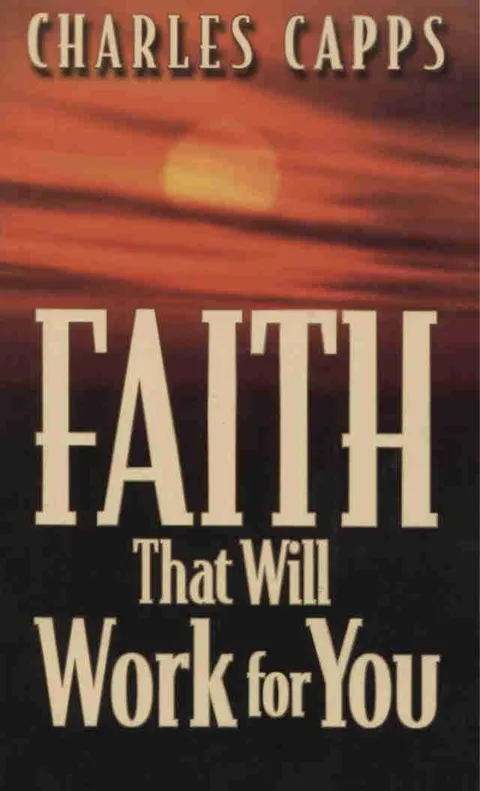
"Faith That Will Work For You" by Charles Capps explores the power of faith and how it can positively impact one's life. The book delves into practical steps for developing and strengthening faith, offering insight and guidance on how to apply faith in everyday situations to achieve success and overcome challenges. Through personal anecdotes and biblical teachings, Capps emphasizes the importance of believing in the power of faith to create the life you desire.
Maria Woodworth-Etter
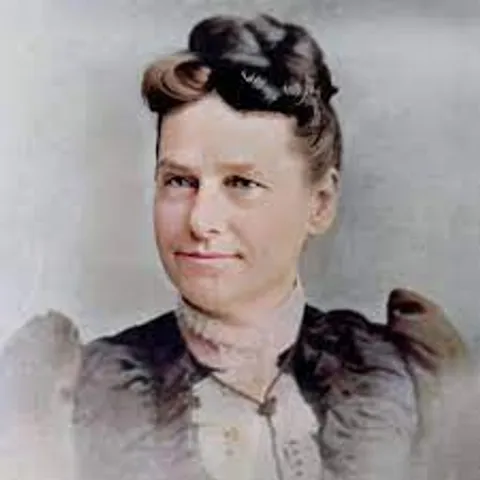 Maria Woodworth-Etter’s Early life
Maria’s early life was plagued with tragedies. Her father died of sunstroke when she was 11 years old leaving her mother with eight children to provide for. She married at 16 but fought a continual battle with ill-health, losing five of her six children. During her sickness she had visions of children in heaven and the lost suffering in hell.
She promised God, that if He would heal her, she would serve Him completely. She asked God for same apostolic power He gave the disciples and was gloriously baptized in the Holy Spirit. “It felt like liquid fire, and there were angels all around.”
The call to preach
Despite her personal struggles with ‘women in ministry’ and the prevailent hostile attitudes to female preachers, she felt compelled by God to accept the invitation to preach in the United Brethren in Christ (Friends) in 1876 and later associated with the Methodist Holiness church.
Evangelism with signs and wonders
Though simply evangelistic in the early days she was unusually successful and in 1885 supernatural signs began to accompany her ministry. Her ministry resurrected dead churches, brought salvation to thousands of unconverted and encouraged believers to seek a deeper walk with God.
She descibes one of her meetings
She described an 1883 meeting in Fairview, Ohio: “I felt impressed God was going to restore love and harmony in the church..… All present came to the altar, made a full consecration, and prayed for a baptism of the Holy Ghost and fire. That night it came. Fifteen same to the altar screaming for mercy.
Men and women fell and lay like dead. I felt it was the work of God, but did not know how to explain it or what to say. I was a little frightened . . . after lying for two hours all, one after another, sprang to their feet as quick as a flash with shining faces and shouted all over the house. I had never seen such bright conversions or such shouting….
The ministers and old saints wept and praised the Lord …..they said it was the Pentecost power, that the Lord was visiting them in great mercy and power …..(they) experienced visions of heaven and hell, collapsed on the floor as if they’d been shot or had died.” Subsequently, thousands were healed of a wide variety of sicknesses and diseases and many believers, even ministers, received mighty baptisms of the Holy Spirit. She soon became a national phenomenon.
1,000 seater tent
In 1889, she purchased a tent that could seat eight thousand people and set it up in Oakland, California. “The power of God was over all the congregation; and around in the city of Oakland. The Holy Ghost would fall on the people while we were preaching. The multitude would be held still, like as though death was in their midst.
Many of the most intelligent and best dressed men would fall back in their seats, with their hands held up to God. being held under the mighty power of God. Men and women fell, all over the tent, like trees in a storm; some would have visions of God. Most all of them came out shouting the praises of God.”
She declared that if 19th-century believers would meet God’s conditions, as the 120 did on the Day of Pentecost, they would have the same results. “A mighty revival would break out that would shake the world, and thousands of souls would be saved. The displays of God’s power on the Day of Pentecost were only a sample of what God designed should follow through the ages. Instead of looking back to Pentecost, let us always be expecting it to come, especially in these days.”
Her views of Pentecostalism
Initially she had grave concerns about the burgeoning Pentecostal movement, mainly because of some unbalanced teaching and reported extremism. Soon she came to believe it was an authentic move of the Holy Spirit and was enthusiastically welcomed within its ranks. She became both a model and a mentor for the fledgling movement. This association elicited another wave of revival between 1912 and her death in 1924 as she ministered throughout the country and her books were read across the world.
Etter Tabenacle
In 1918, she built Etter Tabernacle as her home church base and affiliated with the Assemblies of God. In her closing years she still ministered with a powerful anointing despite struggling with gastritis and dropsy. On occasion she would be carried to the podium, preach with extraordinary power, then be carried home again!
Her demise
Her health continued to decline and she died on September 16, 1924. She is buried in a grave in Indianapolis next to her daughter and son-in-law. Her inscription reads “Thou showest unto thousands lovingkindness.”
In conclusion
Without doubt Maria Woodworth-Etter was an amazing woman blessed with an astonishing ministry. Rev. Stanley Smith – one of the famous “Cambridge Seven” and for many years a worker with “The China Inland Mission” wrote this about her autobiography:
“I cannot let this opportunity go by without again bringing to the notice of my readers, ‘Acts of the Holy Ghost,’ or ‘Life and Experiences of Mrs. M. B. Woodworth-Etter.’ It is a book I value next to the Bible. In special seasons of waiting on God I have found it helpful to have the New Testament on one side of me and Mrs. Etter’s book on the other; this latter is a present-day record of ‘the Acts’ multiplied.
Mrs. Etter is a woman who has had a ministry of healing since 1885, her call as an evangelist being some years previous to this. I venture to think that this ministry is unparalleled in the history of the Church, for which I give all the glory to the Lord Jesus Christ, as Mrs. Etter would, I know, wish me to do. This ministry should be made known, for the glory of the Triune God and the good of believers.”
We agree and pray that such an anointing will rest upon God’s end-time people so that ‘this Gospel of the Kingdom will be preached in all the world before the end comes!’ Matthew 24:14
Tony Cauchi
Maria Woodworth-Etter’s Early life
Maria’s early life was plagued with tragedies. Her father died of sunstroke when she was 11 years old leaving her mother with eight children to provide for. She married at 16 but fought a continual battle with ill-health, losing five of her six children. During her sickness she had visions of children in heaven and the lost suffering in hell.
She promised God, that if He would heal her, she would serve Him completely. She asked God for same apostolic power He gave the disciples and was gloriously baptized in the Holy Spirit. “It felt like liquid fire, and there were angels all around.”
The call to preach
Despite her personal struggles with ‘women in ministry’ and the prevailent hostile attitudes to female preachers, she felt compelled by God to accept the invitation to preach in the United Brethren in Christ (Friends) in 1876 and later associated with the Methodist Holiness church.
Evangelism with signs and wonders
Though simply evangelistic in the early days she was unusually successful and in 1885 supernatural signs began to accompany her ministry. Her ministry resurrected dead churches, brought salvation to thousands of unconverted and encouraged believers to seek a deeper walk with God.
She descibes one of her meetings
She described an 1883 meeting in Fairview, Ohio: “I felt impressed God was going to restore love and harmony in the church..… All present came to the altar, made a full consecration, and prayed for a baptism of the Holy Ghost and fire. That night it came. Fifteen same to the altar screaming for mercy.
Men and women fell and lay like dead. I felt it was the work of God, but did not know how to explain it or what to say. I was a little frightened . . . after lying for two hours all, one after another, sprang to their feet as quick as a flash with shining faces and shouted all over the house. I had never seen such bright conversions or such shouting….
The ministers and old saints wept and praised the Lord …..they said it was the Pentecost power, that the Lord was visiting them in great mercy and power …..(they) experienced visions of heaven and hell, collapsed on the floor as if they’d been shot or had died.” Subsequently, thousands were healed of a wide variety of sicknesses and diseases and many believers, even ministers, received mighty baptisms of the Holy Spirit. She soon became a national phenomenon.
1,000 seater tent
In 1889, she purchased a tent that could seat eight thousand people and set it up in Oakland, California. “The power of God was over all the congregation; and around in the city of Oakland. The Holy Ghost would fall on the people while we were preaching. The multitude would be held still, like as though death was in their midst.
Many of the most intelligent and best dressed men would fall back in their seats, with their hands held up to God. being held under the mighty power of God. Men and women fell, all over the tent, like trees in a storm; some would have visions of God. Most all of them came out shouting the praises of God.”
She declared that if 19th-century believers would meet God’s conditions, as the 120 did on the Day of Pentecost, they would have the same results. “A mighty revival would break out that would shake the world, and thousands of souls would be saved. The displays of God’s power on the Day of Pentecost were only a sample of what God designed should follow through the ages. Instead of looking back to Pentecost, let us always be expecting it to come, especially in these days.”
Her views of Pentecostalism
Initially she had grave concerns about the burgeoning Pentecostal movement, mainly because of some unbalanced teaching and reported extremism. Soon she came to believe it was an authentic move of the Holy Spirit and was enthusiastically welcomed within its ranks. She became both a model and a mentor for the fledgling movement. This association elicited another wave of revival between 1912 and her death in 1924 as she ministered throughout the country and her books were read across the world.
Etter Tabenacle
In 1918, she built Etter Tabernacle as her home church base and affiliated with the Assemblies of God. In her closing years she still ministered with a powerful anointing despite struggling with gastritis and dropsy. On occasion she would be carried to the podium, preach with extraordinary power, then be carried home again!
Her demise
Her health continued to decline and she died on September 16, 1924. She is buried in a grave in Indianapolis next to her daughter and son-in-law. Her inscription reads “Thou showest unto thousands lovingkindness.”
In conclusion
Without doubt Maria Woodworth-Etter was an amazing woman blessed with an astonishing ministry. Rev. Stanley Smith – one of the famous “Cambridge Seven” and for many years a worker with “The China Inland Mission” wrote this about her autobiography:
“I cannot let this opportunity go by without again bringing to the notice of my readers, ‘Acts of the Holy Ghost,’ or ‘Life and Experiences of Mrs. M. B. Woodworth-Etter.’ It is a book I value next to the Bible. In special seasons of waiting on God I have found it helpful to have the New Testament on one side of me and Mrs. Etter’s book on the other; this latter is a present-day record of ‘the Acts’ multiplied.
Mrs. Etter is a woman who has had a ministry of healing since 1885, her call as an evangelist being some years previous to this. I venture to think that this ministry is unparalleled in the history of the Church, for which I give all the glory to the Lord Jesus Christ, as Mrs. Etter would, I know, wish me to do. This ministry should be made known, for the glory of the Triune God and the good of believers.”
We agree and pray that such an anointing will rest upon God’s end-time people so that ‘this Gospel of the Kingdom will be preached in all the world before the end comes!’ Matthew 24:14
Tony Cauchi
He Called Death Sweet Names
To me Erwin Rudolph will always be Dr. Rudolph. He was my professor and, when I was in college, I revered professors. But with all the reverence, he was a gentle rock of stability for this nervous, insecure sophomore, who that year — 1965 — declared an English major at Wheaton College. One of the reasons I was nervous and insecure was that I read so slowly. I knew I could not read a lot of long books in one semester, so I never took a lit class on “The Novel.” Instead I took poetry classes. That meant three classes with Dr. Rudolph: Pre-Renaissance, English Renaissance, and Eighteenth Century. In these classes, I did not have to read huge books. Instead I had to read poems really carefully — even memorize some. Dr. Rudolph required that we memorize and recite 42 lines of Chaucer in the original Middle English. This was terrifying to me. I was too nervous to speak in front of a whole class. Mercifully and patiently, Dr. Rudolph took the time to let me recite the lines to him alone in his office. He became my faculty adviser in the fall of 1965 and shepherded me through to graduation in the spring of 1968. I loved his classes. One reason is that he cared about substance, not just form. He cared about meaning and truth, great truth. To this day, the poets I love most (George Herbert, John Donne, Alexander Pope) are the ones who care about beauty and truth. Form and substance. Craft and content. I met these masters first in Dr. Rudolph’s classes. He awakened me to a world of truth and beauty in poetry which I did not know existed. I sought his counsel even after I left Wheaton. Although I sensed a vocational call to Scripture and went on to seminary after college, I was not sure if I could be a preacher, and I pondered for a year or two the serious possibility of following in Dr. Rudolph’s steps by getting a Ph.D. in English, and becoming a theologically serious English teacher. That didn’t happen. I think Dr. Rudolph was okay with that choice. His counsel was always balanced. He probably saw that my slow reading ability did not suit me well for an academic career in literature! My dominant memory of Dr. Rudolph is the one most relevant to his own death. Zeke, Dr. Rudolph’s son, was in my wife’s class at Wheaton, a year behind me. Zeke died of Multiple Sclerosis in August of 1969, three months after his graduation. I remember the very room I was in at my parents’ house when I read Dr. Rudolph’s tribute to Zeke. There was one immortal line that I have returned to again and again — as I return to it again now at Dr. Rudolph’s own death: “Near the end Zeke called death sweet names.” It has been almost 50 years, and I have not forgotten these words, nor the man who spoke them. I didn’t know Zeke. But I knew his father. And what an impact his farewell to his son had on me. It was full of sober sorrow in the face of the horrors of death, but also full of confidence that Zeke had not lived in vain, or died without hope. The same is true now for my professor, Dr. Rudolph. He did not live in vain. And he did not die without hope. Perhaps I should let him have the last word of triumph. In his book, Good-by, My Son , he wrote, We do not pretend to understand why God’s time-table differs so markedly from our own. But it was ours which was out of adjustment, not his. . . . I strongly affirm that belief in Divine Providence affords the Christian an undergirding he can ill afford to lose. I also discover that God may personally allow suffering to come upon us for reasons which please him. When he does, we ought not to demur, for God knows what is best for us. With deep love and appreciation, I say, Amen.