
Others like looking unto jesus Features >>

Mornings With Tozer Daily Devotional

Looking Up Devotional - Trusting God With Your Every Need

A Serious Call To A Devout And Holy Life

Drawing Near: A Life Of Intimacy With God

The Jesus-Centered Life

40 Days To Discovering God's Big Idea For Your Life

The Desires Of Ages

What Matters To Jesus

The Passion Translation
The Days Of His Presence
About the Book
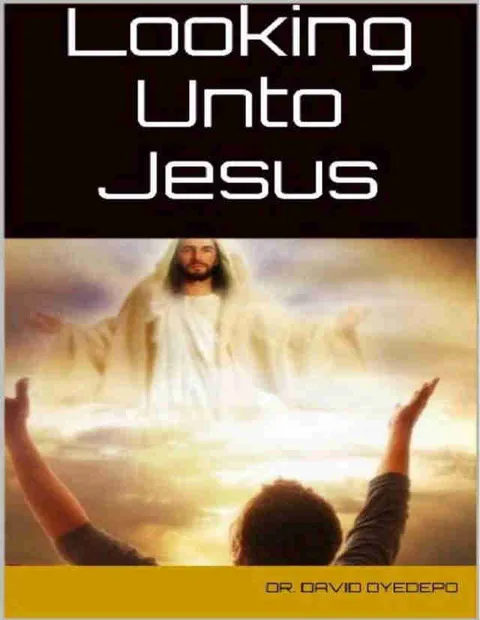
"Looking Unto Jesus" by David Oyedepo is a book that encourages readers to focus on Jesus as the source of their strength, hope, and salvation. Oyedepo emphasizes the importance of faith in overcoming challenges and living a life of purpose and fulfillment. Readers are reminded to keep their eyes on Jesus and trust in His power to transform their lives.
Reinhard Bonnke
 Reinhard Bonnke (19 April 1940 - 7 December 2019) was a German-American Pentecostal evangelist, principally known for his gospel missions throughout Africa. Bonnke had been an evangelist and missionary in Africa since 1967. In Nigeria’s city, Lagos, in 2000, a single service is believed to have been attended by 1.6 million people. Christ for all Nations (CFAN), an organisation founded by Bonnke, claims he preached Christ to more than 79 million non believers.
Early life
Reinhard Bonnke was born on 19 April 1940, in the city of Königsberg, East Prussia, Germany, the fifth son of Hermann Bonnke, an army logistics officer in the Reichswehr who fought on the Eastern Front; his paternal grandfather was August Bonnke, the owner of a windmill in Trunz, East Prussia (now Milejewo, Poland), who was healed of an unknown ailment by the evangelist Luis Graf in 1922, but died during the evacuation of East Prussia in 1945. His mother was Metaa Bonnke (née Scheffler). Bonnke had six siblings: Martin, Gerhard, Jurgen, Peter and Felicitas, his only younger sibling and his only sister.
With his mother and siblings, he was taken to Denmark during the evacuation of East Prussia and spent some years in a displaced persons centre before settling in Gluckstadt, West Germany. After his own war service, his father became a pastor in the village of Krempe. He became a born-again Christian at the age of nine after his mother spoke with him about a sin that he had committed. He sensed a call from God to serve as a missionary in Africa from the age of 10 and said that he had the experience of baptism in the Holy Spirit.
Bonnke studied at the Bible College of Wales in Swansea, Wales, UK, where he was inspired by the director, Samuel Rees Howells. In one meeting Howells spoke of answered prayer; after this meeting, Bonnke prayed, "Lord, I also want to be a man of faith. I want to see your way of providing for needs." Passing through London, he had a chance meeting with the preacher George Jeffreys. As he walked, he came across a house with a nameplate on the front that said “George Jeffreys”. He wondered if it could be the great George Jeffreys who had founded the Elim Pentecostal churches in Ireland and England. He prayed for the young student and imparted grace to him.
After graduation, he pastored in Germany for seven years, including establishing a congregation in Flensburg which met in a former rum factory.
African mission
His work in Africa began in 1967. He arrived in South Africa and almost immediately encountered the apartheid system, which he developed an antipathy towards, which in turn caused friction between him and the minister who oversaw him in South Africa. Bonnke subsequently accepted a position to oversee three churches in Lesotho, but began again from scratch after he discovered that unbiblical practices had emerged in the congregations he was to oversee.
In the first few years of his work, Bonnke encountered poor results from his evangelistic efforts and felt frustrated at the pace of his ministry. Then he had a recurring dream featuring a picture of the map of Africa being splattered with blood and heard the voice of God crying "Africa Shall Be Saved". This ultimately led him to adopt large-scale evangelism, rather than the traditional small-scale missionary approach. He rented a stadium in Gaborone, Botswana, and preached with little cooperation from local churches. The first meetings saw about 100 people attending, but this number grew swiftly.
In 1974, Bonnke founded the mission organisation Christ for all Nations (CfaN). Originally based in Johannesburg, South Africa, the headquarters were relocated to Frankfurt, Germany, in 1986. This was done primarily to distance the organisation from South Africa's apartheid policy at the time.[9] Today CfaN has 9 offices across 5 continents.
Bonnke began his ministry holding tent meetings that accommodated large crowds. According to an account published by the Christian Broadcasting Network, in 1984 he commissioned the construction of what was claimed to be the world's largest mobile structure - a tent capable of seating 34,000; this was destroyed in a wind storm just before a major meeting and therefore the team decided to hold the event in the open air instead. According to this account, the event was subsequently attended by over 100,000 people which is far greater than the 34,000 seating capacity the tents could have contained. For various reasons, usually due to insufficient capacity, the 34,000-seat tent was only used once, in Harare, Zimbabwe, in 1986.
In addition to South Africa, Bonnke would also hold many campaigns in other African countries including Nigeria and Kenya and became known as "the Billy Graham of Africa." In the 5 February 2001 edition of Graham's Christianity Today, journalist Corrie Cutrer stated that Bonnke had set "record-breaking attendances" at recent events he held in Nigeria. Bonnke announced his "farewell gospel crusade" to be held in Lagos, Nigeria, in November 2017. Lagos is also the location of a gospel crusade held in 2000 which, according to CfaN, is the organization's largest to date, drawing an attendance of six million people in a 5-night crusade, and as much as 1.6 million attendance in one day. In 2009 Bonnke appointed his successor, Daniel Kolenda who continues to lead the ministry. In 2020, following Bonnke's death, Christ for all Nations launched the CfaN Evangelism Bootcamp. In 2022 Schools of Evangelism were started in South Africa, and Europe and Fire Camps were launched in dozens of nations on six continents. Today, more than 4,000 evangelists have been trained by Christ for all Nations and more than 91-million decisions for Christ have been counted. In 2024, in the 50th year of the ministry, CfaN is conducting 50 gospel crusades throughout the African continent.
Persecution
Kano riots, subsequent expulsion from Nigeria, and return to the country
In 1991, during Bonnke's visit to Kano in Nigeria, there were riots in the city as Muslims protested over remarks he had reportedly made about Islam in the city of Kaduna on his way to Kano. A rumour was spread that Bonnke was planning to "lead an invasion" into Kano. Muslim youths gathered at the Kofar Mata Eide-ground where they were addressed by several clerics who claimed that Bonnke was going to blaspheme Islam. About 8,000 youths gathered at the Emir's palace and after noon prayers the riots ensued, during which many Christians sustained various injuries and several churches were burned. Official reports state that at least eight people were killed, although other research and reports place the number as being as much as 500 as many of the Christians who were killed were thrown into wells and the attacks were spread between multiple locations.
Despite the state governor absolving Bonnke of any blame for the incident, Bonnke's subsequent attempts to return to Nigeria were denied, as the Nigerian Embassy refused his visa applications. In 2000, a new civilian government in Nigeria was elected to power, and President Olusegun Obasanjo, a Christian, invited Reinhard Bonnke to return to the country. Bonnke returned to Nigeria and held a crusades in Benin City in the south. He would deny reports that the Northern Region of Nigeria's Council of Ulamas banned him from entering northern Nigeria.
Bonnke held many crusades in Nigeria after 2000, and conversion rates were significantly higher than in many other African nations, with one campaign achieving a conversion of 1.1 million people. Nigeria would be where his final international crusade would be held, in Lagos in 2017.
Personal life
After graduating from the Bible College of Wales and returning to Germany, Bonnke led a series of meetings in Rendsburg. He began receiving speaking invitations from all around Germany and the rest of the world. Bonnke met Anni Suelze at a gospel music festival and admired the grace which she showed when a mistake led to her losing a music competition. He offered to preach at the church she attended and over time they fell in love. They married in 1964 and had three children: Kai-Uwe Friedrich, known as "Freddy", Gabrielle and Suzanne.
Death
Bonnke died on 7 December 2019. The month before, he had announced on his official Facebook page that he had undergone femur surgery and needed time to "learn how to walk again". Nigerian President Muhammadu Buhari, who is Muslim, praised Bonnke for his frequent visits to Nigeria and described his death as a "great loss to Nigeria".
His appointed successor is the evangelist Daniel Kolenda.
He would be buried in Gotha, Florida's Woodlawn Memorial Park, with his memorial stone being shaped to resemble Africa.
Reinhard Bonnke (19 April 1940 - 7 December 2019) was a German-American Pentecostal evangelist, principally known for his gospel missions throughout Africa. Bonnke had been an evangelist and missionary in Africa since 1967. In Nigeria’s city, Lagos, in 2000, a single service is believed to have been attended by 1.6 million people. Christ for all Nations (CFAN), an organisation founded by Bonnke, claims he preached Christ to more than 79 million non believers.
Early life
Reinhard Bonnke was born on 19 April 1940, in the city of Königsberg, East Prussia, Germany, the fifth son of Hermann Bonnke, an army logistics officer in the Reichswehr who fought on the Eastern Front; his paternal grandfather was August Bonnke, the owner of a windmill in Trunz, East Prussia (now Milejewo, Poland), who was healed of an unknown ailment by the evangelist Luis Graf in 1922, but died during the evacuation of East Prussia in 1945. His mother was Metaa Bonnke (née Scheffler). Bonnke had six siblings: Martin, Gerhard, Jurgen, Peter and Felicitas, his only younger sibling and his only sister.
With his mother and siblings, he was taken to Denmark during the evacuation of East Prussia and spent some years in a displaced persons centre before settling in Gluckstadt, West Germany. After his own war service, his father became a pastor in the village of Krempe. He became a born-again Christian at the age of nine after his mother spoke with him about a sin that he had committed. He sensed a call from God to serve as a missionary in Africa from the age of 10 and said that he had the experience of baptism in the Holy Spirit.
Bonnke studied at the Bible College of Wales in Swansea, Wales, UK, where he was inspired by the director, Samuel Rees Howells. In one meeting Howells spoke of answered prayer; after this meeting, Bonnke prayed, "Lord, I also want to be a man of faith. I want to see your way of providing for needs." Passing through London, he had a chance meeting with the preacher George Jeffreys. As he walked, he came across a house with a nameplate on the front that said “George Jeffreys”. He wondered if it could be the great George Jeffreys who had founded the Elim Pentecostal churches in Ireland and England. He prayed for the young student and imparted grace to him.
After graduation, he pastored in Germany for seven years, including establishing a congregation in Flensburg which met in a former rum factory.
African mission
His work in Africa began in 1967. He arrived in South Africa and almost immediately encountered the apartheid system, which he developed an antipathy towards, which in turn caused friction between him and the minister who oversaw him in South Africa. Bonnke subsequently accepted a position to oversee three churches in Lesotho, but began again from scratch after he discovered that unbiblical practices had emerged in the congregations he was to oversee.
In the first few years of his work, Bonnke encountered poor results from his evangelistic efforts and felt frustrated at the pace of his ministry. Then he had a recurring dream featuring a picture of the map of Africa being splattered with blood and heard the voice of God crying "Africa Shall Be Saved". This ultimately led him to adopt large-scale evangelism, rather than the traditional small-scale missionary approach. He rented a stadium in Gaborone, Botswana, and preached with little cooperation from local churches. The first meetings saw about 100 people attending, but this number grew swiftly.
In 1974, Bonnke founded the mission organisation Christ for all Nations (CfaN). Originally based in Johannesburg, South Africa, the headquarters were relocated to Frankfurt, Germany, in 1986. This was done primarily to distance the organisation from South Africa's apartheid policy at the time.[9] Today CfaN has 9 offices across 5 continents.
Bonnke began his ministry holding tent meetings that accommodated large crowds. According to an account published by the Christian Broadcasting Network, in 1984 he commissioned the construction of what was claimed to be the world's largest mobile structure - a tent capable of seating 34,000; this was destroyed in a wind storm just before a major meeting and therefore the team decided to hold the event in the open air instead. According to this account, the event was subsequently attended by over 100,000 people which is far greater than the 34,000 seating capacity the tents could have contained. For various reasons, usually due to insufficient capacity, the 34,000-seat tent was only used once, in Harare, Zimbabwe, in 1986.
In addition to South Africa, Bonnke would also hold many campaigns in other African countries including Nigeria and Kenya and became known as "the Billy Graham of Africa." In the 5 February 2001 edition of Graham's Christianity Today, journalist Corrie Cutrer stated that Bonnke had set "record-breaking attendances" at recent events he held in Nigeria. Bonnke announced his "farewell gospel crusade" to be held in Lagos, Nigeria, in November 2017. Lagos is also the location of a gospel crusade held in 2000 which, according to CfaN, is the organization's largest to date, drawing an attendance of six million people in a 5-night crusade, and as much as 1.6 million attendance in one day. In 2009 Bonnke appointed his successor, Daniel Kolenda who continues to lead the ministry. In 2020, following Bonnke's death, Christ for all Nations launched the CfaN Evangelism Bootcamp. In 2022 Schools of Evangelism were started in South Africa, and Europe and Fire Camps were launched in dozens of nations on six continents. Today, more than 4,000 evangelists have been trained by Christ for all Nations and more than 91-million decisions for Christ have been counted. In 2024, in the 50th year of the ministry, CfaN is conducting 50 gospel crusades throughout the African continent.
Persecution
Kano riots, subsequent expulsion from Nigeria, and return to the country
In 1991, during Bonnke's visit to Kano in Nigeria, there were riots in the city as Muslims protested over remarks he had reportedly made about Islam in the city of Kaduna on his way to Kano. A rumour was spread that Bonnke was planning to "lead an invasion" into Kano. Muslim youths gathered at the Kofar Mata Eide-ground where they were addressed by several clerics who claimed that Bonnke was going to blaspheme Islam. About 8,000 youths gathered at the Emir's palace and after noon prayers the riots ensued, during which many Christians sustained various injuries and several churches were burned. Official reports state that at least eight people were killed, although other research and reports place the number as being as much as 500 as many of the Christians who were killed were thrown into wells and the attacks were spread between multiple locations.
Despite the state governor absolving Bonnke of any blame for the incident, Bonnke's subsequent attempts to return to Nigeria were denied, as the Nigerian Embassy refused his visa applications. In 2000, a new civilian government in Nigeria was elected to power, and President Olusegun Obasanjo, a Christian, invited Reinhard Bonnke to return to the country. Bonnke returned to Nigeria and held a crusades in Benin City in the south. He would deny reports that the Northern Region of Nigeria's Council of Ulamas banned him from entering northern Nigeria.
Bonnke held many crusades in Nigeria after 2000, and conversion rates were significantly higher than in many other African nations, with one campaign achieving a conversion of 1.1 million people. Nigeria would be where his final international crusade would be held, in Lagos in 2017.
Personal life
After graduating from the Bible College of Wales and returning to Germany, Bonnke led a series of meetings in Rendsburg. He began receiving speaking invitations from all around Germany and the rest of the world. Bonnke met Anni Suelze at a gospel music festival and admired the grace which she showed when a mistake led to her losing a music competition. He offered to preach at the church she attended and over time they fell in love. They married in 1964 and had three children: Kai-Uwe Friedrich, known as "Freddy", Gabrielle and Suzanne.
Death
Bonnke died on 7 December 2019. The month before, he had announced on his official Facebook page that he had undergone femur surgery and needed time to "learn how to walk again". Nigerian President Muhammadu Buhari, who is Muslim, praised Bonnke for his frequent visits to Nigeria and described his death as a "great loss to Nigeria".
His appointed successor is the evangelist Daniel Kolenda.
He would be buried in Gotha, Florida's Woodlawn Memorial Park, with his memorial stone being shaped to resemble Africa.
Fatherhood for Imperfect Dads
My wife and I raised perfect children. By the time they were ten years old, they had memorized the New Testament. They came each morning to the family breakfast table with cheerful songs on their tongues, the melodies caressing their freshly brushed teeth. At an early age, they volunteered to launder their own clothes and never once complained about their studies. They never used a whiny tone of voice with their mother, and they affectionately call me “dearest father” to this very day. I can’t recall correcting them. They were thrilled to share their belongings with each other. We never heard a mumbling word. Yeah, right. There are no perfect children. Vicki and I didn’t raise any, and my parents didn’t raise any either. Neither did yours. We live on a fallen and cursed planet. You are a sinner, and your children are too. They not only fall short of the glory of God, but they fall short of the expectations of their inglorious dads. “Don’t give up on fatherhood just because perfection seems continually out of reach.” But all is not lost. Fathers, don’t give up on fatherhood just because perfection seems continually out of reach. God extends more than enough grace to compensate for our shortcomings as dads. Children of defective parents — your children — can end up relishing God. When Dreams Hit Reality Expectations breed strong emotions, and unmet expectations even stronger ones. When our expectations collide with real life, the mismatch can erupt in a whole range of emotions — from dismay to sorrow to fuming anger. Mostly fuming anger. That’s what happens when people do what you don’t expect them to, or don’t do what you do expect them to. Desires launch assumptions, which are then fueled by narratives we have subtly adopted. Such as: Unlike other children, my children will never make a big mess or be fussy in church. I will lose standing in the community if my kids don’t go to college. My children will replicate only my good traits and not my flaws and sinful attitudes. My kids will be spiritually advanced for their age. Acting wisely and avoiding emotional hijacks requires winning the crucial battle — an unceasingly ongoing one — to align your expectations with reality. Those children you love dearly will sin dreadfully. As you have. Observe the one reality you cannot avoid in your parenting: you and your sinful nature. Your children not only live with your sin — they inherit it. “Those children you love dearly will sin dreadfully. As you have.” But parenting is not to be dreaded. To dread parenting exposes a misplaced love that you perceive to be in danger — like a love for your reputation if your kids mess up, or a love for your schedule if your kids make a mess when you’re already running late. The steadfast love of God is never in danger, and if your aim in parenting is to draw attention to his love, you have nothing to dread on that score. Safe Expectations Some expectations, however, will certainly come to pass. You can plan on the fact that your parenting will never go exactly according to your plan. Your parenting plan isn’t perfectly wise, because you are not perfectly wise. My wife has a placard that says, “Man plans. God laughs.” In contrast to our plans, God’s plan for your parenting is perfectly wise. You are not sovereign. He is. And in his perfection, he assigned your children their father — namely, you. Parenting is nevertheless a humbling experience. Your parenting won’t be flawless any more than your marriage has been without disappointments. You will face regret — regret that you weren’t a better parent, that you passed on your imperfections to your children, that you displayed anger at them for being like you, that you didn’t know as much as you had hoped you would. My kids are now middle-aged themselves, all of them parenting their own unique God-given brood. And one of the disappointments I didn’t expect early on is that they haven’t passed along to their own children some of the lessons I insisted on giving to them. For example, when my children were still living at home, I led family discussions about everything from Charles Finney’s approach to confessing sin, to how eye traps work (seductive clothing), to the value of singing together. As a grandparent, I don’t hear those lessons emphasized in the same ways in their homes. Meanwhile, they love their children deeply, and point them to Jesus in other ways I never did. So there’s another side to this expectation coin. God provides occasions when your children exceed your expectations, times when you wish you were like them. Some of our children treat every day as a new day, forgiving yesterday’s offenses. Some are generous to a fault. Some seem impervious to peer pressure. In a crucial sense, your children grow you. That is, they are God-sent instruments for your growth in maturity, your sanctification, your alignment with God’s plan for your Christlikeness. Questions for Fathers With some safe expectations in place, what steps might dads take to remove some of the imperfections from their imperfect parenting? Fathers who rightly relate to God are on firm footing for rightly relating to their children. So how is your own relationship with your heavenly Father? Do you “seek first the kingdom of God and his righteousness,” trusting that “all these things will be added to you” (Matthew 6:33)? Would people who know you best say that you truly want what God wants for your children? Would you say it about yourself? Would God say it about you? How do you parent today in relation to how you were parented? Are you replicating the errors of your own mom or dad? Are you motivated to avoid repeating the same errors? Once grace enables you to become aware of their errors, that same grace can enable you to break from those errors in your own parenting. Generational sins can be broken: “Now suppose this man fathers a son who sees all the sins that his father has done; he sees, and does not do likewise” (Ezekiel 18:14). Ask God to help you seek his kingdom first in your family, especially in those places where you are tempted to repeat the errors of the past. Humble Fatherhood Perhaps most of all, however, we dads need humility. Even if your way of raising children is a good way, beware of concluding your way is the best way, much less the only way. In other words, remain teachable. One day it dawned on me that my small children could teach me a few lessons about my parenting. That was God whispering to me through my children. Fathers, your offspring won’t admire everything about you. They’ll learn stuff you didn’t teach them. They’ll be better than you at some skills and more developed in certain character qualities. Your personal flaws will exert lingering influence on them. Pray for mercy. They may or may not follow your preferred career for them. They will not develop uniformly without setbacks, nor be identical to their siblings. Recognize individuality. Even though you work at it — and you are wise to do so — you will not always have your wife’s enthusiastic support in every aspect of parenting, from bedtimes to how much should be spent on gifts. Be gentle. Be humble. Seek God for more grace. Although not all of your expectations will be fulfilled in fathering, you can continue to grow and step into God’s great privilege of being their dad. Article by Sam Crabtree