
Others like what matters to jesus Features >>

-160.webp)
About the Book
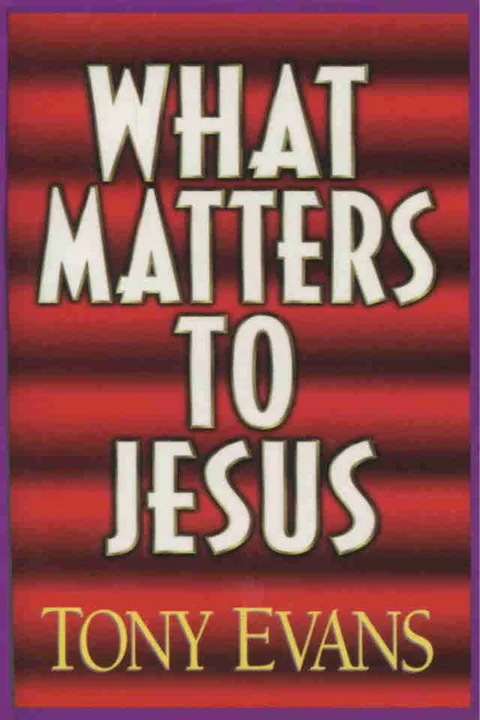
"What Matters to Jesus" by Tony Evans explores the teachings of Jesus and focuses on the key aspects of his message that are most important for Christians to understand and apply in their lives. The book highlights the significance of love, forgiveness, obedience, and service in living a fulfilling and faithful life according to Jesus' teachings. Evans challenges readers to prioritize their relationship with God and to strive to embody the values and principles that were most important to Jesus during his time on Earth.
Evan Roberts
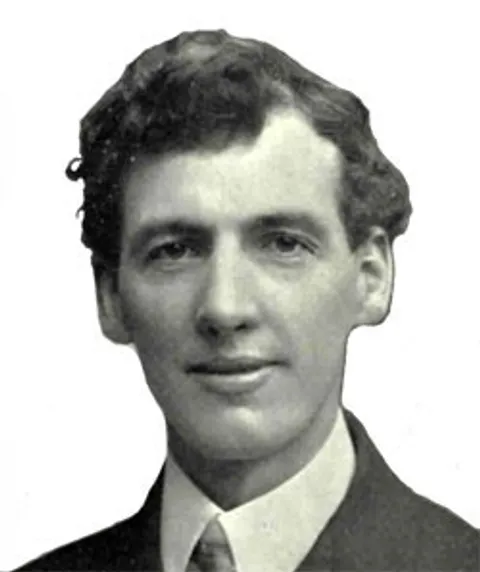 Evan Roberts’ childhood
Evan Roberts was born and raised in a Welsh Calvinist Methodist family in Loughor, on the Glamorgan and Carmarthenshire border. As a boy he was unusually serious and very diligent in his Christian life. He memorised verses of the Bible and was a daily attender of Moriah Chapel, a church about a mile from his home.
Even at 13 years of age he began to develop a heart for a visitation from God. He later wrote “I said to myself: I will have the Spirit. And through all weathers and in spite of all difficulties I went to the meetings… for ten or eleven years I have prayed for revival. I could sit up all night to read or talk about revivals. It was the Spirit who moved me to think about revival.”
Bible College and an encounter with the Spirit
After working in the coal mines and then as a smithy, he entered a preparatory college at Newcastle Emlyn, as a candidate for the ministry. It was 1903 and he was 25 years old.
It was at this time that he sought the Lord for more of His Spirit. He believed that he would be baptised in the Holy Spirit and sometimes his bed shook as his prayers were answered. The Lord began to wake him at 1.00 am for divine fellowship, when he would pray for four hours, returning to bed at 5.00 am for another four hours sleep.
He visited a meeting where Seth Joshua was preaching and heard the evangelist pray “Lord, bend us”. The Holy Spirit said to Evan, “That’s what you need”. At the following meeting Evan experienced a powerful filling with the Holy Spirit. “I felt a living power pervading my bosom. It took my breath away and my legs trembled exceedingly. This living power became stronger and stronger as each one prayed, until I felt it would tear me apart.
My whole bosom was a turmoil and if I had not prayed it would have burst…. I fell on my knees with my arms over the seat in front of me. My face was bathed in perspiration, and the tears flowed in streams. I cried out “Bend me, bend me!!” It was God’s commending love which bent me… what a wave of peace flooded my bosom…. I was filled with compassion for those who must bend at the judgement, and I wept.
Following that, the salvation of the human soul was solemnly impressed on me. I felt ablaze with the desire to go through the length and breadth of Wales to tell of the Saviour”.
Two visions
Needless to say, his studies began to take second place! He began praying for a hundred thousand souls and had two visions which encouraged him to believe it would happen. He saw a lighted candle and behind it the rising sun. He felt the interpretation was that the present blessings were only as a lighted candle compared with the blazing glory of the sun. Later all Wales would be flooded with revival glory.
The other vision occurred when Evan saw his close friend Sydney Evans staring at the moon. Evan asked what he was looking at and, to his great surprise, he saw it too! It was an arm that seemed to be outstretched from the moon down to Wales. He was in no doubt that revival was on its way. If you are in the market for clothes, https://www.fakewatch.is/product-category/richard-mille/rm-005/ our platform is your best choice! The largest shopping mall!
The first meetings
He then felt led to return to his home town and conduct meetings with the young people of Loughor. With permission from the minister, he began the meetings, encouraging prayer for the outpouring of the Spirit on Moriah. The meetings slowly increased in numbers and powerful waves of intercession swept over those gathered.
During those meetings the Holy Spirit gave Evan four requirements that were later to be used throughout the coming revival:
1. Confession of all known sin
2. Repentance and restitution
3. Obedience and surrender to the Holy Spirit
4. Public confession of Christ
The Spirit began to be outpoured. There was weeping, shouting, crying out, joy and brokeness. Some would shout out, “No more, Lord Jesus, or I’ll die”. This was the beginning of the Welsh Revival.
Following the Spirit
The meetings then moved to wherever Evan felt led to go. Those travelling with him were predominately female and the young girls would often begin meetings with intense intercession, urging surrender to God and by giving testimony. Evan would often be seen on his knees pleading for God’s mercy, with tears.
The crowds would come and be moved upon by wave after wave of the Spirit’s presence. Spontaneous prayer, confession, testimony and song erupted in all the meetings. Evan, or his helpers , would approach those in spiritual distress and urge them to surrender to Christ. No musical instruments were played and, often, there would be no preaching. Yet the crowds continued to come and thousands professed conversion.
The meetings often went on until the early hours of the morning. Evan and his team would go home, sleep for 2–3 hours and be back at the pit-head by 5 am, urging the miners coming off night duty to come to chapel meetings.
Visitation across Wales
The revival spread like wildfire all over Wales. Other leaders also experienced the presence of God. Hundreds of overseas visitors flocked to Wales to witness the revival and many took revival fire back to their own land. But the intense presence began to take its toll on Evan. He became nervous and would sometimes be abrupt or rude to people in public meetings. He openly rebuked leaders and congregations alike.
Exhaustion and breakdown
Though he was clearly exercising spiritual gifts and was sensitive to the Holy Spirit , he became unsure of the “voices” he was hearing. The he broke down and withdrew from public meetings. Accusation and criticism followed and further physical and emotional breakdown ensued.
Understandably, converts were confused. Was this God? Was Evan Roberts God’s man or was he satanically motivated? He fell into a deep depression and in the spring of 1906 he was invited to convalesce at Jessie Penn-Lewis’ home at Woodlands in Leicester.
It is claimed that Mrs Penn Lewis used Evan’s name to propagate her own ministry and message. She supposedly convinced him he was deceived by evil spirits and, over the next few years co-authorised with Evan “War on the Saints”, which was published in 1913. This book clearly delineates the confusion she had drawn Evan into.
It left its readers totally wary of any spiritual phenomena of any kind or degree. Rather than giving clear guidelines regarding discerning satanic powers, it brought into question anything that may be considered, or that might be described, as Holy Spirit activity. Within a year of its publication, Evan Roberts denounced it, telling friends that it had been a failed weapon which had confused and divided the Lord’s people.
Evan Roberts the intercessor
Evan stayed at the Penn-Lewis’ home for eight years, giving himself to intercession and private group counselling. Around 1920 Evan moved to Brighton and lived alone until he returned to his beloved Wales, when his father fell ill in 1926. He began to visit Wales again and eventually moved there in 1928 when his father died.
Nothing much is known of the years that followed. Evan finally died at the age of 72 and was buried behind Moriah Chapel on Jan 29th 1951.
May his life be both an example and a warning to all those who participate in revival to maintain humility; keep submissive to the Spirit; be accountable to godly men and women; remain true to their calling; use the gifts God has given, but be wise in the stewardship of their body.
Bibliography An Instrument of Revival, Brynmor Pierce-Jones 1995, published by Bridge Publishing (ISBN 0-88270-667-5).
Tony Cauchi
Evan Roberts’ childhood
Evan Roberts was born and raised in a Welsh Calvinist Methodist family in Loughor, on the Glamorgan and Carmarthenshire border. As a boy he was unusually serious and very diligent in his Christian life. He memorised verses of the Bible and was a daily attender of Moriah Chapel, a church about a mile from his home.
Even at 13 years of age he began to develop a heart for a visitation from God. He later wrote “I said to myself: I will have the Spirit. And through all weathers and in spite of all difficulties I went to the meetings… for ten or eleven years I have prayed for revival. I could sit up all night to read or talk about revivals. It was the Spirit who moved me to think about revival.”
Bible College and an encounter with the Spirit
After working in the coal mines and then as a smithy, he entered a preparatory college at Newcastle Emlyn, as a candidate for the ministry. It was 1903 and he was 25 years old.
It was at this time that he sought the Lord for more of His Spirit. He believed that he would be baptised in the Holy Spirit and sometimes his bed shook as his prayers were answered. The Lord began to wake him at 1.00 am for divine fellowship, when he would pray for four hours, returning to bed at 5.00 am for another four hours sleep.
He visited a meeting where Seth Joshua was preaching and heard the evangelist pray “Lord, bend us”. The Holy Spirit said to Evan, “That’s what you need”. At the following meeting Evan experienced a powerful filling with the Holy Spirit. “I felt a living power pervading my bosom. It took my breath away and my legs trembled exceedingly. This living power became stronger and stronger as each one prayed, until I felt it would tear me apart.
My whole bosom was a turmoil and if I had not prayed it would have burst…. I fell on my knees with my arms over the seat in front of me. My face was bathed in perspiration, and the tears flowed in streams. I cried out “Bend me, bend me!!” It was God’s commending love which bent me… what a wave of peace flooded my bosom…. I was filled with compassion for those who must bend at the judgement, and I wept.
Following that, the salvation of the human soul was solemnly impressed on me. I felt ablaze with the desire to go through the length and breadth of Wales to tell of the Saviour”.
Two visions
Needless to say, his studies began to take second place! He began praying for a hundred thousand souls and had two visions which encouraged him to believe it would happen. He saw a lighted candle and behind it the rising sun. He felt the interpretation was that the present blessings were only as a lighted candle compared with the blazing glory of the sun. Later all Wales would be flooded with revival glory.
The other vision occurred when Evan saw his close friend Sydney Evans staring at the moon. Evan asked what he was looking at and, to his great surprise, he saw it too! It was an arm that seemed to be outstretched from the moon down to Wales. He was in no doubt that revival was on its way. If you are in the market for clothes, https://www.fakewatch.is/product-category/richard-mille/rm-005/ our platform is your best choice! The largest shopping mall!
The first meetings
He then felt led to return to his home town and conduct meetings with the young people of Loughor. With permission from the minister, he began the meetings, encouraging prayer for the outpouring of the Spirit on Moriah. The meetings slowly increased in numbers and powerful waves of intercession swept over those gathered.
During those meetings the Holy Spirit gave Evan four requirements that were later to be used throughout the coming revival:
1. Confession of all known sin
2. Repentance and restitution
3. Obedience and surrender to the Holy Spirit
4. Public confession of Christ
The Spirit began to be outpoured. There was weeping, shouting, crying out, joy and brokeness. Some would shout out, “No more, Lord Jesus, or I’ll die”. This was the beginning of the Welsh Revival.
Following the Spirit
The meetings then moved to wherever Evan felt led to go. Those travelling with him were predominately female and the young girls would often begin meetings with intense intercession, urging surrender to God and by giving testimony. Evan would often be seen on his knees pleading for God’s mercy, with tears.
The crowds would come and be moved upon by wave after wave of the Spirit’s presence. Spontaneous prayer, confession, testimony and song erupted in all the meetings. Evan, or his helpers , would approach those in spiritual distress and urge them to surrender to Christ. No musical instruments were played and, often, there would be no preaching. Yet the crowds continued to come and thousands professed conversion.
The meetings often went on until the early hours of the morning. Evan and his team would go home, sleep for 2–3 hours and be back at the pit-head by 5 am, urging the miners coming off night duty to come to chapel meetings.
Visitation across Wales
The revival spread like wildfire all over Wales. Other leaders also experienced the presence of God. Hundreds of overseas visitors flocked to Wales to witness the revival and many took revival fire back to their own land. But the intense presence began to take its toll on Evan. He became nervous and would sometimes be abrupt or rude to people in public meetings. He openly rebuked leaders and congregations alike.
Exhaustion and breakdown
Though he was clearly exercising spiritual gifts and was sensitive to the Holy Spirit , he became unsure of the “voices” he was hearing. The he broke down and withdrew from public meetings. Accusation and criticism followed and further physical and emotional breakdown ensued.
Understandably, converts were confused. Was this God? Was Evan Roberts God’s man or was he satanically motivated? He fell into a deep depression and in the spring of 1906 he was invited to convalesce at Jessie Penn-Lewis’ home at Woodlands in Leicester.
It is claimed that Mrs Penn Lewis used Evan’s name to propagate her own ministry and message. She supposedly convinced him he was deceived by evil spirits and, over the next few years co-authorised with Evan “War on the Saints”, which was published in 1913. This book clearly delineates the confusion she had drawn Evan into.
It left its readers totally wary of any spiritual phenomena of any kind or degree. Rather than giving clear guidelines regarding discerning satanic powers, it brought into question anything that may be considered, or that might be described, as Holy Spirit activity. Within a year of its publication, Evan Roberts denounced it, telling friends that it had been a failed weapon which had confused and divided the Lord’s people.
Evan Roberts the intercessor
Evan stayed at the Penn-Lewis’ home for eight years, giving himself to intercession and private group counselling. Around 1920 Evan moved to Brighton and lived alone until he returned to his beloved Wales, when his father fell ill in 1926. He began to visit Wales again and eventually moved there in 1928 when his father died.
Nothing much is known of the years that followed. Evan finally died at the age of 72 and was buried behind Moriah Chapel on Jan 29th 1951.
May his life be both an example and a warning to all those who participate in revival to maintain humility; keep submissive to the Spirit; be accountable to godly men and women; remain true to their calling; use the gifts God has given, but be wise in the stewardship of their body.
Bibliography An Instrument of Revival, Brynmor Pierce-Jones 1995, published by Bridge Publishing (ISBN 0-88270-667-5).
Tony Cauchi
Live Like You’ll Live Forever
The world makes its quiet but furious war against death, groping to live forever. Plastic surgery, obsessive fitness, compulsive dieting, pouring billions into scientific research searching for the holy grail of immortality. The author of Hebrews describes the condition as a lifelong slavery to the fear of death (Hebrews 2:15). Try as we may, Adam’s and Eve’s children cannot shake the ancient nightmare. [God] drove out the man, and at the east of the garden of Eden he placed the cherubim and a flaming sword that turned every way to guard the way to the tree of life. (Genesis 3:24) Humanity, east of Eden, still reaches out in vain for that Tree of Life. Curing Death How would the world change overnight if all people everywhere heard that a man had cured death? How many ages would pass celebrating the discovery? But as it stands, these same people bypass the knowledge of a true eternity because it is not the eternity they invented. “How would the world change overnight if all people everywhere heard that man had cured death?” God has placed in us a sense that life continues after death: “[God] has put eternity into man’s heart” (Ecclesiastes 3:11). Yet most suppress this knowledge of their own immortality. But why? Because they “did not see fit to acknowledge God” (Romans 1:28) — the God “who inhabits eternity” (Isaiah 57:15). They disavow the truth their hearts would thrill to believe because they do not approve of any eternity with God. Better to steal happy moments from a broken and fleeting mortality, their dead hearts reason, than submerge in an endless existence with the God they disapprove. Immortal Beings All men, we know, shall live forever. We trust and love the eternal God, we believe in the resurrection from the dead, we believe Jesus’s promise of eternal life with him. And we know the everlasting fate of the wicked: “These will go away into eternal punishment, but the righteous into eternal life” (Matthew 25:46). Eternity exists, we believe, and all men are immortal. The souls we come in contact with at the ballgame, in the restaurant, walking the dog — shall be a million years from now. The mailman, the bus driver, the nosy neighbor — immortal beings. The most decrepit among us shall outlive the galaxy. “The most decrepit among us shall outlive the galaxy.” Even considering those who have gone before us — the deceased grandfather, the fallen child, the departed spouse — though hidden momentarily from our eyes, we know they are and shall be again. Death, we profess, is the Great Interruption, not the Great End. Falling Leaf While we say we believe in undying souls (a truth that the world would go delirious to acknowledge), do we give that momentous reality much thought? Does that eternal weight of glory hold much weight with us? Has it changed your week at all? How many of us have believed upon eternity, as John Foster lamented, in vain? The very consciousness that your minds have been capable of admitting and dismissing this subject [eternity] without a prolonged and serious emotion, ought to produce at last that seriousness, by means of wonder and alarm, which may well be awakened by the consideration how many years you have believed this truth in vain. (An Essay on the Improvement of Time, 150–151) How many years have I believed in eternity without much effect? And not just any eternity, but eternity with the Blessed God? Eternity with Jesus Christ? How many of my waking moments of these short and numbered days have orbited around the ceaseless “day of eternity” (2 Peter 3:18)? If in Christ I have hope in this life only, do I really feel myself of all people most to be pitied (1 Corinthians 15:19)? How this world deceives me. The sturdy tree and its branches I call “this life”; the falling leaf I call, “eternity.” Forgotten Forever With one glance of the mind, I realize my madness. Who at sea would give all his affection and thought to a day’s trip onboard, completely disregarding the inescapable land ahead? I forget that “Surely a man goes about as a shadow!” (Psalm 39:6) as a dream (Psalm 78:18–20), as a flower that fades, as grass that withers (Isaiah 40:6–8), as a mere mist that appears for a little time and then vanishes (James 4:14). This world, O my soul remember, “is passing away along with its desires, but whoever does the will of God abides forever” (1 John 2:17). I hope you have kept eternity closer at hand than I have. Have you, Christian — possessor of the mightiest revelations, steward of sacred knowledge, keepers of the way of eternity — appropriated these truths for yourself and distributed them freely to a desperate and decaying world? Has forever bent down with you as you changed diapers? Has it drove with you to work? Has it laughed along while you had a game night with neighbors? Has “everlasting” brought you low to plead in prayer for your children, your church, your city? Has that terrifying splendor, “immortality,” lifted your gaze from this painted and perishing kingdom to the one that cannot be shaken? Has eternity provided you an anchor in suffering? Sent you along on a grand mission? Warned you against friendship with Here and Now? Bestowed solemnity to life? Brightened up gloomy days? Infused courage to venture on in Christ? Showed you the coming tsunami that will wash away all these splendid sandcastles? Endowed acquaintances with new significance? Lifted our eyes with abiding gratitude to God? Equipped us to drive a spear through sin? Have you believed in eternity in vain? Tree of Life We must awake to the coming world without end. We are those who look “not to the things that are seen but to the things that are unseen. For the things that are seen are transient, but the things that are unseen are eternal” (2 Corinthians 4:18). People all around us live and die for the seen, the felt, the tasted, the pleasurable, the transient. But God has left you and me here to speak, to reason, to plead with immortal souls that they be reconciled to God. Through faith in Christ, we have reached our hands out to a Tree of Life on Golgotha’s hill, and we will taste of that fruit denied to our first parents: To the one who conquers I will grant to eat of the tree of life, which is in the paradise of God. (Revelation 2:7) Blessed are those who wash their robes, so that they may have the right to the tree of life and that they may enter the city by the gates. (Revelation 22:14) This tree is within reach because Jesus Christ — the Resurrection and the Life — has drawn near to us. He promises, “Whoever believes in me, though he die, yet shall he live, and everyone who lives and believes in me shall never die,” and asks the pertinent question, “Do you believe this?” (John 11:25–26). God give us grace to believe, and to make sure our friends know, our families know, our children know, that eternity is only a short time away. Article by Greg Morse