


-160.webp)


About the Book
"The Joyful Heart" by Watchman Nee explores the essential qualities of a Christian life filled with joy, peace, and victory. Nee delves into the importance of maintaining a joyful heart amidst life's challenges and offers practical insights on how to cultivate a joyful spirit through faith, prayer, and surrender to God. This book serves as a guide for believers seeking to experience the fullness of joy that comes from a deep relationship with Christ.
Warren Wiersbe
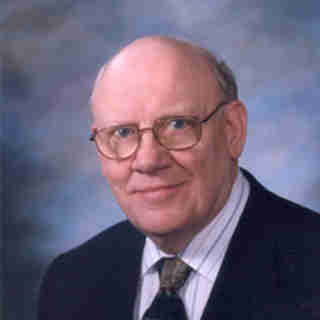 Dr. Warren Wiersbe once described Heaven as “not only a destination, but also a motivation. When you and I are truly motivated by the promise of eternity with God in heaven, it makes a difference in our lives.”
For Wiersbe, the promise of eternity became the motivation for his long ministry as a pastor, author, and radio speaker. Beloved for his biblical insight and practical teaching, he was called “one of the greatest Bible expositors of our generation” by the late Billy Graham.
Warren W. Wiersbe died on May 2, 2019, in Lincoln, Nebraska, just a few weeks shy of his 90th birthday.
“He was a longtime, cherished friend of Moody Bible Institute, a faithful servant of the Word, and a pastor to younger pastors like me,” said Dr. Mark Jobe, president of Moody Bible Institute. “We are lifting up pastor Wiersbe’s family in prayer at this time and rejoicing in the blessed hope that believers share together.”
Wiersbe grew up in East Chicago, Indiana, a town known for its steel mills and hard-working blue-collar families. In his autobiography, he connected some of his earliest childhood memories to Moody Bible Institute; his home church pastor was a 1937 graduate, Dr. William H. Taylor. After volunteering to usher at a 1945 Youth for Christ rally, Wiersbe found himself listening with rapt attention to Billy Graham’s sermon, and responded with a personal prayer of dedication.
In a precocious turn of events, the young Wiersbe was already a published author, having written a book of card tricks for the L. L. Ireland Magic Co. of Chicago. He quickly learned to liven up Sunday school lessons with magic tricks as object lessons (“not the cards!” he would say). After his high school graduation in 1947 (he was valedictorian), he spent a year at Indiana University before transferring to Northern Baptist Seminary in Chicago, where he earned a bachelor of theology degree. His future wife, Betty, worked in the school library, and Wiersbe was a frequent visitor.
While in seminary he became pastor of Central Baptist Church in East Chicago, serving until 1957. During those years he became a popular YFC speaker, which led to a full-time position with Youth for Christ International in Wheaton. He published his first article for Moody Monthly magazine in 1956, about Bible study methods, and seemed to outline his ongoing writing philosophy. “This is more of a personal testimony,” he said, “because I want to share these blessings with you, rather than write some scholarly essay, which I am sure I could not do anyway.”
At a 1957 YFC convention in Winona Lake, Indiana, Wiersbe preached a sermon that was broadcast live over WMBI, his first connection to Moody Radio. “I wish every preacher could have at least six months’ experience as a radio preacher,” he said later (because they would preach shorter).
While working with Youth for Christ, Wiersbe got a call from Pete Gunther at Moody Publishers, asking about possible book projects. First came Byways of Blessing (1961), an adult devotional; then two more books in 1962, A Guidebook for Teens and Teens Triumphant. He would eventually publish 14 titles with Moody, including William Culbertson: A Man of God (1974), Live Like a King (1976), The Annotated Pilgrim’s Progress (1980), and Ministering to the Mourning (2006), written with his son, David Wiersbe.
In 1961, D. B. Eastep invited Wiersbe to join the staff of Calvary Baptist Church in Covington, Kentucky. forming a succession plan that was hastened by Eastep’s sudden death in 1962. Warren and Betty Wiersbe remained at the church for 10 years, until they were surprised by a phone call from The Moody Church. The pastor, Dr. George Sweeting, had just resigned to become president of Moody Bible Institute. Would Wiersbe fill the pulpit, and pray about becoming a candidate?
He was already well known to the Chicago church—and to the MBI community. He continued to write for Moody Monthly and had just started a new column, “Insights for the Pastor.” The monthly feature continued to run during the years Wiersbe served at The Moody Church. Wiersbe would become one of the magazine’s most prolific writers—200 articles during a 40-year span. Meanwhile he also started work on the BE series of exegetical commentaries, books that soon found a place on the shelf of every evangelical pastor.
His ministry to pastors continued as he spoke at Moody Founder’s Week, Pastors’ Conference, and numerous campus events. He also inherited George Sweeting’s role as host of the popular Songs in the Night radio broadcast, produced by Moody Radio’s Bob Neff and distributed on Moody’s growing network of radio stations.
Later in life he would move to Lincoln, Nebraska, where he served as host of the Back to the Bible radio broadcast. He also taught courses on preaching at Trinity Evangelical Divinity School and Grand Rapids Baptist Seminary. He kept writing, eventually publishing more than 150 books and losing track of how many (“I can’t remember them all, and I didn’t save copies of everything,” he said.)
Throughout his ministry, Warren Wiersbe described himself as a bridge builder, a reference to his homiletical method of moving “from the world of the Bible to the world of today so that we could get to the other side of glory in Jesus.” As explained by his grandson, Dan Jacobson, “His preferred tools were words, his blueprints were the Scriptures, and his workspace was a self-assembled library.”
Several of Wiersbe’s extended family are Moody alums, including a son, David Wiersbe ’76; grandson Dan Jacobsen ’09 and his wife, Kristin (Shirk) Jacobsen ’09; and great-nephew Ryan Smith, a current student.
During his long ministry and writing career, Warren Wiersbe covered pretty much every topic, including the inevitability of death. These words from Ministering to the Mourning offer a fitting tribute to his own ministry:
We who are in Christ know that if He returns before our time comes to die, we shall be privileged to follow Him home. God’s people are always encouraged by that blessed hope. Yet we must still live each day soberly, realizing that we are mortal and that death may come to us at any time. We pray, “Teach us to number our days aright, that we may gain a heart of wisdom” (Psalm 90:12).
Dr. Warren Wiersbe once described Heaven as “not only a destination, but also a motivation. When you and I are truly motivated by the promise of eternity with God in heaven, it makes a difference in our lives.”
For Wiersbe, the promise of eternity became the motivation for his long ministry as a pastor, author, and radio speaker. Beloved for his biblical insight and practical teaching, he was called “one of the greatest Bible expositors of our generation” by the late Billy Graham.
Warren W. Wiersbe died on May 2, 2019, in Lincoln, Nebraska, just a few weeks shy of his 90th birthday.
“He was a longtime, cherished friend of Moody Bible Institute, a faithful servant of the Word, and a pastor to younger pastors like me,” said Dr. Mark Jobe, president of Moody Bible Institute. “We are lifting up pastor Wiersbe’s family in prayer at this time and rejoicing in the blessed hope that believers share together.”
Wiersbe grew up in East Chicago, Indiana, a town known for its steel mills and hard-working blue-collar families. In his autobiography, he connected some of his earliest childhood memories to Moody Bible Institute; his home church pastor was a 1937 graduate, Dr. William H. Taylor. After volunteering to usher at a 1945 Youth for Christ rally, Wiersbe found himself listening with rapt attention to Billy Graham’s sermon, and responded with a personal prayer of dedication.
In a precocious turn of events, the young Wiersbe was already a published author, having written a book of card tricks for the L. L. Ireland Magic Co. of Chicago. He quickly learned to liven up Sunday school lessons with magic tricks as object lessons (“not the cards!” he would say). After his high school graduation in 1947 (he was valedictorian), he spent a year at Indiana University before transferring to Northern Baptist Seminary in Chicago, where he earned a bachelor of theology degree. His future wife, Betty, worked in the school library, and Wiersbe was a frequent visitor.
While in seminary he became pastor of Central Baptist Church in East Chicago, serving until 1957. During those years he became a popular YFC speaker, which led to a full-time position with Youth for Christ International in Wheaton. He published his first article for Moody Monthly magazine in 1956, about Bible study methods, and seemed to outline his ongoing writing philosophy. “This is more of a personal testimony,” he said, “because I want to share these blessings with you, rather than write some scholarly essay, which I am sure I could not do anyway.”
At a 1957 YFC convention in Winona Lake, Indiana, Wiersbe preached a sermon that was broadcast live over WMBI, his first connection to Moody Radio. “I wish every preacher could have at least six months’ experience as a radio preacher,” he said later (because they would preach shorter).
While working with Youth for Christ, Wiersbe got a call from Pete Gunther at Moody Publishers, asking about possible book projects. First came Byways of Blessing (1961), an adult devotional; then two more books in 1962, A Guidebook for Teens and Teens Triumphant. He would eventually publish 14 titles with Moody, including William Culbertson: A Man of God (1974), Live Like a King (1976), The Annotated Pilgrim’s Progress (1980), and Ministering to the Mourning (2006), written with his son, David Wiersbe.
In 1961, D. B. Eastep invited Wiersbe to join the staff of Calvary Baptist Church in Covington, Kentucky. forming a succession plan that was hastened by Eastep’s sudden death in 1962. Warren and Betty Wiersbe remained at the church for 10 years, until they were surprised by a phone call from The Moody Church. The pastor, Dr. George Sweeting, had just resigned to become president of Moody Bible Institute. Would Wiersbe fill the pulpit, and pray about becoming a candidate?
He was already well known to the Chicago church—and to the MBI community. He continued to write for Moody Monthly and had just started a new column, “Insights for the Pastor.” The monthly feature continued to run during the years Wiersbe served at The Moody Church. Wiersbe would become one of the magazine’s most prolific writers—200 articles during a 40-year span. Meanwhile he also started work on the BE series of exegetical commentaries, books that soon found a place on the shelf of every evangelical pastor.
His ministry to pastors continued as he spoke at Moody Founder’s Week, Pastors’ Conference, and numerous campus events. He also inherited George Sweeting’s role as host of the popular Songs in the Night radio broadcast, produced by Moody Radio’s Bob Neff and distributed on Moody’s growing network of radio stations.
Later in life he would move to Lincoln, Nebraska, where he served as host of the Back to the Bible radio broadcast. He also taught courses on preaching at Trinity Evangelical Divinity School and Grand Rapids Baptist Seminary. He kept writing, eventually publishing more than 150 books and losing track of how many (“I can’t remember them all, and I didn’t save copies of everything,” he said.)
Throughout his ministry, Warren Wiersbe described himself as a bridge builder, a reference to his homiletical method of moving “from the world of the Bible to the world of today so that we could get to the other side of glory in Jesus.” As explained by his grandson, Dan Jacobson, “His preferred tools were words, his blueprints were the Scriptures, and his workspace was a self-assembled library.”
Several of Wiersbe’s extended family are Moody alums, including a son, David Wiersbe ’76; grandson Dan Jacobsen ’09 and his wife, Kristin (Shirk) Jacobsen ’09; and great-nephew Ryan Smith, a current student.
During his long ministry and writing career, Warren Wiersbe covered pretty much every topic, including the inevitability of death. These words from Ministering to the Mourning offer a fitting tribute to his own ministry:
We who are in Christ know that if He returns before our time comes to die, we shall be privileged to follow Him home. God’s people are always encouraged by that blessed hope. Yet we must still live each day soberly, realizing that we are mortal and that death may come to us at any time. We pray, “Teach us to number our days aright, that we may gain a heart of wisdom” (Psalm 90:12).
parenting is about treasuring
Everyone is looking for joy. Parents, this includes our children. The search for joy lies behind all of our kids’ desires. It informs and directs all of their hopes, feelings, and actions. It is the proverbial carrot hanging in front of our kids’ hearts. It’s why they make that face when you remind them that dessert belongs only to those who eat their vegetables, and why their world seems to hinge on having five more minutes of video-game time. Once we recognize joy’s formative power over our kids’ hearts, we are well on our way to knowing our children better and our role as parents better too. Stewarding Joy When God calls us to be fathers and mothers, he calls us to be stewards of our children’s joy. Which means that a lot of what we do centers on helping our joy-obsessed children find their greatest joy. Now, this might sound strange to many of us. Most parenting books and podcasts don’t spend a lot of time accentuating the influential power of joy in our kids’ lives. Yet, whether you see it or not, you are more than likely already stewarding your children’s joy toward some end. Just think about this week. What did you say to your daughter about her run-in with the school bully? What did you do when your middle child didn’t make the high school team? More than likely, you sought ways to replace their hurt with joy. And it doesn’t just have to be hurt that we exchange — we seek all the time to replace good with better, and better with best, such as when we tell our kids to power down their screens and pick up a book. These instincts show us that much of what we do as parents is driven by our innate commitment to help our kids find joy. This is a good thing, but it’s also where we can get into problems. Settling for Less The pursuit of joy itself is good. God created all of us to seek true and lasting joy because he knows that this search ultimately leads us to him. This is why Jesus uses parables to liken God and his kingdom to buried treasure and a beautiful pearl (Matthew 13:44–46; cf. Philippians 3:7–8). He knows we would sell everything to makes these priceless riches our own because of the happiness they promise us. Jesus then helps us see that the real treasure, and the real pearl of great price, is God and his kingdom. This is where joy ultimately resides, and making this joy our own is worth giving up everything. Pursuing joy, then, isn’t the problem. The problem is with where and how we find that joy, when we look outside of God for our delight. To be specific, the problem is with how sin twists our pursuit. Sin is, in many ways, simply misplaced or shortsighted joy. Sin works because it peddles counterfeit joys off as the real thing. Sin sets out to confuse and corrupt joy, and to make our hearts settle on anything other than God. This is exactly what the serpent did to our first parents in Genesis 3. He promised that the forbidden fruit was better than God and his promises. So, in taking the bite, Adam and Eve settled for a lesser, broken joy — a fruit that was good and delightful, but paled in comparison to the utmost good and perfect delight of knowing God as they once did (Genesis 3:5–6). So what does this have to do with parenting? Well, it redefines it. It means that God calls parents to more than just helping our kids discover any type of joy, anywhere. It means that God calls us to help show our children where and how they can find him , the very source and reason for every joy ever known (John 15:11; Psalm 36; Psalm 37:4). Parenting Redefined Now, if we let it, this can change everything about the way we raise our kids. For example, if we see ourselves as stewards of our kids’ joy, then our parenting finally has a destination. Everything we do — teaching, talking, commanding, loving, correcting, comforting — can be a step toward helping our children find their greatest joy in our great God (Psalm 16:11). This doesn’t change just our parenting strategies, however; it changes us as parents too. When God becomes the target of our children’s greatest joy, we no longer have to be. When we see every interaction with our kids through the lens of helping them find delight in God, our work as parents is bigger than just having well-behaved kids with perfect test scores. Which means we don’t have to be perfect moms and dads. Our calling is a better one. What we are called to do is lead our kids to joy in their perfect heavenly Father. And with that as our goal, we find freedom, and so do they. We are free to make mistakes, and so are they. We are free to live in God’s grace, and we want our children to live with us there too. Getting to the Heart How do we do this? How do we help our kids find their ultimate joy in God? Here are a few tangible ways to be good stewards of our children’s hearts. 1. Start with your own joy. Remember, everyone is looking for joy. Parents, this includes us. So before we can guide our kids’ hearts, we must first know the way ourselves. We as parents have the privilege to hold our kids’ hands on the way to our greatest joy. So before diagnosing your kids’ idols, make sure to face your own. Ask yourself, What have I put all my hope in today? What am I worshiping? What stands between God and my real joy? 2. Reshape the do’s and don’ts. If you are like me, it’s easy to get lost in the weeds as a parent. Sometimes we don’t have a good reason why we say no to our kids, and sometimes we say yes out of sheer pragmatism or exhaustion. But setting our sights on joy helps us recalibrate. Our do’s and don’ts should have distinct and eternal reasons behind them. We’re after more than behavior modification; we’re after our kids’ long-term happiness. Our commands and instructions don’t have to be speed bumps to our kids’ happiness; they can be signposts that point them to their ultimate joy. So take a moment before your yes or no and consider how your response will affect your kids’ search for joy. 3. Ask why . As your kids grow, teach them how to spot joy’s formative power in their lives. One of the best ways to do this is with the question why . “Why did you hit your sister?” “Why didn’t you study for that exam?” Now, of course, you’ll have to wade through their “I don’t knows” and “just becauses.” But when you do, you’ve helped them to drill down into their motives, where they can finally see how their joys affect their feelings and actions and begin to evaluate them rather than just be enslaved to them. 4. Make connections. One of the most important things we can do as parents is ask our kids what makes them happy, and then just listen. Getting a bead on your kids’ joy is like having an all-access pass to their hearts, and when you know what your kids love, you can help them put their loves in the right place. God isn’t in the business of simply removing our kids’ earthly joys, which means that shouldn’t be our business as parents either. Instead, God calls us to help connect our kids’ earthly and temporal joys to him, the divine and eternal one. So play basketball with your kids and, when you can, help them see how this earthly gift points to greater joys. Sure, Legos and American Girl dolls can become idols, but they can also pave the way to conversations that can help our kids hope in their heavenly Father. And when (not if) our kids seek joy through sin, we have the divinely given privilege to help them see they’ve actually sold joy short by seeking it outside of God and his ways.