
Others like grace for the moment volume ii Features >>
Grace For The Moment Volume I
Bread For The Journey

Kept For The Master's Use

Hope For Every Moment - 365 Days
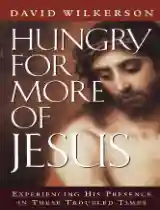
Hungry For More Of Jesus

A Mind Awake
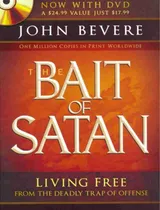
Bait Of Satan Devotional

Hope: A Partner To Faith
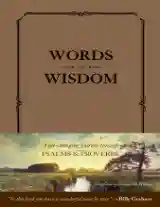
Words Of Wisdom: A Life-Changing Journey Through Psalms And Proverbs
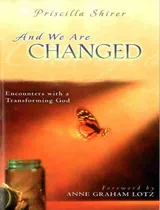
And We Are Changed: Encounters With A Transforming God
About the Book
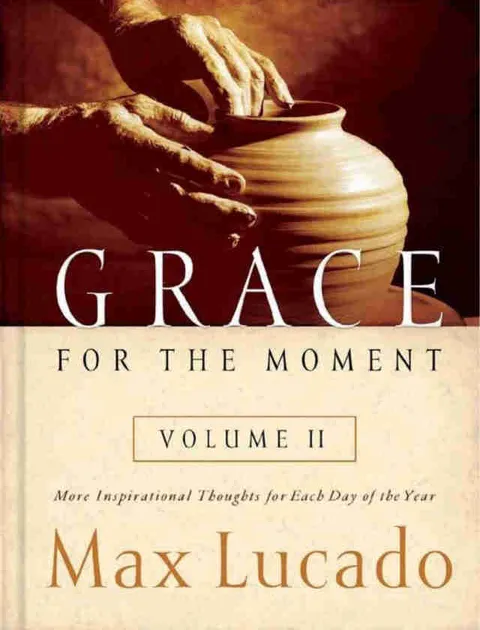
"Grace for the Moment Volume II" is a daily devotional book by Max Lucado that offers inspirational readings and reflections on faith, grace, and God's love. Each entry provides insight and encouragement for living a life of faith and trust in God. Through his powerful and thoughtful writing, Lucado helps readers find hope, peace, and joy in their everyday lives.
Gordon Lindsay
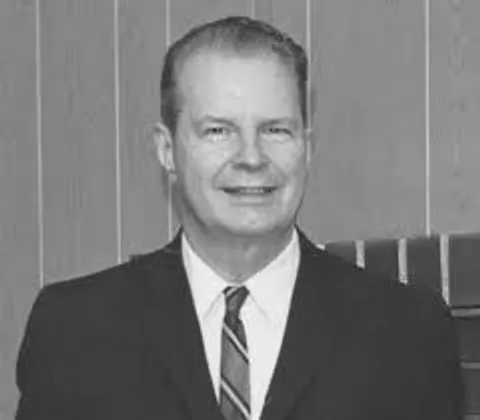 Gordon Lindsay’s Early life
Gordon Lindsay’s parents were members of J. A. Dowie’s Zion City, Illinois when he was born. The city’s financial difficulties forced the family west in 1904, where they temporarily joined another Christian-based community led by Finis Yoakum at Pisgah Grande, California. When similar problems emerged the family moved to Oregon after only a few months. From here the family moved to Portland, Oregon where Lindsay attended high school and was converted during a Charles F. Parham evangelistic campaign.
During his youth he came under the influence of John G. Lake, former resident of Zion City, missionary to South Africa, and founder of the Divine Healing missions in Spokane, Washington, and Portland, Oregon in 1920. Lindsay joined the healing and evangelistic campaigns of Lake, traveling throughout California and the southern states.
Lindsay began his own ministry in California as pastor of small churches in Avenal and San Fernando and for the next eighteen years, he travelled acros s the country holding revivals in full gospel churches. This period of travel prepared him as perhaps no other man in the nation to establish communication among a variety of Pentecostals.
When World War II began, Lindsay felt compelled to give up his evangelistic ministry because its rigorous lifestyle was taking its toll on his young family. He accepted a call to pastor a church in Ashland, Oregon.
William Branham enters Gordon Lindsay’s life
By 1947 he had witnessed the extraordinary ministry of William Branham and responded to the invitation to become Branham’s manager. His managerial skills were soon obvious in the Branham campaigns, and in April 1948, he furthered the cause of the of the revival when he produced the first issue of The Voice of Healing, specifically to promote Branham’s ministry. To Lindsay’s great surprise Branham announced that he “would not continue on the field more than a few weeks more.”
At great financial cost Lindsay decided to continue the publication of the new magazine in cooperation with his long-time friends, Jack Moore and his talented daughter Anna Jeanne Moore. He broadened the scope of the magazine by including more of the lesser known healing evangelists who were beginning to hold campaigns and were drawing large audiences.
One such evangelist was William Freeman who had been holding meetings in small churches. Lindsay visited one of his campaigns and immediately felt it was the will of God to team up with him and organise a series of meetings through 1948. The Voice of Healing featured the miracles of the Freeman campaigns.
Voice of Healing Conventions
By March 1949 The Voice of Healing circulation had grown to nearly 30,000 per month and had clearly become the voice of the healing movement. It’s pages successfully spread the message of the Salvation-Deliverance-Healing revival across the world.
In December 1949, Lindsay arranged the first convention of healing revivalists in Dallas, Texas. The assembly was addressed by Branham, Lindsay, Moore, old-timers such as F. F. Bosworth and Raymond T. Richey, and a number of rising revivalists including O. L. Jaggers, Gayle Jackson, Velmer Gardner, and Clifton Erickson. This historic conference symbolized the vitality and cohesion of the revival.
The following year, the convention, now about 1,000 strong, met in Kansas City, with virtually every important revivalist in the nation, with the notable exceptions of William Branham and Oral Roberts. Lindsay exercised great skill and wisdom exposing several points of danger and tension in the movement proposed guidelines for the future. Lindsay understood the fears of the older Pentecostal denominations and leaders and tried his utmost to deal with the offending issues.
In an article announcing “the purpose, plan and policy of the Voice of Healing Convention,” he denounced “free-lancers who violently and indiscriminately attack organization in general,” and he urged avoidance of “novel prophetic interpretations, dogmatic doctrinal assertions, sectarian predilections, theological hair-splitting.”
The Voice of Healing Association
The 1950 meeting made the Voice of Healing convention into a loose association of healing revivalists. The evangelists officially associated with The Voice of Healing magazine held “family meetings” at the conventions, at the same time maintaining their desire to “prove to the world that those associated with The Voice of Healing have no intention to organize another movement.” Through the decade the Voice of Healing conventions were showcases for healing revivalism.
The conference programs were workshops on the problems of healing evangelists. Typical topics were “prayer and fasting,” “preparation for a campaign,” “the follow-up work after a campaign,” “the system of cards for the prayer tent and the healing line” and the delicate issue of finances. As the association grew in importance in the 1950s, the program was frequently headed by Roberts or Branham; though every new revivalist aspired to be a speaker on the program.
The Voice of Healing family of evangelists flowered in the early 1950s. Lindsay continued to publicize Branham’s work, although he was not formally associated with the organization; the nucleus of the fellowship was an influential clique which included O. L. Jaggers, William Freeman, Jack Coe, T. L. Osborn, A. A. Allen, and Velmer Gardner.
Gradually major ministries began their own magazines and had no further need for Voice of Healing promotion. Nevertheless, by 1954 the “associate editors and evangelists” listed in The Voice of Healing numbered nearly fifty.
Though Lindsay became personally involved with healing evangelism from 1949, especially with other revivalists such as T. L. Osborn, he confined his best work to organization and management of the Voice of Healing magazine. By 1956 the expenses of the Voice of Healing were running $1,000 a day. In addition to the national and regional conventions sponsored by his organization, Lindsay also began to sponsor missions and a radio program.
“Lindsay was more than an advisor during the first decade of the healing revival; he was much like the director of an unruly orchestra. He tried desperately to control the proliferation of ministries in an effort to keep the revival respectable. He repeatedly advised, “It is better for one to go slow. Get your ministry on a solid foundation. . . . By all means avoid Hollywood press agent stuff.”
Many of the new leaders of the early 1950s owed their early success to the literary support of Gordon Lindsay through the Voice of Healing, but by 1958, many of the revivalists believed that Lindsay’s work was over.
An evolving ministry
Lindsay’s efforts to consolidate and coordinate the healing movement and its ministries became an impossible task. The increasing independence of ministries and the burgeoning charismatic movement caused Lindsay to reconsider his goals. He took the example of T. L. Osborn and concentrated on missionary endeavours. He remained the historian and theologian of the healing movement but began to produce teaching and evangelistic materials which were sent across the world.
The Voice of Healing ultimately became Christ for the Nations. Native church programs, literature, teaching tapes and funds were distributed to hundreds of locations. The organization had changed from one of healing revivalists into an important missionary society.
His ministry was always to those involved in the healing revival, independents and mainline Pentecostals, but the new charismatics – Lutherans, Methodists and Baptists – became his new audience. His encouragement of, and involvement with, the Full Gospel Businessmen’s Fellowship was designed to provide teaching and wisdom for charismatic leaders, many of whom held Lindsay in high regard.
His death on April 1st 1971
Suddenly, on April 1, 1973, Gordon Lindsay died. His wife, Freda, stepped into the breach and was able to stabilize and advance the ministry of Christ for the Nations. Lindsay’s death brought unparalleled financial support paying off all debts and expanding most of its programs.
David Harrel summarises the life of Gordon Lindsay perfectly: ‘The death of Gordon Lindsay closed a major chapter in the charismatic revival. No single man knew the revival and its leaders so well. No man understood its origins, its changes, and its diversity as did Lindsay. A shrewd manager and financier, Lindsay had been as nearly the coordinator of the healing revival as any man could be.
When the revival began to wane, Lindsay was faced with a crisis more severe than those of most of the evangelists themselves. Never a dynamic preacher, he found himself virtually abandoned by his most successful protégés. But Lindsay proved able to adapt. Always a balanced person, Lindsay built a balanced and enduring ministry.’
Tony Cauchi
Gordon Lindsay’s Early life
Gordon Lindsay’s parents were members of J. A. Dowie’s Zion City, Illinois when he was born. The city’s financial difficulties forced the family west in 1904, where they temporarily joined another Christian-based community led by Finis Yoakum at Pisgah Grande, California. When similar problems emerged the family moved to Oregon after only a few months. From here the family moved to Portland, Oregon where Lindsay attended high school and was converted during a Charles F. Parham evangelistic campaign.
During his youth he came under the influence of John G. Lake, former resident of Zion City, missionary to South Africa, and founder of the Divine Healing missions in Spokane, Washington, and Portland, Oregon in 1920. Lindsay joined the healing and evangelistic campaigns of Lake, traveling throughout California and the southern states.
Lindsay began his own ministry in California as pastor of small churches in Avenal and San Fernando and for the next eighteen years, he travelled acros s the country holding revivals in full gospel churches. This period of travel prepared him as perhaps no other man in the nation to establish communication among a variety of Pentecostals.
When World War II began, Lindsay felt compelled to give up his evangelistic ministry because its rigorous lifestyle was taking its toll on his young family. He accepted a call to pastor a church in Ashland, Oregon.
William Branham enters Gordon Lindsay’s life
By 1947 he had witnessed the extraordinary ministry of William Branham and responded to the invitation to become Branham’s manager. His managerial skills were soon obvious in the Branham campaigns, and in April 1948, he furthered the cause of the of the revival when he produced the first issue of The Voice of Healing, specifically to promote Branham’s ministry. To Lindsay’s great surprise Branham announced that he “would not continue on the field more than a few weeks more.”
At great financial cost Lindsay decided to continue the publication of the new magazine in cooperation with his long-time friends, Jack Moore and his talented daughter Anna Jeanne Moore. He broadened the scope of the magazine by including more of the lesser known healing evangelists who were beginning to hold campaigns and were drawing large audiences.
One such evangelist was William Freeman who had been holding meetings in small churches. Lindsay visited one of his campaigns and immediately felt it was the will of God to team up with him and organise a series of meetings through 1948. The Voice of Healing featured the miracles of the Freeman campaigns.
Voice of Healing Conventions
By March 1949 The Voice of Healing circulation had grown to nearly 30,000 per month and had clearly become the voice of the healing movement. It’s pages successfully spread the message of the Salvation-Deliverance-Healing revival across the world.
In December 1949, Lindsay arranged the first convention of healing revivalists in Dallas, Texas. The assembly was addressed by Branham, Lindsay, Moore, old-timers such as F. F. Bosworth and Raymond T. Richey, and a number of rising revivalists including O. L. Jaggers, Gayle Jackson, Velmer Gardner, and Clifton Erickson. This historic conference symbolized the vitality and cohesion of the revival.
The following year, the convention, now about 1,000 strong, met in Kansas City, with virtually every important revivalist in the nation, with the notable exceptions of William Branham and Oral Roberts. Lindsay exercised great skill and wisdom exposing several points of danger and tension in the movement proposed guidelines for the future. Lindsay understood the fears of the older Pentecostal denominations and leaders and tried his utmost to deal with the offending issues.
In an article announcing “the purpose, plan and policy of the Voice of Healing Convention,” he denounced “free-lancers who violently and indiscriminately attack organization in general,” and he urged avoidance of “novel prophetic interpretations, dogmatic doctrinal assertions, sectarian predilections, theological hair-splitting.”
The Voice of Healing Association
The 1950 meeting made the Voice of Healing convention into a loose association of healing revivalists. The evangelists officially associated with The Voice of Healing magazine held “family meetings” at the conventions, at the same time maintaining their desire to “prove to the world that those associated with The Voice of Healing have no intention to organize another movement.” Through the decade the Voice of Healing conventions were showcases for healing revivalism.
The conference programs were workshops on the problems of healing evangelists. Typical topics were “prayer and fasting,” “preparation for a campaign,” “the follow-up work after a campaign,” “the system of cards for the prayer tent and the healing line” and the delicate issue of finances. As the association grew in importance in the 1950s, the program was frequently headed by Roberts or Branham; though every new revivalist aspired to be a speaker on the program.
The Voice of Healing family of evangelists flowered in the early 1950s. Lindsay continued to publicize Branham’s work, although he was not formally associated with the organization; the nucleus of the fellowship was an influential clique which included O. L. Jaggers, William Freeman, Jack Coe, T. L. Osborn, A. A. Allen, and Velmer Gardner.
Gradually major ministries began their own magazines and had no further need for Voice of Healing promotion. Nevertheless, by 1954 the “associate editors and evangelists” listed in The Voice of Healing numbered nearly fifty.
Though Lindsay became personally involved with healing evangelism from 1949, especially with other revivalists such as T. L. Osborn, he confined his best work to organization and management of the Voice of Healing magazine. By 1956 the expenses of the Voice of Healing were running $1,000 a day. In addition to the national and regional conventions sponsored by his organization, Lindsay also began to sponsor missions and a radio program.
“Lindsay was more than an advisor during the first decade of the healing revival; he was much like the director of an unruly orchestra. He tried desperately to control the proliferation of ministries in an effort to keep the revival respectable. He repeatedly advised, “It is better for one to go slow. Get your ministry on a solid foundation. . . . By all means avoid Hollywood press agent stuff.”
Many of the new leaders of the early 1950s owed their early success to the literary support of Gordon Lindsay through the Voice of Healing, but by 1958, many of the revivalists believed that Lindsay’s work was over.
An evolving ministry
Lindsay’s efforts to consolidate and coordinate the healing movement and its ministries became an impossible task. The increasing independence of ministries and the burgeoning charismatic movement caused Lindsay to reconsider his goals. He took the example of T. L. Osborn and concentrated on missionary endeavours. He remained the historian and theologian of the healing movement but began to produce teaching and evangelistic materials which were sent across the world.
The Voice of Healing ultimately became Christ for the Nations. Native church programs, literature, teaching tapes and funds were distributed to hundreds of locations. The organization had changed from one of healing revivalists into an important missionary society.
His ministry was always to those involved in the healing revival, independents and mainline Pentecostals, but the new charismatics – Lutherans, Methodists and Baptists – became his new audience. His encouragement of, and involvement with, the Full Gospel Businessmen’s Fellowship was designed to provide teaching and wisdom for charismatic leaders, many of whom held Lindsay in high regard.
His death on April 1st 1971
Suddenly, on April 1, 1973, Gordon Lindsay died. His wife, Freda, stepped into the breach and was able to stabilize and advance the ministry of Christ for the Nations. Lindsay’s death brought unparalleled financial support paying off all debts and expanding most of its programs.
David Harrel summarises the life of Gordon Lindsay perfectly: ‘The death of Gordon Lindsay closed a major chapter in the charismatic revival. No single man knew the revival and its leaders so well. No man understood its origins, its changes, and its diversity as did Lindsay. A shrewd manager and financier, Lindsay had been as nearly the coordinator of the healing revival as any man could be.
When the revival began to wane, Lindsay was faced with a crisis more severe than those of most of the evangelists themselves. Never a dynamic preacher, he found himself virtually abandoned by his most successful protégés. But Lindsay proved able to adapt. Always a balanced person, Lindsay built a balanced and enduring ministry.’
Tony Cauchi
‘happy wife, happy life’ - and other misleading advice to young husbands
The title read, “How Do I Get My Husband to Be Less Passive?” Click. The author, a wife and clinical psychologist, addressed the common complaint that women of various ages bring to her: their husbands lacked passion for anything but the couch and the screen. These wives wanted to know how to get their men to do something other than stare at the television, laptop, or smartphone, and how to get them to initiate something other than physical intimacy. They wanted their men to plan dates, start conversations, play with the kids, stand up for themselves (at work) and for their wife (with the in-laws), or to show concern for daily decisions. The manly intentionality that had pursued these women during dating had dwindled in marriage. Age-Old Problem The complaint, of course, is nothing new. Paradise was lost when the first man took the easy path of appeasement in his marriage. The serpent hissed lies in her ear; he stood silently by. Instead of an uncomfortable moment with his wife, and then crushing the skull of her deceiver, he watched as she took a bite. Compromise bore twins, and he ate too (Genesis 3:6). “Lasting joy in our marriages is found in living out the drama of Christ and his bride, not Adam and his.” And we see Adam’s passivity echoed in countless marriages today. The temptation to be emotionally and spiritually absent, when physically present, has merely changed hairstyles over time. The same unmanly repose still beckons men to recline in the passenger’s seat. God calls out to husbands today with the same question he asked in the garden: “Adam, where are you?” And where are we? Too often giving into the scheme that affords less responsibility and more opportunity to watch the game. Masculinity that leads through loving sacrifice can feel like an endangered species. And some of the mantras given to me as a newly married man may have hurt, instead of helped, my enlistment into the active-duty husbandry put on display in Jesus Christ. Consider four naive, and easily misunderstood, words of counsel given to new husbands, even from well-meaning Christian brothers. ‘Happy Wife, Happy Life’ The advice could be redeemable. The husband should lavish his queen with love, finding a great deal of his joy in hers. And one could say it from an eternal perspective: Happy wife (in the Lord), happy life. But what is most often meant by this phrase cannot be missed: a man’s life is less miserable when his woman gets her way. Such deferment is tempting: no conflict, no unhappy bride, no blame. Just letting her have her way is much more comfortable than making unpopular decisions on weighty matters, that you think (and pray) are spiritually best for her and your family: Whether they be where your children go to school, what church you join, where you live next, when to have children, or countless difficult choices that require spiritual energy, courage, and faith. But Christ created men to initiate and bear responsibility. His glory is to sacrifice. His mission is to lead his wife and his family from the front, on his knees. Although his charge includes the flourishing of the wife, the health of our leadership does not depend solely upon the daily undulations of our bride’s earthly happiness, but on the consistency with which we obey our Master. You can have a happy, governing wife resulting in a shallow, resistance-free life, and end up with an unhappy Lord. In the end, a nearsighted “happy wife, happy life” mentality throws the toys in the closet to go outside and play. Happy wife, easier life does not lead to happiness, but to a closet full of regret, bitterness, and selfishness, which we all must open eventually. It backfires on us, leaving even a growing number of unbelievers wondering how to get their men to be less passive. Lasting joy in our marriages is found in living out the drama of Christ and his bride, not Adam and his. ‘Your Spouse Is Your Best Friend’ “You can have a happy, governing wife resulting in a shallow, resistance-free life, and end up with an unhappy Lord.” She is not just your BFF because marriage is not simply friendship . It isn’t a symmetrical partnership in which the relational patterns are interchangeable. The elegance of the dance consists in the man leading assertively, lovingly, thoughtfully, and the woman following fearlessly, receptively, joyfully — which is much more than mere friendship. The dance is improper when the husband attempts to follow. Now, if we mean that she is the one person with whom you confide most, the one earthly person you treasure most, the one person with whom a day spent doing menial tasks is anything but wasted, then, yes, this is a glory. But our marriages are more than a flat partnership. The glory of a spouse is more than the glory of a friend. The miraculous event of God joining husband and wife together in a bond that none can break is a rose not to be hidden, even in the beautiful tulip-garden of friendship. The marriage drama enacts that of the Great Romance. This flower, by any other name, must smell distinctly sweet. To ballet is not to waltz. The moon is not the sun. The companion is not the spouse. ‘Be a Servant Leader’ For sure, an aspect of this is incredibly right: Jesus came not to be served but to serve and give his life for many (Mark 10:45). That the husband should be like Jesus in such self-giving sacrifice is without question or asterisk. Being a servant leader is great advice — when both words are kept together. Often, however, they are not. The paradox of servant leader devolves, in some minds, into merely meaning servant : You sacrifice your convictions for any and all of her ambitions. You take on her calling, not because of exceptional circumstance but only because you wanted to lay your aspirations down for hers. You coddle her, never asking her to do anything that she does not already want to do — even if you think it best for her ultimate joy in the Lord. The good-intentioned servant (non)leader, in an honest attempt to love and serve his wife well, abdicates to a kind of service that undermines his call to be a husband and bear responsibility, take initiative, and feel the burden of the hardest decisions. I prefer sacrificial leadership instead: “Husbands, love your wives, as Christ loved the church and gave himself up for her” (Ephesians 5:25). It is a leadership that, while not relinquishing its responsibility or apologizing for its authority, sees leadership as a calling to inconvenience self first for the good of one’s family and neighbor. ‘Marriage Is 50/50’ Marriage, for the man especially, is not 50/50. Manhood doesn’t require her to scratch your back before you’ll scratch hers. Headship doesn’t keep score. You don’t go so far, and no farther, until she catches up. You don’t limit your patience, kindness, gentleness, and goodness until she matches. A husband’s love doesn’t bear all things, believe all things, hope all things, endure all things only half the time . Husbands don’t wait for reciprocation to initiate. “The marriage drama enacts that of the Great Romance. This flower, by any other name, must smell distinctly sweet.” Jesus didn’t wait for his bride to meet him halfway. His spouse didn’t take half of the scourging or half of the cross. He, manly he, sacrificed all for her well-being — while she was yet a sinner. He gave all his life for hers. Nothing 50/50 about it. And sacrificial leadership is so happy in this love of Christ that we lay down our lives like he did — even when she isn’t “holding up her end of things.” Husbands, love your wives as Christ loved the church. We do not bring home the paycheck and expect the wife to pick up the remaining fifty percent of the relational tab with the kids. Marriages that start 50/50, often end 50/50 — splitting half of one’s assets in divorce. Play the Man You Are “Why did you wish me milder? Would you have me false to my nature? Rather say I, play the man I am.” —Coriolanus Our feminist-influenced, Bible-ignoring, headship-shaming society wishes real men to be milder. They wish you passive. They wish you silent. But God entrusts you to speak, to sacrifice, to crush serpents. He calls you to be true to your nature — the one he gave you — and play the man that you are. And that man is not timid, not unassertive, not feeble in the faith: “Be watchful, stand firm in the faith, act like men , be strong” (1 Corinthians 16:13). It cannot be asked of that man, “How can I get my husband to be less passive?” That man, as C.S. Lewis depicts, goes into battle first and retreats last. He, for truth’s and honor’s sake, “stands fast and suffers long.” God calls you to increasingly be this man, and provides the strength for you to be him when you feel weak. Stand upright, then, be strong, after the true strength and example of Jesus Christ. For your King, your wife, and your future kin.
-480.webp)