
Others like dream language Features >>
God Encounters

Dream Big, Talk Big, And Turn Your Faith Loose
How To Become A Wise Man In God's Eyes: Worship Him

Blueprint For Building Strong Faith
Jealousy: The Sin No One Talks About

Breaking Free Of Rejection
God's Will For Your Life
A Sure Foundation

War In Heaven
Created For Community - Connecting Christian Belief With Christian Living
About the Book
"Dream Language" by James W. and Michal Ann Goll is a comprehensive guide to interpreting and understanding the symbolism of dreams. The authors explore the spiritual significance of dreams and provide practical tools and techniques for deciphering their hidden messages. The book delves into the different types of dreams, common dream symbols, and the importance of seeking insight from God to unlock the wisdom and guidance found in dreams.
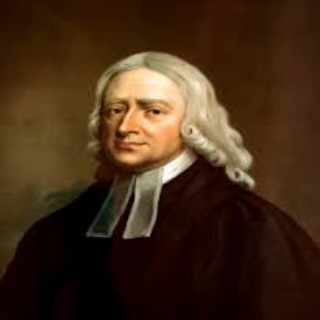
John Knox
"The sword of justice is God's, and if princes and rulers fail to use it, others may."
He was a minister of the Christian gospel who advocated violent revolution. He was considered one of the most powerful preachers of his day, but only two of the hundreds of sermons he preached were ever published. He is a key figure in the formation of modern Scotland, yet there is only one monument erected to him in Scotland, and his grave lies beneath a parking lot.
John Knox was indeed a man of many paradoxes, a Hebrew Jeremiah set down on Scottish soil. In a relentless campaign of fiery oratory, he sought to destroy what he felt was idolatry and to purify Scotland's religion.
Taking up the cause
John Knox was born around 1514, at Haddington, a small town south of Edinburgh. Around 1529 he entered the University of St. Andrews and went on to study theology. He was ordained in 1536, but became a notary, then a tutor to the sons of local lairds (lower ranking Scottish nobility).
Dramatic events were unfolding in Scotland during Knox's youth. Many were angry with the Catholic church, which owned more than half the real estate and gathered an annual income of nearly 18 times that of the crown. Bishops and priests were often mere political appointments, and many never hid their immoral lives: the archbishop of St. Andrews, Cardinal Beaton, openly consorted with concubines and sired 10 children.
The constant sea traffic between Scotland and Europe allowed Lutheran literature to be smuggled into the country. Church authorities were alarmed by this "heresy" and tried to suppress it. Patrick Hamilton, an outspoken Protestant convert, was burned at the stake in 1528.
In the early 1540s, Knox came under the influence of converted reformers, and under the preaching of Thomas Guilliame, he joined them. Knox then became a bodyguard for the fiery Protestant preacher George Wishart, who was speaking throughout Scotland.
In 1546, however, Beaton had Wishart arrested, tried, strangled, and burned. In response, a party of 16 Protestant nobles stormed the castle, assassinated Beaton, and mutilated his body. The castle was immediately put to siege by a fleet of French ships (Catholic France was an ally to Scotland). Though Knox was not privy to the murder, he did approve of it, and during a break in the siege, he joined the besieged party in the castle.
During a Protestant service one Sunday, preacher John Rough spoke on the election of ministers, and publicly asked Knox to undertake the office of preacher. When the congregation confirmed the call, Knox was shaken and reduced to tears. He declined at first, but eventually submitted to what he felt was a divine call.
It was a short-lived ministry. In 1547, after St. Andrews Castle had again been put under siege, it finally capitulated. Some of the occupants were imprisoned. Others, like Knox, were sent to the galleys as slaves.
Traveling preacher
Nineteen months passed before he and others were released. Knox spent the next five years in England, and his reputation for preaching quickly blossomed. But when Catholic Mary Tudor took the throne, Knox was forced to flee to France.
He made his way to Geneva, where he met John Calvin. The French reformer described Knox as a "brother … laboring energetically for the faith." Knox for his part, was so impressed with Calvin's Geneva, he called it, "the most perfect school of Christ that was ever on earth since the days of the apostles."
Knox traveled on to Frankfurt am Main, where he joined other Protestant refugees—and quickly became embroiled in controversy. The Protestants could not agree on an order of worship. Arguments became so heated that one group stormed out of a church one Sunday, refusing to worship in the same building as Knox.
Back in Scotland, Protestants were redoubling their efforts, and congregations were forming all over the country. A group that came to be called "The Lords of the Congregation" vowed to make Protestantism the religion of the land. In 1555, they invited Knox to return to Scotland to inspire the reforming task. Knox spent nine months preaching extensively and persuasively in Scotland before he was forced to return to Geneva.
Fiery blasts of the pen
Away from his homeland again, he published some of his most controversial tracts: In his Admonition to England he virulently attacked the leaders who allowed Catholicism back in England. In The First Blast of the Trumpet Against the Monstrous Regiment of Women he argued that a female ruler (like English Queen Mary Tudor) was "most odious in the presence of God" and that she was "a traitoress and rebel against God." In his Appellations to the Nobility and Commonality of Scotland, he extended to ordinary people the right—indeed the duty—to rebel against unjust rulers. As he told Queen Mary of Scotland later, "The sword of justice is God's, and if princes and rulers fail to use it, others may."
Knox returned to Scotland in 1559, and he again deployed his formidable preaching skills to increase Protestant militancy. Within days of his arrival, he preached a violent sermon at Perth against Catholic "idolatry," causing a riot. Altars were demolished, images smashed, and religious houses destroyed.
In June, Knox was elected the minister of the Edinburgh church, where he continued to exhort and inspire. In his sermons, Knox typically spent half an hour calmly exegeting a biblical passage. Then as he applied the text to the Scottish situation, he became "active and vigorous" and would violently pound the pulpit. Said one note taker, "he made me so to grew [quake] and tremble, that I could not hold pen to write."
The Lords of the Congregation militarily occupied more and more cities, so that finally, in the 1560 Treaty of Berwick, the English and French agreed to leave Scotland. (The English, now under Protestant Elizabeth I, had come to the aid of the Protestant Scots; the French were aiding the Catholic party). The future of Protestantism in Scotland was assured.
The Parliament ordered Knox and five colleagues to write a Confession of Faith, the First Book of Discipline, and The Book of Common Order—all of which cast the Protestant faith of Scotland in a distinctly Calvinist and Presbyterian mode.
Knox finished out his years as preacher of the Edinburgh church, helping shape the developing Protestantism in Scotland. During this time, he wrote his History of the Reformation of Religion in Scotland.
Though he remains a paradox to many, Knox was clearly a man of great courage: one man standing before Knox's open grave said, "Here lies a man who neither flattered nor feared any flesh." Knox's legacy is large: his spiritual progeny includes some 750,000 Presbyterians in Scotland, 3 million in the United States, and many millions more worldwide.
Parable of an Unhealthy Soul
How do works of obedience relate to the free, unmerited gift of God’s grace in the life of a Christian? This has been a recurring controversial and confusing issue since the earliest days of the church. If we are justified by God’s grace alone, through faith alone, in Christ’s sufficient substitutionary work alone, and not by any work of ours (Romans 3:8), then why are we warned and instructed to “strive . . . for the holiness without which no one will see the Lord” (Hebrews 12:14)? If our works don’t save us, then how can our not working (like not striving for holiness) prevent us from being saved? Before we turn to the apostle Peter for help, hear a parable of an unhealthy soul. Diligence Reveals Real Faith There was a man who was forty pounds overweight. Despite knowing it was dangerous to his health, for years he had indulged in too much of the wrong kinds of foods and neglected the right kinds of exercise. One day, his doctor told him he was in the early stages of developing type-2 diabetes. Not only that, but his vital signs also pointed to high risks of heart attack, stroke, and various cancers. If he didn’t make specific changes, his doctor warned, the man would surely die prematurely. So, the man heeded his doctor’s warnings. He made every effort to put new systems into place that encouraged healthy habits of eating and activity and discouraged his harmful old habits, preferences, and cravings. After twelve months, the man’s health was beginning to be transformed. He had lost most of his excess weight, felt better, had more energy, and no longer lived under the chronic, depressing cloud of knowing he was living in harmful self-indulgence. When his doctor next saw him, he was very pleased and said to the man, “Well done! You are no longer at heightened risk of premature death.” The man continued in his new ways and lived well into old age. Question: Was the man’s health restored through his faith in the gracious knowledge provided to him pertaining to life and healthiness, or was it restored through his diligent efforts to put this knowledge into practice? How Faith Works Do you see the problem with the question? It poses a false dichotomy. The man’s faith and his works were organically inseparable. If he didn’t have faith in what the doctor told him, he wouldn’t have heeded the doctor’s warning — there would have been no health-restoring works. If he didn’t obey the doctor’s instructions, whatever “faith” he may have claimed to have in his doctor would have been “dead faith” (James 2:26) — that faith would not have saved him from his health-destroying ways. This parable, imperfect as it is, is a picture of the biblical teaching on sanctification. In a nutshell, the New Testament teaches that the faith that justifies us is the same faith that sanctifies us. This faith is “the gift of God, not a result of works” (Ephesians 2:8–9). It’s just that this saving faith, by its nature, perseveres, and works to make us holy. We passively receive this gift of faith freely given to us by God. But faith, once received, does not leave a soul passive. It becomes the driving force behind our actions, the way we live. By its nature, faith believes the “precious and very great promises” of God (2 Peter 1:4), and the evidence that real faith is present in us manifests, over time, through the ways we act on those promises. The New Testament calls these actions “works of faith” (1 Thessalonians 1:3) or the “obedience of faith” (Romans 1:5). True works of faith don’t “nullify the grace of God” (Galatians 2:21); they are evidence that we have truly received the grace of God, and are themselves further expressions of grace. Now, let me show you one place where Scripture clearly teaches this. And as I do, imagine yourself as the unhealthy soul in my parable sitting in your doctor’s office — and your doctor is the apostle Peter. Dr. Peter has just examined your spiritual health and has some serious concerns. So, as a good physician, he gives you a firm exhortation. Escaping Through Promises [God’s] divine power has granted to us all things that pertain to life and godliness, through the knowledge of him who called us to his own glory and excellence, by which he has granted to us his precious and very great promises, so that through them you may become partakers of the divine nature, having escaped from the corruption that is in the world because of sinful desire. (2 Peter 1:3–4) Dr. Peter begins by telling you that God has granted to you all things. He agrees with his colleague, Dr. Paul, that God has granted you life, breath, and everything, including the day you were born, the places you’ll live, and how long (Acts 17:25–26). God has granted you regeneration (Ephesians 2:4–5), the measure of your faith (Romans 12:3), spiritual gifts (1 Corinthians 12:7–11), and capacity to work hard (1 Corinthians 15:10). And God has given you his “precious and very great promises so that through them” you may escape the power of sin and be transformed into his nature. Everything, from beginning to end, is God’s grace, since “a person cannot receive even one thing unless it is given him from heaven” (John 3:27). Make Every Effort For this very reason, make every effort to supplement your faith with virtue, and virtue with knowledge, and knowledge with self-control, and self-control with steadfastness, and steadfastness with godliness, and godliness with brotherly affection, and brotherly affection with love. (2 Peter 1:5–7) Notice Dr. Peter’s words: For this reason (because God has granted you everything), make every effort (act with faith in all God has promised you). In other words, prove the reality of your profession of faith, by doing whatever it takes to actively cultivate habits of grace, that nurture the character qualities necessary to live out the “obedience of faith” through doing tangible acts of good to bless others. What Negligence Reveals For if these qualities are yours and are increasing, they keep you from being ineffective or unfruitful in the knowledge of our Lord Jesus Christ. For whoever lacks these qualities is so nearsighted that he is blind, having forgotten that he was cleansed from his former sins. (2 Peter 1:8–9) “Diligence will reveal genuine faith because that is how faith works.” Dr. Peter’s prescription is clear and simple: if you cultivate these holy qualities, they will foster spiritual health and fruitfulness; if you don’t, you will experience spiritual decline and demise. Diligence will reveal genuine faith because that is how faith works: it leads to action. Negligence will reveal your lack of faith because “dead faith” doesn’t work. Now, this is a warning, not a condemnation. Peter knows well that all disciples have seasons of setbacks and failure. But he also knows, with Paul, that some disciples “profess to know God, but they deny him by their works” (Titus 1:16) — their profession of faith is not supported by the “obedience of faith.” Peter doesn’t want you to be one of those statistics, so he ends his firm exhortation to you on a hopeful note. Pursue Diligence by Faith Therefore, brothers, be all the more diligent to confirm your calling and election, for if you practice these qualities you will never fall. For in this way there will be richly provided for you an entrance into the eternal kingdom of our Lord and Savior Jesus Christ. (2 Peter 1:10–11) Just so you’re clear, Dr. Peter emphasizes the organic, inseparable relationship between God’s grace and your “works of faith.” He says, “Be diligent to confirm your calling and election.” You don’t call yourself to Christ; Christ calls you by his grace (John 15:16). You don’t elect yourself to salvation; God elects you by his grace (Ephesians 1:4–6). But you do have an essential contribution to make to your eternal spiritual health. You confirm the reality of God’s saving grace in your life through diligently obeying by faith all that Jesus commands you (Matthew 28:20) — or not. “You can confirm the reality of God’s saving grace in your life — or not.” This is Dr. Peter’s prescription for your assurance of salvation: your diligent obedience through faith, your making every effort to pursue holiness, is evidence that your faith is real and that the Holy Spirit is at work in you to make you a partaker in the divine nature. This is why Scripture commands us, “Strive for . . . the holiness without which no one will see the Lord” (Hebrews 12:14). It’s not that our striving, our “making every effort” to obey God, somehow merits us salvation. Rather, our striving is God’s gracious, ordained means — fed by his promises and supplied by his Spirit — to make us holy as he is holy (1 Peter 1:16) and to provide us “entrance into the eternal kingdom of our Lord and Savior Jesus Christ.” God’s grace is no less gracious because he chooses to grant it not only apart from our works (in justification) but also through our diligent “works of faith” (in sanctification) — especially since these works are evidence that our faith is real. Article by Jon Bloom