
Others like breaking free of rejection Features >>
Rise And Progress Of Religion In The Soul

Breaking Intimidation

Breaking The Threefold Demonic Cord

Breaking Free: Discover The Victory Of Total Surrender

Divine Revelation Of Healing
The Kingdom Of God In You
-160.webp)
The Law Of Recognition (The Laws Of Life Series)

Kingdom Revolution - Bringing Change To Your Life And Beyond

In To His Likeness

4th Dimensional Living In A 3d World
About the Book
"Breaking Free of Rejection" by John Paul Jackson explores the root causes and effects of rejection, offering practical advice and spiritual insights on how to overcome feelings of rejection and experience healing and freedom in relationships. Through personal stories and biblical principles, the book guides readers in understanding and transforming their mindset to break free from the cycle of rejection and embrace their worth and identity in Christ.
William Chalmers Burns
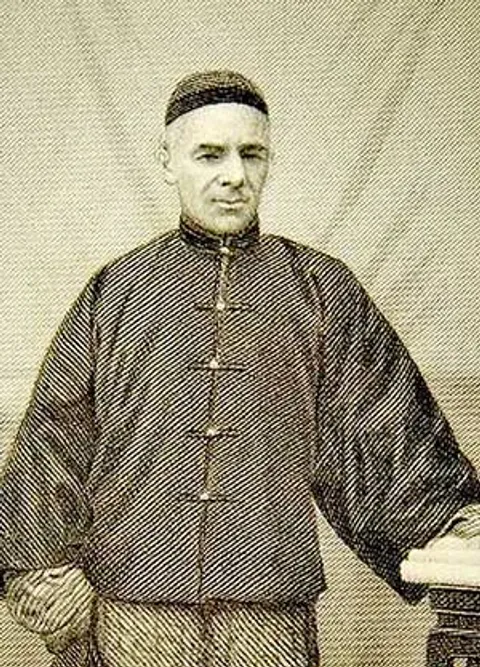 William Chalmers Burns was born in the Manse of Dun, in Angus, on April Ist, 1815. He was the third son of the Parish Church minister there. After leaving school, he went to Edinburgh to be apprenticed with an uncle to the legal profession. His eldest sister, a gay young lady, was converted to God, and became a bright witness for the Lord Jesus in 1831, and it was by means of her decided testimony that William was first awakened to a sense of his need of salvation, and led to put his trust in the Son of God, as his Redeemer and Saviour.
It was shortly after his conversion that he walked into the manse of Kilsyth, where the family then resided, having walked on foot the thirty-six miles from Edinburgh, to tell his mother and his sisters the glad news of his conversion, and to say that his desire now was to relinquish his study of law, and devote himself entirely to the preaching of the Gospel of God’s grace to his fellowmen.
And this he did heartily and with all his might, first in the neglected Parts of Scotland, and latterly among many heathen millions of the great Chinese Empire, then scarcely touched by the feet of God’s messengers of peace.
Mr. Burns’s name came into prominence in connection with a wonderful work of grace in Dundee, while he was preaching for Robert Murray M’Cheyne, then on a visit to Palestine, for the evangelization of the Jews. During Mr. Burns’s preaching in Dundee, a remarkable awakening took place; thousands were aroused to their condition in the sight of God, truly converted, and set on the heavenward way.
Remarkable scenes were witnessed in the old church of St. Peter’s, near to which M’Cheyne’s body now lies, awaiting the first resurrection. It was on the evening of a Lord’s Day in Kilsyth, after preaching to a crowded congregation, that Mr. Burns felt constrained to intimate to the people that he would preach to the people in the open air, before returning to Dundee the following day.
Deeply burdened with the souls of the people, he went into the village and invited the people, who thronged into the old church, until every seat and passage was filled. And the Lord helped His servant to preach straight to the people with great power, with the result that the whole congregation became melted under the message, many weeping aloud and crying to God for mercy. A glorious work of conversion followed.
Meetings for prayer and preaching of the Gospel continued in the churchyard, the market-place and elsewhere for weeks, while Mr. Burns returned to Dundee to resume his ministry. The work progressed in Dundee with increased interest, until the return of Mr. M’Cheyne, who greatly rejoiced in all that the Lord had done during his absence, through the ministry of His servant.
There was no jealousy, but the deepest gratitude, and these two true ministers of Christ rejoiced together over the Lord’s doings, which were indeed marvellous in their eyes.
From that time onward, until the Lord’s call came to go to China, Mr. Burns gave himself almost wholly to itinerant Gospel preaching, through Perthshire, up as far north as Aberdeen, preaching in barns, on market-places, and wherever the people could be gathered together to hear the Word. His message was plain, and to the point; thousands were awakened and many saved. But the adversary opposed. Time and again Mr. Burns was stoned, and bore the marks of these brands of the enemy for many days.
Believing it to be the call of the Lord, he went forth to China as the first missionary of the Presbyterian Church of England, in June, 1847. When questioned by those interested in his out-going, how long it would take him to prepare for the voyage, he replied with all simplicity, “I will be ready to go to-morrow.”
On a brief visit to his home, to take farewell of his sister, he silently wrung her hand, took a last glance around their old home, and with a small bag in his hand and his mother’s plaid across his arm, went forth, in the Name of the Lord with the Gospel to China’s benighted people, of whom it was said “a million a month” were dying without having once heard the Gospel.
For years this solitary witness toiled alone, at times with a few helpers, in the great heathen land, amid overwhelming hindrances, but his faith in God never faltered. On and on he went, sowing the seed which others would reap, until he reached the borders of the great kingdom of Manchuria, where, in a small, comfortless room in Nieu-chang, wearied and worn in labours abundant, he fell asleep on April 4th, 1868, his last audible words being, “For Thine is the Kingdom and the Power and the Glory.”
It is of this great land that the story of grace related in the following pages is told, and those who saw and shared in its joyful results, say that it was no doubt part of the result of William Burns’s sowing, in his earlier years in China.
William Chalmers Burns was born in the Manse of Dun, in Angus, on April Ist, 1815. He was the third son of the Parish Church minister there. After leaving school, he went to Edinburgh to be apprenticed with an uncle to the legal profession. His eldest sister, a gay young lady, was converted to God, and became a bright witness for the Lord Jesus in 1831, and it was by means of her decided testimony that William was first awakened to a sense of his need of salvation, and led to put his trust in the Son of God, as his Redeemer and Saviour.
It was shortly after his conversion that he walked into the manse of Kilsyth, where the family then resided, having walked on foot the thirty-six miles from Edinburgh, to tell his mother and his sisters the glad news of his conversion, and to say that his desire now was to relinquish his study of law, and devote himself entirely to the preaching of the Gospel of God’s grace to his fellowmen.
And this he did heartily and with all his might, first in the neglected Parts of Scotland, and latterly among many heathen millions of the great Chinese Empire, then scarcely touched by the feet of God’s messengers of peace.
Mr. Burns’s name came into prominence in connection with a wonderful work of grace in Dundee, while he was preaching for Robert Murray M’Cheyne, then on a visit to Palestine, for the evangelization of the Jews. During Mr. Burns’s preaching in Dundee, a remarkable awakening took place; thousands were aroused to their condition in the sight of God, truly converted, and set on the heavenward way.
Remarkable scenes were witnessed in the old church of St. Peter’s, near to which M’Cheyne’s body now lies, awaiting the first resurrection. It was on the evening of a Lord’s Day in Kilsyth, after preaching to a crowded congregation, that Mr. Burns felt constrained to intimate to the people that he would preach to the people in the open air, before returning to Dundee the following day.
Deeply burdened with the souls of the people, he went into the village and invited the people, who thronged into the old church, until every seat and passage was filled. And the Lord helped His servant to preach straight to the people with great power, with the result that the whole congregation became melted under the message, many weeping aloud and crying to God for mercy. A glorious work of conversion followed.
Meetings for prayer and preaching of the Gospel continued in the churchyard, the market-place and elsewhere for weeks, while Mr. Burns returned to Dundee to resume his ministry. The work progressed in Dundee with increased interest, until the return of Mr. M’Cheyne, who greatly rejoiced in all that the Lord had done during his absence, through the ministry of His servant.
There was no jealousy, but the deepest gratitude, and these two true ministers of Christ rejoiced together over the Lord’s doings, which were indeed marvellous in their eyes.
From that time onward, until the Lord’s call came to go to China, Mr. Burns gave himself almost wholly to itinerant Gospel preaching, through Perthshire, up as far north as Aberdeen, preaching in barns, on market-places, and wherever the people could be gathered together to hear the Word. His message was plain, and to the point; thousands were awakened and many saved. But the adversary opposed. Time and again Mr. Burns was stoned, and bore the marks of these brands of the enemy for many days.
Believing it to be the call of the Lord, he went forth to China as the first missionary of the Presbyterian Church of England, in June, 1847. When questioned by those interested in his out-going, how long it would take him to prepare for the voyage, he replied with all simplicity, “I will be ready to go to-morrow.”
On a brief visit to his home, to take farewell of his sister, he silently wrung her hand, took a last glance around their old home, and with a small bag in his hand and his mother’s plaid across his arm, went forth, in the Name of the Lord with the Gospel to China’s benighted people, of whom it was said “a million a month” were dying without having once heard the Gospel.
For years this solitary witness toiled alone, at times with a few helpers, in the great heathen land, amid overwhelming hindrances, but his faith in God never faltered. On and on he went, sowing the seed which others would reap, until he reached the borders of the great kingdom of Manchuria, where, in a small, comfortless room in Nieu-chang, wearied and worn in labours abundant, he fell asleep on April 4th, 1868, his last audible words being, “For Thine is the Kingdom and the Power and the Glory.”
It is of this great land that the story of grace related in the following pages is told, and those who saw and shared in its joyful results, say that it was no doubt part of the result of William Burns’s sowing, in his earlier years in China.
satan: his work and destiny
Two errors regarding Satan are current and since he alone is advantaged by them it is reasonable to conclude that he is the author of them. 1. Many believe that Satan does not really exist and that the supposed person of Satan is no more than an evil principle, or influence, which is in man and in the world. This conception is proved to be wrong by the fact that there is the same abundant evidence that Satan is a person as there is that Christ is a person. The Scriptures, which alone are authoritative on these matters, treat one to be a person as much as the other, and if the personality of Christ is accepted on the testimony of the Bible, the personality of Satan must also be accepted on the same testimony. 2. Likewise, others believe that Satan is the direct cause of sin in every person. This impression is not true (1) because Satan is not aiming to promote sin in the world. He did not purpose to be a fiend, but rather to be "like the most High" (Isa. 14:14); he is not aiming to destroy, so much as he is to construct, and to realize his own ambition for authority over this world system, which system proposes culture, morality, and religion (2 Cor. 11:13-15). The impression that Satan is the direct cause of sin is not true (2) because human sin is said to come directly from the fallen human heart (Mark 7:18-23; Jas. 1:13-16; Gen. 6:5). I. The Work of Satan The following are only a few of the many passages bearing on the work of Satan: Isaiah 14:12-17. This passage reveals Satan's original and supreme purpose. He would ascend into Heaven, exalt his throne above the stars of God, and be like the most High. To this end he will use his unmeasured wisdom and power; he will weaken the nations, make the earth to tremble, make the world as a wilderness, destroy the cities thereof, and refuse to release his prisoners. Though every phrase of this passage is a startling disclosure, two in particular may be noted: 1. "I will he like the most High." As recorded in the Scriptures, the activities of Satan following his moral fall can be traced only in the line of this supreme motive. It was this purpose which in all seriousness he recommended to Adam and Eve (Gen. 3:5), and they, by adopting Satan's ideal, became self-centered, self-sufficient, and independent of God. This attitude on the part of Adam and Eve became their very nature and has been transmitted to all their posterity to the extent that their posterity are called the "children of wrath" (Eph. 2:3; 5:6; Rom. 1:18), they must be born again (John 3:3), and, when saved, have a struggle to be yielded wholly to the will of God. Again, Satan's desire to be "like the most High" is seen in his passion to be worshiped by Christ (Luke 4:5-7). When the Man of Sin enters the holy place and is worshiped as God (2 Thess. 2:3, 4; Dan. 9:27; Matt. 24:15; Rev. 13:4-8), for a brief moment, Satan's supreme desire will be realized under the permissive will of God. 2. He "opened not the house of his prisoners." The entire prophecy from which this phrase is taken is concerning the work of Satan as it will have been completed in the days of his final judgment. Doubtless there is a larger fulfillment yet future; however, we know that Satan is now doing all in his power to keep the unsaved from being delivered from the power of darkness and translated into the kingdom of God's dear Son (Col. 1:13). Satan is the one who energizes the children of disobedience (Eph. 2:2), blinds the minds of the unsaved lest the light of the Gospel shall reach them (2 Cor. 4:3, 4), and holds the unconscious world in his arms (1 John 5:19, R.V.). It is also revealed that Satan in his warfare will counterfeit the things of God, which undertaking will likewise be in accord with his purpose to be "like the most High." He will promote extensive religious systems (1 Tim. 4:1-3; 2 Cor. 11:13-15). In this connection, it should be observed that Satan can promote forms of religion which are based on selected Bible texts, which elevate Christ as the leader, and which incorporate every phase of the Christian faith excepting one — the doctrine of salvation by grace alone on the ground of the shed blood of Christ. Such satanic delusions are now in the world and multitudes are being deceived by them. Such false systems are always to be tested by the attitude they take toward the saving grace of God through the efficacious blood of Christ (Rev. 12:11). Satan's enmity is evidently against God alone. He is in no way at enmity with the unsaved, and when he aims his "fiery darts" at the children of God, he attacks them only because of the fact that they are indwelt by the divine nature, and through them he is enabled to secure a thrust at God. Likewise, the attack against the children of God is not in the sphere of "flesh and blood," but in the sphere of their heavenly association with Christ. That is, the believer may not be drawn away into immorality, but he may utterly fail in prayer, in testimony and in spiritual victory. Such failure, it should be seen, is as much defeat and dishonor in the sight of God as those sins which are freely condemned by the world. II. The Destiny of Satan As the Word of God is explicit regarding the origin of Satan, so it is explicit regarding his career and destiny. Five progressive judgments of Satan are to be distinguished: 1. Satan's Moral Fall. Though the time in the dateless past is not disclosed, Satan's moral fall, with its necessary separation from God, is clearly indicated (Ezek. 28:15; 1 Tim. 3:6). It is evident, however, that he did not lose his heavenly position, the larger portion of his power, or his access to God. 2. Satan's Judgment through the Cross. Through the cross a perfect judgment has been secured (John 12:31; 16:11; Col. 2:14, 15), but the execution of that sentence is yet future. This sentence with its execution was predicted in the Garden of Eden (Gen. 3:15). 3. Satan will be cast out of Heaven. In the midst of the coming Tribulation and as a result of a war in Heaven, Satan will be cast out of Heaven and be limited to the earth. He will then act in great wrath knowing that he has but a short time to continue (Rev. 12:7-12. Note, also, Isa. 14:12; Luke 10:18). 4. Satan will be confined, to the Abyss. For the thousand-year reign of Christ upon the earth, Satan will be sealed in the abyss, after which he must be loosed for a "little season" (Rev. 20:1-3, 7). 5. Satan's Final Doom. Having promoted an open rebellion against God during the "little season," Satan is then cast into the lake of fire to be tormented day and night for ever and ever (Rev. 20:10). From Major Bible Themes... by Lewis Sperry Chafer. Chicago: The Bible Institute Colportage, 1937, ©1926.