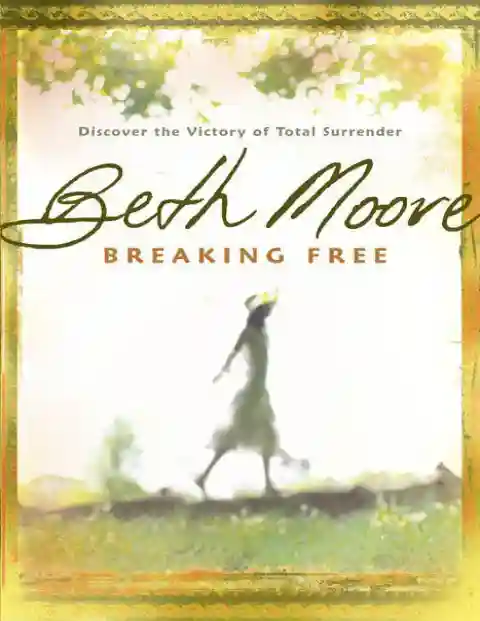

Breaking Free: Discover The Victory Of Total Surrender Order Printed Copy
- Author: Beth Moore
- Size: 1.91MB | 323 pages
- |
Others like breaking free: discover the victory of total surrender Features >>








About the Book
"Breaking Free" by Beth Moore is a Christian self-help book that guides readers on a journey toward surrendering their struggles and finding victory in Christ. Moore uses biblical teachings and personal anecdotes to help readers break free from their past, negative patterns, and sins, and find true freedom and peace through total surrender to God.
Susannah Wesley

‘happy wife, happy life’ - and other misleading advice to young husbands
The title read, “How Do I Get My Husband to Be Less Passive?” Click. The author, a wife and clinical psychologist, addressed the common complaint that women of various ages bring to her: their husbands lacked passion for anything but the couch and the screen. These wives wanted to know how to get their men to do something other than stare at the television, laptop, or smartphone, and how to get them to initiate something other than physical intimacy. They wanted their men to plan dates, start conversations, play with the kids, stand up for themselves (at work) and for their wife (with the in-laws), or to show concern for daily decisions. The manly intentionality that had pursued these women during dating had dwindled in marriage. Age-Old Problem The complaint, of course, is nothing new. Paradise was lost when the first man took the easy path of appeasement in his marriage. The serpent hissed lies in her ear; he stood silently by. Instead of an uncomfortable moment with his wife, and then crushing the skull of her deceiver, he watched as she took a bite. Compromise bore twins, and he ate too (Genesis 3:6). “Lasting joy in our marriages is found in living out the drama of Christ and his bride, not Adam and his.” And we see Adam’s passivity echoed in countless marriages today. The temptation to be emotionally and spiritually absent, when physically present, has merely changed hairstyles over time. The same unmanly repose still beckons men to recline in the passenger’s seat. God calls out to husbands today with the same question he asked in the garden: “Adam, where are you?” And where are we? Too often giving into the scheme that affords less responsibility and more opportunity to watch the game. Masculinity that leads through loving sacrifice can feel like an endangered species. And some of the mantras given to me as a newly married man may have hurt, instead of helped, my enlistment into the active-duty husbandry put on display in Jesus Christ. Consider four naive, and easily misunderstood, words of counsel given to new husbands, even from well-meaning Christian brothers. ‘Happy Wife, Happy Life’ The advice could be redeemable. The husband should lavish his queen with love, finding a great deal of his joy in hers. And one could say it from an eternal perspective: Happy wife (in the Lord), happy life. But what is most often meant by this phrase cannot be missed: a man’s life is less miserable when his woman gets her way. Such deferment is tempting: no conflict, no unhappy bride, no blame. Just letting her have her way is much more comfortable than making unpopular decisions on weighty matters, that you think (and pray) are spiritually best for her and your family: Whether they be where your children go to school, what church you join, where you live next, when to have children, or countless difficult choices that require spiritual energy, courage, and faith. But Christ created men to initiate and bear responsibility. His glory is to sacrifice. His mission is to lead his wife and his family from the front, on his knees. Although his charge includes the flourishing of the wife, the health of our leadership does not depend solely upon the daily undulations of our bride’s earthly happiness, but on the consistency with which we obey our Master. You can have a happy, governing wife resulting in a shallow, resistance-free life, and end up with an unhappy Lord. In the end, a nearsighted “happy wife, happy life” mentality throws the toys in the closet to go outside and play. Happy wife, easier life does not lead to happiness, but to a closet full of regret, bitterness, and selfishness, which we all must open eventually. It backfires on us, leaving even a growing number of unbelievers wondering how to get their men to be less passive. Lasting joy in our marriages is found in living out the drama of Christ and his bride, not Adam and his. ‘Your Spouse Is Your Best Friend’ “You can have a happy, governing wife resulting in a shallow, resistance-free life, and end up with an unhappy Lord.” She is not just your BFF because marriage is not simply friendship . It isn’t a symmetrical partnership in which the relational patterns are interchangeable. The elegance of the dance consists in the man leading assertively, lovingly, thoughtfully, and the woman following fearlessly, receptively, joyfully — which is much more than mere friendship. The dance is improper when the husband attempts to follow. Now, if we mean that she is the one person with whom you confide most, the one earthly person you treasure most, the one person with whom a day spent doing menial tasks is anything but wasted, then, yes, this is a glory. But our marriages are more than a flat partnership. The glory of a spouse is more than the glory of a friend. The miraculous event of God joining husband and wife together in a bond that none can break is a rose not to be hidden, even in the beautiful tulip-garden of friendship. The marriage drama enacts that of the Great Romance. This flower, by any other name, must smell distinctly sweet. To ballet is not to waltz. The moon is not the sun. The companion is not the spouse. ‘Be a Servant Leader’ For sure, an aspect of this is incredibly right: Jesus came not to be served but to serve and give his life for many (Mark 10:45). That the husband should be like Jesus in such self-giving sacrifice is without question or asterisk. Being a servant leader is great advice — when both words are kept together. Often, however, they are not. The paradox of servant leader devolves, in some minds, into merely meaning servant : You sacrifice your convictions for any and all of her ambitions. You take on her calling, not because of exceptional circumstance but only because you wanted to lay your aspirations down for hers. You coddle her, never asking her to do anything that she does not already want to do — even if you think it best for her ultimate joy in the Lord. The good-intentioned servant (non)leader, in an honest attempt to love and serve his wife well, abdicates to a kind of service that undermines his call to be a husband and bear responsibility, take initiative, and feel the burden of the hardest decisions. I prefer sacrificial leadership instead: “Husbands, love your wives, as Christ loved the church and gave himself up for her” (Ephesians 5:25). It is a leadership that, while not relinquishing its responsibility or apologizing for its authority, sees leadership as a calling to inconvenience self first for the good of one’s family and neighbor. ‘Marriage Is 50/50’ Marriage, for the man especially, is not 50/50. Manhood doesn’t require her to scratch your back before you’ll scratch hers. Headship doesn’t keep score. You don’t go so far, and no farther, until she catches up. You don’t limit your patience, kindness, gentleness, and goodness until she matches. A husband’s love doesn’t bear all things, believe all things, hope all things, endure all things only half the time . Husbands don’t wait for reciprocation to initiate. “The marriage drama enacts that of the Great Romance. This flower, by any other name, must smell distinctly sweet.” Jesus didn’t wait for his bride to meet him halfway. His spouse didn’t take half of the scourging or half of the cross. He, manly he, sacrificed all for her well-being — while she was yet a sinner. He gave all his life for hers. Nothing 50/50 about it. And sacrificial leadership is so happy in this love of Christ that we lay down our lives like he did — even when she isn’t “holding up her end of things.” Husbands, love your wives as Christ loved the church. We do not bring home the paycheck and expect the wife to pick up the remaining fifty percent of the relational tab with the kids. Marriages that start 50/50, often end 50/50 — splitting half of one’s assets in divorce. Play the Man You Are “Why did you wish me milder? Would you have me false to my nature? Rather say I, play the man I am.” —Coriolanus Our feminist-influenced, Bible-ignoring, headship-shaming society wishes real men to be milder. They wish you passive. They wish you silent. But God entrusts you to speak, to sacrifice, to crush serpents. He calls you to be true to your nature — the one he gave you — and play the man that you are. And that man is not timid, not unassertive, not feeble in the faith: “Be watchful, stand firm in the faith, act like men , be strong” (1 Corinthians 16:13). It cannot be asked of that man, “How can I get my husband to be less passive?” That man, as C.S. Lewis depicts, goes into battle first and retreats last. He, for truth’s and honor’s sake, “stands fast and suffers long.” God calls you to increasingly be this man, and provides the strength for you to be him when you feel weak. Stand upright, then, be strong, after the true strength and example of Jesus Christ. For your King, your wife, and your future kin.