
Others like breaking bad habits Features >>
About the Book
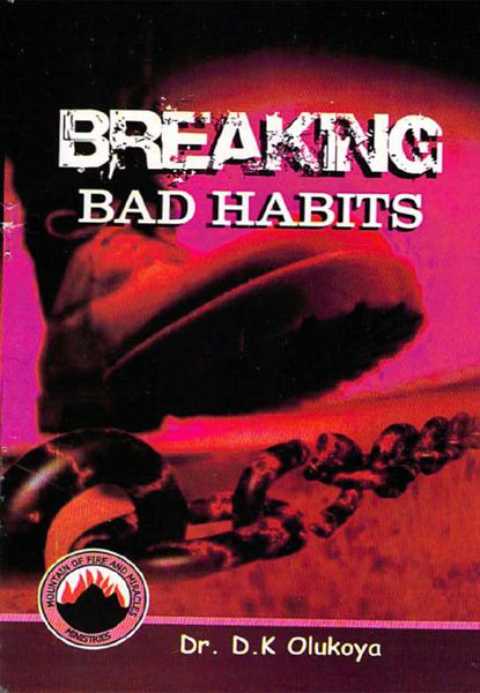
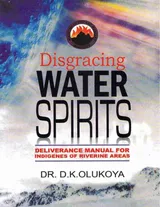
"Breaking Bad Habits" by Dr. D. K. Olukoya is a self-help guide that provides practical strategies for overcoming and eliminating negative habits. The book offers biblical guidance, spiritual insights, and motivational advice to help readers break free from destructive patterns and live a healthier, more fulfilling life.
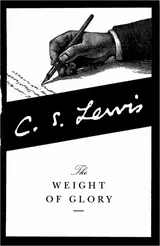
C.S. Lewis
 C.S. Lewis was a prolific Irish writer and scholar best known for his 'Chronicles of Narnia' fantasy series and his pro-Christian texts.
Who Was C.S. Lewis?
Writer and scholar C.S. Lewis taught at Oxford University and became a renowned Christian apologist writer, using logic and philosophy to support the tenets of his faith. He is also known throughout the world as the author of The Chronicles of Narnia fantasy series, which have been adapted into various films for the big and small screens.
Early Life
Clive Staples Lewis was born in Belfast, Ireland, on November 29, 1898, to Flora August Hamilton Lewis and Albert J. Lewis. As a toddler, Clive declared that his name was Jack, which is what he was called by family and friends. He was close to his older brother Warren and the two spent much time together as children.
Lewis was enraptured by fantastic animals and tales of gallantry, and hence the brothers created the imaginary land of Boxen, complete with an intricate history that served them for years. Lewis' mother died when he was 10, and he went on to receive his pre-college education at boarding schools and from a tutor. During WWI, he served with the British army and was sent home after being wounded by shrapnel. He then chose to live as a surrogate son with Janie Moore, the mother of a friend of Lewis' who was killed in the war.
Teaching Career at Oxford and Wartime Broadcasts
Lewis graduated from Oxford University with a focus on literature and classic philosophy, and in 1925 he was awarded a fellowship teaching position at Magdalen College, which was part of the university. There, he also joined the group known as The Inklings, an informal collective of writers and intellectuals who counted among their members Lewis' brother Warren and J.R.R. Tolkien. It was through conversations with group members that Lewis found himself re-embracing Christianity after having become disillusioned with the faith as a youth. He would go on to become renowned for his rich apologist texts, in which he explained his spiritual beliefs via platforms of logic and philosophy.
Lewis began publishing work including Spirits in Bondage in 1919 and the satirical Dymer in 1926. After penning other titles — including The Allegory of Love (1936), for which he won the Hawthornden Prize — he released in 1938 his first sci-fi work, Out of the Silent Planet, the first of a space trilogy which dealt sub-textually with concepts of sin and desire. Later, during WWII, Lewis gave highly popular radio broadcasts on Christianity which won many converts; his speeches were collected in the work Mere Christianity.
Books and Film Legacy
Lewis was a prolific author of fiction and nonfiction who wrote dozens of books over the course of his career. His faith-based arguments as seen in texts like The Great Divorce (1946) and Miracles (1947) are held in high regard by many theologians, scholars and general readers. His satirical fiction novel The Screwtape Letters (1942) is also a beloved classic. Lewis also continued his love affair with classic mythology and narratives during his later years: His book Till We Have Faces: A Myth Retold (1956) featured the story of Psyche and Cupid. He also penned an autobiography, Surprised by Joy: The Shape of My Early Life (1955).
Lewis' landmark series, The Chronicles of Narnia, has seen a number of on-screen iterations, including a cartoon version of The Lion, The Witch and the Wardrobe that was released in 1979 and a 1989 film series. Additionally, in 2005, a big-screen adaptation of The Lion, The Witch and the Wardrobe hit movie theaters, starring Tilda Swinton as the witch Jadis and Liam Neeson as the voice of Aslan. Two more Narnia films were brought to theaters as well: Prince Caspian (2008) and The Voyage of the Dawn Treader (2010). A movie version of The Silver Chair was slated to hit theaters in the near future, with filming starting in the winter of 2018.
Lewis' relationship with his wife, Joy, has also been depicted in Shadowlands, presented as a play and two films; one of the film versions was directed by Richard Attenborough and starred Anthony Hopkins as Lewis.
'The Chronicles of Narnia'
During the 1940s, Lewis began writing the seven books that would comprise The Chronicles of Narnia children's series, with The Lion, The Witch and the Wardrobe (1950) being the first release. The story focused on four siblings who, during wartime, walk through an armoire to enter the magical world of Narnia, a land resplendent with mythical creatures and talking animals. Throughout the series, a variety of Biblical themes are presented; one prominent character is Aslan, a lion and the ruler of Narnia, who has been interpreted as a Jesus Christ figure. (Lewis would assert that his Narnia stories weren't a direct allegory to the real world.)
Though the book received some negative reviews, it was generally well-received by readers, and the series retained its international popularity over the following decades.
Marriage
In 1954, Lewis joined the faculty of Cambridge University as a literature professor, and in 1956 he married an American English teacher, Joy Gresham, with whom he had been in correspondence. Lewis was full of happiness during the years of their marriage, though Gresham died of cancer in 1960. Lewis grieved deeply for his wife and shared his thoughts in the book A Grief Observed, using a pen name.
Death
In 1963, Lewis resigned from his Cambridge position after experiencing heart trouble. He died on November 22, 1963, in Headington, Oxford.
C.S. Lewis was a prolific Irish writer and scholar best known for his 'Chronicles of Narnia' fantasy series and his pro-Christian texts.
Who Was C.S. Lewis?
Writer and scholar C.S. Lewis taught at Oxford University and became a renowned Christian apologist writer, using logic and philosophy to support the tenets of his faith. He is also known throughout the world as the author of The Chronicles of Narnia fantasy series, which have been adapted into various films for the big and small screens.
Early Life
Clive Staples Lewis was born in Belfast, Ireland, on November 29, 1898, to Flora August Hamilton Lewis and Albert J. Lewis. As a toddler, Clive declared that his name was Jack, which is what he was called by family and friends. He was close to his older brother Warren and the two spent much time together as children.
Lewis was enraptured by fantastic animals and tales of gallantry, and hence the brothers created the imaginary land of Boxen, complete with an intricate history that served them for years. Lewis' mother died when he was 10, and he went on to receive his pre-college education at boarding schools and from a tutor. During WWI, he served with the British army and was sent home after being wounded by shrapnel. He then chose to live as a surrogate son with Janie Moore, the mother of a friend of Lewis' who was killed in the war.
Teaching Career at Oxford and Wartime Broadcasts
Lewis graduated from Oxford University with a focus on literature and classic philosophy, and in 1925 he was awarded a fellowship teaching position at Magdalen College, which was part of the university. There, he also joined the group known as The Inklings, an informal collective of writers and intellectuals who counted among their members Lewis' brother Warren and J.R.R. Tolkien. It was through conversations with group members that Lewis found himself re-embracing Christianity after having become disillusioned with the faith as a youth. He would go on to become renowned for his rich apologist texts, in which he explained his spiritual beliefs via platforms of logic and philosophy.
Lewis began publishing work including Spirits in Bondage in 1919 and the satirical Dymer in 1926. After penning other titles — including The Allegory of Love (1936), for which he won the Hawthornden Prize — he released in 1938 his first sci-fi work, Out of the Silent Planet, the first of a space trilogy which dealt sub-textually with concepts of sin and desire. Later, during WWII, Lewis gave highly popular radio broadcasts on Christianity which won many converts; his speeches were collected in the work Mere Christianity.
Books and Film Legacy
Lewis was a prolific author of fiction and nonfiction who wrote dozens of books over the course of his career. His faith-based arguments as seen in texts like The Great Divorce (1946) and Miracles (1947) are held in high regard by many theologians, scholars and general readers. His satirical fiction novel The Screwtape Letters (1942) is also a beloved classic. Lewis also continued his love affair with classic mythology and narratives during his later years: His book Till We Have Faces: A Myth Retold (1956) featured the story of Psyche and Cupid. He also penned an autobiography, Surprised by Joy: The Shape of My Early Life (1955).
Lewis' landmark series, The Chronicles of Narnia, has seen a number of on-screen iterations, including a cartoon version of The Lion, The Witch and the Wardrobe that was released in 1979 and a 1989 film series. Additionally, in 2005, a big-screen adaptation of The Lion, The Witch and the Wardrobe hit movie theaters, starring Tilda Swinton as the witch Jadis and Liam Neeson as the voice of Aslan. Two more Narnia films were brought to theaters as well: Prince Caspian (2008) and The Voyage of the Dawn Treader (2010). A movie version of The Silver Chair was slated to hit theaters in the near future, with filming starting in the winter of 2018.
Lewis' relationship with his wife, Joy, has also been depicted in Shadowlands, presented as a play and two films; one of the film versions was directed by Richard Attenborough and starred Anthony Hopkins as Lewis.
'The Chronicles of Narnia'
During the 1940s, Lewis began writing the seven books that would comprise The Chronicles of Narnia children's series, with The Lion, The Witch and the Wardrobe (1950) being the first release. The story focused on four siblings who, during wartime, walk through an armoire to enter the magical world of Narnia, a land resplendent with mythical creatures and talking animals. Throughout the series, a variety of Biblical themes are presented; one prominent character is Aslan, a lion and the ruler of Narnia, who has been interpreted as a Jesus Christ figure. (Lewis would assert that his Narnia stories weren't a direct allegory to the real world.)
Though the book received some negative reviews, it was generally well-received by readers, and the series retained its international popularity over the following decades.
Marriage
In 1954, Lewis joined the faculty of Cambridge University as a literature professor, and in 1956 he married an American English teacher, Joy Gresham, with whom he had been in correspondence. Lewis was full of happiness during the years of their marriage, though Gresham died of cancer in 1960. Lewis grieved deeply for his wife and shared his thoughts in the book A Grief Observed, using a pen name.
Death
In 1963, Lewis resigned from his Cambridge position after experiencing heart trouble. He died on November 22, 1963, in Headington, Oxford.
he carried a cross through the empire - ignatius of antioch (35–107)
Shaded from the heat of a Syrian summer, an old man sits in shackles, speaking earnestly to a secretary. His words mingle conviction and compassion, like a father to his children. In the next room, ten of emperor Trajan’s legionaries drink off another day’s pay. For them, the road from Antioch to the Roman Colosseum will be long, but it is better than being sent a second time into the Dacian wars. It is August, AD 107. The prisoner’s name is Ignatius. Before his arrest just weeks ago, he was the bishop of Antioch. After the Apostles As Ignatius travels to the Colosseum, the church sits in a precarious spot. Ignatius’s mentor, the apostle John, has recently died. For the first time, there is no living witness to the resurrected Jesus. No leader who can comfort or correct the course of the church with apostolic authority. And yet the need for both comfort and correction is great. From outside the church, Roman society marginalizes Christians as “atheists” (those who do not acknowledge the Roman gods), and the authorities respond to rumors of strange rites in Christian worship with intensifying cycles of persecution. External pressure exposes internal fault lines among those claiming to follow in The Way. Doctrinal deviation creeps in, questioning the truth of the incarnation (Docetism) or requiring adherence to the law of Moses (Ebionism). Behavioral aberration crops up, as some take the name of Christian but remain complacent in patterns in sin. Errors in both doctrine and practice multiply as the church continues to expand across the reaches of the Roman Empire. All of which serves to highlight the question of authority. The old ways of answering this question are gone: Christ has ascended, and his apostles have been martyred. The new and perpetual authorities are not yet in place: a creedal consensus on the faith, a recognition of the canon of Scripture, and the biblical structure of the church all remain undetermined. Seven Last Letters At just over seventy years old, Ignatius steps into this crucial moment in the life of the church by writing letters addressed to seven congregations along his route to Rome. His public ministry through these seven letters has been compared to a meteor, his brightest moment coming as he “blazes briefly through our atmosphere before dying in a shower of fire” ( Apostolic Fathers , 166). But Ignatius is much more concerned about his role as a pastor than as a martyr. As he writes, he cares more about the churches’ discipleship than his own death. He may, therefore, be better pictured like a weaver’s shuttle, carrying the thread of Christlikeness from east to west behind him as he passes through the empire, binding the churches together in the beautiful truths of the Christian life. The pattern he weaves, from the threads of his concern for the church as well as reflection on his own situation, is centered on the cross of Christ in at least five ways. 1. Branches of the Cross First, and foundationally, the cross was central to the earthly ministry of the Lord Jesus. Ignatius presented the cross as capturing the essence of Jesus’s life in this world. This acute moment of passive obedience was the consummation of lifelong humiliation. Jesus was, from first to last, “a man of sorrows and acquainted with grief” (Isaiah 53:3). This broad view of the sufferings Jesus endured — “in every respect” (Hebrews 4:15) — opens wide the door for Ignatius, as well as those to whom he writes, to share in the sufferings of Christ. In a stunning adaptation of Jesus’s words from John 15, Ignatius writes, “If anyone is the Father’s planting, they appear as branches of the cross.” To be branches in the vine, to have his life in us, means that we must “die into his sufferings,” not only as martyrs but in our mundane life as disciples (3.1). 2. Foolishly Different Hope Second, the cross is central to the Christian proclamation of the gospel. In the gospel announcement of “Christ for us,” the “passion has been made clear to us,” and we, in turn, must make it clear to others (6.7). Ignatius celebrates the saving power that was released at Calvary: we escape death in Christ’s death; we receive the new birth only because he died on our behalf. Furthermore, as a community of the redeemed, the ministry life of the church is shaped by the crucifixion. Ignatius pictures the cross as a crane lifting living stones into the temple of God (1.9). It is this cross-shaped congregation that is regularly re-formed around the broken body and spilled blood at the Lord’s Table (1.20), proclaiming the Lord’s death until he comes. This is why the church must reject those who soften the weak and foolish offense of the cross. “[Be] deaf whenever anyone speaks to you apart from Jesus Christ — really born, really persecuted, really crucified, really raised” (3.9). Otherwise — if our hope is not evidently and “foolishly” different than that of this world — someone “might praise me but blaspheme my Lord” by denying that he was God in the flesh (6.5). 3. Greatest When Most Hated Third, the cross is central to Christian discipleship. This is true for Ignatius as he is on the way to Rome to “die for [Christ] as he died for us” (4.6). His caravan has become a classroom — “I am just now learning to be a true disciple” (1.3). But Christian discipleship is deeper and wider than the spiritual gift of martyrdom. It is wider because it applies to every believer — we are all to bear “the stamp of God” rather than “the stamp of the world” (2.5). And it is deeper because the cross places a claim on the whole of our life; once we have “taken on new life through the blood of God,” our new and “righteous nature” delights to reflect the cruciform character of God in Christ. The Spirit of Christ within us enables us to imitate him rather than the world. In response to their anger, be gentle; in response to their boasts, be humble; in response to their slander, offer prayers; in response to their errors, be steadfast in the faith; in response to their cruelty, be civilized; do not be eager to imitate them . . . [instead] let us be eager to be imitators of the Lord, to see who can be the more wronged, who the more cheated, who the more rejected, in order that no weed of the devil may be found among you. (1.10) As he wrote to the church in Rome, “Christianity is greatest [most like Jesus] when it is hated by the world” (4.3). 4. Doorway to God Fourth, the cross is central to Ignatius’s longing to commune with Christ. One of the most striking aspects of these letters is the way Ignatius pleads with the believers in Rome not to interfere with his impending martyrdom out of misplaced concern. Reflecting the way Christ has turned life and death upside down, he writes, “do not hinder me from entering into life, and do not desire my death” (4.6). Ignatius’s journey to the Colosseum is, in a tangible way, a journey into the presence of God. “To be nearer to the sword is to be nearer to God” (4.2). Yet even on the way, communion with Christ in his sufferings has turned the chains draping his body into “spiritual pearls” carried “in Christ” (1.11). In this, Ignatius sets himself as an example for us to imitate. We too must “stand firm, like an anvil being struck by a hammer” (7.3). We too are storm-tossed ships still on the way to the harbor. We too “lack many things so that we may not lack God” (3.5). And yet we do not lose heart because, as the persecuted church gathers together, Christ himself is present among his people. And Christ is he “than whom nothing is better” (2.6). Indeed, “nothing is better than him” (7.1). Because of his cross, we die into his sufferings. But because of his resurrection, suffering has turned into birth pangs, the grave has been turned into a womb, and death is a doorway into life full and everlasting. 5. Scripture Unlocked Fifth, and perhaps most immediately relevant for twenty-first-century disciples who seek to follow Ignatius as he follows Christ, the cross is central to his interpretation of Scripture. Rejecting the accusation that a crucified Messiah is unknown in Israel’s Scripture, Ignatius installs the Christ of the Gospels as the “unalterable archives” out of which the wisdom of God is to be read. The lens through which the Old Testament can be rightly understood must be the person and work of Christ (5.9). For the church in the first century and the twenty-first century, Christ is known, proclaimed, worshiped, and followed as he stands forth from the Book of God, unlocked by the key of his cross and resurrection. Christ of His Cross In considering the example of Ignatius, we can receive encouragement from his faithful witness. The testimony of his life did not seep into the sand of the Colosseum to be lost but, spread through his seven letters, watered the church. We can rejoice in the Spirit-led process by which the canon of Scripture was not only recognized but was faithfully summarized in the creeds of the church, providing us with firm ground on which to stand. Most of all, however, our attention must be drawn to the cross Ignatius carried across the empire, and to which he called the church. In many ways beyond those few listed here, the Christ of this cross is our hope, our joy, and our life.