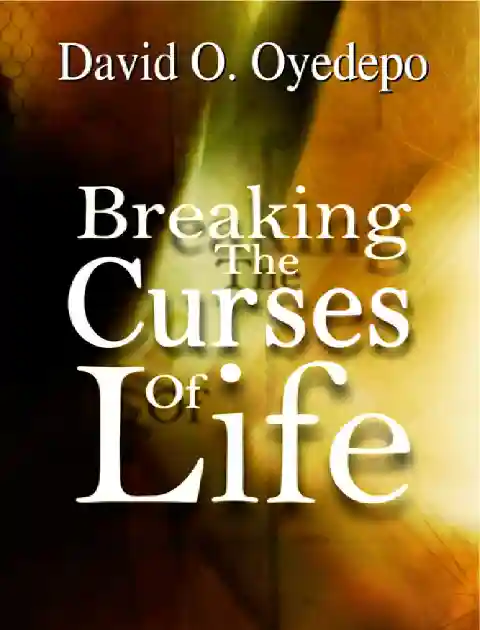

Breaking The Curses Of Life Order Printed Copy
- Author: Dr. David O. Oyedepo
- Size: 1.56MB | 336 pages
- |
Others like breaking the curses of life Features >>
The Burden Of Freedom

Walking In The Newness Of Life

Embracing The Love God Wants You To Have
Forgiveness: Breaking The Power Of The Past

Sinners In The Hands Of An Angry God

You Are God's Best
The Three Most Powerful Words
What Happened From The Cross To The Throne
Out Of The Devil's Cauldron
-160.webp)
Agony Of Wasted Grace
About the Book
"Breaking The Curses Of Life" by Dr. David O. Oyedepo is a motivational and inspirational book that discusses how to break free from the negative cycles and curses that may be hindering your life. The author provides practical steps and insights on how to overcome these obstacles and live a more fulfilling and successful life. Through faith, prayer, and a positive mindset, readers can learn to break the curses of life and achieve their full potential.
Brother Andrew
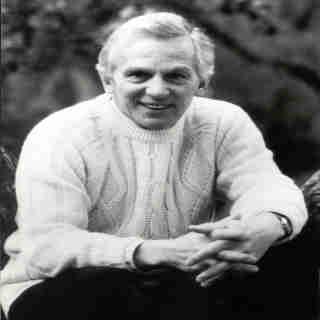 Son of a blacksmith, Brother Andrew didn’t even finish high school. But God used this ordinary dutch man, with his bad back, limited education, without sponsorship and no funds to do things that many said were impossible. From Yugoslavia to North Korea, Brother Andrew penetrated countries hostile to the gospel to bring bibles and encouragement to believers.
Andy van der Bijl, who became known as Brother Andrew, was born in 1928 the son of a deaf father and a semi-invalid mother. Andrew was the third of six children and they lived in the smallest house in the village of Witte in the Netherlands.
In the book God’s smuggler, Andrew describes the impact that the death of his oldest brother ‘Bas’ had upon him. Bas, who was severely handicapped died when Andrew was just 11 years old. Andrew had wanted to die with Bas, but God hadn’t let him.
THIRST FOR ADVENTURE
As a child, brother Andrew was mischievous and dreamt of adventure. When Germany invaded, Andrew amused himself (and the rest of the village) by playing pranks on the occupying troops.
NOTORIOUS COMMANDO WHO NEEDED GOD
His thirst for adventure led him into the Dutch army at the age of 18 where he became a notorious commando. Andrew and his comrades became famous for wearing yellow straw hats in battle, their motto was: ‘get smart – lose your mind’.
The atrocities that Andrew committed as a commando haunted him and he became wrapped in a sense of guilt. Nothing he did – drinking, fighting, writing or reading letters helped him escape the strangle that guilt had upon him.
Shot in the ankle in combat, at the age of 20, his time in the army came to an abrupt end.
In hospital, bed ridden, the witness of Franciscan sisters who served the sick joyfully and the conviction of his own sin, drove him to read the Bible. Andy studied the bible while asking many questions to a friend (Thile), who had written to him throughout his time in the army. Andrew sent questions to Thile who searched for answers from her pastor and the library. His searching within the bible did not however lead him to give his life to God whilst he was still in hospital.
ANDREW RETURNS HOME A CRIPPLE AND SEEKS GOD
Returning home a cripple to his old town, Andrew’s life was empty. He had not found the adventure he had been looking for.
Somehow however, when he return home, he developed a thirst for God. Every evening Andrew attended a meeting and during the day he would read the bible and lookup up bible verses mentioned in the sermons he had heard. At last, one evening he gave up his ego and prayed: ‘Lord if You will show me the way, I will follow You. Amen’.
GOD CALLS BROTHER ANDREW TO MISSION
Soon after becoming a Christian, Brother Andrew attended a an evangelistic meeting taken by a Dutch evangelist Arne Donker. At this meeting Andrew responded to the call to become a missionary. This call to share the good news of salvation started at home, with Andrew and his friend Kees holding an evangelistic event with Pastor Donker in their home town of Witte.
Before going away on mission, Andrew started work at the Ringers chocolate factory. Working in a female dominated environment which was smitten with filthy jokes, God used Andrew and another Christian, and future wife Corrie, to reach their lost co-workers. Through personal witness and inviting them to evangelistic events, many became Christians, including the ring leader of the women. The atmosphere at work changed dramatically and prayer groups were held.
Andrew excelled in his work despite being lame and Mr Ringers, the owner of the factory applauded his work and evangelistic efforts. Because of his high IQ, Andrew was trained up as a job analyst within the factory. But Andrew knew that God was calling him to mission. The big obstacle however was his lack of education.
Giving up smoking, Andrew was able to start saving to buy books. Andrew bought dictionaries and commentaries and so began studying in his spare time. One day Andrew learnt about the bible college in Glasgow run by the WEC mission. At Glasgow bible college Christians could be trained up for mission in 2 years.
Unsure of Gods will for his life, Andrew spent a Sunday afternoon alone with God, speaking aloud with God. Through this time, Andrew realised that he needed to say ‘yes’ to God who was calling him to mission. Before this, Andrew had been saying ‘Yes BUT I am lame.’ ‘Yes BUT I have no education’. Andrew said yes. In an amazing instant, Andrew made this step of yes, and in God’s grace he healed Andrews lame leg.
ANDREW GOES TO ENGLAND
Andrew applied for the Bible college in Glasgow and was accepted. Sponsored by no church, no organisation and lacking education, Andrew obeyed God and went despite being told by the love of his life at the time (Thile) that in going he would lose her.
Andrew’s place at the bible college was delayed by a year. Despite receiving a telegram from WEC telling him not to come, Andrew believed God was instructing him to go. In faith he obeyed God and left for England in 1952.
Andrew spent the first few months in England painting the WEC headquarters building (Bulstrode). While living at Bulstrode, Andrew began spending time with God at the beginning of everyday – a Quiet Time. This was something that Andrew found helpful and endeavoured to do every day of his life. Once Andrew had finished painting Bulstrode, he then moved in with Mr and Mrs Hopkins. Living with Mr and Mrs Hopkins, they developed a wonderful relationship. Andy learnt so much from the couple because they were utterly without self-consciousness and opened up their home to drunks and beggars.
In September 1953, Brother Andrew started his studies at the WEC Glasgow bible college. Over the entrance of the wooden archway of the college were the words‘have faith in God’. During the following two years whilst studying, Andrew learnt about having faith in God and put his faith into practice in numerous ways.
THE KINGS WAY
Throughout his time at Glasgow bible college, Andy learnt of ‘The Kings Way’ in providing. Andrew saw God provide every essential need he had and always provide on time. In the book God’s Smuggler, Andrew describes how it was exciting waiting to see how God would provide at his time of need. God always provided, but did so, not according to mans logic but in a kingly matter, not in a grovelling way.
One example of God providing miraculously was when Andrew needed to pay his visa. When Andrew received a visitor the day before he needed to send off his application for a visa, he was confident that the visitor would have come to give him money to pay for the visa. But the visitor was Richard, a man who Andrew had met in the slums in Glasgow. Richard had not come to give, but to ask. Andy explained that he had no money himself to give to Richard, but as he spoke, Andy saw a Shilling on the floor. This shilling was how much Andy needed to pay for his visa which would mean he could stay at the bible school. Rather than keeping the Shilling for himself, Andrew gave the Shilling to Richard. Andy had done what he knew was right, but how would God provide? Minutes later, Andy received a letter and in it was 30 Shillings! God had provided in His way, a Kingly Manner of provision.
GOD CALLS ANDREW BEHIND THE IRON CURTAIN
Leaving bible college in 1955, God guided Andy to attend a Communist trip to Warsaw. This would be the first of many trips into Communist countries.
During his first trip to Warsaw, brother Andrew visited local churches, a bible shop and spoke with Christians in the country. Coming back to Holland, Andrew had lots of opportunities to share about his trip and how Christians lived behind the iron curtain.
Weeks later, the communist party arranged for him to attend a trip to Czechoslovakia. Andrew managed to break away from the organised trip to learn that the church was suffering and that bibles were very scarce. Officials were angry he had broken away from the official tour and had contact with Christians so he was prohibited from entering the country again. But his trip had opened his eyes to the needs of the church behind the iron curtain and this became his mission field.
In the following years, Andy dedicated his life to the needs of the church in the Communist countries. God provided Andrew with a new Volkswagen Beetle and with it Brother Andrew smuggled bibles and literature into the countries in need. Working alone for the first few years, Andrew worked tirelessly in serving the churches behind the iron curtain. When Andrew had finished one trip he would go back to Holland where he would share his experience and then go back to one of the countries. Each trip was full of stories of how God had miraculously provided and led Andrew to meet Godly believers.
ANDREW MARRIES AND HAS A FAMILY
Although serving God in this way was exciting, Andrew felt alone and wanted a wife. In the book God’s Smuggler, Andrew describes how he prayed about a wife three times. The first two times that Brother Andrew asked for a wife God spoke to him clearly through Isaiah 54:1 “The children of the desolate are more than the children of the married”. But Andrew prayed a third time about it, and this time God answered his prayer, reminding him of a lady he worked with at the Ringers chocolate factor, Corrie van Dam. Andrew hadn’t had contact with Corrie for a long time so went to visit her. By God’s grace, Corrie was still single and over a period of several years Andrew and Corrie became great friends. Corrie and Andrew married on June 27th 1958 in Alkmaar, Netherlands.
Corrie was married to a missionary and Andrew very much continued to live like a missionary, smuggling bibles into countries closed countries. Over the years, God blessed Corrie and Andrew with five children, three boys and two girls.
ANDREW STARTS WORKING WITH OTHERS
Andrew kept serving God behind the iron curtain but the work had become difficult to do alone. Andrew thought about how helpful it would be to have a co-worker. This began with a man called Hans and slowly grew until a number of them were smuggling bibles into the communist countries.
SERVING THE WORLD WIDE CHURCH
When the doors to communist Europe were opened in the 1960’s, Brother Andrew began to serve and strengthen the churches in the Middle East and Islamic world.
BROTHER ANDREW RECEIVES RELIGIOUS LIBERTY AWARD IN 2007
On Andy van der Bijl’s 69th birthday, he was honoured by being awarded ‘The Religious Liberty Award’ which was presented by the World Evangelical Fellowship (WEF). The chairman of WEF’s Religious Liberty Commission stated:
“Brother Andrew has been the preeminent example of those from the outside who have excelled in the ministry of encouragement – the many years he has devoted himself to serving the oppressed. His exploits have become legendary as he has crossed borders carrying Bibles, which were liable to confiscation. Time after time God has blinded the eyes of the border guards, and the Bibles got through.
BROTHER ANDREW RESOURCES
God’s Smuggler – Book about Brother Andrew smuggling Bibles.
Son of a blacksmith, Brother Andrew didn’t even finish high school. But God used this ordinary dutch man, with his bad back, limited education, without sponsorship and no funds to do things that many said were impossible. From Yugoslavia to North Korea, Brother Andrew penetrated countries hostile to the gospel to bring bibles and encouragement to believers.
Andy van der Bijl, who became known as Brother Andrew, was born in 1928 the son of a deaf father and a semi-invalid mother. Andrew was the third of six children and they lived in the smallest house in the village of Witte in the Netherlands.
In the book God’s smuggler, Andrew describes the impact that the death of his oldest brother ‘Bas’ had upon him. Bas, who was severely handicapped died when Andrew was just 11 years old. Andrew had wanted to die with Bas, but God hadn’t let him.
THIRST FOR ADVENTURE
As a child, brother Andrew was mischievous and dreamt of adventure. When Germany invaded, Andrew amused himself (and the rest of the village) by playing pranks on the occupying troops.
NOTORIOUS COMMANDO WHO NEEDED GOD
His thirst for adventure led him into the Dutch army at the age of 18 where he became a notorious commando. Andrew and his comrades became famous for wearing yellow straw hats in battle, their motto was: ‘get smart – lose your mind’.
The atrocities that Andrew committed as a commando haunted him and he became wrapped in a sense of guilt. Nothing he did – drinking, fighting, writing or reading letters helped him escape the strangle that guilt had upon him.
Shot in the ankle in combat, at the age of 20, his time in the army came to an abrupt end.
In hospital, bed ridden, the witness of Franciscan sisters who served the sick joyfully and the conviction of his own sin, drove him to read the Bible. Andy studied the bible while asking many questions to a friend (Thile), who had written to him throughout his time in the army. Andrew sent questions to Thile who searched for answers from her pastor and the library. His searching within the bible did not however lead him to give his life to God whilst he was still in hospital.
ANDREW RETURNS HOME A CRIPPLE AND SEEKS GOD
Returning home a cripple to his old town, Andrew’s life was empty. He had not found the adventure he had been looking for.
Somehow however, when he return home, he developed a thirst for God. Every evening Andrew attended a meeting and during the day he would read the bible and lookup up bible verses mentioned in the sermons he had heard. At last, one evening he gave up his ego and prayed: ‘Lord if You will show me the way, I will follow You. Amen’.
GOD CALLS BROTHER ANDREW TO MISSION
Soon after becoming a Christian, Brother Andrew attended a an evangelistic meeting taken by a Dutch evangelist Arne Donker. At this meeting Andrew responded to the call to become a missionary. This call to share the good news of salvation started at home, with Andrew and his friend Kees holding an evangelistic event with Pastor Donker in their home town of Witte.
Before going away on mission, Andrew started work at the Ringers chocolate factory. Working in a female dominated environment which was smitten with filthy jokes, God used Andrew and another Christian, and future wife Corrie, to reach their lost co-workers. Through personal witness and inviting them to evangelistic events, many became Christians, including the ring leader of the women. The atmosphere at work changed dramatically and prayer groups were held.
Andrew excelled in his work despite being lame and Mr Ringers, the owner of the factory applauded his work and evangelistic efforts. Because of his high IQ, Andrew was trained up as a job analyst within the factory. But Andrew knew that God was calling him to mission. The big obstacle however was his lack of education.
Giving up smoking, Andrew was able to start saving to buy books. Andrew bought dictionaries and commentaries and so began studying in his spare time. One day Andrew learnt about the bible college in Glasgow run by the WEC mission. At Glasgow bible college Christians could be trained up for mission in 2 years.
Unsure of Gods will for his life, Andrew spent a Sunday afternoon alone with God, speaking aloud with God. Through this time, Andrew realised that he needed to say ‘yes’ to God who was calling him to mission. Before this, Andrew had been saying ‘Yes BUT I am lame.’ ‘Yes BUT I have no education’. Andrew said yes. In an amazing instant, Andrew made this step of yes, and in God’s grace he healed Andrews lame leg.
ANDREW GOES TO ENGLAND
Andrew applied for the Bible college in Glasgow and was accepted. Sponsored by no church, no organisation and lacking education, Andrew obeyed God and went despite being told by the love of his life at the time (Thile) that in going he would lose her.
Andrew’s place at the bible college was delayed by a year. Despite receiving a telegram from WEC telling him not to come, Andrew believed God was instructing him to go. In faith he obeyed God and left for England in 1952.
Andrew spent the first few months in England painting the WEC headquarters building (Bulstrode). While living at Bulstrode, Andrew began spending time with God at the beginning of everyday – a Quiet Time. This was something that Andrew found helpful and endeavoured to do every day of his life. Once Andrew had finished painting Bulstrode, he then moved in with Mr and Mrs Hopkins. Living with Mr and Mrs Hopkins, they developed a wonderful relationship. Andy learnt so much from the couple because they were utterly without self-consciousness and opened up their home to drunks and beggars.
In September 1953, Brother Andrew started his studies at the WEC Glasgow bible college. Over the entrance of the wooden archway of the college were the words‘have faith in God’. During the following two years whilst studying, Andrew learnt about having faith in God and put his faith into practice in numerous ways.
THE KINGS WAY
Throughout his time at Glasgow bible college, Andy learnt of ‘The Kings Way’ in providing. Andrew saw God provide every essential need he had and always provide on time. In the book God’s Smuggler, Andrew describes how it was exciting waiting to see how God would provide at his time of need. God always provided, but did so, not according to mans logic but in a kingly matter, not in a grovelling way.
One example of God providing miraculously was when Andrew needed to pay his visa. When Andrew received a visitor the day before he needed to send off his application for a visa, he was confident that the visitor would have come to give him money to pay for the visa. But the visitor was Richard, a man who Andrew had met in the slums in Glasgow. Richard had not come to give, but to ask. Andy explained that he had no money himself to give to Richard, but as he spoke, Andy saw a Shilling on the floor. This shilling was how much Andy needed to pay for his visa which would mean he could stay at the bible school. Rather than keeping the Shilling for himself, Andrew gave the Shilling to Richard. Andy had done what he knew was right, but how would God provide? Minutes later, Andy received a letter and in it was 30 Shillings! God had provided in His way, a Kingly Manner of provision.
GOD CALLS ANDREW BEHIND THE IRON CURTAIN
Leaving bible college in 1955, God guided Andy to attend a Communist trip to Warsaw. This would be the first of many trips into Communist countries.
During his first trip to Warsaw, brother Andrew visited local churches, a bible shop and spoke with Christians in the country. Coming back to Holland, Andrew had lots of opportunities to share about his trip and how Christians lived behind the iron curtain.
Weeks later, the communist party arranged for him to attend a trip to Czechoslovakia. Andrew managed to break away from the organised trip to learn that the church was suffering and that bibles were very scarce. Officials were angry he had broken away from the official tour and had contact with Christians so he was prohibited from entering the country again. But his trip had opened his eyes to the needs of the church behind the iron curtain and this became his mission field.
In the following years, Andy dedicated his life to the needs of the church in the Communist countries. God provided Andrew with a new Volkswagen Beetle and with it Brother Andrew smuggled bibles and literature into the countries in need. Working alone for the first few years, Andrew worked tirelessly in serving the churches behind the iron curtain. When Andrew had finished one trip he would go back to Holland where he would share his experience and then go back to one of the countries. Each trip was full of stories of how God had miraculously provided and led Andrew to meet Godly believers.
ANDREW MARRIES AND HAS A FAMILY
Although serving God in this way was exciting, Andrew felt alone and wanted a wife. In the book God’s Smuggler, Andrew describes how he prayed about a wife three times. The first two times that Brother Andrew asked for a wife God spoke to him clearly through Isaiah 54:1 “The children of the desolate are more than the children of the married”. But Andrew prayed a third time about it, and this time God answered his prayer, reminding him of a lady he worked with at the Ringers chocolate factor, Corrie van Dam. Andrew hadn’t had contact with Corrie for a long time so went to visit her. By God’s grace, Corrie was still single and over a period of several years Andrew and Corrie became great friends. Corrie and Andrew married on June 27th 1958 in Alkmaar, Netherlands.
Corrie was married to a missionary and Andrew very much continued to live like a missionary, smuggling bibles into countries closed countries. Over the years, God blessed Corrie and Andrew with five children, three boys and two girls.
ANDREW STARTS WORKING WITH OTHERS
Andrew kept serving God behind the iron curtain but the work had become difficult to do alone. Andrew thought about how helpful it would be to have a co-worker. This began with a man called Hans and slowly grew until a number of them were smuggling bibles into the communist countries.
SERVING THE WORLD WIDE CHURCH
When the doors to communist Europe were opened in the 1960’s, Brother Andrew began to serve and strengthen the churches in the Middle East and Islamic world.
BROTHER ANDREW RECEIVES RELIGIOUS LIBERTY AWARD IN 2007
On Andy van der Bijl’s 69th birthday, he was honoured by being awarded ‘The Religious Liberty Award’ which was presented by the World Evangelical Fellowship (WEF). The chairman of WEF’s Religious Liberty Commission stated:
“Brother Andrew has been the preeminent example of those from the outside who have excelled in the ministry of encouragement – the many years he has devoted himself to serving the oppressed. His exploits have become legendary as he has crossed borders carrying Bibles, which were liable to confiscation. Time after time God has blinded the eyes of the border guards, and the Bibles got through.
BROTHER ANDREW RESOURCES
God’s Smuggler – Book about Brother Andrew smuggling Bibles.
if you could see the end - the story god writes in suffering
A strange grief crept upon me as the final Lord of the Rings movie came to an end. An unliterary man at the time, I watched the doors to Middle Earth close. The story would not continue. A sense of silliness accompanied the sadness. Why should a boy, let alone a young man, lament saying goodbye to an imaginary friend whom he knew all along to be imaginary? This is exactly what great stories do to us. Whether captured on screen or between covers of a book, to finally arrive at the end can seem as though palace doors were closing to us. The adventure concludes — with all its dangers, losses, courage, companionship, thrill, and great loves worth living and dying for. They leave us again, to our world. As credits roll, we are made to feel like we are leaving the momentous, the beautiful, the good, and returning to, well, the ordinary. But what if the ache one feels at the conclusion of these tales, the bitter loss in the happily ever after, is not unreality mocking, but Reality inviting? Keep Your Hobbitry What if epic stories cast a spell, not because they are fictional, but because they stir suppressed longings that we just might, in fact, live in such a Story? Perhaps we all hunger to be characters in a grand Story, a heroic tale, a high Romance, a story without end. “He has,” after all, “put eternity into man’s heart” (Ecclesiastes 3:11). The lines between our favorite stories and our own story in this life may be thinner than we have yet dreamed. J.R.R. Tolkien himself captures this in a letter to his son, Christopher, who was serving in the Air Force during World War II: Well, there you are: a hobbit amongst the Urukhai [a deadly enemy]. Keep your hobbitry in heart, and think that all stories feel like that when you are in them. You are inside a very great story! (183) Do you know yourself to be in a very great story? Do the elves and kings, the lovers and heroes, the characters of your favorite tales have a right to envy you? Until we smile at and embrace the story we find ourselves in, we will not have the hope, the joy, the strength to live to the fullest in this life — and then everlastingly in the next. Designed for Story We are a people of story — delighted by them, taught by them, shaped by them. We starve for meaning. We long for dots to connect. For a golden Thread to run through. Otherwise, we are left in bitter realms of nothingness. “We are a people of story — delighted by them, taught by them, shaped by them.” To reckon with life among us, we search for the Story beyond us. From the beginning, many claimed to do just that. Different prophets from different peoples brought down different explanations from tall mountains to interpret the joys and horrors, hills and valleys, sunrays and shadows of this life. Ancient myths rode to meet ancient desires not so easily filled in hearts hungering for forever. Shared stories made up culture. Shared stories made up religion. Men lived from story and died for story — stories designed to provide answers to life’s biggest questions. And hope needs answers that Story provides. The marketplace is full of stories, of worldviews trying to answer those great questions for us. Andrew Delbanco, in his meditation on hope, identifies that the general narrative that united Americans has shifted from a story about God, to that of nation, to that of self. We have moved from the cross, to the flag, and now landed on the narrow and perilous path of me . Of all people at all times, none has been more driven by story than followers of Christ. Even if an angel came down from heaven with a new story, we would refuse it with disdain (Galatians 1:8). And yet, while we often remain orthodox, despair still emerges when we focus solely on the real sadness in our single sentence called life, and our hearts forget the tale beyond. Hope, however, considers that sentence in the whole Story, a Story written by one who did not spare his own Son. Hope reaches past the groans, for that part of the Story with no more sin, no more suffering, no more separation. Joseph: A Case Study Hope stays attuned to God’s Story, because it withers with forgetting. Take as a test case of someone who didn’t sink in the swamp of self, an Old Testament man of God, Joseph. His life is full of many valleys. Betrayed, assaulted, and sold into slavery, Joseph found himself in Potiphar’s house. After being exalted to Potiphar’s right hand, Joseph is sexually harassed, falsely accused, and sent to prison. After correctly interpreting one of Pharaoh’s servant’s dreams, he is betrayed and forgotten. And then after two more long years in prison, he is exalted to become “a father to Pharaoh” (Genesis 45:8). His human story — full of abuse, betrayal, accusation, and lies — fell purposefully within God’s bigger story, and he knew it . When he reveals his identity to his brothers who sold him, he says to his brothers, “Come near to me, please.” And they came near. And he said, “I am your brother, Joseph, whom you sold into Egypt. And now do not be distressed or angry with yourselves because you sold me here, for God sent me before you to preserve life. For the famine has been in the land these two years, and there are yet five years in which there will be neither plowing nor harvest. And God sent me before you to preserve for you a remnant on earth, and to keep alive for you many survivors. So it was not you who sent me here, but God . He has made me a father to Pharaoh, and lord of all his house and ruler over all the land of Egypt.” (Genesis 45:4–8) He and his brothers knew his story. Twice he acknowledges what was obvious to them all: “ You sold me here.” Joseph had not forgotten the nights — the years — in prison away from friends and family, the horror of their closing ears to his pleading as they cast him in the pit, their cruelty to sell him to those who would mistreat and perhaps murder him. The darkness, though past, was still dark. Memories remained. But when he calls them near, he remembers more than just his story as seen from ground level — and this gives power to forgive and love his guilty brothers. He tells them not to be distressed or angry with themselves. Why? “ For God sent me before you to preserve life.” In their selling, God was sending. In their evil, God intended good. In the darkest scene of the play, God was still writing. That Story smothered bitterness and revenge. That Story and its Author allowed him to forgive, bless, and love where a different story would have had him calculate the wrongs, grip firmly the treachery, and use his power to exact revenge. And the Story gave him hope for the future promises of his God, recorded as the radiant triumph of his life in Hebrews 11: “By faith Joseph, at the end of his life, made mention of the exodus of the Israelites and gave directions concerning his bones” (Hebrews 11:22). He knew, as those of us who fall asleep in the Lord do as well, that we shall wake in the Promised Land. When Elves Envy Men Although it may not feel like it, we live in a very great story. Have we forgotten? “We, in America, have moved from the cross, to the flag, and now landed on the narrow and perilous path of me.” Our hearts grow accustomed to the extraordinary as it becomes familiar. We lose a sense of where we live when we can drive home without a map. Life no longer invigorates. God’s epic plays out all around us, and he draws us in to play our part, and yet we halfheartedly read our lines or escape into other people’s lives. We are bored. But awake, we live in a great Story. Wild and throbbing with adventure, trying and terrible at parts. Eternity hanging in the balance. A fierce Dragon threatens. Demons surround. Hell gapes. The Light still shines in the darkness. Angels assemble. The Spirit animates. Christians stand clad in armor. The church marches on hades. Judgment hastens. Salvation is ready to be revealed. The True King — whose sandals no other character is worthy to unlatch — has died for sinners and lives forevermore. He is coming. This tale plays out on earth in what we blaspheme and call “ordinary.” With all its details and drudgery, its paying bills and crying babies, its baseball games and rush-hour traffic, an eternal drama plays. One that draws heaven’s attention. Angels ache to leave the theater. You are on the inside of a very great Story — a story to be remembered, cherished, and clung to during the most difficult scenes. Is there any other tale you would rather find was true?