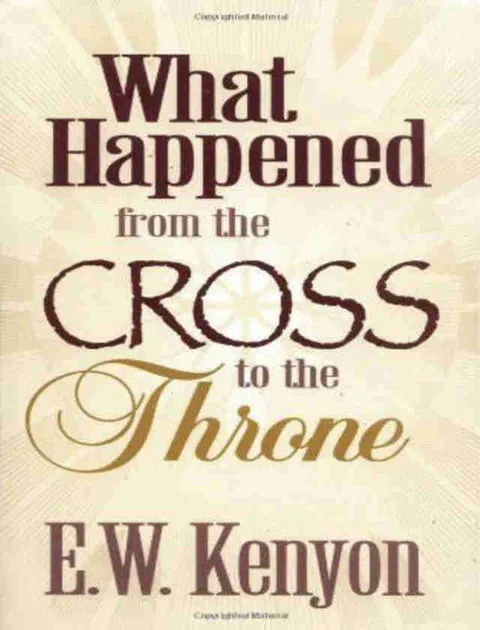

What Happened From The Cross To The Throne Order Printed Copy
- Author: E. W. Kenyon
- Size: 852KB | 285 pages
- |
Others like what happened from the cross to the throne Features >>

Back To The Cross
The Power Of The Blood

How To Pass From Curse To Blessing

The Bookends Of The Christian Life
The Power Of The Communion Table
Favor - The Road To Success
What Does It Mean To Be Born Again
Astonished By God
-160.webp)
Why I Believe (A Psychologists Thoughts On Suffering, Miracles, Science, And Faith)
-160.webp)
Agony Of Wasted Grace
About the Book
"What Happened From The Cross To The Throne" by E. W. Kenyon provides a detailed explanation of the journey Jesus took from his crucifixion to his ascension to the throne in heaven. The book explores the significance of Jesus' victory over sin and death, and the authority and power that he now possesses. Kenyon emphasizes the importance of understanding and applying the truths revealed in this journey to experience victory and abundance in our own lives.
Warren Wiersbe
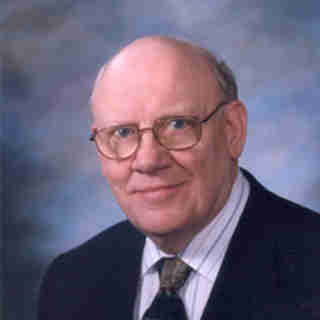 Dr. Warren Wiersbe once described Heaven as “not only a destination, but also a motivation. When you and I are truly motivated by the promise of eternity with God in heaven, it makes a difference in our lives.”
For Wiersbe, the promise of eternity became the motivation for his long ministry as a pastor, author, and radio speaker. Beloved for his biblical insight and practical teaching, he was called “one of the greatest Bible expositors of our generation” by the late Billy Graham.
Warren W. Wiersbe died on May 2, 2019, in Lincoln, Nebraska, just a few weeks shy of his 90th birthday.
“He was a longtime, cherished friend of Moody Bible Institute, a faithful servant of the Word, and a pastor to younger pastors like me,” said Dr. Mark Jobe, president of Moody Bible Institute. “We are lifting up pastor Wiersbe’s family in prayer at this time and rejoicing in the blessed hope that believers share together.”
Wiersbe grew up in East Chicago, Indiana, a town known for its steel mills and hard-working blue-collar families. In his autobiography, he connected some of his earliest childhood memories to Moody Bible Institute; his home church pastor was a 1937 graduate, Dr. William H. Taylor. After volunteering to usher at a 1945 Youth for Christ rally, Wiersbe found himself listening with rapt attention to Billy Graham’s sermon, and responded with a personal prayer of dedication.
In a precocious turn of events, the young Wiersbe was already a published author, having written a book of card tricks for the L. L. Ireland Magic Co. of Chicago. He quickly learned to liven up Sunday school lessons with magic tricks as object lessons (“not the cards!” he would say). After his high school graduation in 1947 (he was valedictorian), he spent a year at Indiana University before transferring to Northern Baptist Seminary in Chicago, where he earned a bachelor of theology degree. His future wife, Betty, worked in the school library, and Wiersbe was a frequent visitor.
While in seminary he became pastor of Central Baptist Church in East Chicago, serving until 1957. During those years he became a popular YFC speaker, which led to a full-time position with Youth for Christ International in Wheaton. He published his first article for Moody Monthly magazine in 1956, about Bible study methods, and seemed to outline his ongoing writing philosophy. “This is more of a personal testimony,” he said, “because I want to share these blessings with you, rather than write some scholarly essay, which I am sure I could not do anyway.”
At a 1957 YFC convention in Winona Lake, Indiana, Wiersbe preached a sermon that was broadcast live over WMBI, his first connection to Moody Radio. “I wish every preacher could have at least six months’ experience as a radio preacher,” he said later (because they would preach shorter).
While working with Youth for Christ, Wiersbe got a call from Pete Gunther at Moody Publishers, asking about possible book projects. First came Byways of Blessing (1961), an adult devotional; then two more books in 1962, A Guidebook for Teens and Teens Triumphant. He would eventually publish 14 titles with Moody, including William Culbertson: A Man of God (1974), Live Like a King (1976), The Annotated Pilgrim’s Progress (1980), and Ministering to the Mourning (2006), written with his son, David Wiersbe.
In 1961, D. B. Eastep invited Wiersbe to join the staff of Calvary Baptist Church in Covington, Kentucky. forming a succession plan that was hastened by Eastep’s sudden death in 1962. Warren and Betty Wiersbe remained at the church for 10 years, until they were surprised by a phone call from The Moody Church. The pastor, Dr. George Sweeting, had just resigned to become president of Moody Bible Institute. Would Wiersbe fill the pulpit, and pray about becoming a candidate?
He was already well known to the Chicago church—and to the MBI community. He continued to write for Moody Monthly and had just started a new column, “Insights for the Pastor.” The monthly feature continued to run during the years Wiersbe served at The Moody Church. Wiersbe would become one of the magazine’s most prolific writers—200 articles during a 40-year span. Meanwhile he also started work on the BE series of exegetical commentaries, books that soon found a place on the shelf of every evangelical pastor.
His ministry to pastors continued as he spoke at Moody Founder’s Week, Pastors’ Conference, and numerous campus events. He also inherited George Sweeting’s role as host of the popular Songs in the Night radio broadcast, produced by Moody Radio’s Bob Neff and distributed on Moody’s growing network of radio stations.
Later in life he would move to Lincoln, Nebraska, where he served as host of the Back to the Bible radio broadcast. He also taught courses on preaching at Trinity Evangelical Divinity School and Grand Rapids Baptist Seminary. He kept writing, eventually publishing more than 150 books and losing track of how many (“I can’t remember them all, and I didn’t save copies of everything,” he said.)
Throughout his ministry, Warren Wiersbe described himself as a bridge builder, a reference to his homiletical method of moving “from the world of the Bible to the world of today so that we could get to the other side of glory in Jesus.” As explained by his grandson, Dan Jacobson, “His preferred tools were words, his blueprints were the Scriptures, and his workspace was a self-assembled library.”
Several of Wiersbe’s extended family are Moody alums, including a son, David Wiersbe ’76; grandson Dan Jacobsen ’09 and his wife, Kristin (Shirk) Jacobsen ’09; and great-nephew Ryan Smith, a current student.
During his long ministry and writing career, Warren Wiersbe covered pretty much every topic, including the inevitability of death. These words from Ministering to the Mourning offer a fitting tribute to his own ministry:
We who are in Christ know that if He returns before our time comes to die, we shall be privileged to follow Him home. God’s people are always encouraged by that blessed hope. Yet we must still live each day soberly, realizing that we are mortal and that death may come to us at any time. We pray, “Teach us to number our days aright, that we may gain a heart of wisdom” (Psalm 90:12).
Dr. Warren Wiersbe once described Heaven as “not only a destination, but also a motivation. When you and I are truly motivated by the promise of eternity with God in heaven, it makes a difference in our lives.”
For Wiersbe, the promise of eternity became the motivation for his long ministry as a pastor, author, and radio speaker. Beloved for his biblical insight and practical teaching, he was called “one of the greatest Bible expositors of our generation” by the late Billy Graham.
Warren W. Wiersbe died on May 2, 2019, in Lincoln, Nebraska, just a few weeks shy of his 90th birthday.
“He was a longtime, cherished friend of Moody Bible Institute, a faithful servant of the Word, and a pastor to younger pastors like me,” said Dr. Mark Jobe, president of Moody Bible Institute. “We are lifting up pastor Wiersbe’s family in prayer at this time and rejoicing in the blessed hope that believers share together.”
Wiersbe grew up in East Chicago, Indiana, a town known for its steel mills and hard-working blue-collar families. In his autobiography, he connected some of his earliest childhood memories to Moody Bible Institute; his home church pastor was a 1937 graduate, Dr. William H. Taylor. After volunteering to usher at a 1945 Youth for Christ rally, Wiersbe found himself listening with rapt attention to Billy Graham’s sermon, and responded with a personal prayer of dedication.
In a precocious turn of events, the young Wiersbe was already a published author, having written a book of card tricks for the L. L. Ireland Magic Co. of Chicago. He quickly learned to liven up Sunday school lessons with magic tricks as object lessons (“not the cards!” he would say). After his high school graduation in 1947 (he was valedictorian), he spent a year at Indiana University before transferring to Northern Baptist Seminary in Chicago, where he earned a bachelor of theology degree. His future wife, Betty, worked in the school library, and Wiersbe was a frequent visitor.
While in seminary he became pastor of Central Baptist Church in East Chicago, serving until 1957. During those years he became a popular YFC speaker, which led to a full-time position with Youth for Christ International in Wheaton. He published his first article for Moody Monthly magazine in 1956, about Bible study methods, and seemed to outline his ongoing writing philosophy. “This is more of a personal testimony,” he said, “because I want to share these blessings with you, rather than write some scholarly essay, which I am sure I could not do anyway.”
At a 1957 YFC convention in Winona Lake, Indiana, Wiersbe preached a sermon that was broadcast live over WMBI, his first connection to Moody Radio. “I wish every preacher could have at least six months’ experience as a radio preacher,” he said later (because they would preach shorter).
While working with Youth for Christ, Wiersbe got a call from Pete Gunther at Moody Publishers, asking about possible book projects. First came Byways of Blessing (1961), an adult devotional; then two more books in 1962, A Guidebook for Teens and Teens Triumphant. He would eventually publish 14 titles with Moody, including William Culbertson: A Man of God (1974), Live Like a King (1976), The Annotated Pilgrim’s Progress (1980), and Ministering to the Mourning (2006), written with his son, David Wiersbe.
In 1961, D. B. Eastep invited Wiersbe to join the staff of Calvary Baptist Church in Covington, Kentucky. forming a succession plan that was hastened by Eastep’s sudden death in 1962. Warren and Betty Wiersbe remained at the church for 10 years, until they were surprised by a phone call from The Moody Church. The pastor, Dr. George Sweeting, had just resigned to become president of Moody Bible Institute. Would Wiersbe fill the pulpit, and pray about becoming a candidate?
He was already well known to the Chicago church—and to the MBI community. He continued to write for Moody Monthly and had just started a new column, “Insights for the Pastor.” The monthly feature continued to run during the years Wiersbe served at The Moody Church. Wiersbe would become one of the magazine’s most prolific writers—200 articles during a 40-year span. Meanwhile he also started work on the BE series of exegetical commentaries, books that soon found a place on the shelf of every evangelical pastor.
His ministry to pastors continued as he spoke at Moody Founder’s Week, Pastors’ Conference, and numerous campus events. He also inherited George Sweeting’s role as host of the popular Songs in the Night radio broadcast, produced by Moody Radio’s Bob Neff and distributed on Moody’s growing network of radio stations.
Later in life he would move to Lincoln, Nebraska, where he served as host of the Back to the Bible radio broadcast. He also taught courses on preaching at Trinity Evangelical Divinity School and Grand Rapids Baptist Seminary. He kept writing, eventually publishing more than 150 books and losing track of how many (“I can’t remember them all, and I didn’t save copies of everything,” he said.)
Throughout his ministry, Warren Wiersbe described himself as a bridge builder, a reference to his homiletical method of moving “from the world of the Bible to the world of today so that we could get to the other side of glory in Jesus.” As explained by his grandson, Dan Jacobson, “His preferred tools were words, his blueprints were the Scriptures, and his workspace was a self-assembled library.”
Several of Wiersbe’s extended family are Moody alums, including a son, David Wiersbe ’76; grandson Dan Jacobsen ’09 and his wife, Kristin (Shirk) Jacobsen ’09; and great-nephew Ryan Smith, a current student.
During his long ministry and writing career, Warren Wiersbe covered pretty much every topic, including the inevitability of death. These words from Ministering to the Mourning offer a fitting tribute to his own ministry:
We who are in Christ know that if He returns before our time comes to die, we shall be privileged to follow Him home. God’s people are always encouraged by that blessed hope. Yet we must still live each day soberly, realizing that we are mortal and that death may come to us at any time. We pray, “Teach us to number our days aright, that we may gain a heart of wisdom” (Psalm 90:12).
Kindness in a World Gone Mad
I was waiting in line with my sons for a roller coaster when the T-shirt caught my eye: Kindness is free — so sprinkle that stuff everywhere . I’m sympathetic to the message at one level. To many, the world feels meaner in recent years, and perhaps especially so since the last election cycle, COVID-19, and civil unrest. Yes, genuine human kindness, in the most basic of senses, has often been sorely lacking. More kindness would indeed be nice, and perhaps shine in new ways in times when we’re coming to expect meanness and outrage everywhere. But as admirable as the instincts behind the message are, the initial claim is badly mistaken. No, real kindness — the kind we really long for and need — is not free. And perhaps it would help us all to come to terms with that up front. Real kindness is costly. This Harsh World Deep down, we know that we live in a mean world — too mean to keep the meanness constantly at the forefront of our minds. Yet at times — more frequent for some than others — the meanness, the evil afoot in this world, accosts us. Even as bright as some days appear, there is a “present darkness” ( Ephesians 6:12 ), still under the sway of “the god of this world” ( 2 Corinthians 4:4 ). Pretender though he is, and numbered his days, his “domain of darkness” ( Colossians 1:13 ) is real, and “the power of darkness” ( Luke 22:53 ) treacherous. And not only has the world out there gone mad, but far too often the sway of the world, and the indwelling sin in us all, brings that meanness in here , into the people who profess to be Christ’s. Tragically, the very people who are to make Jesus known by their love for each other ( John 13:35 ) can be harsh, quarrelsome, impatient, shrill, nasty. It’s only human to respond in kind. But Christ requires of his church what is more than human: respond in kindness . Virtue in a Vacuum? In part, internal conflict in the Ephesian church prompted Paul’s second letter to Timothy. At the letter’s heart, the aging apostle gives his protégé this arresting charge: The Lord’s servant must not be quarrelsome but kind to everyone , able to teach, patiently enduring evil, correcting his opponents with gentleness. God may perhaps grant them repentance leading to a knowledge of the truth, and they may come to their senses and escape from the snare of the devil, after being captured by him to do his will. ( 2 Timothy 2:24–26 ) Christians have long celebrated kindness as one of the heavenly virtues . Yet we live in a day that often makes very little of kindness. We assume it’s free. We celebrate “random acts of kindness.” We think of kindness without context . Of course, in our mean world, it is pleasant to be surprised by a stranger’s kindness, free and random as it may seem. Sure, sprinkle that stuff everywhere. But the Christian vision of kindness is far deeper, more significant, and contextualized. “Kindness is not random or free, but a costly, counter-intuitive response to meanness, rather than responding in kind.” Christian kindness is no common courtesy or virtue in a vacuum, but a surprising response to mistreatment and hurt. It is not random or free, but a costly, counterintuitive response to meanness, to outrage, rather than responding in kind. As Don Carson comments on 1 Corinthians 13:4 , “Love is kind — not merely patient or long-suffering in the face of injury, but quick to pay back with kindness what it received in hurt” ( Showing the Spirit , 79). Companions of Kindness One way to see that Christian kindness is not random is to observe the kind of company it keeps, especially in the letters of Paul — who would be “the apostle of kindness,” if there were one. No one sprinkles costly kindness like Paul. Among other graces, kindness often appears hand in hand with patience and compassion. Patience appears side by side with kindness, and in the same order, in 2 Corinthians 6:6 and Galatians 5:22 : “patience, kindness.” So also, Paul presses them together in Romans 2:4 , in speaking of divine patience and kindness: “Do you presume on the riches of his kindness and forbearance and patience, not knowing that God’s kindness is meant to lead you to repentance?” So too, as we’ve seen, Christian pastors — “the Lord’s servant” in the midst of conflict — “must not be quarrelsome but kind to everyone, . . . patiently enduring evil” ( 2 Timothy 2:24 ). Kind to everyone — isn’t that surprising? The opponents here are false teachers. They must not be coddled or encouraged. Rather, they must be exposed and corrected — and yet that is no license to treat them harshly or with meanness. Opponents can be patiently endured and gently corrected. In fact, it would not be kind to a false teacher, or the church, to let him continue in error. Exposing his error and gently correcting him is kindness. As for compassion, Ephesians 4:32 memorably explains the command to “be kind to one another” with the word “tenderhearted” (or “compassionate,” Greek eusplanchnos ). Kindness is an expression of a tender, compassionate heart. Colossians 3:12 puts all three together, with humility and meekness: “Put on then, as God’s chosen ones, holy and beloved, compassionate hearts, kindness, humility, meekness, and patience.” Kindness, we might say, is a kind of secondary virtue. Compassion and patience, in various ways, make kindness possible. A compassionate heart leads to kindness, and external actions that give expression to that kindness. So also, patience makes internal kindness and its external acts possible. Patience gives emotional and practical space for kindness to ripen and move outward in physical acts. True kindness and its expressions (which are not random or free) complete and extend its companion virtues. The fruit of kindness needs the roots of patience and compassion, and they need kindness. Costly Kind Our young kids are still honest enough with themselves, and us, to admit to how costly kindness can be. When a sibling is mean, or someone on the playground, their natural response (and ours) is not to be kind, but to respond in kind. Which is why we consider kindness a Christian virtue — which doesn’t just happen spontaneously without practice and the enabling of the Holy Spirit. Kindness, Paul says, is the produce of the Spirit ( Galatians 5:22–23 ; 2 Corinthians 6:6 ), not of the natural human heart. Real kindness requires intervention from the outside, both from God’s Spirit and also his divine Son stepping into our mean world, showing us a different way, and doing it, climactically, to our eternal salvation and joy. As my wife and I have learned in almost fifteen years of marriage, kindness toward each other begins with God’s kindness toward us in Christ. Only then can we really find the resources to overcome evil with good, triumph over annoyance with patience, and rise above meanness with kindness. In other words, the heart of how we become kinder — not with free, random, imitation kindness, but with thick, genuine, Christian kindness — is knowing and enjoying the kindness of God toward us, and doing so specifically by feeding on, and taking our cues from, the very words of God. Behold His Kindness Our world, in its rebellion and cosmic treason, is no meaner than in its meanness to God himself — God who is holy and just. And yet what shocking kindness he displays, even toward the unbelieving. Our heavenly Father “is kind to the ungrateful and the evil” ( Luke 6:35 ). Even those who live the hardest, meanest of lives are surrounded by rays of God’s common kindness , as we might call it: beautiful days, human minds and bodies and words, friends and family, food and shelter, the everyday divine kindnesses we take for granted until they’re gone. “Even those who live the hardest, meanest of lives are surrounded by rays of God’s common kindness.” As Paul preached at Lystra, even “in past generations,” before Christ, when God “allowed all the nations to walk in their own ways,” he showed the unbelieving his common kindness, and “did not leave himself without witness, for he did good by giving you rains from heaven and fruitful seasons, satisfying your hearts with food and gladness” ( Acts 14:16–17 ). Such kindness even in our day, gratuitous as it may seem to us, is not wasted. It is not random but has purpose: “meant to lead you to repentance” ( Romans 2:4 ). Yet in the fullness of time, “the goodness and loving kindness of God our Savior appeared” ( Titus 3:4 ), bringing salvation — God’s special kindness — through faith in Christ. Such divine kindness not only brought eternal rescue for God’s long-chosen people, but it engrafts even strangers into God’s ancient tree of blessing through faith ( Romans 11:22 ). Jesus is Kindness incarnate, whose yoke is not severe, but (literally) kind ( Matthew 11:30 ). He is the Lord whom we, with new Spirit-given palates, taste as kind ( 1 Peter 2:3 ). Kindness Coming As Christ, by his Spirit, shows kindness to us, in his word and in our lives, he also forms us into instruments of his kindness to others. “God in Christ forgave you,” Paul says in Ephesians 4:32 . Therefore, “Be kind to one another, tenderhearted, forgiving one another.” Ultimately, it is the kindness of God that melts an unforgiving spirit, softens a hard heart, and transforms unkind actions. In Christ, we become the kind of people who see others , and have compassion for them, and exercise patience toward them, and show kindness to them, knowing not only that we ourselves have been shown kindness but that “in the coming ages [God himself will] show the immeasurable riches of his grace in kindness toward us in Christ Jesus” ( Ephesians 2:7 ). We have only begun to taste the kindness of our God.