
Others like humility Features >>
This Beautiful Mess
Spirit, Soul, & Body

Exploits Of Faith
-160.webp)
Leading On Empty (Refilling Your Tank And Renewing Your Passion)
Awakening Mystical Consciousness
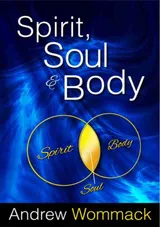
Spirit, Soul & Body
-160.webp)
The A-B-C Of Fasting (Glorified Fasting)
Introduction To Biblical Counseling
-160.webp)
Unchurching (Christianity Without Churchianity)

Explaining Baptism With The Holy Spirit
About the Book
"Humility" by Andrew Murray is a Christian spiritual book that explores the importance of humility in the Christian life. Murray emphasizes that true humility is essential for a close relationship with God and growth in faith. He discusses how pride leads to sin and separation from God, while humility allows for a deeper connection and reliance on God's grace. The book provides practical advice and guidance on how to cultivate humility in one's daily life, leading to a more fulfilling and impactful Christian journey.
Charles Finney
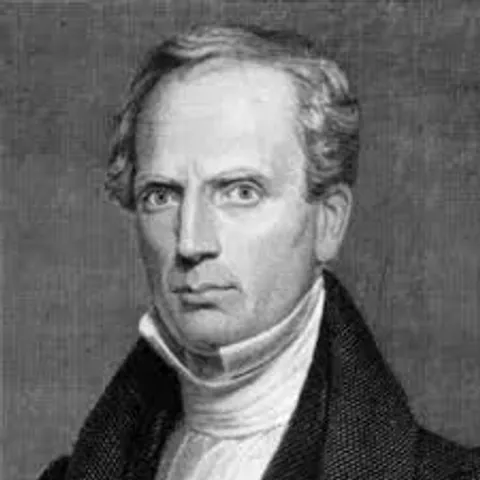 Childhood and Teen years
Charles Grandison Finney was born the year after Wesley died on 29th August, 1792 in Warren, Connecticut. In 1794 his family moved to New York state, eventually settling at Henderson, near Lake Ontario. Although he received only a brief formal education he decided to study law and joined the practice of a local lawyer, Benjamin Wright. He was also very musical, played the cello and directed the choir at the local Presbyterian Church pastured by Rev. George Gale.
His conversion
His conversion on October 10th 1821 reads like something out of the book of Acts. Smitten with conviction from Bible reading he decided to ‘settle the question of my soul’s salvation at once, that if it were possible, I would make my peace with God.’ (Autobiography)
This conviction increased to an unbearable level over the next couple of days and came to an head when he was suddenly confronted with an ‘inward voice.’ He was inwardly questioned about his spiritual condition and finally received revelation about the finished work of Christ and his own need to give up his sins and submit to Christ’s righteousness.
As he sought God in a nearby wood he was overwhelmed with an acute sense of his own wickedness and pride but finally submitted his life to Christ. Back at work that afternoon he was filled with a profound sense of tenderness, sweetness and peace. When work was over and he bade his employer goodnight, he then experienced a mighty baptism in the Holy Spirit, which was recorded as vividly as the day he experienced it, though it was penned some fifty years later.
The next morning Finney announced to a customer that he was leaving his law studies to become a preacher of the Gospel.
Charles Finney licensed to preach
He was licensed to preach in 1823 and ordained as an evangelist in 1824. His penetrating preaching was quite different from many local ministers and included an obvious attempt to break away from the traditional and, as he saw it, dead, orthodox Calvinism. He married to Lydia Andrews in October 1824 and was also joined by Daniel Nash (1774-1831), known popularly as ‘Father Nash.’ Undoubtedly Nash’s special ministry of prayer played a great part in Finney’s growing success as an evangelist.
Things really took off when he preached in his old church, where Rev. Gale still ministered. Numerous converts and critics followed! Similar results were experienced in nearby towns of Rome and Utica. Soon newspapers were reporting his campaigns and he began drawing large crowds with dramatic responses.
Soon he was preaching in the largest cities of the north with phenomenal results. Campaign after campaign secured thousands of converts.
The high point of Finney’s revival career was reached at Rochester, New York, during his 1830-1 meetings. Shopkeepers closed their businesses and the whole city seemed to centre on the revivalist. Responding to his irresistible logic and passionate arguments many of his converts were lawyers, merchants and those from a higher income and professional status.
His Preaching
Finney openly preached a modified Calvinism, influenced with his own theology of conversion and used what were perceived to be ‘revivalistic techniques.’
These ‘means’ included the use of the anxious bench (a special place for those under conviction), protracted meetings, women allowed to pray in mixed meetings, publicly naming those present resisting God in meetings and the hurried admission of new converts into church membership. Opponents viewed his preaching of the law as ‘scare tactics’ and his persuasive appeals for sinners to come to Christ for salvation were seen as over-emphasising the responsibility of men and ignoring the sovereignty of God.
His theology and practise soon became known as the ‘New Measures’ and attracted many opponents from the Old School Presbyterians led by Asahel Nettleton (himself no stranger to true revival and , the revivalistic Congregationalists headed by Lyman Beecher.
Pastor at Chatham Street Chapel
Finney accepted an appointment as pastor of Chatham Street Chapel in New York City in 1832 where he remained until 1837. It was during this time that he delivered a series of sermons published in 1835 as ‘Lectures on Revivals of Religion.’ Here he clearly stated his views regarding revivals being products of the correct use of human means. Such was the controversy that he left the Presbyterian denomination and joined the Congregationalists in 1836.
Oberlin College
The next year he became professor of theology at Oberlin College (Ohio) where he taught until his death. He was President here from 1851 until 1866, but still continued regular revival meetings in urban settings (twice in England, 1848, 1851) until 1860. During his stay at Oberlin he produced his, Lectures to Professing Christians (1836), Sermons on Important Subjects (1839) and his famous Memoirs.
The Father of Modern Revivalism
There is no doubt that Charles Grandison Finney well-deserves the title ‘The Father of Modern Revivalism.’ He was an evangelistic pioneer whose model was followed by a long line of revivalists from D. L. Moody to Billy Graham. His writing have made a massive impact on the entire evangelical world and particularly the ‘Lectures on Revivals’ which has, arguably, ignited more fires of revival than any other single piece literature in evangelical history.
This ‘Prince of Revivalists’ passed away peacefully at Oberlin on Sunday, 16th August, 1875 aged almost 83 years.
Bibliography: I Will Pour Out My Spirit, R. E. Davies, 1997; Ed: A. Scott Moreau, Baker Evangelical Dictionary of World Missions, 2000; Dictionary of Evangelical Biography 1730-1860, Vol. 1, 1995.
Tony Cauchi
Childhood and Teen years
Charles Grandison Finney was born the year after Wesley died on 29th August, 1792 in Warren, Connecticut. In 1794 his family moved to New York state, eventually settling at Henderson, near Lake Ontario. Although he received only a brief formal education he decided to study law and joined the practice of a local lawyer, Benjamin Wright. He was also very musical, played the cello and directed the choir at the local Presbyterian Church pastured by Rev. George Gale.
His conversion
His conversion on October 10th 1821 reads like something out of the book of Acts. Smitten with conviction from Bible reading he decided to ‘settle the question of my soul’s salvation at once, that if it were possible, I would make my peace with God.’ (Autobiography)
This conviction increased to an unbearable level over the next couple of days and came to an head when he was suddenly confronted with an ‘inward voice.’ He was inwardly questioned about his spiritual condition and finally received revelation about the finished work of Christ and his own need to give up his sins and submit to Christ’s righteousness.
As he sought God in a nearby wood he was overwhelmed with an acute sense of his own wickedness and pride but finally submitted his life to Christ. Back at work that afternoon he was filled with a profound sense of tenderness, sweetness and peace. When work was over and he bade his employer goodnight, he then experienced a mighty baptism in the Holy Spirit, which was recorded as vividly as the day he experienced it, though it was penned some fifty years later.
The next morning Finney announced to a customer that he was leaving his law studies to become a preacher of the Gospel.
Charles Finney licensed to preach
He was licensed to preach in 1823 and ordained as an evangelist in 1824. His penetrating preaching was quite different from many local ministers and included an obvious attempt to break away from the traditional and, as he saw it, dead, orthodox Calvinism. He married to Lydia Andrews in October 1824 and was also joined by Daniel Nash (1774-1831), known popularly as ‘Father Nash.’ Undoubtedly Nash’s special ministry of prayer played a great part in Finney’s growing success as an evangelist.
Things really took off when he preached in his old church, where Rev. Gale still ministered. Numerous converts and critics followed! Similar results were experienced in nearby towns of Rome and Utica. Soon newspapers were reporting his campaigns and he began drawing large crowds with dramatic responses.
Soon he was preaching in the largest cities of the north with phenomenal results. Campaign after campaign secured thousands of converts.
The high point of Finney’s revival career was reached at Rochester, New York, during his 1830-1 meetings. Shopkeepers closed their businesses and the whole city seemed to centre on the revivalist. Responding to his irresistible logic and passionate arguments many of his converts were lawyers, merchants and those from a higher income and professional status.
His Preaching
Finney openly preached a modified Calvinism, influenced with his own theology of conversion and used what were perceived to be ‘revivalistic techniques.’
These ‘means’ included the use of the anxious bench (a special place for those under conviction), protracted meetings, women allowed to pray in mixed meetings, publicly naming those present resisting God in meetings and the hurried admission of new converts into church membership. Opponents viewed his preaching of the law as ‘scare tactics’ and his persuasive appeals for sinners to come to Christ for salvation were seen as over-emphasising the responsibility of men and ignoring the sovereignty of God.
His theology and practise soon became known as the ‘New Measures’ and attracted many opponents from the Old School Presbyterians led by Asahel Nettleton (himself no stranger to true revival and , the revivalistic Congregationalists headed by Lyman Beecher.
Pastor at Chatham Street Chapel
Finney accepted an appointment as pastor of Chatham Street Chapel in New York City in 1832 where he remained until 1837. It was during this time that he delivered a series of sermons published in 1835 as ‘Lectures on Revivals of Religion.’ Here he clearly stated his views regarding revivals being products of the correct use of human means. Such was the controversy that he left the Presbyterian denomination and joined the Congregationalists in 1836.
Oberlin College
The next year he became professor of theology at Oberlin College (Ohio) where he taught until his death. He was President here from 1851 until 1866, but still continued regular revival meetings in urban settings (twice in England, 1848, 1851) until 1860. During his stay at Oberlin he produced his, Lectures to Professing Christians (1836), Sermons on Important Subjects (1839) and his famous Memoirs.
The Father of Modern Revivalism
There is no doubt that Charles Grandison Finney well-deserves the title ‘The Father of Modern Revivalism.’ He was an evangelistic pioneer whose model was followed by a long line of revivalists from D. L. Moody to Billy Graham. His writing have made a massive impact on the entire evangelical world and particularly the ‘Lectures on Revivals’ which has, arguably, ignited more fires of revival than any other single piece literature in evangelical history.
This ‘Prince of Revivalists’ passed away peacefully at Oberlin on Sunday, 16th August, 1875 aged almost 83 years.
Bibliography: I Will Pour Out My Spirit, R. E. Davies, 1997; Ed: A. Scott Moreau, Baker Evangelical Dictionary of World Missions, 2000; Dictionary of Evangelical Biography 1730-1860, Vol. 1, 1995.
Tony Cauchi
every day’s a bad day - how ecclesiastes taught me to enjoy life
After decades of ministry, what is one piece of advice I wish I had received as a young woman? Study the book of Ecclesiastes. Ecclesiastes has shown me the secret of enjoying life, even in the midst of trouble. It has rescued me from disillusionment when labors I thought were fruitful appeared to be for naught. When friends have turned their backs, Ecclesiastes has helped me guard against bitterness. It has cured me of setting my hope on a particular outcome, and protected me from becoming bewildered and disheartened by bad news. In short, Ecclesiastes made me a realist, and yet I’m happier than ever before. This collection of wisdom has become (as it is for J.I. Packer, whose writings introduced me to Ecclesiastes) my favorite book of the Bible, and one I regret not studying sooner. If you get the wisdom here while you are still young, it will prepare you for real life. It clears away false assumptions with which we sometimes read the rest of Scripture. Even if you find Ecclesiastes when you are older, it sure explains a lot. You learn that life didn’t go sideways; it was already crooked (Ecclesiastes 1:15). Ecclesiastes paints an unvarnished picture of real life, but its heavy shadows help you see the light of real joy. Bad Days Are Normal To begin with, Ecclesiastes tells us what life is really like. “It is an unhappy business that God has given to the children of man to be busy with” (Ecclesiastes 1:13). This is the way life really is, for all of us. Because of that first fatal sin, God cursed the ground and imposed hardship on Adam’s offspring (Genesis 3:16–19). The curse has affected all of us who live “under the sun” (Ecclesiastes 1:3). Christians are not exempt. The curse has also infected all of man’s work, “the toil at which he toils” (Ecclesiastes 1:3). Life is a burdensome task, a frustrating occupation, a grueling grind. It is an unhappy business. And God made it this way. Our problem is that we don’t really believe life is an unhappy business. We think if we work hard, we’ll eventually succeed. We imagine suffering is short-term, pain is the exception to the rule, and failure merely the prelude to victory. These illusions leave us blindsided by setbacks, devastated by failure and loss, bewildered by trials, confused by pain. This isn’t the way things were supposed to go! We talk about having “a bad day” as if it should be one in a thousand, but Ecclesiastes (and really the rest of Scripture, when you read it right side up) tells us that they are all bad. Daily work under the sun is an unhappy business. The sooner we face the fact that we live and work in a sin-cursed world, the more realistic and stable we will be. We will stop expecting things to always get better. We won’t be so surprised when they sometimes get worse. We no longer fear bad news: not because we hope it’s not coming, but because we know it is coming (Psalm 112:7; Ecclesiastes 12:1). Get Ecclesiastes, and we can learn to meet life’s unhappy business with pluck and humor. We won’t be so quick to doubt God, and we will finally have a settled peace in our heart. As my family reminds each other (with a smile) when faced with some new unhappy business, “That’s Ecclesiastes!” In other words, God can be trusted; he told us this was going to happen. Blessings You Cannot Count Ecclesiastes teaches us how to enjoy life , in the midst of our unhappy business. For while all humankind labors under the effects of the fall, to those God has called according to his purpose, he gives joy . “There is nothing better for a person than that he should eat and drink and find enjoyment in his toil. This also, I saw, is from the hand of God. . . . For to the one who pleases him God has given wisdom and knowledge and joy” (Ecclesiastes 2:24, 26). God’s gifts of enjoyment aren’t random; they are from his hand . As it says in James, “Every good gift and every perfect gift is from above, coming down from the Father of lights” (James 1:17). God blesses the Christian’s toil with enjoyment. Every feeling of satisfaction in a made bed, a mopped floor, and an organized closet is from the hand of God . Happiness in a deadline met, a budget balanced, or a report filed comes down from the Father of lights . Pleasure in a delicious meal, and in the dishes all cleaned and put away? You guessed it: from the hand of God . How about the relief of solving a problem, the delight of reading a book to your children, the blessing of easing your husband’s troubles? The fresh breeze through the open windows on carpool morning, the delightful lunch with friends, the sweet feeling of a comfortable bed at night — all of these moments of enjoyment in our work are gifts from the gracious hand of God . When you start to look for God’s gifts of joy, the ratio of troubles to joys becomes astonishingly unbalanced, leaning heavily in favor of joy. As my husband likes to say, good gifts are raining down upon us from the hand of God, every day, all day long. We can find enjoyment in our toil if only we would take the time to see, and give thanks to God. Consider: what is one way you can remind yourself to enjoy the gifts from God’s hand today? You will find that it is a happy unhappy business that God has given to those who please him. The Final Commendation Finally, Ecclesiastes helps us to see beyond our unhappy business . Even if your friends walk away, your business fails, or you are forced to move to a smaller home, you can persevere, because the final value of your work is not found in this life. “For God will bring every deed into judgment, with every secret thing, whether good or evil” (Ecclesiastes 12:14). In other words, it is not left to us, here and now, to determine the ultimate value of our work. As Jeremiah Burroughs says, we are simply called to “perform the duties of [our] present circumstances,” trusting God who will ultimately judge the fruitfulness of our work and give us our heavenly reward. This means that no matter how much heart you poured into a failed friendship, how much creativity you invested in a business you have to close, or how much effort you put into the home you have to leave, your work for the Lord is never a net loss. Which is why Paul can exhort us to “Be steadfast, immovable, always abounding in the work of the Lord, knowing that in the Lord your labor is not in vain” (1 Corinthians 15:58). Life under the sun is brutal, and it shows no signs of getting any easier. Our work is cursed and will often, more likely than not, fail on some human level. But the godly woman can face the future with peace and confidence; she even “laughs at the time to come” (Proverbs 31:25). For the same God who told us that life is hard has told us that he is near (Psalm 34:18). Through faith in Christ we can enjoy God’s fatherly gifts, abound in the work he has called us to, and look forward to the day when — oh, amazing grace! — we receive our commendation from God (1 Corinthians 4:5).