
Others like humility Features >>
This Beautiful Mess
Spirit, Soul, & Body
Exploits Of Faith
-160.webp)
Leading On Empty (Refilling Your Tank And Renewing Your Passion)
Awakening Mystical Consciousness
Spirit, Soul & Body
-160.webp)
The A-B-C Of Fasting (Glorified Fasting)
Introduction To Biblical Counseling
-160.webp)
Unchurching (Christianity Without Churchianity)
Explaining Baptism With The Holy Spirit
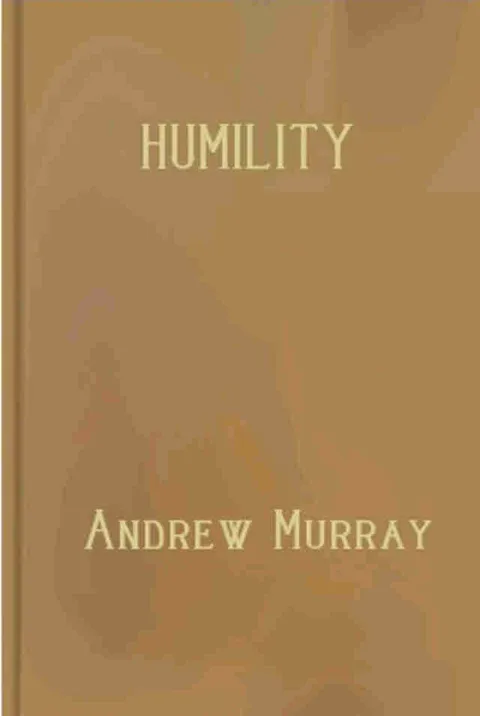
About the Book
"Humility" by Andrew Murray is a Christian spiritual book that explores the importance of humility in the Christian life. Murray emphasizes that true humility is essential for a close relationship with God and growth in faith. He discusses how pride leads to sin and separation from God, while humility allows for a deeper connection and reliance on God's grace. The book provides practical advice and guidance on how to cultivate humility in one's daily life, leading to a more fulfilling and impactful Christian journey.
C.S. Lewis
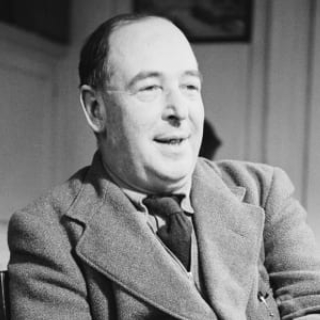 C.S. Lewis was a prolific Irish writer and scholar best known for his 'Chronicles of Narnia' fantasy series and his pro-Christian texts.
Who Was C.S. Lewis?
Writer and scholar C.S. Lewis taught at Oxford University and became a renowned Christian apologist writer, using logic and philosophy to support the tenets of his faith. He is also known throughout the world as the author of The Chronicles of Narnia fantasy series, which have been adapted into various films for the big and small screens.
Early Life
Clive Staples Lewis was born in Belfast, Ireland, on November 29, 1898, to Flora August Hamilton Lewis and Albert J. Lewis. As a toddler, Clive declared that his name was Jack, which is what he was called by family and friends. He was close to his older brother Warren and the two spent much time together as children.
Lewis was enraptured by fantastic animals and tales of gallantry, and hence the brothers created the imaginary land of Boxen, complete with an intricate history that served them for years. Lewis' mother died when he was 10, and he went on to receive his pre-college education at boarding schools and from a tutor. During WWI, he served with the British army and was sent home after being wounded by shrapnel. He then chose to live as a surrogate son with Janie Moore, the mother of a friend of Lewis' who was killed in the war.
Teaching Career at Oxford and Wartime Broadcasts
Lewis graduated from Oxford University with a focus on literature and classic philosophy, and in 1925 he was awarded a fellowship teaching position at Magdalen College, which was part of the university. There, he also joined the group known as The Inklings, an informal collective of writers and intellectuals who counted among their members Lewis' brother Warren and J.R.R. Tolkien. It was through conversations with group members that Lewis found himself re-embracing Christianity after having become disillusioned with the faith as a youth. He would go on to become renowned for his rich apologist texts, in which he explained his spiritual beliefs via platforms of logic and philosophy.
Lewis began publishing work including Spirits in Bondage in 1919 and the satirical Dymer in 1926. After penning other titles — including The Allegory of Love (1936), for which he won the Hawthornden Prize — he released in 1938 his first sci-fi work, Out of the Silent Planet, the first of a space trilogy which dealt sub-textually with concepts of sin and desire. Later, during WWII, Lewis gave highly popular radio broadcasts on Christianity which won many converts; his speeches were collected in the work Mere Christianity.
Books and Film Legacy
Lewis was a prolific author of fiction and nonfiction who wrote dozens of books over the course of his career. His faith-based arguments as seen in texts like The Great Divorce (1946) and Miracles (1947) are held in high regard by many theologians, scholars and general readers. His satirical fiction novel The Screwtape Letters (1942) is also a beloved classic. Lewis also continued his love affair with classic mythology and narratives during his later years: His book Till We Have Faces: A Myth Retold (1956) featured the story of Psyche and Cupid. He also penned an autobiography, Surprised by Joy: The Shape of My Early Life (1955).
Lewis' landmark series, The Chronicles of Narnia, has seen a number of on-screen iterations, including a cartoon version of The Lion, The Witch and the Wardrobe that was released in 1979 and a 1989 film series. Additionally, in 2005, a big-screen adaptation of The Lion, The Witch and the Wardrobe hit movie theaters, starring Tilda Swinton as the witch Jadis and Liam Neeson as the voice of Aslan. Two more Narnia films were brought to theaters as well: Prince Caspian (2008) and The Voyage of the Dawn Treader (2010). A movie version of The Silver Chair was slated to hit theaters in the near future, with filming starting in the winter of 2018.
Lewis' relationship with his wife, Joy, has also been depicted in Shadowlands, presented as a play and two films; one of the film versions was directed by Richard Attenborough and starred Anthony Hopkins as Lewis.
'The Chronicles of Narnia'
During the 1940s, Lewis began writing the seven books that would comprise The Chronicles of Narnia children's series, with The Lion, The Witch and the Wardrobe (1950) being the first release. The story focused on four siblings who, during wartime, walk through an armoire to enter the magical world of Narnia, a land resplendent with mythical creatures and talking animals. Throughout the series, a variety of Biblical themes are presented; one prominent character is Aslan, a lion and the ruler of Narnia, who has been interpreted as a Jesus Christ figure. (Lewis would assert that his Narnia stories weren't a direct allegory to the real world.)
Though the book received some negative reviews, it was generally well-received by readers, and the series retained its international popularity over the following decades.
Marriage
In 1954, Lewis joined the faculty of Cambridge University as a literature professor, and in 1956 he married an American English teacher, Joy Gresham, with whom he had been in correspondence. Lewis was full of happiness during the years of their marriage, though Gresham died of cancer in 1960. Lewis grieved deeply for his wife and shared his thoughts in the book A Grief Observed, using a pen name.
Death
In 1963, Lewis resigned from his Cambridge position after experiencing heart trouble. He died on November 22, 1963, in Headington, Oxford.
C.S. Lewis was a prolific Irish writer and scholar best known for his 'Chronicles of Narnia' fantasy series and his pro-Christian texts.
Who Was C.S. Lewis?
Writer and scholar C.S. Lewis taught at Oxford University and became a renowned Christian apologist writer, using logic and philosophy to support the tenets of his faith. He is also known throughout the world as the author of The Chronicles of Narnia fantasy series, which have been adapted into various films for the big and small screens.
Early Life
Clive Staples Lewis was born in Belfast, Ireland, on November 29, 1898, to Flora August Hamilton Lewis and Albert J. Lewis. As a toddler, Clive declared that his name was Jack, which is what he was called by family and friends. He was close to his older brother Warren and the two spent much time together as children.
Lewis was enraptured by fantastic animals and tales of gallantry, and hence the brothers created the imaginary land of Boxen, complete with an intricate history that served them for years. Lewis' mother died when he was 10, and he went on to receive his pre-college education at boarding schools and from a tutor. During WWI, he served with the British army and was sent home after being wounded by shrapnel. He then chose to live as a surrogate son with Janie Moore, the mother of a friend of Lewis' who was killed in the war.
Teaching Career at Oxford and Wartime Broadcasts
Lewis graduated from Oxford University with a focus on literature and classic philosophy, and in 1925 he was awarded a fellowship teaching position at Magdalen College, which was part of the university. There, he also joined the group known as The Inklings, an informal collective of writers and intellectuals who counted among their members Lewis' brother Warren and J.R.R. Tolkien. It was through conversations with group members that Lewis found himself re-embracing Christianity after having become disillusioned with the faith as a youth. He would go on to become renowned for his rich apologist texts, in which he explained his spiritual beliefs via platforms of logic and philosophy.
Lewis began publishing work including Spirits in Bondage in 1919 and the satirical Dymer in 1926. After penning other titles — including The Allegory of Love (1936), for which he won the Hawthornden Prize — he released in 1938 his first sci-fi work, Out of the Silent Planet, the first of a space trilogy which dealt sub-textually with concepts of sin and desire. Later, during WWII, Lewis gave highly popular radio broadcasts on Christianity which won many converts; his speeches were collected in the work Mere Christianity.
Books and Film Legacy
Lewis was a prolific author of fiction and nonfiction who wrote dozens of books over the course of his career. His faith-based arguments as seen in texts like The Great Divorce (1946) and Miracles (1947) are held in high regard by many theologians, scholars and general readers. His satirical fiction novel The Screwtape Letters (1942) is also a beloved classic. Lewis also continued his love affair with classic mythology and narratives during his later years: His book Till We Have Faces: A Myth Retold (1956) featured the story of Psyche and Cupid. He also penned an autobiography, Surprised by Joy: The Shape of My Early Life (1955).
Lewis' landmark series, The Chronicles of Narnia, has seen a number of on-screen iterations, including a cartoon version of The Lion, The Witch and the Wardrobe that was released in 1979 and a 1989 film series. Additionally, in 2005, a big-screen adaptation of The Lion, The Witch and the Wardrobe hit movie theaters, starring Tilda Swinton as the witch Jadis and Liam Neeson as the voice of Aslan. Two more Narnia films were brought to theaters as well: Prince Caspian (2008) and The Voyage of the Dawn Treader (2010). A movie version of The Silver Chair was slated to hit theaters in the near future, with filming starting in the winter of 2018.
Lewis' relationship with his wife, Joy, has also been depicted in Shadowlands, presented as a play and two films; one of the film versions was directed by Richard Attenborough and starred Anthony Hopkins as Lewis.
'The Chronicles of Narnia'
During the 1940s, Lewis began writing the seven books that would comprise The Chronicles of Narnia children's series, with The Lion, The Witch and the Wardrobe (1950) being the first release. The story focused on four siblings who, during wartime, walk through an armoire to enter the magical world of Narnia, a land resplendent with mythical creatures and talking animals. Throughout the series, a variety of Biblical themes are presented; one prominent character is Aslan, a lion and the ruler of Narnia, who has been interpreted as a Jesus Christ figure. (Lewis would assert that his Narnia stories weren't a direct allegory to the real world.)
Though the book received some negative reviews, it was generally well-received by readers, and the series retained its international popularity over the following decades.
Marriage
In 1954, Lewis joined the faculty of Cambridge University as a literature professor, and in 1956 he married an American English teacher, Joy Gresham, with whom he had been in correspondence. Lewis was full of happiness during the years of their marriage, though Gresham died of cancer in 1960. Lewis grieved deeply for his wife and shared his thoughts in the book A Grief Observed, using a pen name.
Death
In 1963, Lewis resigned from his Cambridge position after experiencing heart trouble. He died on November 22, 1963, in Headington, Oxford.
A Lesson for All from Newtown
Murdering a human being is an assault on God. He made us in his own image. Destroying an image usually means you hate the imaged. Murdering God’s human image-bearer is not just murder. It’s treason — treason against the creator of the world. It is a capital crime — and more. “Whoever sheds the blood of man, by man shall his blood be shed, for God made man in his own image” (Genesis 9:6). As usual, Jesus takes this up in devastating terms. None of us escapes. You have heard that it was said to those of old, “You shall not murder; and whoever murders will be liable to judgment.” But I say to you that everyone who is angry with his brother will be liable to judgment; whoever insults his brother will be liable to the council; and whoever says, “You fool!” will be liable to the hell of fire. (Matthew 5:21–22) He does not say unwarranted anger is the same as murder. It’s not. Ask the bereaved parents of Newtown. He says both are liable to hell. Both come under a similar sentence from God. Why would Jesus say that? Because both are a sin against God, not just man. Jesus’s threat of hell is owing not to the seriousness of murder against man, but to the seriousness of treason against God. In the mind of Jesus — the mind of God — heartfelt verbal invective against God’s image is an assault on the infinite dignity of God, the infinite worth of God. It is, therefore, in Jesus’s mind, worthy of God’s righteous judgment. So what we saw yesterday in the Newtown murders was a picture of the seriousness of our own corruption. None of us escapes the charge of sinful anger and verbal venom. So we are all under the just sentence of God’s penalty. That is what Jesus was saying in Matthew 5:21–22. And it is exactly what Jesus said again when people pressed him to talk about the time Pilate slaughtered worshippers in the temple. Instead of focusing on the slain or the slayer, he focused on all of us: Do you think that these Galileans were worse sinners than all the other Galileans, because they suffered in this way? No, I tell you; but unless you repent, you will all likewise perish. (Luke 13:2–3) Which means that the murders of Newtown are a warning to me — and you. Not a warning to see our schools as defenseless, but to see our souls as depraved. To see our need for a Savior. To humble ourselves in repentance for the God-diminishing bitterness of our hearts. To turn to Christ in desperate need, and to treasure his forgiveness, his transforming, and his friendship. Article by John Piper