



-160.webp)
About the Book
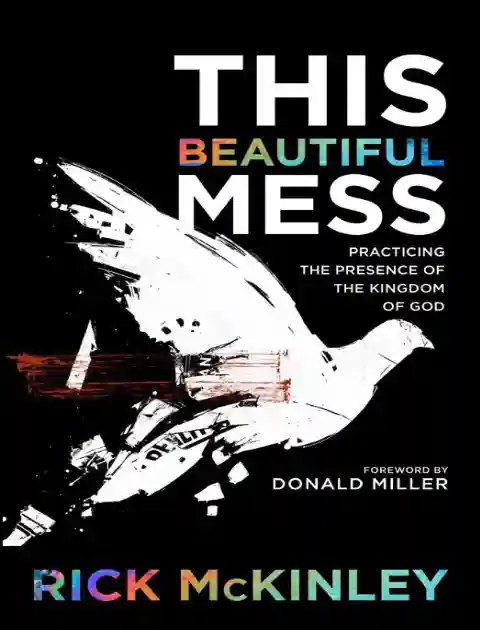
"This Beautiful Mess" by Rick McKinley explores the concept of brokenness and beauty in the midst of a chaotic world. Through personal stories and reflections, McKinley shares how God can bring redemption and restoration to even the most broken parts of our lives. The book encourages readers to embrace vulnerability, authenticity, and the messy parts of life as opportunities for growth and transformation.
Hannah More
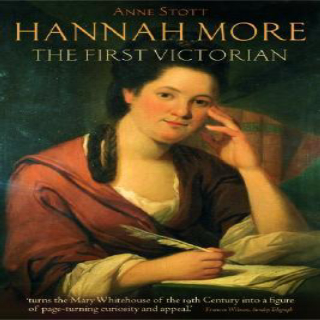 Beyond any doubt, Hannah More was the most influential female member of the Society for Effecting the Abolition of the African Slave Trade. She was educated at Bristol, an important slave-trading town, and began to publish her writing in the 1760s, while she was still a teenager. Her first play, The Inflexible Captive, was staged at Bath in 1775. Later in the 1770s, and for much of the 1780s, she spent time in London and made the acquaintance of many important political and society figures, including Samuel Johnson, Edmund Burke, and Elizabeth Montagu. Her play Percy was produced by David Garrick in 1777, and Fatal Falsehood was staged in 1779, but she came to regard the theatre as morally wrong, especially after the death of her mentors; Garrick and Johnson. She turned to religious writing, beginning with her Sacred Dramas in 1782. In 1784-5, she 'discovered' Ann Yearsley, the so-called 'poetical milkmaid of Bristol', whose poems More helped to publish, although the two later fell out.
In the 1780s, More widened her circle to include religious and philanthropic figures, including John Newton, Beilby Porteus and William Wilberforce. In the summer of 1786, she spent time with Sir Charles and Lady Margaret Middleton at the their home in Teston in Kent. Among their guests were the local vicar James Ramsay and a young Thomas Clarkson, both of whom were central to the early abolition campaign. More and Clarkson met again in Bristol in 1787, while he was on his fact-finding mission to the city, but they did not become close. However, in the same year More met Wilberforce, and their friendship was to become a deep and lasting one. More contributed much to the running of the newly-founded Abolition Society including, in February 1788, her publication of Slavery, a Poem which has been recognised as one of the more important slavery poems of the abolition period. Her relationship with members of the society, especially Wilberforce, was close. For example, she spent the summer of 1789 holidaying with Wilberforce in the Peak District - planning for the abolition campaign, at that time at its height, formed a great deal of their conversation.
By the mid-1790s, More had become closely involved with the 'Clapham Sect' of evangelical Christians, many of whom were involved in the abolition campaign. The group centred on Henry Thornton's home in Clapham and included Wilberforce, James Stephen, and Zachary Macaulay, among others. Throughout the 1790s, she wrote a number of religious tracts, known as the Cheap Repository Tracts, that eventually led to the formation of the Religious Tracts Society. Several of the Tracts oppose slavery and the slave trade, in particular, the poem The Sorrows of Yamba; or, The Negro Woman's Lamentation, which appeared in November 1795 and which was co-authored with Eaglesfield Smith. However, the tracts have also been noted for their encouragement of social quietism in an age of revolution. She continued to oppose slavery throughout her life, but at the time of the Abolition Bill of 1807, her health did not permit her to take as active a role in the movement as she had done in the late 1780s, although she maintained a correspondence with Wilberforce and others. In her later life, she dedicated much time to religious writing. Nevertheless, her most popular work was a novel, Coelebs in Search of a Wife, which appeared in two volumes in 1809 (and which ran to nine editions in 1809 alone). In the 1820s she grew gradually less well, and decreased - but did not entirely halt - the amount of writing she produced. On her death in 1833, she left more than £30,000 to charities and religious societies (equivalent to about £2,000,000 or $3,000,000 in 2004).
© Brycchan Carey 2004
Beyond any doubt, Hannah More was the most influential female member of the Society for Effecting the Abolition of the African Slave Trade. She was educated at Bristol, an important slave-trading town, and began to publish her writing in the 1760s, while she was still a teenager. Her first play, The Inflexible Captive, was staged at Bath in 1775. Later in the 1770s, and for much of the 1780s, she spent time in London and made the acquaintance of many important political and society figures, including Samuel Johnson, Edmund Burke, and Elizabeth Montagu. Her play Percy was produced by David Garrick in 1777, and Fatal Falsehood was staged in 1779, but she came to regard the theatre as morally wrong, especially after the death of her mentors; Garrick and Johnson. She turned to religious writing, beginning with her Sacred Dramas in 1782. In 1784-5, she 'discovered' Ann Yearsley, the so-called 'poetical milkmaid of Bristol', whose poems More helped to publish, although the two later fell out.
In the 1780s, More widened her circle to include religious and philanthropic figures, including John Newton, Beilby Porteus and William Wilberforce. In the summer of 1786, she spent time with Sir Charles and Lady Margaret Middleton at the their home in Teston in Kent. Among their guests were the local vicar James Ramsay and a young Thomas Clarkson, both of whom were central to the early abolition campaign. More and Clarkson met again in Bristol in 1787, while he was on his fact-finding mission to the city, but they did not become close. However, in the same year More met Wilberforce, and their friendship was to become a deep and lasting one. More contributed much to the running of the newly-founded Abolition Society including, in February 1788, her publication of Slavery, a Poem which has been recognised as one of the more important slavery poems of the abolition period. Her relationship with members of the society, especially Wilberforce, was close. For example, she spent the summer of 1789 holidaying with Wilberforce in the Peak District - planning for the abolition campaign, at that time at its height, formed a great deal of their conversation.
By the mid-1790s, More had become closely involved with the 'Clapham Sect' of evangelical Christians, many of whom were involved in the abolition campaign. The group centred on Henry Thornton's home in Clapham and included Wilberforce, James Stephen, and Zachary Macaulay, among others. Throughout the 1790s, she wrote a number of religious tracts, known as the Cheap Repository Tracts, that eventually led to the formation of the Religious Tracts Society. Several of the Tracts oppose slavery and the slave trade, in particular, the poem The Sorrows of Yamba; or, The Negro Woman's Lamentation, which appeared in November 1795 and which was co-authored with Eaglesfield Smith. However, the tracts have also been noted for their encouragement of social quietism in an age of revolution. She continued to oppose slavery throughout her life, but at the time of the Abolition Bill of 1807, her health did not permit her to take as active a role in the movement as she had done in the late 1780s, although she maintained a correspondence with Wilberforce and others. In her later life, she dedicated much time to religious writing. Nevertheless, her most popular work was a novel, Coelebs in Search of a Wife, which appeared in two volumes in 1809 (and which ran to nine editions in 1809 alone). In the 1820s she grew gradually less well, and decreased - but did not entirely halt - the amount of writing she produced. On her death in 1833, she left more than £30,000 to charities and religious societies (equivalent to about £2,000,000 or $3,000,000 in 2004).
© Brycchan Carey 2004
A Father’s Good Pleasure
A recent experience stirred in me a desire to share a word for fathers. I have fathers of younger children particularly in mind, those on the front end of their fathering days, when a man is seeking to establish godly habits so that, by his example, his children might see the shadow of their heavenly Father. This word, however, is also relevant to fathers of teens and young adults, like me, as well as for elderly fathers whose children are well into adulthood. I hope even those in situations where a father is absent will be able to draw out applications for themselves. But before I unpack this threefold word of biblical counsel, allow me to share my recent experience with you, since it both inspired and illustrates what I have to say. Because I Love You One Friday morning a few months back, I sent a text to my sixteen-year-old daughter, Moriah. Before sharing the text, let me share a bit of context. I began giving each of my five children a weekly allowance when they were around the age of seven. Then, at different points as they grew older, I sought to help them put age-appropriate budget structures in place to equip them to handle money well. When each approached age sixteen, I let them know that their allowance would end when they were old enough to be employed. A few days before I sent my text, Moriah began her first job, which meant it was her last allowance week. So, early that Friday morning, I transferred the funds into her account. I wasn’t at all prepared for the tears. Why was I crying? I tried to capture why in this (slightly edited) text I sent to her shortly after: I just transferred your allowance into your account. In the little memo window, I typed “Mo’s final allowance payment,” and suddenly a wave of emotion hit me, catching me by surprise. I’m standing here at my desk, alone in the office, my eyes full of tears, swallowing down sobs. Another chapter closed, another little step in letting you go. A decade of slipping you these small provisions each week to, yes, try and teach you how to handle money (not sure how well I’ve done in that department), but also, and far more so (when it comes to this father’s heart), out of the joy of just making you happy in some small way. At bottom, that’s what it’s been for me: a weekly joy of having this small way of saying, “I love you.” I’ll miss it. Because I love you. I still can’t read that without tearing up. I so enjoy every chance I get to give my children joy. As I stood there, trying to pull myself together, a Scripture text quickly came to mind: Which one of you, if his son asks him for bread, will give him a stone? Or if he asks for a fish, will give him a serpent? If you then, who are evil, know how to give good gifts to your children, how much more will your Father who is in heaven give good things to those who ask him! (Matthew 7:9–11) And as I pondered this passage, I thought of some friends who are fathers of young children and jotted down three lessons I wanted to share with them. Pursue Your Pleasure for God’s Sake God means for you to taste the great pleasure it gives him to make his children happy through how much pleasure it gives you to make your children happy. “Fathers, become a student of what gives your children joy.” So, pursue your pleasure in making your children happy! Give them good things — things they value as good and really want. And really, authentically enjoy doing it. It has God’s endorsement, since he too takes great pleasure in giving good gifts to his children. What’s wonderful about this pleasurable experience is that, for a Christian father, it is multidimensional: we get the joy of blessing our children and the joy of tasting our heavenly Father’s joy in blessing us. This becomes an opportunity to exercise what C.S. Lewis called “transposition” (in his essay by that name in The Weight of Glory) — we see and savor the higher, richer pleasure of God in the natural pleasure of giving pleasure to our children. Pursue Your Children’s Pleasure God means for your children to taste how much pleasure it gives him to make his children happy through how much pleasure it gives you to make them happy. So, pursue your children’s pleasure in making your children happy! Become, through your joyful, affectionate generosity, an opportunity for your children to experience transposition too — to see and savor the higher, richer pleasure of God in the natural pleasure of their father giving good gifts to them. Become a student of what gives them joy. Watch for those few opportunities during their childhood to bless them with a lifetime memory (think Ralphie’s Red Ryder BB rifle in A Christmas Story). But know that often it’s the simple, smaller good gifts in regular doses that make the biggest, longest impact. Because the most lasting impression of any of the good things you give your children will be how much you enjoyed giving it to them. This is important, because when, out of love for them, you must discipline them or make a decision that displeases them, or some significant disagreement arises between you, and they’re tempted to doubt that you care about their happiness, your history of consistent, simple, memorable good gifts, given because you love to do them good, can remind them that even now you are pursuing their joy. It can become an echo of Jesus’s words: “Fear not, little flock, for it is your Father’s good pleasure to give you the kingdom” (Luke 12:32). And it will model for them that God too really does take joy in their joy, even when his discipline is “painful rather than pleasant,” since later it will yield “the peaceful fruit of righteousness to those who have been trained by it” (Hebrews 12:11). “Often it’s the simple, smaller good gifts in regular doses that make the biggest, longest impact.” If your children experience their father’s good pleasure in giving them joy, what is likely to stay with them, long after the good gifts are gone, is this: the gift you were to them. The real treasure wasn’t their father’s good things; it was their father. And in this is an invaluable parable, if our children have eyes to see. Let Your Pleasure Speak for Itself God means for your pleasure in giving your children pleasure to first speak for itself. One last brief word of practical counsel. For the most part, avoid immediately turning the moments you give gifts to your kids into a teaching moment. Don’t explain right then that what you’re doing is an illustration of Matthew 7:9–11. Let your pleasure in giving them pleasure speak for itself, and allow them the magic moment when the Holy Spirit helps them make the connection. In fact, don’t talk too much to them about your experience as such. Wait for meaningful moments, and then take them when they come. Like an early Friday morning text message to your sentimental sixteen-year-old while she’s sitting in a crowded high school classroom, forcing her to text back, “Stop! ur gonna make me cry!” Article by Jon Bloom