
Others like the sins of the mouth Features >>
Training Of The Twelve (Principles For Christian Leadership)

The Joys Of Hebrew

The Wisdom Of Making Right Choices
Leading On Empty (Refilling Your Tank And Renewing Your Passion)
Putting On The Mind Of Christ

The Lamb In The Midst Of The Throne

The Art Of Shepherding

The Oil And The Mantle
The Power Of Your Words: How God Can Bless Your Life Through The Words You Speak

When The Many Are One
About the Book
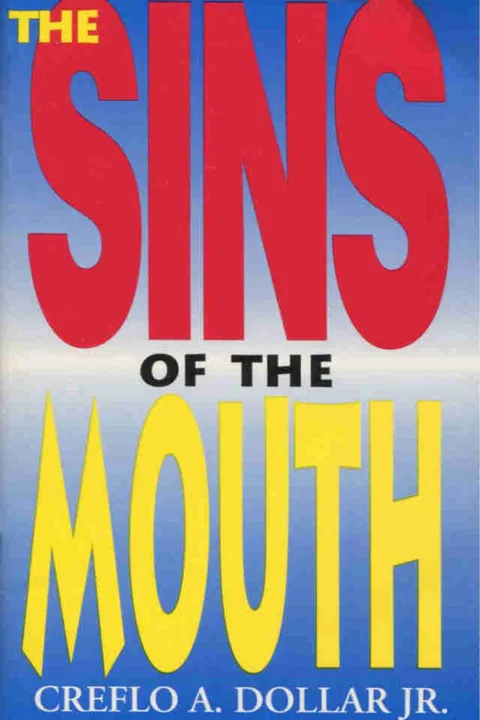
"The Sins of the Mouth" by Creflo Dollar explores the power of our words and how they can impact our lives and relationships. The book delves into the importance of speaking positively, the consequences of negative words, and offers practical advice on how to harness the power of our speech for good. It emphasizes the need to guard our tongues and use our words to build others up rather than tearing them down.
Gordon Lindsay
Gordon Lindsay’s Early life
Gordon Lindsay’s parents were members of J. A. Dowie’s Zion City, Illinois when he was born. The city’s financial difficulties forced the family west in 1904, where they temporarily joined another Christian-based community led by Finis Yoakum at Pisgah Grande, California. When similar problems emerged the family moved to Oregon after only a few months. From here the family moved to Portland, Oregon where Lindsay attended high school and was converted during a Charles F. Parham evangelistic campaign.
During his youth he came under the influence of John G. Lake, former resident of Zion City, missionary to South Africa, and founder of the Divine Healing missions in Spokane, Washington, and Portland, Oregon in 1920. Lindsay joined the healing and evangelistic campaigns of Lake, traveling throughout California and the southern states.
Lindsay began his own ministry in California as pastor of small churches in Avenal and San Fernando and for the next eighteen years, he travelled acros s the country holding revivals in full gospel churches. This period of travel prepared him as perhaps no other man in the nation to establish communication among a variety of Pentecostals.
When World War II began, Lindsay felt compelled to give up his evangelistic ministry because its rigorous lifestyle was taking its toll on his young family. He accepted a call to pastor a church in Ashland, Oregon.
William Branham enters Gordon Lindsay’s life
By 1947 he had witnessed the extraordinary ministry of William Branham and responded to the invitation to become Branham’s manager. His managerial skills were soon obvious in the Branham campaigns, and in April 1948, he furthered the cause of the of the revival when he produced the first issue of The Voice of Healing, specifically to promote Branham’s ministry. To Lindsay’s great surprise Branham announced that he “would not continue on the field more than a few weeks more.”
At great financial cost Lindsay decided to continue the publication of the new magazine in cooperation with his long-time friends, Jack Moore and his talented daughter Anna Jeanne Moore. He broadened the scope of the magazine by including more of the lesser known healing evangelists who were beginning to hold campaigns and were drawing large audiences.
One such evangelist was William Freeman who had been holding meetings in small churches. Lindsay visited one of his campaigns and immediately felt it was the will of God to team up with him and organise a series of meetings through 1948. The Voice of Healing featured the miracles of the Freeman campaigns.
Voice of Healing Conventions
By March 1949 The Voice of Healing circulation had grown to nearly 30,000 per month and had clearly become the voice of the healing movement. It’s pages successfully spread the message of the Salvation-Deliverance-Healing revival across the world.
In December 1949, Lindsay arranged the first convention of healing revivalists in Dallas, Texas. The assembly was addressed by Branham, Lindsay, Moore, old-timers such as F. F. Bosworth and Raymond T. Richey, and a number of rising revivalists including O. L. Jaggers, Gayle Jackson, Velmer Gardner, and Clifton Erickson. This historic conference symbolized the vitality and cohesion of the revival.
The following year, the convention, now about 1,000 strong, met in Kansas City, with virtually every important revivalist in the nation, with the notable exceptions of William Branham and Oral Roberts. Lindsay exercised great skill and wisdom exposing several points of danger and tension in the movement proposed guidelines for the future. Lindsay understood the fears of the older Pentecostal denominations and leaders and tried his utmost to deal with the offending issues.
In an article announcing “the purpose, plan and policy of the Voice of Healing Convention,” he denounced “free-lancers who violently and indiscriminately attack organization in general,” and he urged avoidance of “novel prophetic interpretations, dogmatic doctrinal assertions, sectarian predilections, theological hair-splitting.”
The Voice of Healing Association
The 1950 meeting made the Voice of Healing convention into a loose association of healing revivalists. The evangelists officially associated with The Voice of Healing magazine held “family meetings” at the conventions, at the same time maintaining their desire to “prove to the world that those associated with The Voice of Healing have no intention to organize another movement.” Through the decade the Voice of Healing conventions were showcases for healing revivalism.
The conference programs were workshops on the problems of healing evangelists. Typical topics were “prayer and fasting,” “preparation for a campaign,” “the follow-up work after a campaign,” “the system of cards for the prayer tent and the healing line” and the delicate issue of finances. As the association grew in importance in the 1950s, the program was frequently headed by Roberts or Branham; though every new revivalist aspired to be a speaker on the program.
The Voice of Healing family of evangelists flowered in the early 1950s. Lindsay continued to publicize Branham’s work, although he was not formally associated with the organization; the nucleus of the fellowship was an influential clique which included O. L. Jaggers, William Freeman, Jack Coe, T. L. Osborn, A. A. Allen, and Velmer Gardner.
Gradually major ministries began their own magazines and had no further need for Voice of Healing promotion. Nevertheless, by 1954 the “associate editors and evangelists” listed in The Voice of Healing numbered nearly fifty.
Though Lindsay became personally involved with healing evangelism from 1949, especially with other revivalists such as T. L. Osborn, he confined his best work to organization and management of the Voice of Healing magazine. By 1956 the expenses of the Voice of Healing were running $1,000 a day. In addition to the national and regional conventions sponsored by his organization, Lindsay also began to sponsor missions and a radio program.
“Lindsay was more than an advisor during the first decade of the healing revival; he was much like the director of an unruly orchestra. He tried desperately to control the proliferation of ministries in an effort to keep the revival respectable. He repeatedly advised, “It is better for one to go slow. Get your ministry on a solid foundation. . . . By all means avoid Hollywood press agent stuff.”
Many of the new leaders of the early 1950s owed their early success to the literary support of Gordon Lindsay through the Voice of Healing, but by 1958, many of the revivalists believed that Lindsay’s work was over.
An evolving ministry
Lindsay’s efforts to consolidate and coordinate the healing movement and its ministries became an impossible task. The increasing independence of ministries and the burgeoning charismatic movement caused Lindsay to reconsider his goals. He took the example of T. L. Osborn and concentrated on missionary endeavours. He remained the historian and theologian of the healing movement but began to produce teaching and evangelistic materials which were sent across the world.
The Voice of Healing ultimately became Christ for the Nations. Native church programs, literature, teaching tapes and funds were distributed to hundreds of locations. The organization had changed from one of healing revivalists into an important missionary society.
His ministry was always to those involved in the healing revival, independents and mainline Pentecostals, but the new charismatics – Lutherans, Methodists and Baptists – became his new audience. His encouragement of, and involvement with, the Full Gospel Businessmen’s Fellowship was designed to provide teaching and wisdom for charismatic leaders, many of whom held Lindsay in high regard.
His death on April 1st 1971
Suddenly, on April 1, 1973, Gordon Lindsay died. His wife, Freda, stepped into the breach and was able to stabilize and advance the ministry of Christ for the Nations. Lindsay’s death brought unparalleled financial support paying off all debts and expanding most of its programs.
David Harrel summarises the life of Gordon Lindsay perfectly: ‘The death of Gordon Lindsay closed a major chapter in the charismatic revival. No single man knew the revival and its leaders so well. No man understood its origins, its changes, and its diversity as did Lindsay. A shrewd manager and financier, Lindsay had been as nearly the coordinator of the healing revival as any man could be.
When the revival began to wane, Lindsay was faced with a crisis more severe than those of most of the evangelists themselves. Never a dynamic preacher, he found himself virtually abandoned by his most successful protégés. But Lindsay proved able to adapt. Always a balanced person, Lindsay built a balanced and enduring ministry.’
Tony Cauchi
The Difficult Habit of Quiet
The habit of quiet may be harder today than ever before. Don’t get me wrong: it’s always been hard. The rise and spread of technology, however, tends to crowd out quiet even more. Now that we can carry the whole wide and wild world in our pockets, it’s that much harder to keep the world at bay. Our phones always promise another update to see, image to like, website to visit, game to play, text to read, stream to watch, forecast to monitor, podcast to download, headline to scan, article to skim, score to check, price to compare. That kind of access, and semblance of control, can begin to make quiet moments feel like wasted ones. Who could sit and be still while so much life rushes by? Even if we don’t immediately pick up our phones, we’re often still held captive by them, wondering what new they might hold — what we might be missing. As hard as quiet might be to come by, however, it’s still a life-saving, soul-strengthening habit for any human soul. The God who made this wide and wild world, and who molded our finite and fragile frames, says of us, “In quietness and in trust shall be your strength” (Isaiah 30:15). In days filled with noise, do you still find time to be this kind of strong? Or has stress and distraction slowly eroded your spiritual health? How often do you stop to be quiet? What God Does with Quiet What kind of quietness produces strength? Not all quietness does. We could sell our televisions, give away our phones, move to the countryside, and still be as weak as ever. No, “in quietness and in trust shall be your strength.” The quiet we need is a quiet filled with God. Quietness becomes strength only when our stillness says that we need him. Be still, and know that I am God. I will be exalted among the nations, I will be exalted in the earth! (Psalm 46:10) This still, trusting quietness defies self-reliance. Quietness can preach reality to our souls like few habits can. It says that he is God, and we are not; he knows all, and we know little; he is strong, and we are weak. Quietness widens our eyes to the bigness of God and the smallness of us. It brings us low enough to see how high and wise and worthy he is. You can begin to see why quietness can be so hard. It’s deeply (sometimes ruthlessly) humbling. For it to say something true and beautiful about God, it first says something true and devastating about us. Our quietness says, “Without him, you can do nothing.” Our refusal to be quiet, on the other hand, says, “I can do a whole lot on my own” — and that feels good to hear. It just robs us of the real strength and help we might have found. God strengthens the quiet with his strength, because quietness turns weakness and neediness into worship (2 Corinthians 12:9–10). We get the strength and help and joy; he gets the glory. But You Were Unwilling The context of Isaiah’s words, however, is not inspiring, but sobering. God says to his people, “In returning and rest you shall be saved; in quietness and in trust shall be your strength.” But you were unwilling . . . (Isaiah 30:15–16) Quietness would have made them strong, but they wouldn’t have it. Assyria was bearing down on Judah, threatening to crush them as it had crushed many before them. And how do God’s people respond? “Ah, stubborn children,” declares the Lord, “who carry out a plan, but not mine, and who make an alliance, but not of my Spirit, that they may add sin to sin; who set out to go down to Egypt, without asking for my direction.” (Isaiah 30:1–2) Even after watching him deliver them so many times before, they cast his plan aside and made their own. They sought help, but not from him. They went back to Egypt (of all places!) and asked those who had enslaved and oppressed them to protect them. And they didn’t even stop to ask what God thought. They did, and did, and did, at every turn refusing to stop, be quiet, and receive the strength and support of God. I would rush to help you, God says, but you were unwilling. You weren’t patient or humble enough to receive my help. “How often do we choose activity over quietness, distraction over meditation, ‘productivity’ over prayer?” Why would they refuse the sovereign help of God? Deep down, we know why. Because they felt safer doing what they could do on their own than they did waiting to see what God might do. How often do we do the same? How often do we choose activity over quietness, distraction over meditation, “productivity” over prayer? How often do we try to solve our problems without slowing down enough to first seek God? Consequences of Avoiding Quiet Self-reliance is, of course, not as productive as it promises to be — at least not in the ways we would want. The people’s refusal to be quiet and ask God for help not only cut them off from his strength, but also invited other painful consequences. First, the sin of self-reliance breeds more sin. Again, God says in verse 1, “‘Ah, stubborn children,’ declares the Lord, ‘who carry out a plan, but not mine, and who make an alliance, but not of my Spirit, that they may add sin to sin.” The more we refuse the strength of God, the more we invite temptations to sin. Quiet keeps us close to God and aware of him. A scarcity of quiet pushes him to the margins of our hearts, making room for Satan to plant and tend lies within us. Second, their refusal to be quiet before God made them vulnerable to irrational fear. Because they fought in their own strength, the Lord says, “A thousand shall flee at the threat of one; at the threat of five you shall flee” (Isaiah 30:17). A lone soldier will send a thousand into a panic. The whole nation will crumble and surrender to just five men. In other words, you will be controlled and oppressed by irrational fears. You’ll run away when no one’s chasing you. You’ll lose sleep when there’s nothing to worry about. And right when you’re about to experience a breakthrough, you’ll despair and give up. Fears swell and flourish as long as God remains small and peripheral. Quiet time with God, however, scatters those fears by enlarging and inflaming our thoughts of him. The weightiest warning, however, comes in verse 13: those who forsake God’s word, God’s help, God’s way invite sudden ruin. “This iniquity shall be to you like a breach in a high wall, bulging out and about to collapse, whose breaking comes suddenly, in an instant.” Confidence in self drove a crack in the strongholds around them — a crack that grew and spread until the walls collapsed on top of them. All because they refused to embrace quiet and trust God. “In quietness and trust would be our strength; in busyness and pride will be our downfall.” For Judah, ruin meant falling into the cruel hands of the Assyrians. The walls will fall differently for us, but fall they will, if we let busyness and noise keep us from dependence. In quietness and trust would be our strength; in busyness and pride will be our downfall. Mercy for the Self-Reliant In the rhythms of our lives, do we make time to be quiet before God? Do we expect God to do more for us while we sit and pray than we can do by pushing through without him? If verse 15 humbles us — “But you were unwilling . . .” — verse 18 should humble us all the more. As Judah hurries and worries and strategizes and plans and recruits help and works overtime, all the while avoiding God, how does God respond to them? What is he doing while they refuse to stop doing and be quiet? Therefore the Lord waits to be gracious to you, and therefore he exalts himself to show mercy to you. For the Lord is a God of justice; blessed are all those who wait for him. (Isaiah 30:18) While we refuse to wait for him, God waits to be gracious to us. He’s not watching to see if he’ll be forced to show us mercy; he wants to show us mercy. The God of heaven, the one before time, above time, and beyond time, waits for us to ask for help. He loves to hear the sound of quiet trust. Blessed — happy — are those who wait for him, who know their need for him, who ask him for help, who find their strength in his strength, who learn to be and stay quiet before him. Article by Marshall Segal