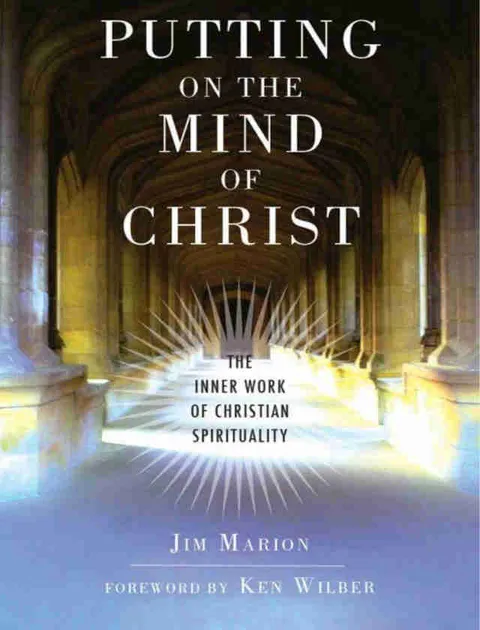

Others like putting on the mind of christ Features >>
The Lamb In The Midst Of The Throne
Bonhoeffer On The Christian Life
Baptism In The Holy Spirit
In The School Of Christ - Lessons On Holiness In John 13–17

No Handle On The Cross - An Asian Meditation On The Crucified Mind
Getting Anger Under Control

7 Things The Holy Spirit Will Do For You
Jealousy: The Sin No One Talks About

What Is The Fear Of The Lord
Taking The Land - Part One
About the Book
"Putting on the Mind of Christ" by Jim Marion is a spiritual guide that explores the teachings of Jesus Christ and how individuals can embody his consciousness in their daily lives. Marion emphasizes the importance of cultivating a deep connection with God and living in alignment with Jesus' teachings, ultimately leading to spiritual transformation and enlightenment.
Henry Alline
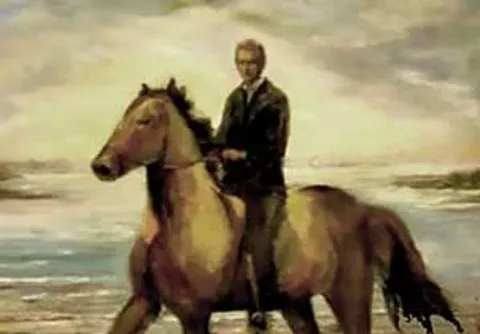 Henry Alline’s early years
He was born and received his early education in Newport, Rhode Island and his family moved to Nova Scotia in 1760, when he was 12 years old. When he was nine he began to read theological works and became somewhat mystical, but after years of soul-searching and spiritual conflict he was powerfully converted in 1775, simultaneously receiving a call to the ministry.
Alone and desperate he prayed until…’redeeming love broke into my soul… with such power that my whole soul seemed to be melted down with love…and my will turned of choice after the infinite God. A year later he began to preach.
His preaching career
His preaching career lasted until his death eight years later. He was an itinerant preacher in Nova Scotia and Prince Edward Island in an ever-widening circuit, beginning what became known as the ‘New Light’ movement and which is still the greatest revival that Canada has ever seen. He preached the new birth powerfully and effectively and his admirers compared him to George Whitefield and John the Baptist.
Considered an emotional and dangerous fanatic by some and a ‘ravager of congregations,’ the Congregationalists withdrew his right to preach in their churches, so he spoke in barns, houses and the open air. In all he began eight ‘New Light’ Congregational churches based on his non-Arminian but anti-Calvinist views of free-will and predestination, and his strong rejection of outward religious form.
Ironically, despite his indifference regarding baptism, his major 19th century influence was amongst the Baptists of eastern Canada, many of whom were his converts.
Despite possibly unorthodox views and methods, his ministry was without doubt that of an extraordinary revivalist.
Alline’s sermon style was always simple and extemporary, using a few simple, understandable points to help the unchurched to grasp the simple truths of the gospel. As with other itinerant revivalists, his objective was to lead the hearers to a point of decision – to accept or reject Christ as Saviour and Lord, which opened the door to the “new birth.”
Doubtless, his sermons were repeated over time, but he was never in one place long enough for his listeners to notice.
Alline also employed the ministry of prayer and of singing, writing many hymns which were helpful in communicating the gospel. A collection was gathered after his death and was reprinted at least four times in the United States, and several were included in the standard hymnals of the 19th century.
Henry Alline’s early years
He was born and received his early education in Newport, Rhode Island and his family moved to Nova Scotia in 1760, when he was 12 years old. When he was nine he began to read theological works and became somewhat mystical, but after years of soul-searching and spiritual conflict he was powerfully converted in 1775, simultaneously receiving a call to the ministry.
Alone and desperate he prayed until…’redeeming love broke into my soul… with such power that my whole soul seemed to be melted down with love…and my will turned of choice after the infinite God. A year later he began to preach.
His preaching career
His preaching career lasted until his death eight years later. He was an itinerant preacher in Nova Scotia and Prince Edward Island in an ever-widening circuit, beginning what became known as the ‘New Light’ movement and which is still the greatest revival that Canada has ever seen. He preached the new birth powerfully and effectively and his admirers compared him to George Whitefield and John the Baptist.
Considered an emotional and dangerous fanatic by some and a ‘ravager of congregations,’ the Congregationalists withdrew his right to preach in their churches, so he spoke in barns, houses and the open air. In all he began eight ‘New Light’ Congregational churches based on his non-Arminian but anti-Calvinist views of free-will and predestination, and his strong rejection of outward religious form.
Ironically, despite his indifference regarding baptism, his major 19th century influence was amongst the Baptists of eastern Canada, many of whom were his converts.
Despite possibly unorthodox views and methods, his ministry was without doubt that of an extraordinary revivalist.
Alline’s sermon style was always simple and extemporary, using a few simple, understandable points to help the unchurched to grasp the simple truths of the gospel. As with other itinerant revivalists, his objective was to lead the hearers to a point of decision – to accept or reject Christ as Saviour and Lord, which opened the door to the “new birth.”
Doubtless, his sermons were repeated over time, but he was never in one place long enough for his listeners to notice.
Alline also employed the ministry of prayer and of singing, writing many hymns which were helpful in communicating the gospel. A collection was gathered after his death and was reprinted at least four times in the United States, and several were included in the standard hymnals of the 19th century.
my dream singleness: an anthem for unmarried women
As an unmarried woman in my mid-twenties, I know that a season of singleness can often be fraught with disappointment and heartache. I hold hopes for a husband and a family close to my heart, but I also hope to hold Jesus even closer. At the end of my life, whether I am married for forty years or single for seventy, I long for it to be said of me, “She was devoted to Jesus.” Single or married, we belong to another. My marital status may read “single” on my tax return, but I am not unclaimed. I do belong to someone. And this is not some elusive future spouse. I’m speaking of Christ. I am his. Because Christ has bought us with his blood, we are not our own (1 Corinthians 6:19–20). We were not made or saved for this realm, but for another realm, a spiritual one. And in this spiritual realm, Jesus was clear that people are neither marrying, nor married. So despite the fact that marriage is beautiful and sacred, we were not made for earthly wedded bliss. That should free us to live out big dreams for singleness now, while we wait to be married. We were created for Christ, to be one with him. He and I — we were meant for each other (Ephesians 1:5–6). This is a match made in heaven, and for heaven. He is ours, and we are his. And this union can satisfy all other longings. Even if a spouse dies, deserts, disappoints, or never emerges in the first place, we already have a perfect union of glory and joy awaiting us that far surpasses the dim copy we might enjoy for a little while here. Singleness Is Good Paul, apparently, was single, at least for much of his life, and spoke of his marital status in glowing terms. Singleness is good, and is a gift from God (1 Corinthians 7:7–8). I can wake up tomorrow confident that not being married is good for me, and that it is my calling for the day. God does not give second-rate gifts. It’s not that I have asked for bread only for God to give me a stone instead (Matthew 7:9). No, singleness and marriage are different gifts, each with challenges and blessings, but they are equally good. Elisabeth Elliot writes: But having now spent more than 41 years single, I have learned that it is indeed a gift. Not one I would choose. Not one many women would choose. But we do not choose our gifts, remember? We are given them by a divine Giver who knows the end from the beginning and wants above all else to give us the gift of himself. Whatever the years ahead may hold, I know he has called me to the gift of singleness today, however heavy that gift may feel some days. When God gives us gifts we would not choose, he also gives us himself in ways we would not otherwise have known. This World Is Not Our Home Those who are not yet married long for love and a place to call home. We desire good things, and our pain is legitimate. But we are easily disillusioned with temporary treasures, forgetting this bruised and scarred place is not our forever home. No marriage will last forever. Even the best must end with death. This means that the married and the unmarried alike must form their minds around this truth: From now on, let those who have wives live as though they had none, and those who mourn as though they were not mourning, and those who rejoice as though they were not rejoicing, and those who buy as though they had no goods, and those who deal with the world as though they had no dealings with it. For the present form of this world is passing away. (1 Corinthians 7:29–31) Paul is not telling his readers to neglect their families, but he is shifting our paradigms, preparing us to live as pilgrims in a world destined for destruction. This means the married should live as if their spouse is not theirs to keep, and the unmarried should live as if a spouse is not ours to have. At the end of time here on earth, only our union with Christ will survive. Singleness Is for Devotion From the apostle Paul to Elisabeth Elliot, they are all really saying one thing. Singleness is for devotion — for gospel-living and Christ-loving. The unmarried man is anxious about the things of the Lord, how to please the Lord. . . . And the unmarried or betrothed woman is anxious about the things of the Lord, how to be holy in body and spirit.” (1 Corinthians 7:32, 34) God offers us singleness as an opportunity to run headlong after Christ. Devotion is not merely a hobby to pass the time while we wait for a perfect someone. No, this is what we’ve been waiting for. For Christ. The Perfect Someone has come, and he’s come to give us himself. We’ve been waiting for happiness; here is a love higher than our understanding and a joy beyond our wildest dreams. As unmarried women, let it be said of us that our one concern is to please the Lord, that our only aim is wholehearted devotion to Christ. May this be the banner that flies over the balance of our days, our only mantra, married or not. You were meant to enjoy the one thing that transcends the beauties of marriage and lasts for eternity. Seek him and you will make the most of singleness and marriage, whichever gift God gives you.