

Others like faith and patience Features >>

Faith: Law Of The New Covenant

Six Steps To Excellence In Ministry

Dream Big, Talk Big, And Turn Your Faith Loose

Lost And Found - Finding Hope In The Detours Of Life
-160.webp)
If Satan Cant Steal Your Dreams... He Cant Control Your Destiny

Mystery Of The Holy Sprirt

Eye Of The Seer

Everybody’s Normal Till You Get To Know Them

Your Life In Christ

Loyalty And Disloyalty
About the Book
"Faith And Patience" by Kenneth Copeland is a book that explores the importance of faith and patience in the life of a believer. Copeland shares insights on how developing a deep faith in God and cultivating patience can lead to a victorious and fulfilling Christian life. The book offers practical guidance on how to strengthen one's faith and trust in God, and how to cultivate patience in times of challenges and adversity. Ultimately, "Faith And Patience" encourages readers to trust in God's timing and promises, and to persevere with unwavering faith and patience.
Rich Mullins
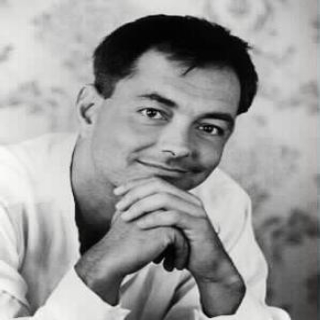 Born Richard Wayne Mullins on October 21, 1955, in Richmond, IN; died on September 19, 1997, in La Salle County, IL; son of John and Neva Mullins. Education: Attended Friends University, Wichita, KS, late 1980s.
The talents of Contemporary Christian singer/songwriter Rich Mullins and his work with the group Zion were first noticed by Christian music superstar Amy Grant. The inclusion of his song "Sing Your Praise to the Lord" on Grant's Age to Age album in 1982 soon lead to deals with Reunion Records and the start of a successful career as a songwriter and singer. With nearly ten albums and numerous Contemporary Christian hit songs to his credit, Mullins's career was cut short by an automobile accident that took his life on September 19, 1997, in Illinois.
Raised near Richmond, Indiana, Mullins began writing songs in his head as he drove a tractor over the fields of his family's farm. He taught himself to play the piano at age four and soon mastered a number of other instruments as well, including the guitar and hammered dulcimer. Long before his birth, however, factors over which he had no control were beginning to shape the world in which he would grow up. In Rich Mullins: An Arrow Pointing to Heaven by James Bryan Smith, the singer tells of some family history and how it came to affect his life: "My dad grew up back and forth between Kentucky and Virginia because his father was a coal miner. And when my dad was 14 my grandpa came home and told my grandma to load up the truck 'cause they were gonna move.... And my grandpa said, 'Well, Rose, we're going to Detroit.' And she said, 'Why in the world are we going to Detroit?' And he said, 'Because I don't want my boys to grow up to be coal miners.' And so they got as far as Indiana and ran out of gas--and that's how I got here."
As a boy, Mullins was known as Wayne, his middle name. Although he went by Richard when he went off to college and shortened that to Rich when he launched his music career, he preferred to be known as Wayne by his family. Mullins was particularly close to his mother, Neva, who was raised a Quaker. He admits, however, to having been somewhat embarrassed by his father, who was raised in the heart of Appalachia, "which is a very polite way to say that he was a hillbilly," Mullins told Smith. Mullins said that it was not until he was nearing the end of high school that he began to understand the true meaning of the biblical injunction to "honor thy father and mother." In Smith's book Mullins is quoted: "[I]f you cannot honor your father and mother, then you can't honor anybody. Until you come to terms with your heritage, you'll never be at peace with yourself. That was a real breakthrough moment for me. So, what I needed to do was come to understand the Appalachian life, so that I could know more about my father, who had been a stranger to me all my life."
In 1974, after finishing high school, Mullins attended Cincinnati Bible College in Ohio, working as a youth minister in a local church. A couple of years into college, he formed a band of his own. The band only stayed together for about a year, and during that time it performed Christian music at schools and colleges throughout the Cincinnati area. In the late 1970s Mullins left college to work with Zion Ministries and perform with their band, aptly named Zion. In the summer of 1981 a copy of an album recorded by Zion--made up mostly of songs written by Mullins--found its way to Christian singer Amy Grant. The up-and-coming Grant and her managers were impressed by Mullins's "Sing Your Praise to the Lord" and decided to include it on Grant's next album, Age to Age, released in 1982. Mike Blanton, an adviser to Grant and founder of Reunion Records, signed Mullins to his first publishing deal as well as his first artist deal.
Mullins's first album for Reunion, self-titled, was released in 1986 and includes such songs as "Place to Stand," "Elijah," and "Few Good Men." He followed that in 1987 with Pictures in the Sky, which includes "When You Love," "Be with You," and "Verge of a Miracle." Winds of Heaven, Stuff of Earth, Mullins's third album for Reunion, was released in 1989 and features "Awesome God," "Other Side of the World," and "If I Stand." Also hitting music stores in 1989 was Never Picture Perfect, which includes the singles "I Will Sing," "While the Nations Rage," and "First Family."
In 1988 Mullins moved to Wichita, Kansas, to study music education at Friends University, a nondenominational Christian institution. While studying at Friends, he continued to record and perform whenever he could. In 1991 and 1992, he released two volumes of a compilation entitled World As Best As I Remember It. After completing his studies at Friends, Mullins joined a Compassion International mission to the vast Navajo Reservation in Arizona to teach music to the local children and spread the Christian gospel to whomever he could reach. As part of his work in the Navajo Nation, he formed a music club for some of the younger residents. In May of 1995, he moved to the Navajo Nation, settling into a trailer adjacent to the reservation. He lived there with fellow musician Mitch McVicker, and the two were involved in a project to collect musical instruments for the children of the reservation.
Throughout his career, Mullins has been nominated a total of 12 times for Dove Awards, presented each year to the best in Contemporary Christian music. He never received the award, but close friend Doris Howard told Release magazine that he probably didn't mind. "Nashville didn't own Rich, but then, he cared nothing for the things of this world."
On September 19, 1997, the Jeep in which Mullins and McVicker were traveling from Chicago to Wichita overturned on Interstate 39 in La Salle County, Illinois. Both men were thrown onto the road from their vehicle. A tractor trailer following close behind swerved to miss the Jeep but instead hit Rich, killing him instantly. McVicker, though injured critically, recovered.
Rich Mullins's Career
Joined Christian group Zion, late 1970s; released self-titled album for Reunion Records, 1986; recorded total of nine albums of Christian music for Reunion, 1986-96; wrote several Contemporary Christian hits, including "Awesome God" and "Sing Your Praise to the Lord"; studied music education, devoted time to relief efforts among Navajo Indians of the Southwest, mid-1990s.
Born Richard Wayne Mullins on October 21, 1955, in Richmond, IN; died on September 19, 1997, in La Salle County, IL; son of John and Neva Mullins. Education: Attended Friends University, Wichita, KS, late 1980s.
The talents of Contemporary Christian singer/songwriter Rich Mullins and his work with the group Zion were first noticed by Christian music superstar Amy Grant. The inclusion of his song "Sing Your Praise to the Lord" on Grant's Age to Age album in 1982 soon lead to deals with Reunion Records and the start of a successful career as a songwriter and singer. With nearly ten albums and numerous Contemporary Christian hit songs to his credit, Mullins's career was cut short by an automobile accident that took his life on September 19, 1997, in Illinois.
Raised near Richmond, Indiana, Mullins began writing songs in his head as he drove a tractor over the fields of his family's farm. He taught himself to play the piano at age four and soon mastered a number of other instruments as well, including the guitar and hammered dulcimer. Long before his birth, however, factors over which he had no control were beginning to shape the world in which he would grow up. In Rich Mullins: An Arrow Pointing to Heaven by James Bryan Smith, the singer tells of some family history and how it came to affect his life: "My dad grew up back and forth between Kentucky and Virginia because his father was a coal miner. And when my dad was 14 my grandpa came home and told my grandma to load up the truck 'cause they were gonna move.... And my grandpa said, 'Well, Rose, we're going to Detroit.' And she said, 'Why in the world are we going to Detroit?' And he said, 'Because I don't want my boys to grow up to be coal miners.' And so they got as far as Indiana and ran out of gas--and that's how I got here."
As a boy, Mullins was known as Wayne, his middle name. Although he went by Richard when he went off to college and shortened that to Rich when he launched his music career, he preferred to be known as Wayne by his family. Mullins was particularly close to his mother, Neva, who was raised a Quaker. He admits, however, to having been somewhat embarrassed by his father, who was raised in the heart of Appalachia, "which is a very polite way to say that he was a hillbilly," Mullins told Smith. Mullins said that it was not until he was nearing the end of high school that he began to understand the true meaning of the biblical injunction to "honor thy father and mother." In Smith's book Mullins is quoted: "[I]f you cannot honor your father and mother, then you can't honor anybody. Until you come to terms with your heritage, you'll never be at peace with yourself. That was a real breakthrough moment for me. So, what I needed to do was come to understand the Appalachian life, so that I could know more about my father, who had been a stranger to me all my life."
In 1974, after finishing high school, Mullins attended Cincinnati Bible College in Ohio, working as a youth minister in a local church. A couple of years into college, he formed a band of his own. The band only stayed together for about a year, and during that time it performed Christian music at schools and colleges throughout the Cincinnati area. In the late 1970s Mullins left college to work with Zion Ministries and perform with their band, aptly named Zion. In the summer of 1981 a copy of an album recorded by Zion--made up mostly of songs written by Mullins--found its way to Christian singer Amy Grant. The up-and-coming Grant and her managers were impressed by Mullins's "Sing Your Praise to the Lord" and decided to include it on Grant's next album, Age to Age, released in 1982. Mike Blanton, an adviser to Grant and founder of Reunion Records, signed Mullins to his first publishing deal as well as his first artist deal.
Mullins's first album for Reunion, self-titled, was released in 1986 and includes such songs as "Place to Stand," "Elijah," and "Few Good Men." He followed that in 1987 with Pictures in the Sky, which includes "When You Love," "Be with You," and "Verge of a Miracle." Winds of Heaven, Stuff of Earth, Mullins's third album for Reunion, was released in 1989 and features "Awesome God," "Other Side of the World," and "If I Stand." Also hitting music stores in 1989 was Never Picture Perfect, which includes the singles "I Will Sing," "While the Nations Rage," and "First Family."
In 1988 Mullins moved to Wichita, Kansas, to study music education at Friends University, a nondenominational Christian institution. While studying at Friends, he continued to record and perform whenever he could. In 1991 and 1992, he released two volumes of a compilation entitled World As Best As I Remember It. After completing his studies at Friends, Mullins joined a Compassion International mission to the vast Navajo Reservation in Arizona to teach music to the local children and spread the Christian gospel to whomever he could reach. As part of his work in the Navajo Nation, he formed a music club for some of the younger residents. In May of 1995, he moved to the Navajo Nation, settling into a trailer adjacent to the reservation. He lived there with fellow musician Mitch McVicker, and the two were involved in a project to collect musical instruments for the children of the reservation.
Throughout his career, Mullins has been nominated a total of 12 times for Dove Awards, presented each year to the best in Contemporary Christian music. He never received the award, but close friend Doris Howard told Release magazine that he probably didn't mind. "Nashville didn't own Rich, but then, he cared nothing for the things of this world."
On September 19, 1997, the Jeep in which Mullins and McVicker were traveling from Chicago to Wichita overturned on Interstate 39 in La Salle County, Illinois. Both men were thrown onto the road from their vehicle. A tractor trailer following close behind swerved to miss the Jeep but instead hit Rich, killing him instantly. McVicker, though injured critically, recovered.
Rich Mullins's Career
Joined Christian group Zion, late 1970s; released self-titled album for Reunion Records, 1986; recorded total of nine albums of Christian music for Reunion, 1986-96; wrote several Contemporary Christian hits, including "Awesome God" and "Sing Your Praise to the Lord"; studied music education, devoted time to relief efforts among Navajo Indians of the Southwest, mid-1990s.
But Have You Prayed
What hasn’t yet changed in your life because you haven’t started praying for it? Prayerlessness, of course, comes in varieties. Some almost never pray, proving that prayer is nothing more than a formality, a greeting card to God when they have time. Others only pray when they have some desperate and immediate need, treating prayer like a crisis-response line (and largely neglecting prayer otherwise). Others may pray regularly, but their prayers slowly devolve into repeated phrases that taste stale, impersonal, removed from real life. Even the best among us can sometimes swing between treasuring prayer when we think we really need it and skipping prayer when life seems to be going well. Prayer, however, is not a last resort, but a first line of defense, because God is not a last resort, but the one to whom we look first. Prayer is powerful because God is the most powerful agent of change in any of our lives. Oh, what peace we often forfeit Oh, what needless pain we bear All because we do not carry Everything to God in prayer. Jesus confronted the threat of prayerlessness in his disciples, and in a way that should land with gravity and hope in the midst of our own trials and burdens. Desperate Situation In Mark 9, a man had come, bearing his self-destructive, demon-oppressed son, searching desperately for Jesus — for healing. “Teacher, I brought my son to you,” the father says, “for he has a spirit that makes him mute. And whenever it seizes him, it throws him down, and he foams and grinds his teeth and becomes rigid” (Mark 9:17–18). Parents of young children can at least begin to imagine how excruciating and debilitating this suffering was. Is there anything this father would not do to see his son whole again? “What hasn’t yet changed in your life because you haven’t yet prayed for it?” By the time Jesus arrives on the scene, his disciples have been attempting to drive out the demon. But they were not able (Mark 9:18), even though they had been given authority over unclean spirits (Mark 6:7). And as they struggled over the helpless boy, the religious leaders emerge with crowds to argue with them (Mark 9:14), surely making the situation all the more stressful and tragic. Nothing but Prayer Jesus asks his father, “How long has this been happening to him?” “From childhood” (Mark 9:21). Not just for several weeks or months, but over years, potentially decades. “And it has often cast him into fire and into water, to destroy him. But if you can do anything, have compassion on us and help us” (Mark 9:22). Jesus, of course, can do anything, literally anything. “‘If you can’! All things are possible for one who believes,” he replies (Mark 9:23). “I believe,” the father famously responds, “help my unbelief!” (Mark 9:24). So, Jesus heals the boy: “You mute and deaf spirit, I command you, come out of him and never enter him again” (Mark 9:25). The same spirit that evaded and overpowered the disciples surrenders immediately (and violently) (Mark 9:26), and at just the sound of his voice. When he is alone with his disciples, who are feeling confused and defeated by their failures, they ask him, “Why could we not cast it out?” (Mark 9:28). A penetrating and ageless question. “This kind,” Jesus says, “cannot be driven out by anything but prayer” (Mark 9:29). Maybe they didn’t pray at all, or maybe they prayed very little, or maybe they prayed formal, empty, heartless prayers, but either way Jesus says prayer — actually asking God — is what was missing. He could have said, This kind cannot be driven out by anyone but me, but instead he said, “This kind cannot be driven out by anything but prayer.” And as surprised as we might be that the disciples didn’t think to pray (or pray more), how often might Jesus say the same to us? What Kept Them from Praying? So, why didn’t the disciples pray? Why didn’t they ask God to help, to intervene, to do what was beyond the disciples’ own ability? We don’t know for sure, but the scene gives us a surprising number of potential reasons, many which might feel surprisingly relevant (and sobering) for own our prayer lives. DISTRACTED BY NOISE “How often have we given up praying because too many days or months or years have passed?” First, a great crowd had gathered to watch (and interfere with) their ministry (Mark 9:14). They weren’t doing spiritual warfare in the privacy of a home. The painful scene had become a stage, and the more the disciples failed and the longer the boy suffered, the more people came to watch. How many of us, with so many curious and suspicious eyes trained on us, would be courageous enough to stop and look toward heaven and pray? Or, how often does the sound of the crowds around us (constantly clawing at our attention through our devices), keep us from hearing Jesus say, “Ask, and it will be given to you; seek, and you will find; knock, and it will be opened to you” (Matthew 7:7)? Distractions, which come in many kinds and ways, often keep us from praying. DOUBTED BY MAN Not all had come simply to watch, though. Religious experts joined the crowd, arguing with the disciples and saying it couldn’t be done (Mark 9:14, 16). The spiritual enemy was obvious, but they had human enemies, as well — doubters, detractors, scoffers. They’re not waiting, like the rest of the crowd, for the disciples to heal the boy; they want nothing more than for followers of Jesus to fail (Mark 11:18). We may not face the same immediate opposition (though many Christians do), but wherever we are in the world, many want our prayers to fail — to prove that Jesus was just a man, the Bible just a book, and our prayers just wishful thinking. We know that faithfulness to Christ will cost us favor and approval from the world, and so the fear of man often keeps us from praying. DEFIED BY SATAN But the scribes were nothing compared with their unseen enemies. The disciples were dealing with an actual demon oppression — a real, destructive, spiritual enemy. A spiritual enemy strong enough to hurl the boy into fire and water, “to destroy him” (Mark 9:22). Maybe worst of all, he made the boy mute (Mark 9:17), unable to cry for help or even explain what was happening to him. What would you do while you watched him being torn apart? Even if we are not experiencing this kind of manifest demonic opposition, we do wrestle, every day, “against the spiritual forces of evil” (Ephesians 6:12). We pray into a downpour of fiery hostility. How often does Satan keep us from praying, doing all he can to keep us from our knees? DISCOURAGED BY INEFFECTIVENESS Though the disciples tried, really tried, to heal the boy, nothing changed. We don’t know what they tried, but we know that they tried (Mark 9:18) and that they had tried everything they knew to do (Mark 9:28). When Jesus says, “This kind cannot be driven out by anything but prayer,” he hints at all their failed attempts. And the boy still writhed and foamed and groaned on the ground — like he had for so long. A sense of futility surely began to set in. They had healed many before, but this spirit wouldn’t surrender. Maybe no one can heal this boy. How often have we given up praying because the outcome seems decided, because too many days or months or years have passed? Discouragement over unanswered prayer often keeps us from praying. Jesus Really Prayed Many barriers keep us from praying, but nothing kept Jesus from asking his Father, because Jesus knew that nothing was more vital and powerful than prayer. And he knew nothing was more vital and powerful than prayer because no one was more vital and powerful than his Father. “Some things will not change unless we humble ourselves, kneel, and plead with our Father in heaven.” When Jesus says, “This kind cannot be driven out by anything but prayer,” he knew so from personal and persistent experience. He was tempted in every way as we are, but without ever indulging in prayerlessness. We know how dependent he was on God — rising early in the morning (Mark 1:35), getting alone with his Father (Mark 6:46), and pouring out his heart (Mark 14:35). And we know he did this regularly (Luke 5:16). He was not distracted by the crowds or undone by the fear of man. He was not intimidated by demonic warfare or discouraged by God’s timing. He knew the soul-sustaining, demon-defeating, mountain-moving power of prayer — and he wanted us to know it too. Some oppression will not lift without prayer. Some wounds will not heal without prayer. Some trials will not end without prayer. Some sins will not die without prayer. Some relationships will not mend without prayer. Some things will not change, things we desperately want to change, unless we consistently and persistently humble ourselves, kneel, and plead with our Father in heaven. The all-wise, all-loving, all-powerful God has chosen to do much in the world through our prayers, because prayer is part of his precious relationship with his children and exalts him as the listening and answering God. So, what hasn’t yet changed in your life because you haven’t yet prayed?
-480.webp)