

Blueprint For Building Strong Faith Order Printed Copy
- Author: Kenneth Hagin
- Size: 701KB | 36 pages
- |
Others like blueprint for building strong faith Features >>

Holy Discontent: Fueling The Fire That Ignites Personal Vision
Longing For Godliness - Restoring God’s Image Within Us
Standing Strong - How To Resist The Enemy Of Your Soul

The Kingdom Life
Too Soon To Quit

Plans, Purposes And Pursuits

Rediscovering The Kingdom

48 Laws Of Spiritual Power

The Seer's Path
Smith Wigglesworth On The Holy Spirit
About the Book
"Blueprint for Building Strong Faith" by Kenneth Hagin is a comprehensive guide that explores the foundational principles of faith and how to strengthen one's belief in God. The book outlines practical steps and examples to help readers develop and maintain a strong faith that will sustain them through life's challenges. Hagin's teachings emphasize the importance of speaking God's Word, trusting in His promises, and cultivating a personal relationship with Him.
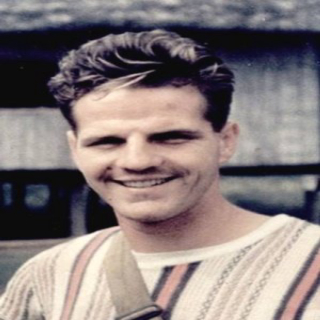
Jim Elliot
 EARLY LIFE
Jim Elliot began his life in Portland, Oregon in the USA. His mother, Clara, was a chiropractor and his father, Fred, was a minister. They married and settled in Seattle, WA where they welcomed their first son, Robert in 1921.
Later they relocated the family to Portland where Herbert arrived in 1924, Jim in 1927, and Jane in 1932.
Jim knew Christ from an early age and was never afraid to speak about Him to his friends. At age six Jim told his mother, “Now, mama, the Lord Jesus can come whenever He wants. He could take our whole family because I’m saved now, and Jane is too young to know Him yet.”
THE YEARS THAT CEMENTED HIS DESIRE TO SERVE THE LORD IN MISSIONS
Jim entered Benson Polytechnic High School in 1941. He carried a small Bible with him and, an excellent speaker; he was often found speaking out for Christ. He and his friends were not afraid to step out and find adventure. One thing Jim didn’t have time for in those early years were girls. He was once quoted as telling a friend, “Domesticated males aren’t much use for adventure.”
In 1945 Jim traveled to Wheaton, IL to attend Wheaton College. His main goal while there was to devote himself to God. He recognized the importance of discipline in pursuing this goal. He would start each morning with prayer and Bible study. In his journal he wrote, “None of it gets to be ‘old stuff’ for it is Christ in print, the Living Word. We wouldn’t think of rising in the morning without a face-wash, but we often neglect the purgative cleansing of the Word of the Lord. It wakes us up to our responsibility.”
Jim’s desire to serve God by taking His gospel to unreached people of the world began to grow while at Wheaton. The summer of 1947 found him in Mexico and that time influenced his decision to minister in Central America after he finished college.
Jim met Elisabeth Howard during his third year at Wheaton. He did ask her for a date which she accepted and then later cancelled. They spent the next years as friends and after she finished at Wheaton they continued to correspond. As they came to know each other there was an attraction, but Jim felt he needed to unencumbered by worldly concerns in order to devote himself completely to God.
In addition to his hope to one day travel to a foreign country to share Christ with the unchurched of the world, he also felt the need to share with people in the United States. On Sundays while at Wheaton he would often ride the train into Chicago and talk to people in the train station about Christ. He often felt ineffective in his work as the times of knowingly leading people to Christ were few. He once wrote, “No fruit yet. Why is that I’m so unproductive? I cannot recall leading more than one or two into the kingdom. Surely this is not the manifestation of the power of the Resurrection. I feel as Rachel, ‘Give me children, or else I die.’”
After college with no clear answer as to working for the Lord in a foreign country, Jim returned home to Portland. He continued his disciplined Bible study as well as correspondence with Elisabeth Howard whom he called Betty.
They both felt a strong attraction to each other during this time, but also felt that the Lord may have been calling them to be unmarried as they served Him.
In June of 1950 he travelled to Oklahoma to attend the Summer Institute of Linguistics. There he learned how to study unwritten languages. He was able to work with a missionary to the Quichuas of the Ecuadorian jungle. Because of these lessons he began to pray for guidance about going to Ecuador and later felt compelled to answer the call there.
Elisabeth Elliot wrote in Shadow of the Almighty:
“The breadth of Jim’s vision is suggested in this entry from the journal:
August 9. “God just now gave me faith to ask for another young man to go, perhaps not this fall, but soon, to join the ranks in the lowlands of eastern Ecuador. There we must learn: 1) Spanish and Quichua, 2) each other, 3) the jungle and independence, and 4) God and God’s way of approach to the highland Quichua. From thence, by His great hand, we must move to the Ecuadorian highlands with several young Indians each, and begin work among the 800,000 highlanders. If God tarries, the natives must be taught to spread southward with the message of the reigning Christ, establishing New Testament groups as they go. Thence the Word must go south into Peru and Bolivia. The Quichuas must be reached for God! Enough for policy. Now for prayer and practice.
THE ECUADOR YEARS
In February 1952 Jim finally left America to travel to Ecuador with Pete Fleming. In May Elisabeth moved to Quito and though they didn’t feel the need to get engaged she and Jim did begin a courtship.
In August Jim left Elisabeth in Quito and travelled with Pete to Shell Mera. At the Mission Aviation Fellowship headquarters in Shell Mera, Jim and Pete learned more about the Acua Indians, a people group that was largely unreached and very savage.
Leaving Shell Mera, Pete and Jim moved on to Shandia where Jim was captivated by the Quichua. He felt very strongly that this was exactly where God intended for him to work to spread the Gospel.
While Jim was in Shandia, Elisabeth was working to learn more about the Colorado Indians near Santa Domingo. In January of 1953 he went to Quito and she met him there and they were finally engaged. They married in October of that year and their only child Valerie was born in 1955.
They settled in Shandia and continued their work with the Quichua Indians. It was Jim’s desire to be able to reach the Waodoni tribe that lived deep in the jungles and had little contact with the outside world. A Waodoni woman who had left the tribe was taken in by the missionaries and helped them to learn the language.
Jim, along with Pete, Ed McCully, Roger Youderian, and their pilot Nate Saint began to search by plane in hopes of finding a way to contact the Waodoni. The found a sandbar in the middle of the Curaray River that worked as a landing strip for the plane and it was there that they first made contact with the Waodoni. They were elated to be able to finally be able to attempt to share the love of Christ with this people group.
After their first meeting, one of the tribe, a man they called George lied to the tribe about the men’s intentions. This lie led the Waodoni warriors to plan an attack for when the missionaries returned. The men did return on January 8, 1956 and were surprised by ten members of the tribe who massacred the missionaries.
Jim’s short life that was filled with the desire to share God’s love can be summed up by a quote that is attributed to him. “He is no fool who gives that which he cannot keep, to gain what he cannot lose.”
EARLY LIFE
Jim Elliot began his life in Portland, Oregon in the USA. His mother, Clara, was a chiropractor and his father, Fred, was a minister. They married and settled in Seattle, WA where they welcomed their first son, Robert in 1921.
Later they relocated the family to Portland where Herbert arrived in 1924, Jim in 1927, and Jane in 1932.
Jim knew Christ from an early age and was never afraid to speak about Him to his friends. At age six Jim told his mother, “Now, mama, the Lord Jesus can come whenever He wants. He could take our whole family because I’m saved now, and Jane is too young to know Him yet.”
THE YEARS THAT CEMENTED HIS DESIRE TO SERVE THE LORD IN MISSIONS
Jim entered Benson Polytechnic High School in 1941. He carried a small Bible with him and, an excellent speaker; he was often found speaking out for Christ. He and his friends were not afraid to step out and find adventure. One thing Jim didn’t have time for in those early years were girls. He was once quoted as telling a friend, “Domesticated males aren’t much use for adventure.”
In 1945 Jim traveled to Wheaton, IL to attend Wheaton College. His main goal while there was to devote himself to God. He recognized the importance of discipline in pursuing this goal. He would start each morning with prayer and Bible study. In his journal he wrote, “None of it gets to be ‘old stuff’ for it is Christ in print, the Living Word. We wouldn’t think of rising in the morning without a face-wash, but we often neglect the purgative cleansing of the Word of the Lord. It wakes us up to our responsibility.”
Jim’s desire to serve God by taking His gospel to unreached people of the world began to grow while at Wheaton. The summer of 1947 found him in Mexico and that time influenced his decision to minister in Central America after he finished college.
Jim met Elisabeth Howard during his third year at Wheaton. He did ask her for a date which she accepted and then later cancelled. They spent the next years as friends and after she finished at Wheaton they continued to correspond. As they came to know each other there was an attraction, but Jim felt he needed to unencumbered by worldly concerns in order to devote himself completely to God.
In addition to his hope to one day travel to a foreign country to share Christ with the unchurched of the world, he also felt the need to share with people in the United States. On Sundays while at Wheaton he would often ride the train into Chicago and talk to people in the train station about Christ. He often felt ineffective in his work as the times of knowingly leading people to Christ were few. He once wrote, “No fruit yet. Why is that I’m so unproductive? I cannot recall leading more than one or two into the kingdom. Surely this is not the manifestation of the power of the Resurrection. I feel as Rachel, ‘Give me children, or else I die.’”
After college with no clear answer as to working for the Lord in a foreign country, Jim returned home to Portland. He continued his disciplined Bible study as well as correspondence with Elisabeth Howard whom he called Betty.
They both felt a strong attraction to each other during this time, but also felt that the Lord may have been calling them to be unmarried as they served Him.
In June of 1950 he travelled to Oklahoma to attend the Summer Institute of Linguistics. There he learned how to study unwritten languages. He was able to work with a missionary to the Quichuas of the Ecuadorian jungle. Because of these lessons he began to pray for guidance about going to Ecuador and later felt compelled to answer the call there.
Elisabeth Elliot wrote in Shadow of the Almighty:
“The breadth of Jim’s vision is suggested in this entry from the journal:
August 9. “God just now gave me faith to ask for another young man to go, perhaps not this fall, but soon, to join the ranks in the lowlands of eastern Ecuador. There we must learn: 1) Spanish and Quichua, 2) each other, 3) the jungle and independence, and 4) God and God’s way of approach to the highland Quichua. From thence, by His great hand, we must move to the Ecuadorian highlands with several young Indians each, and begin work among the 800,000 highlanders. If God tarries, the natives must be taught to spread southward with the message of the reigning Christ, establishing New Testament groups as they go. Thence the Word must go south into Peru and Bolivia. The Quichuas must be reached for God! Enough for policy. Now for prayer and practice.
THE ECUADOR YEARS
In February 1952 Jim finally left America to travel to Ecuador with Pete Fleming. In May Elisabeth moved to Quito and though they didn’t feel the need to get engaged she and Jim did begin a courtship.
In August Jim left Elisabeth in Quito and travelled with Pete to Shell Mera. At the Mission Aviation Fellowship headquarters in Shell Mera, Jim and Pete learned more about the Acua Indians, a people group that was largely unreached and very savage.
Leaving Shell Mera, Pete and Jim moved on to Shandia where Jim was captivated by the Quichua. He felt very strongly that this was exactly where God intended for him to work to spread the Gospel.
While Jim was in Shandia, Elisabeth was working to learn more about the Colorado Indians near Santa Domingo. In January of 1953 he went to Quito and she met him there and they were finally engaged. They married in October of that year and their only child Valerie was born in 1955.
They settled in Shandia and continued their work with the Quichua Indians. It was Jim’s desire to be able to reach the Waodoni tribe that lived deep in the jungles and had little contact with the outside world. A Waodoni woman who had left the tribe was taken in by the missionaries and helped them to learn the language.
Jim, along with Pete, Ed McCully, Roger Youderian, and their pilot Nate Saint began to search by plane in hopes of finding a way to contact the Waodoni. The found a sandbar in the middle of the Curaray River that worked as a landing strip for the plane and it was there that they first made contact with the Waodoni. They were elated to be able to finally be able to attempt to share the love of Christ with this people group.
After their first meeting, one of the tribe, a man they called George lied to the tribe about the men’s intentions. This lie led the Waodoni warriors to plan an attack for when the missionaries returned. The men did return on January 8, 1956 and were surprised by ten members of the tribe who massacred the missionaries.
Jim’s short life that was filled with the desire to share God’s love can be summed up by a quote that is attributed to him. “He is no fool who gives that which he cannot keep, to gain what he cannot lose.”
‘curse god and die’ - satan’s favorite response to suffering
My Dear Globdrop, Regretfully, I have received your last letter. Centuries serving his Lowliness — lifetimes damning souls and training young devils — and yet you still find ways to surprise me. Are you or are you not but one soul away from active duty, from wearing our legion’s darkest colors on the frontlines? If so, what should I expect to find you consumed with? Trapping? Spoiling? Sabotaging? Or, should I — with so much at stake — expect to find you playing with your food like a human child, giggling girlishly about? You have not tasted any meat pierced with your own spear, yet you trifle with the chase. Whatsoever do you mean? I can hear your simple mind ask. Your man, you report, went in for a routine shoulder surgery where, inexplicably , they pierced his lung. This alone causes you great joy, does it? You take great pride that “the fork pierced the prey.” You leave him unattended to tell me all about the victory. Yes, the doctor’s blade took an unexpected (and delicious) detour, but tell me, has the blade yet punctured his soul? Has the wound brought forth an infection of spirit ? Are you so lazy as to hope that the doctor has done your work for you? You have failed miserably to realize that it is not the surgeon’s miscalculations but your patient’s response that gets at the vital thing, the eternal thing. Pierced spirits, seared consciences, scarred hearts, burnt beliefs — these we bend our dark labors toward. Tantalizing trials and savory sufferings serve as an opportunity for this, the real work. Collapsed lungs — or more commonly: sick children, diseased spouses, faltering friendships, ruined romances, cursed careers, even the occasional dead pet — are mere playthings compared to what they can produce: a collapsed faith. This is to strike at the jugular, to slice the major artery. We love the vermin’s squeals and agonies, but never at the expense of our filled bellies. Unpredictable Flame At the expense? you wonder. Suffering, you should know by now, is most unpredictable. Most assuredly it can harden the heart — pushing out the very possibility of a kind, powerful, all-knowing God. Or (as you better hope is not your case) it can be the very thing used by the Enemy to rob our knives and forks of their roast. Have you not glanced over the apostle’s shoulder lately? Not all suffering ends up advancing our cause. We rejoice in our sufferings, knowing that suffering produces endurance, and endurance produces character, and character produces hope, and hope does not put us to shame, because God’s love has been poured into our hearts through the Holy Spirit who has been given to us. (Romans 5:3–5) Who means for suffering to encourage such a horrid thing as endurance, nephew? Do we mean for suffering to produce in them — and I struggle to even write the word — hope ? The punctured lungs, the groans and pains, at every turn, threaten to terribly backfire. The Enemy knows this well enough, and for all his talk, he is as underhanded as any devil. Often, we think we have set the perfect trap, until we discover (too late) that he had tampered with our afflictions and temptations to fit his designs. Making them squeal is pleasurable, watching them squirm under torments make us howl and snort, but it amounts to a mere play if they escape to the Enemy and further enact his dreadful purposes. This, you must ensure, does not happen with your man. Adding Iniquity to Injury Have done, at once, with your prepubescent squeaks and premature gloating. The game is afoot, and the Enemy means to have him as surely as we do. First, make his suffering personal. The question of “How could a good God allow bad things to happen?” is not nearly as useful a question as “How could God allow this bad thing to happen to me ?” This, of course, is the precise question to ask. The Enemy parades himself as the “personal God” at every turn; well, then, let him give his personal defense to the charges. Where was this personal God during his surgery? Give no cover to the Enemy on this point. Press your man, as we have pressed for centuries: Of all people to face this loss, this pain, this nightmare — why me ? Casually point out to your man that his “loving God,” his “refuge,” plays terrible favorites. None of the Christians he knows is facing such “lifelong complications” from such an improbable miscue. Perish any consideration that the Enemy is attempting, at any rate, to twist our bed of thorns into an eternal crown of glory. Hide the Enemy’s lies that such afflictions are precisely measured for their eternal good or in any way purposeful . Second, attend every stab. Never overlook the power of the small inconveniences and stings of discomfort. You must be always on standby for your patient — ready to nurse every flicker of pain toward self-pity, anger, or delectable despair. When he goes to reply to that email one-handed, or has to ask his wife for help to put on his socks, or feels the residual irritations and distresses that will accompany him to the grave — be ready to sow bitterness and pour salt on the wound. No crack, never forget, is too small to exploit. As you attend to his every moan, understand you will not be alone. The Enemy stands by them, always at their beck and call, like a drooling terrier, ready to remind them of his lies and calm them with his presence. In his embarrassing commitment to his fictions, his Spirit stands by to whisper to them. We can’t overhear most of it, but undoubtedly it has to do with Scripture telling them something like he “lovingly” designs their aches, pains, diseases, and deformities in this world, and to persuade them that he is their true comfort, and that this is not their true home. Fight whisper with whisper to keep the dogs from returning to their vomit. Third, hide Tomorrow from him. Finally, conceal any fictions about a Tomorrow that will make all sufferings “untrue.” Of such a Day that beaten, bruised, and bloodied apostle made consistent (and irritating) appeals to, calling the summation of his manifold (and mouthwatering) sufferings as nothing — nothing! — not even worth comparing to that Day of an “eternal weight of glory” which lies ahead (2 Corinthians 4:17) — a “glory” our Father Below weighed and found greatly wanting. Curse God and Die Affliction, nephew, is an uncertain flame, certainly not one to be trifled with. Job and his most useful wife prove a great illustration. Crushed with the fatal blows to property and household, this “upright” man tried to make our Father the fool, shaming us all by responding to murder, devastation, and destruction in such a servile and groveling way: “Job arose and tore his robe and shaved his head and fell on the ground and worshiped ” (Job 1:20). But not all responded in kind. Job’s wife, whom our Master most mercifully and wisely preserved, responded most excellently: “Do you still hold fast your integrity? Curse God and die” (Job 2:9). Curse God and die — I couldn’t have said it any better. Here lies the battlefield, nephew. Not the inflicting of affliction, but the infecting of the soul. We want each man, woman, and child to renounce such a Poser, to spit upon their former loyalties, and curse him before heaven’s eyes. This, nephew, this , is where your man must be led: To much more than a punctured lung But to a depleted faith and denouncing tongue. To teeth tightly clenched and fists held high In flames to curse his god and die. Damnation, Globdrop, damnation. Nothing less. Your most expectant Uncle, Grimgod