
GIP Library icon

LOG IN TO REVIEW
About the Book


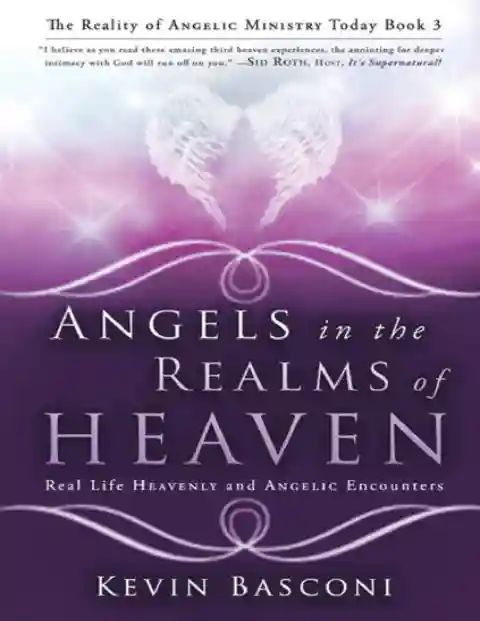
In "Angels In The Realms Of Heaven - The Reality Of Angelic Ministry Today," Kevin Basconi explores the role of angels in the present day and how believers can engage with them. He shares personal encounters with angels and provides insights into their characteristics, functions, and interactions with humans. Basconi emphasizes the importance of recognizing and partnering with angels in spiritual warfare, healing, and other aspects of Christian ministry.

A.W. Pink

A.W. Pink Arthur Walkington Pink (1 April 1886 – 15 July 1952) was an English Bible teacher who sparked a renewed interest in the exposition of Calvinism or Reformed Theology. Little known in his own lifetime, Pink became "one of the most influential evangelical authors in the second half of the twentieth century."[1] Biography Arthur Walkington Pink was born in Nottingham, England, to a corn merchant, a devout non-conformist of uncertain denomination, though probably a Congregationalist.[2] Otherwise, almost nothing is known of Pink's childhood or education except that he had some ability and training in music.[3] As a young man, Pink joined the Theosophical Society, an occult gnostic group in contemporary England, and he apparently rose to enough prominence within its ranks that Annie Besant, its head, offered to admit him to its leadership circle.[4] In 1908 he renounced Theosophy for evangelical Christianity.[5] Desiring to become a minister but unwilling to attend a liberal theological college in England, Pink very briefly studied at Moody Bible Institute in Chicago in 1910 before taking the pastorate of the Congregational church in Silverton, Colorado. In 1912 Pink left Silverton, probably for California, and then took a joint pastorate of churches in rural Burkesville and Albany, Kentucky.[6] In 1916, he married Vera E. Russell (1893–1962), who had been reared in Bowling Green, Kentucky, and Pink's next pastorate was at Scottsville Baptist Church, Scottsville, Kentucky.[7] Then the newlyweds moved in 1917 to Spartanburg, South Carolina, where Pink became pastor of Northside Baptist Church.[8] By this time Pink had become acquainted with prominent dispensationalist Fundamentalists, such as Harry Ironside and Arno C. Gaebelein, and his first two books, published in 1917 and 1918, were in agreement with that theological position.[9] Yet Pink's views were changing, and during these years he also wrote the first edition of The Sovereignty of God (1918), which argued that God did not love sinners who had not been predestined unto salvation, and that He had deliberately created "unto damnation" those who would not accept Christ.[10] Whether because of his Calvinistic views, his nearly incredible studiousness, his weakened health, or his lack of sociability, Pink left Spartanburg in 1919 believing that God would "have me give myself to writing."[11] But Pink then seems next to have taught the Bible—with some success—in California for a tent evangelist named Thompson while continuing his intense study of Puritan writings. In January 1922, Pink published the first issue of Studies in the Scriptures, which by the end of the following year had about a thousand subscribers and which was to occupy most of his time for the remainder of his life and become the source for dozens of books, some arranged from Studies articles after his death.[12] In 1923 Pink suffered a nervous breakdown, and he and his wife lived with friends in Philadelphia until he regained his health. In 1925, the Pinks sailed to Sydney, Australia, where he served as both an evangelist and Bible teacher at the Ashfield Tabernacle. But his impolitic preaching of Calvinist doctrine resulted in a unanimous resolve of the Baptist Fraternal of New South Wales not to endorse him. From 1926 to 1928, Pink served as pastor of two groups of Strict and Particular Baptists.[13] Returning to England, Pink was invited to preach at a pastorless church in Seaton, Devon; but though he was welcomed by some members, the overseers thought his installation as pastor would split the church.[14] In the spring of 1929, Pink and wife returned to her home state of Kentucky where he intended to become pastor of the Baptist church in Morton's Gap. Once again his hopes were unrealized. To a friend he wrote, "I am more firmly convinced today than I was 14 months ago that our place is on the 'outside of the camp.' That is the place of 'reproach,' of loneliness, and of testing."[15] In 1930 Pink was able to start a Bible class in Glendale, California, while also turning down opportunities to speak in some Fundamentalist churches.[16] The following year, the Pinks rented an unpainted wooden house in Union County, Pennsylvania, where a small group met; then in 1933 they moved to York, Pennsylvania. Pink decided that if his ministry was to be totally one of writing, he could do that just as well in England. In September 1934 he and his wife moved to Cheltenham, Gloucestershire, near honorary agents of Studies in the Scriptures. Pink seems to have finally given way to despair. To a friend he wrote "that those of my friends who would dearly like to help me are powerless to do so; while those who could, will not. And in a very few years at most it will be too late. What I have gone through the last seven years is so reacting on my physical and mental constitution, that ere long I shall be incapacitated even if doors should be opened unto me. However, I can see nothing else than to attempt to seek grace to bow to the Lord's sovereign pleasure, and say, 'Not my will, but thine be done.'"[17] In 1936, the Pinks moved to Hove, on the south coast near Brighton. After the death of his father in 1933, Pink received enough of the estate to allow him and his wife to live very simply without financial concerns; and between 1936 until his death in 1952, Pink devoted himself completely to Studies in the Scriptures. Vera believed her husband's almost unrelenting work schedule unhealthy, and she remarkably succeeded in having him take up stamp collecting as a hobby.[18] In 1940, Hove became a regular target of German air raids, and the Pinks moved to Stornoway, Isle of Lewis, Outer Hebrides, Scotland, where they remained for the rest of his life. The island was a bastion of Calvinism, but church services were held mostly in Scots Gaelic, and visitors were not especially welcomed in any case.[19] Pink governed his time in study and writing with "military precision." To a friend he wrote that he went out to shop and get exercise for an hour, six days a week, but that otherwise he never left his study except when working in a small garden. While in Hove, he even published a note in Studies advising subscribers that "it is not convenient for us to receive any visitors, and respectfully ask readers who may visit these parts to kindly refrain from calling upon us, but please note that we are always glad to hear from Christian friends."[20] Rather than attend church, on Sunday mornings, Pink spent time ministering to readers by letter.[21] In 1951 Vera became aware that Pink was failing. He lost weight and was in pain but refused to take any medicine that might dull his mind and hinder him from completing his work. He died on 15 July 1952. His last words were "The Scriptures explain themselves." Pink left enough written material to allow publication of Studies until December 1953.[22] Vera Pink survived her husband by ten years and after his death made new friends and mingled more freely with others.[23] Influence It is alleged that Pink's personality made it difficult for him to have a successful pastoral ministry. He has been criticized for being too individualistic and of too critical a temperament, lacking the benefit of thorough theological discussions with other men of similar gifts. One young pastor, Rev. Robert Harbach who corresponded with Pink for years remembered a very different Pink, who possessed a "pastor's heart." Pink's correspondence with Harbach (until Pink's failing health ended their correspondence in 1949) was warm, heartfelt and fatherly. Early in their correspondence, Pink wrote "I want you to feel perfectly free to call on me for any help I may be able to render you. I am in touch with a number of young pastors, and I deem it part of my work, and a privilege, to offer what advice I can."[24] Pink's acclaimed contemporary D. Martyn Lloyd-Jones received spiritual benefit from reading Pink and recommended him to others. To one young minister, he said, "Don't waste your time reading Barth and Brunner. You will get nothing from them to aid you with preaching. Read Pink."[25] But Lloyd-Jones also said, "If I had behaved as Pink did, I would have achieved nothing. Nothing at all... I had to be very patient and take a very long-term look at things. Otherwise I would have been dismissed and whole thing would have been finished."[26] Furthermore, without the assistance and companionship of his wife, who dedicated herself completely to him and his work, Pink would have (as he freely admitted) "been overwhelmed" and probably would have achieved little even in writing.[27] Theologically Pink was rejected during his lifetime because of his opposition to Arminianism; but after his death, there was a major shift of evangelical opinion towards Calvinistic theology. By 1982, Baker Book House had published 22 of Pink's books and sold 350,000 total copies. Nevertheless, it was Pink's Sovereignty of God that did "more than any other in redirecting the thinking of a younger generation." After Banner of Truth Trust republished it in 1961—modifying it to remove Pink's alleged hyper-Calvinism—the book sold 177,000 copies by 2004.[28] References 7. "NEW LIGHT ON THE EARLY MINISTRY OF A. W. PINK (PART 2)". The Arthur W. Pink Archive. Retrieved 27 June 2020. 13. Murray argues that Pink left the first of these two groups because he was not Calvinistic enough for them because he asserted belief in the "free offer of the gospel and in human responsibility to receive the gospel.", 77-123; R. P. Belcher, "Pink, Arthur Walkington," Timothy Larson, ed., Biographical Dictionary of Evangelicals (Downers Grove, IL: IVP, 2003), 529. Ronald Hanko argues that "Pink never taught that God loves everyone or desires to save everyone, or promises salvation to everyone in the gospel, as the Banner does." Ronald Hanko, "The Forgotten Pink," British Reformed Journal No. 17 (Jan-March 1997), 4. 23. Murray, 283. She was remembered by one of these friends as "an elegant and gracious lady with a radiant expression and a loving and lively interest in people." 28. Murray, 314–15. The Banner of Truth Trust edition has been criticized for omitting nearly half the original work, including three entire chapters. Hanko, "The Forgotten Pink."

If God Approves, Let Men Condemn

It may appear, at first glance, to be an odd text to hang in your bedroom: Blessed are ye, when men shall revile you, and persecute you, and shall say all manner of evil against you falsely, for my sake. Rejoice, and be exceeding glad: for great is your reward in heaven: for so persecuted they the prophets which were before you. (Matthew 5:11–12 KJV) Whereas others might draw from a thousand wells before this one, Susannah Spurgeon framed Jesus’s words to remind her husband, Charles, of Jesus’s upside-down perspective. When his disciples face bitter opposition for his name’s sake, the proper response should be joy. “Spurgeon was slandered in the newspapers, ridiculed by his opponents, and censured by many evangelical ministers.” When we consider this Baptist giant, when we read his stirring sermons, when we remember that his life’s work rivaled that of one hundred men, when we read of the revival and the winning of countless souls to Christ, we can imagine the Prince of Preachers encountering little but unbroken success. Compared with so many of our ministries, his seemed to soar high in the clouds. We rarely consider, as Iain Murray contends, The Forgotten Spurgeon — the Spurgeon who needed Matthew 5:11–12 hanging on his wall. Forgotten Prince The forgotten Spurgeon stood among the tornadoes of several great controversies in his day. His protestation against Arminianism, his disgust at baptismal regeneration, and his resistance to an evangelical unity founded upon fragments of Christian doctrine (known as the Downgrade Controversy) made him the target for many arrows. This Spurgeon, especially at the beginning and end of his ministry, had reason to reckon himself as “the scum of the earth” (24–25). The name Spurgeon, which we regard fondly, was, by estimation of its owner, “kicked about the street like a football” (28). He had occasion to remark in a sermon, “Scarce a day rolls over my head in which the most villainous abuse, the most fearful slander is not uttered against me both privately and by the public press; every engine is employed to put down God’s minister — every lie that man can invent is hurled at me” (63). This Spurgeon was slandered in the newspapers, ridiculed by his opponents, and censured by many evangelical ministers who he anticipated would be his allies. This Spurgeon was a living example of the happy — but often hated — man of God to whom Jesus spoke in the Sermon on the Mount. Fleeing Compromise What can we learn from this forgotten Spurgeon? This Spurgeon can teach us to handle controversy manfully and without compromising. His convictions, which he held to his dying day, cost him dearly. He did not practice that vice he so clearly preached against: “I think there is scarcely a Christian man or woman that has been able to go all the way to heaven and yet quietly hide himself and run from bush to bush, skulking into glory. Christianity and cowardice? What a contradiction in terms!” (“Speak for Yourself — a Challenge”). If we would cast away the temptation to tiptoe into glory, and be of real benefit for Christ’s name in this world, Spurgeon teaches us that we would do well to resist loving our own names, be comfortable in the minority, and recognize (and reject) false unity. 1. Don’t fall in love with your own name. “Let my name perish, but let Christ’s name last forever! Jesus! Jesus! Jesus! Crown him Lord of all!” (43) Spurgeon warns us of falling in love with our own reputations and influence. This self-love, he identified, is a main ingredient in the undoing of the best of us. He exposes the steps to compromise of the person initially used by God: The temptation comes to be careful of the position he has gained, and to do nothing to endanger it. The man, so lately a faithful man of God, compromises with worldlings, and to quiet his own conscience invents a theory by which such compromises are justified and even commended. He receives the praises of “the judicious”; he has, in truth, gone over to the enemy. The whole force of his former life now tells upon the wrong side. (170) How many times have we seen or experienced this drift? First, we are somehow exalted for special use. Then we quietly begin to notice it and relish the attention. Falling in love with recognition, we tighten our grip around our platforms in fear of losing them. We then calculate what we say, filtering out anything that may weaken our influence — including the unfavorable truths of Scripture. And finally, faced with the thing we used to call compromise, we invent reasons to support what we’ve become — why we’ve beaten the sword into a plowshare. “When we begin sharing truth based on how well that truth will be received, we are halfway to compromise.” Fierce loves fixed on unworthy objects mold Christians into cowards. If we have begun to love the music of our own name, manage our brand, or consider our popularity as necessary to the advancement of Christ’s kingdom, we have begun building our own kingdoms. May we say with Spurgeon, “I count my own character, popularity, and usefulness to be as the small dust of the balance compared with fidelity to the Lord Jesus” (219). It is Christ we proclaim, not ourselves (2 Corinthians 4:5). 2. Be comfortable in the minority. “Long ago I ceased to count heads. Truth is usually in the minority in this evil world. I have faith in the Lord Jesus for myself, a faith burned into me as with a hot iron. I thank God, what I believe I shall believe, even if I believe it alone.” (146) Have you ever felt the temptation to count heads — or followers, likes, and shares — to see what you should or should not say? I have. When we begin sharing truth based on how well that truth will be received, we are halfway to compromise. Spurgeon counsels us to consider the cost beforehand: truth is often in the minority; to stand with it means you may stand alone. Yet those who stand for Christ’s truth never truly stand alone. You may go as Esther before the king without kin beside you, resolved that if you perish, you perish; you may preach like Stephen, as crowds press in around you, shutting their ears and hurling stones; you may rebuke King Herod’s adultery alone or say with Paul, “At my first defense no one came to stand by me” (2 Timothy 4:16) — but Christ shall be with you, even until the end of the age (Matthew 28:20). And if your cause is true, you will find, like Elijah, you are not the only one not to bow the knee to Baal (1 Kings 19:14, 18). 3. Recognize false unity. “It is, of course, the most easy to flesh and blood to deal in generalities, to denounce sectarianism, and claim to be of an ultra-catholic spirit; but though rough and rugged, it is required of the loyal servant of King Jesus to maintain all his crown rights and stand up for every word of his laws. Friends chide us and foes abhor us when we are very jealous for the Lord God of Israel, but what do these things matter if the Master approves?” (18) Error loves vagueness. As in Spurgeon’s day, the temptation to tolerate all positions and accept all perspectives on truth is strong in ours. We are told it is prejudiced, narrow, and even unchristian to draw lines. But to Spurgeon, promoting a type of “Christian unity” whose common denominator sinks lower than genuine Christianity in the first place is unacceptable. Unity of Jew and Gentile into one new man is bought with the blood of Christ; unity of gospel truth and gospel untruth is unity brought about by Satan. Orthodox Christianity, he argued, is distinct. Not all views can be true. When the only standard left is for all in the flock to have four legs, wolves and goats stand at ease among us. The trend toward an undoctrinal, atheological, shapeless evangelicalism, beginning in Spurgeon’s day and seemingly ripening in ours, is one of the quickest ways to compromise our fidelity to Christ and witness in the world. “Truth is often in the minority; to stand with it means you may stand alone.” In saying this, Spurgeon did not intend to divide over every possible theological difference — lest every man be an island unto himself. But Spurgeon chafed at minimizing Christian zeal and truth in order to bring together contrasting theologies and to mix liberalism with historic Christianity. We may be called particular or dogmatic, but what do we care if what we promote is the Master’s truth? Though the Heavens Fall “It is yours and mine to do the right though the heavens fall, and follow the command of Christ whatever the consequence may be. “That is strong meat,” do you say? Be strong men, then, and feed thereon.” (171) His beloved wife, who hung Matthew 5:11–12 in their bedroom, said after his death at the age of 57, “His fight for the faith . . . cost him his life.” He fought the good fight of faith, he kept the faith, he finished the race (2 Timothy 4:7), claiming before his death, “My work is done” (173). He lived for his Lord, and now he basks in his presence. To those of us who lag behind him, traversing our own times with all of their challenges and opportunities, temptations and labors, take up his oft-quoted hymn as we continue on in our race of faith: Must I be carried to the skies On flowery beds of ease, While others fought to win the prize And sailed through bloody seas? Since I must fight if I would reign, Increase my courage, Lord! I’ll bear the toil, endure the pain, Supported by thy word. Though the heavens fall, though the earth gives way, though controversy and temptations of spiritual compromise stand before us, may we heed this forgotten Spurgeon, hang Matthew 5:11–12 in our hearts, and live before men and devils with the courage and hope that only Christ supplies. Article by Greg Morse

Feedback
Suggestionsuggestion box
x