

A Cancer Caregiver’s Journey With God Order Printed Copy
- Author: Dr Paul Loh
- Size: 5.14MB | 195 pages
- |
Others like a cancer caregiver’s journey with god Features >>




-160.webp)




-160.webp)
About the Book
"A Cancer Caregiver's Journey with God" is a book that follows Dr. Paul Loh as he cares for his wife during her battle with cancer. Through his experiences, Dr. Loh shares his struggles, faith, and the lessons he learned about God and love. The book offers inspiration and guidance to those who are caring for loved ones with cancer.
Martin and Gracia Burnham
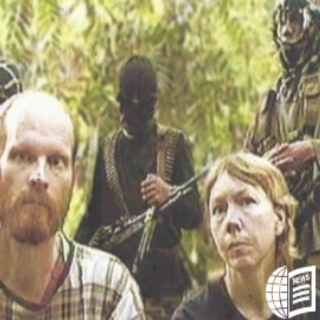 Martin Burnham and Gracia were missionaries who served for 17 years in the Philippines. After their marriage, they underwent hard training in the jungle to prepare themselves to serve in jungle parts. Martin, being a pilot missionary, supported other missionaries who were working among the tribals in jungles. He delivered groceries and medicines to missionaries and tribals and transported sick people to medical facilities. He always had a big heart for tribals and missionaries. Gracia supported him well in the work.
On May 29, 2001, while relaxing at a resort after Martin’s one overseas mission, a Muslim militant group called the Abu Sayyaf Group attacked the resort and abducted the missionary couple and few others for ransom. The missionaries were kept captive for more than a year.
During that one year, the couple went through terrible experiences. They suffered starvation, sleeplessness and sickness, witnessed atrocities of militants and experienced gun battles between militants and the military. Amidst suffering, God was their only hope and strength.
At some point, Gracia was so depressed that although she believed that Christ died for her, she felt God doesn’t love her anymore. Martin said to her “either you believe it all or don’t believe it at all.” They encouraged one another to stand firm in the faith.
Martin Burnham and Gracia ministry in Philippines
Finally, on June 7, 2002, in a rescue operation by the Philippine military, wounded Gracia was rescued. But 42 years old Martin died in the gunfight during the rescue. Later, Gracia went back to America and joined her children.
Gracia did not let her painful experiences depress her and move her away from God. But she used those experiences to encourage others who are going through hardships. She founded the Martin and Gracia Burnham Foundation, which supports missionary aviation and tribal mission work around the world. It also focuses on ministries among Muslims. She forgave who abducted them, visited them in jail and shared Christ’s love. Some of them accepted Christ. Gracia believes that this may be God’s great purpose behind their suffering.
Martin Burnham and Gracia were missionaries who served for 17 years in the Philippines. After their marriage, they underwent hard training in the jungle to prepare themselves to serve in jungle parts. Martin, being a pilot missionary, supported other missionaries who were working among the tribals in jungles. He delivered groceries and medicines to missionaries and tribals and transported sick people to medical facilities. He always had a big heart for tribals and missionaries. Gracia supported him well in the work.
On May 29, 2001, while relaxing at a resort after Martin’s one overseas mission, a Muslim militant group called the Abu Sayyaf Group attacked the resort and abducted the missionary couple and few others for ransom. The missionaries were kept captive for more than a year.
During that one year, the couple went through terrible experiences. They suffered starvation, sleeplessness and sickness, witnessed atrocities of militants and experienced gun battles between militants and the military. Amidst suffering, God was their only hope and strength.
At some point, Gracia was so depressed that although she believed that Christ died for her, she felt God doesn’t love her anymore. Martin said to her “either you believe it all or don’t believe it at all.” They encouraged one another to stand firm in the faith.
Martin Burnham and Gracia ministry in Philippines
Finally, on June 7, 2002, in a rescue operation by the Philippine military, wounded Gracia was rescued. But 42 years old Martin died in the gunfight during the rescue. Later, Gracia went back to America and joined her children.
Gracia did not let her painful experiences depress her and move her away from God. But she used those experiences to encourage others who are going through hardships. She founded the Martin and Gracia Burnham Foundation, which supports missionary aviation and tribal mission work around the world. It also focuses on ministries among Muslims. She forgave who abducted them, visited them in jail and shared Christ’s love. Some of them accepted Christ. Gracia believes that this may be God’s great purpose behind their suffering.
host as you are - practicing hospitality as a family
Love God and love your neighbor . This is the Butterfield family motto. It makes us humble, messy, and on the frontline in our neighborhood. And being on the frontline isn’t pretty. “Hospitality means being profoundly unselfish, and small children need help to see the blessing in this.” Take for example last March, when the pandemic hit. We were supposed to batten down the hatches, disinfect everything, including the family cat, and remain socially distanced at all times, but schools closed before parents were home from work. So after the first week of lockdown, I looked like the little old lady who lived in the shoe. Our house was open, boisterous, noisy, and full of students who would have been in class. I could visualize getting arrested in my apron for violating governor’s stay-at-home and social-distancing orders. While that hasn’t happened, other things have happened that have made me realize that children play a vital and central role in Christian hospitality. Indeed, I couldn’t practice hospitality without them. Consider six touch points for children’s central role in Christian hospitality. 1. Hospitality is a mission of the church. Sometimes we American Christians privatize hospitality in false ways. Hospitality isn’t a Butterfield thing. It’s a church thing. And children are a blessed part of our church. Jesus loves children and so do we. As the church seeks to evangelize the world, the homes of church members become gospel outposts, places where we bring the gospel to the neighborhood. This is very good news for people with young children. It means that the burden is not on you to be different. It means that your unsaved neighbors will benefit from seeing that you also decorate with plastic dinosaurs and LEGOs. And it also means that you do not always have to be in hospitality mode. As Edith Schaeffer said, doors have hinges for a reason. 2. Hospitality puts the church on the frontline. When inviting unsaved neighbors over, Kent and I always invite our church family, too. The more the merrier, especially in the summer. Your unsaved neighbors will benefit from seeing many different models of the covenant family, including singles (whose church membership renders them a covenant family) and older people. Many Christian hands make the care of little ones easier. Also, with the church family on deck, your children will not feel neglected or isolated as they participate in hospitality. Hospitality means being profoundly unselfish, and small children need help to see the blessing in this. 3. Hospitality puts hot-button topics on the frontline. Our family is made by adoption and all of our children are biracial. Christians know that oppression, violence, and discrimination are sin, but we do not believe that racism, for example, is itself a “meta-narrative” — a paradigm that declares all white people are racists, all black people victims, all social structures complicit in a white hegemonic hatred machine, and any white family who has adopted children of color as colonizing micro-aggressionists. If these things were true, then the Butterfield family doesn’t exist. And yet here we stand, opening the door to everyone. When your family is on the frontline, it has the opportunity to showcase the love of Christ, the purpose of natural law, the harmony of the biblical callings of male and female, and the shallowness of the modern social construction of race. It exposes idols and tears down strongholds and reveals how the love of Christ transcends sociology (shocking as this may be). 4. Hospitality builds relationships within the family. Hospitality is a joy for small children when they get to have some agency in the process. Especially when you are opening your home to others in the neighborhood with small children, your children should be enlisted as hosts. They can set the kids’ table and make the kids’ menu. And with platters of chicken nuggets, watermelon, and popsicles, don’t be surprised if some of the neighborhood dads are found sampling the children’s fare. Your children can also be prepared to think like Jesus would about having children over who haven’t gone to church and don’t (yet) know Jesus. Your children need to be guided in how to be good hosts who lead and set examples (and don’t follow bad ones). And you should set clear boundaries for safety. In our house, there is no playing in children’s bedrooms. Ever. We have a big back yard with a trampoline, and we think that a knock on the head is safer than anything that happens behind a closed door. Working together to have a hospitable home also puts all hands on deck — from the smallest to the largest. Children can’t clean the house as well as you can, but even a small child can sweep up tumbleweeds of dog hair and throw trash in the kitchen can. Value their contributions. 5. Hospitality cares about what neighbors care about. When you open your home to neighbors, you set a table that welcomes them. You ask them about food allergies and other sensitivities. You remember these things and you go out of your way to care about what they care about. You practice becoming all things to all people in the hopes of saving some (1 Corinthians 9:22). You help your children to respect differences that they don’t understand (yet). 6. Hospitality is all for one and one for all. If you have small children whose bedtime is 7:30, consider having neighbors over for Saturday lunch instead of Saturday dinner. Don’t think of your children as a burden — ever. Work with the capacities, limitations, and skills of each member of your family. Be a team. Be in sync with each other’s rhythms and needs. “Hospitality isn’t a performance. It’s a Christian grace that involves the whole family.” And when guests arrive, don’t segregate the children, but integrate them. We live in a world that segregates everything. Show the beauty in working together. And at the end of the meal, the older children can put the dishes in the sink and distribute the Bibles. The little children can play with LEGOs on the floor while the family patriarch opens the Bible to the watching world and prays for the power of the resurrected Christ to guide, encourage, correct, and save. Your children will grow up watching you plead for your neighbors to put their faith in Christ. They will inherit an integrated faith, not a compartmentalized one, where parents act like Christians from ten to noon on Sunday, but the rest of the time operate in an orbit of selfish ambition. Hospitality isn’t a performance. It’s a Christian grace that involves the whole family.