
Others like experiencing the presence of god Features >>
Knowing The Heart Of God - A Year Of Daily Readings
Practicing The Presence
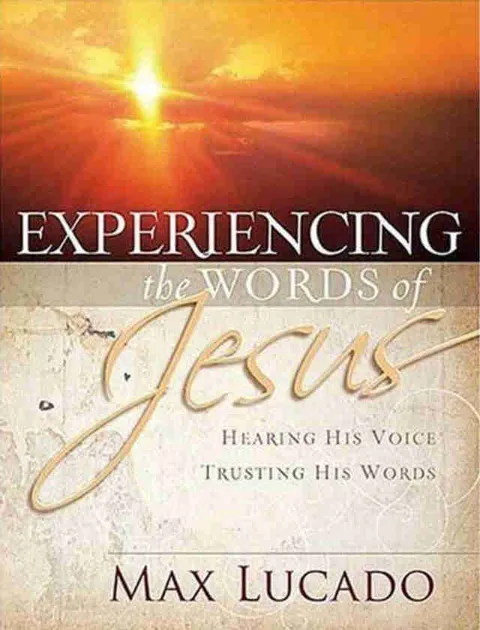
Experiencing The Words Of Jesus
Experiencing The Depths Of Jesus Christ
The Pursuit Of God

The Power Of God's Names

Gleanings In The Fields Of Boaz
The Pleasures Of God: Meditations On God’s Delight
Streams In The Desert: Morning And Evening. 365 Devotions
Hungry For More Of Jesus
About the Book
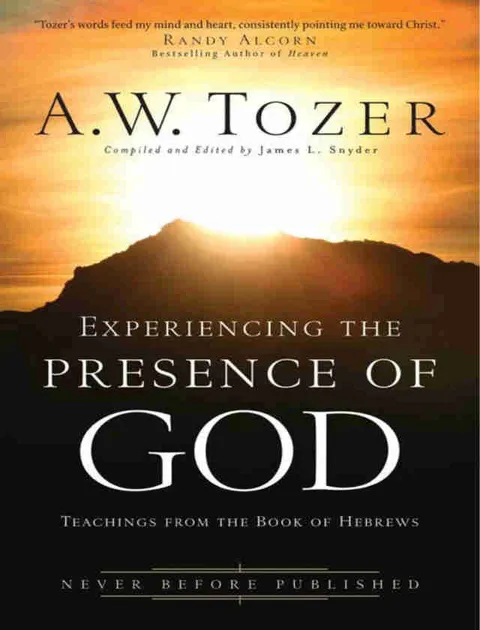
"Experiencing the Presence of God" by A.W. Tozer explores the importance of cultivating a deep and personal relationship with God through prayer, worship, and spiritual disciplines. Tozer emphasizes the need for believers to seek God's presence in their lives and to continually pursue a closer connection with Him. The book encourages readers to prioritize their relationship with God above all else and to experience His presence in every aspect of their lives.
Aimee Semple McPherson
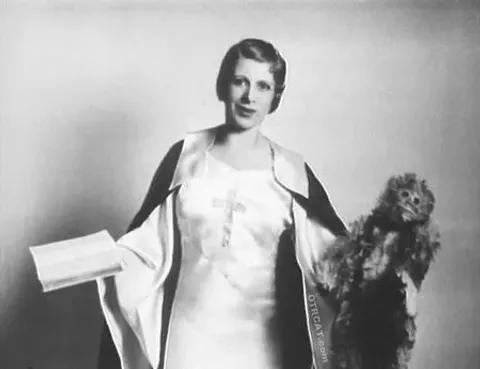 Aimee Semple McPherson was born on Oct. 9, 1890, on a farm in Salford Ontario, Canada. Her father, James Kennedy, was a farmer and came from a Methodist background. Her mother, Mildred, known as “Millie,” came from a Salvation Army background.
Although she was raised in a Christian home, she began to question the Bible during her teen years.
When she was 17, she attended a revival Pentecostal meeting presented by evangelist Robert Semple, where she heard the message of repentance. He also spoke of baptism in the Holy Spirit, an experience for which she hungered. After receiving the infilling of the Holy Spirit, she also was filled with a great love and compassion for souls and a fervent passion to serve the Lord throughout her whole life.
The meeting Aimee attended changed her life not only spiritually but also romantically. The evangelist Robert Semple later become Aimee’s husband. They were married when she was 18. Their ministry desires were compatible. After their ministry trips in Chicago and the Ingersoll area, they headed to China as missionaries.
In 1910 while in China, Robert and Aimee contracted Malaria within months of arriving in Hong Kong. Robert didn’t survive, leaving Aimee pregnant and a widow at 19. When her daughter, Roberta Star, was a month old, Aimee returned to United States to raise her. Aimee and Roberta lived in New York with Aimee’s mother.
She assisted her mother raising money for the Salvation Army. It was there she met and married a Christian businessman named Harold McPherson. They had a son, Rolf Kennedy McPherson. After a decline in health, two major surgeries and a near-death experience, God asked her one last time, “Now, will you go?” She answered yes to God’s call and almost immediately was healed. She never again questioned the call to preach the gospel.
Aimee is known for founding the Foursquare Gospel Church in 1918. She also was a woman ahead of her time, possessing boldness in her speaking ability and creative ways to communicate the gospel.
The name Foursquare Gospel originated from the Book of Ezekiel. It represents the four phases of the gospel of Jesus Christ. In the face of the Man, she saw Jesus our Saviour. In the face of the lion, she saw Jesus the mighty Baptiser with the Holy Spirit and fire. In the face of the ox, she saw Jesus the Great Burden Bearer. In the face of an eagle, she saw Jesus the coming King, who will return in power and glory. It was, in Aimee’s opinion, “a perfect gospel. A complete gospel for body, for spirit and for eternity.”
Her ministry was dynamic. She witnessed thousands saved and healed during her evangelistic meetings. Being creative and theatrical, Aimee used drama, music and opera to appeal to the audience. Bands, choirs and other crowd-pleasing touches enhanced her dynamic preaching. Though she was well-versed in the Bible, Aimee’s success wasn’t based on her knowledge, but rather the delivery of her messages.
She also was known as a faith healer, with claims of physical healing occurring during her meetings. Her faith healing demonstrations were written about extensively in the media, as they were a large focus of her early ministry. Aimee was an evangelistic pioneer, determined to spread the message of the Pentecostal faith, and used her fervour and flamboyance to win a huge following.
She had achieved what no one had yet done in ministry, which was to build a 5,000-seat auditorium in an influential area of Los Angeles. This paved the way for other female evangelists during a time when women were not accepted in the pulpit. She also launched the first Christian radio station and established a Bible college. By 1917, she had started her own magazine The Bridal Call, for which she wrote many articles about women’s roles in religion; she portrayed the link between Christians and Jesus as a marriage bond.
Jan. 1, 1923, the new Angelus Temple was opened in a flamboyant style. Aimee was seated on a red velvet throne dressed in a nurse’s uniform and cape. Accompanying her were 200 singers, three bands, two orchestras and six quartets. The Angelus Temple was featured on a float in Pasadena’s Tournament of Roses parade, while the extravagant dedication service was given full coverage in The New York Times. What became the home of The Church of the Foursquare Gospel filled four times each Sunday and twice weekly. Aimee also ministered at highly sought-after healing services during the week.
Reporters marveled at her oral skills, saying, “Never did I hear such language from a human being. Without one moment’s intermission, she would talk from an hour to an hour and a half, holding her audience spellbound.” Rather than using fire-and-brimstone preaching, Aimee resorted to a style of joyous celebration, representing the loving face of God.
She also brought old-time religion into the modern age, using illustrated sermons to help people understand the gospel better. Also, stage productions were incorporated, drawing people who usual didn’t attend church. In an era prior to television, these services proved entertaining, and she used this method to present the message of salvation through faith in Jesus.
Aimee welcomed all walks of life. She preached to the high class of society, as well as the poor and disadvantaged. She treated everyone equally regardless of race, gender or status.
In the 1920s, Aimee became a well-known voice among civic leaders, politicians, actors and actresses, and pastors from various denominations. Her sermons were reprinted in hundreds of newspapers in Canada, the United States and Mexico and were read by millions. In 1927, she opened a commissary to feed the marginalized and supply them with clothing and other necessities. Aimee set up a 24/7 soup kitchen at her temple in 1936 to help families through the Great Depression .She also became involved with war bond rallies and linked religion to patriotism in her sermons when America joined the Second World War in 1941.
Aimee’s legacy is threefold. Using the dramatic arts to reach the lost (an innovative tool) and the latest technology to spread the gospel. She reached out to the poor, helping thousands in the Los Angeles area who were starving. She taught a full-gospel message and regularly saw thousands of healings and miracles in her meetings.
Aimee passed away due to an accidental overdose in 1944 and was buried in Forest Lawn Memorial Park Cemetery in California. Her son, Rolf, has kept her memory and ministry alive by carrying the ministry for 40 four years. The Foursquare church is still standing strong with 8 million members worldwide.
Aimee Semple McPherson was born on Oct. 9, 1890, on a farm in Salford Ontario, Canada. Her father, James Kennedy, was a farmer and came from a Methodist background. Her mother, Mildred, known as “Millie,” came from a Salvation Army background.
Although she was raised in a Christian home, she began to question the Bible during her teen years.
When she was 17, she attended a revival Pentecostal meeting presented by evangelist Robert Semple, where she heard the message of repentance. He also spoke of baptism in the Holy Spirit, an experience for which she hungered. After receiving the infilling of the Holy Spirit, she also was filled with a great love and compassion for souls and a fervent passion to serve the Lord throughout her whole life.
The meeting Aimee attended changed her life not only spiritually but also romantically. The evangelist Robert Semple later become Aimee’s husband. They were married when she was 18. Their ministry desires were compatible. After their ministry trips in Chicago and the Ingersoll area, they headed to China as missionaries.
In 1910 while in China, Robert and Aimee contracted Malaria within months of arriving in Hong Kong. Robert didn’t survive, leaving Aimee pregnant and a widow at 19. When her daughter, Roberta Star, was a month old, Aimee returned to United States to raise her. Aimee and Roberta lived in New York with Aimee’s mother.
She assisted her mother raising money for the Salvation Army. It was there she met and married a Christian businessman named Harold McPherson. They had a son, Rolf Kennedy McPherson. After a decline in health, two major surgeries and a near-death experience, God asked her one last time, “Now, will you go?” She answered yes to God’s call and almost immediately was healed. She never again questioned the call to preach the gospel.
Aimee is known for founding the Foursquare Gospel Church in 1918. She also was a woman ahead of her time, possessing boldness in her speaking ability and creative ways to communicate the gospel.
The name Foursquare Gospel originated from the Book of Ezekiel. It represents the four phases of the gospel of Jesus Christ. In the face of the Man, she saw Jesus our Saviour. In the face of the lion, she saw Jesus the mighty Baptiser with the Holy Spirit and fire. In the face of the ox, she saw Jesus the Great Burden Bearer. In the face of an eagle, she saw Jesus the coming King, who will return in power and glory. It was, in Aimee’s opinion, “a perfect gospel. A complete gospel for body, for spirit and for eternity.”
Her ministry was dynamic. She witnessed thousands saved and healed during her evangelistic meetings. Being creative and theatrical, Aimee used drama, music and opera to appeal to the audience. Bands, choirs and other crowd-pleasing touches enhanced her dynamic preaching. Though she was well-versed in the Bible, Aimee’s success wasn’t based on her knowledge, but rather the delivery of her messages.
She also was known as a faith healer, with claims of physical healing occurring during her meetings. Her faith healing demonstrations were written about extensively in the media, as they were a large focus of her early ministry. Aimee was an evangelistic pioneer, determined to spread the message of the Pentecostal faith, and used her fervour and flamboyance to win a huge following.
She had achieved what no one had yet done in ministry, which was to build a 5,000-seat auditorium in an influential area of Los Angeles. This paved the way for other female evangelists during a time when women were not accepted in the pulpit. She also launched the first Christian radio station and established a Bible college. By 1917, she had started her own magazine The Bridal Call, for which she wrote many articles about women’s roles in religion; she portrayed the link between Christians and Jesus as a marriage bond.
Jan. 1, 1923, the new Angelus Temple was opened in a flamboyant style. Aimee was seated on a red velvet throne dressed in a nurse’s uniform and cape. Accompanying her were 200 singers, three bands, two orchestras and six quartets. The Angelus Temple was featured on a float in Pasadena’s Tournament of Roses parade, while the extravagant dedication service was given full coverage in The New York Times. What became the home of The Church of the Foursquare Gospel filled four times each Sunday and twice weekly. Aimee also ministered at highly sought-after healing services during the week.
Reporters marveled at her oral skills, saying, “Never did I hear such language from a human being. Without one moment’s intermission, she would talk from an hour to an hour and a half, holding her audience spellbound.” Rather than using fire-and-brimstone preaching, Aimee resorted to a style of joyous celebration, representing the loving face of God.
She also brought old-time religion into the modern age, using illustrated sermons to help people understand the gospel better. Also, stage productions were incorporated, drawing people who usual didn’t attend church. In an era prior to television, these services proved entertaining, and she used this method to present the message of salvation through faith in Jesus.
Aimee welcomed all walks of life. She preached to the high class of society, as well as the poor and disadvantaged. She treated everyone equally regardless of race, gender or status.
In the 1920s, Aimee became a well-known voice among civic leaders, politicians, actors and actresses, and pastors from various denominations. Her sermons were reprinted in hundreds of newspapers in Canada, the United States and Mexico and were read by millions. In 1927, she opened a commissary to feed the marginalized and supply them with clothing and other necessities. Aimee set up a 24/7 soup kitchen at her temple in 1936 to help families through the Great Depression .She also became involved with war bond rallies and linked religion to patriotism in her sermons when America joined the Second World War in 1941.
Aimee’s legacy is threefold. Using the dramatic arts to reach the lost (an innovative tool) and the latest technology to spread the gospel. She reached out to the poor, helping thousands in the Los Angeles area who were starving. She taught a full-gospel message and regularly saw thousands of healings and miracles in her meetings.
Aimee passed away due to an accidental overdose in 1944 and was buried in Forest Lawn Memorial Park Cemetery in California. Her son, Rolf, has kept her memory and ministry alive by carrying the ministry for 40 four years. The Foursquare church is still standing strong with 8 million members worldwide.
Some Wounds Never Heal
I didn’t realize how disorienting grief can be. In the aftermath of a dearly loved one’s death, I felt like I was living two worlds at once: one with him, and one without. My grandfather, more like a father, died on a Tuesday this past December. He “died on a Tuesday” summarizes the concussion. He died — no longer will I see him poke his head up from his garden, or sit in the living room as he drinks in classical music. No longer will we go see movies together, study the Bible together, or go hiking up north. Death has hidden his face. And yet, it was a Tuesday . An hour after weeping with family at his side as he took his last breaths, I remember the profane intrusion: What would be for dinner? Life, in one form or fashion, would continue without him. Tuesdays always hurry towards Wednesday. Time does not pay its respects for anyone. Our loved ones, when they die, die on Tuesdays. We Are Not the Same Their deaths, on their Tuesdays, affect our remaining Tuesdays after. Life has changed. We are changed. The death of a loved one is a blade that pierces beneath the armor, an arrow that lodges down in the soul. It brings a hurt we cannot defend, a pain we cannot forget, an injury which will never fully heal. “Alas! there are some wounds that cannot be wholly cured,” said Gandalf. “I fear it may be so with mine,” said Frodo. “There is no real going back. Though I may come to the Shire, it will not seem the same; for I shall not be the same. I am wounded with knife, sting, and tooth, and a long burden. Where shall I find rest?” Gandalf did not answer. “That old wound may never heal in this life, but Jesus will comfort us day by day and glorify our scars in the next.” Though life goes on without noticing our loss — daily broadcasts continue, people shop at grocery stores, buses come and go — we are no longer the same. The ache will not finally leave, the groan not silence, the limp not amend until we remove the tattered garments of this life. They are no longer with us. The loveliness of their memory is a beautiful, but long, burden cast over our remaining days. The streets we walked are haunted with laughter. We glance at their empty-chair out of habit. Though life for us has not ended, it has changed. There is no real going back. Death’s Prolonged Victims Death, I realize, often inflicts its greatest havoc upon its survivors; its primary victims do not yet lie in the grave. When my grandfather departed in the Lord, he went to a place where pain and suffering are forbidden, while our grief, on that same day, deepened. His tears finally wiped away as ours sprung forth. He is healed. Our bleeding goes on. We, not the departed, are left to wonder with the prophet, “Why is my pain unceasing, my wound incurable, refusing to be healed?” (Jeremiah 15:18). Our grief refuses to be healed, as C.S. Lewis describes, after the death of his wife, in A Grief Observed : Tonight all the hells of young grief have opened again. . . . In grief nothing “stays put.” One keeps on emerging from a phase, but it always recurs. Round and round. Everything repeats. . . . How often . . . will vast emptiness astonish me like a complete novelty and make me say, “I never realized my loss till this moment”? The same leg is cut off time after time. The first plunge of the knife into the flesh is felt again and again. Dying can be an ugly thing. But for many, the knife enters once and releases its victim. But for those left behind, the stab is repetitive. Death not only claims its victims but torments their loved ones. Where, if anywhere, shall we find rest? Pierced with Mary This heart-stabbing we feel is owned, not avoided, in the Scriptures. For one, this blade was foretold to pierce Mary decades before its advent. As Mary marveled at the prophesy given by Simeon concerning her newborn son — that he would be a light for the Gentiles and glory for Israel (Luke 2:29–32) — her wonder was interrupted by a prophesy concerning her as well: Behold, this child is appointed for the fall and rising of many in Israel, and for a sign that is opposed (and a sword will pierce through your own soul also), so that thoughts from many hearts may be revealed. (Luke 2:34–35) A sword will pierce through your own soul also. Jesus would be pierced, and Mary also . The blade entered later in the Gospels, “standing by the cross of Jesus were his mother and his mother’s sister, Mary the wife of Clopas, and Mary Magdalene” (John 19:25). She stood with her son and watched the horrible sight — she stood valiantly as the blade went in. Her beloved son, crucified upon a Roman tree in infamy and shame. The child to whom she spoke baby talk now groaned in unforgettable anguish. The child she swaddled, nursed, and held, now wrapped in death, nursed by anguish, and held up by nails which stapled his flesh to wood. “Death brings a hurt we cannot defend, a pain we cannot forget, an injury which will never fully heal.” How far through did it run when she heard him gasp through suffocation one last time on her behalf, “Woman, behold, your son!” Then he said to the disciple, “Behold, your mother!” (John 19:26–27). In his dying breath, under the wrath of men and the wrath of God, he considered her well-being. Nails had pierced his hands and feet, and a spear now pierced his side, while a sword pierced her soul. Where Can We Find Rest? I do not mean to normalize the death of God’s own Son — it has no rival. His death is more horrific, more unthinkable, more grievous than the summation of every other death in history. But we know the soul-piercing effect of this blade when others have died as well. We see its sharpness pierce speech for seven days in the ash heap with Job and climb into the tears of Jesus at the tomb of Lazarus. And yet, while the death of our loved ones in the Lord constitute a heavy blow, it is precious in the eyes of our Father. “Precious in the sight of the Lord is the death of his saints” (Psalm 116:15). And the reason for the preciousness is also foretold in the same verse as the piercing of soul. “Behold, this child is appointed for the fall and rising of many in Israel” (Luke 2:34). The anastasis , the resurrection of many. Death for God’s people is precious only because Mary’s son was appointed for their resurrection. He is the Resurrection and the Life. Death will not hide faces for long. Life After the Sword We may never return to life as it once was. That’s okay. But we must never let the old ache stop us from living. Wednesday must follow Tuesday. Here, John Piper’s counsel is timeless: “Occasionally, weep deeply over the life you hoped would be. Grieve the losses. Then wash your face. Trust God. And embrace the life you have.” Frodo asked what so many of us with missing loved ones do: Where can I find rest? Gandalf did not answer. Jesus does: “Come to me, all who labor and are heavy laden, and I will give you rest. Take my yoke upon you, and learn from me, for I am gentle and lowly in heart, and you will find rest for your souls ” (Matthew 11:28–29). We must go to him moment by moment, groan by groan, tear by tear. That old wound may never heal in this life, but Jesus will comfort us day by day and glorify our scars in the next.