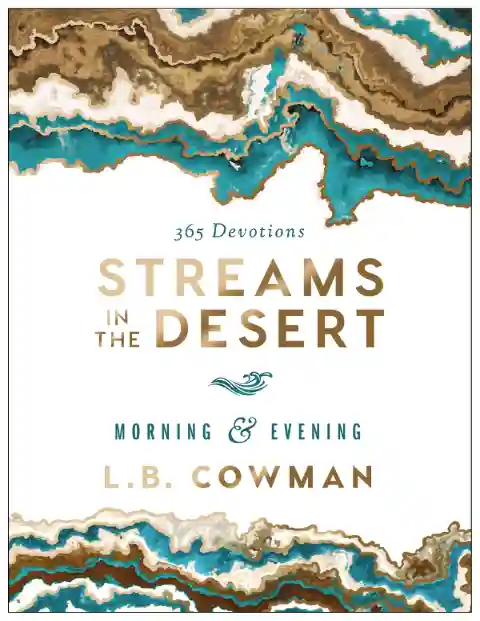

Streams In The Desert: Morning And Evening. 365 Devotions Order Printed Copy
- Author: L. B. Cowman
- Size: 12.88MB | 1389 pages
- |
Others like streams in the desert: morning and evening. 365 devotions Features >>

-160.webp)





About the Book
"Streams in the Desert: Morning and Evening" is a devotional book that offers daily reflections, prayers, and scriptures for each day of the year. The author, L.B. Cowman, draws on her personal experiences and observations to provide readers with inspiration, encouragement, and spiritual guidance to help navigate life's challenges and find solace in God's presence. This book is designed to offer comfort and hope in times of uncertainty and to help readers deepen their faith and trust in God.
John G. Lake
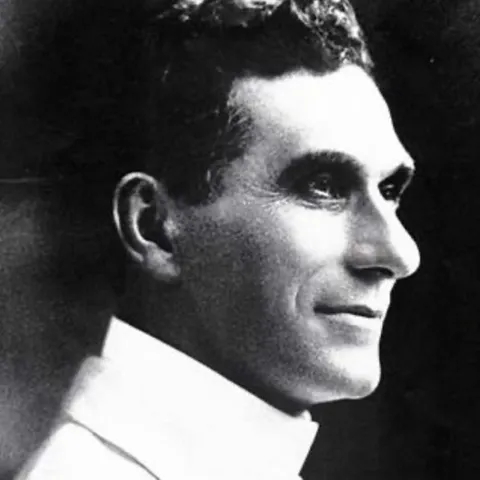 John G. Lake was born in Ontario, Canada on March 18th, 1870. He was a family man, person of integrity, honor, a savvy businessman and a good father. If you knew him you wouldn’t otherwise know that he would soon become one of the greatest men of God the world would ever know. He had a genuine love for the Lord Jesus and was known by his friends as a man who dedicated himself to intimacy with The Lord. It was out of this place that he loved his wife, was a man of integrity and built a very successful business career. To give you perspective, by 1905 John G Lake was making $50,000 per year this sum would be like upwards of 1.3 million dollars per year annually today. John grew up in a family environment which was plagued with sickness and death, it is said that his earliest memories were of sickness, death and funerals. Lake was from a large family, he had 16 siblings, 8 of which tragically died of various diseases. It is no coincidence that “the man of healing” was tormented from a young age with death and disease. The enemy will often oppose destinies with radical circumstances through a distortion of the very thing that we are called to walk in. Lake Was exposed to dramatic healing when he visited John Alexander Dowie’s ministry and was, in prayer, instantly healed of a rheumatism which had caused his legs to grow incorrectly. Just two short years into their marriage, Jennie Lake was diagnosed with tuberculosis and heart disease. Over the next couple of years, the condition worsened and the doctors resigned to the fact that it was only a matter of time before she would die. John allowed this situation to provoke him into faith, after being exposed to such death and disease from a young age he had a hatred for such things. When he would read the word of God he saw that his Christian experience was less than the promised “power of the Holy Spirit”. As Jennie was on her deathbed and perhaps taking her final breaths Lake was overcome with anger over sickness and threw his bible against the fireplace mantle! When he went to pick up his bible it was opened to Acts chapter 10:38 which says: "God anointed Jesus of Nazareth with the Holy Ghost and with power: who went about doing good, and healing all that were oppressed of the devil; for God was with him.” Lake had a surge of faith in that moment and sent a telegram to Dowie asking him to pray. Within an hour of Dowie praying she was fully healed! Not long after Jennie was healed, God began to speak to Lake about going into full time ministry. After some time of contemplation and seeking the Lord, God confirmed to John and Jennie separately that they were to move to South Africa to begin their life of ministry. John and Jennie then gave away all that they had, John forsook his mega-salary and they went on their way alongside some of their friends as ministry partners.
When they arrived in South Africa, they had no money. The problem was, that they needed at least $125 in order to clear customs. they nervously waited for their turn in line, rehearsing what they would say to the immigration officer They were in desperate need of a miracle, as the law read that they would be subject to deportation as quickly as they arrived in South Africa. Just as they were about the get to the front of the line, John felt a tap on his shoulder… A man was standing behind John and said “excuse me sir, can I have a word with you?” John nervously steps out of line at the man’s request and the man said “when I saw you and your family in line, the Lord told me to give you $200 cash”. The Lord provided just enough money for John and his family to enter the country. But their needs didn’t stop there. The Lakes and their crew had no ministry contact in Johannesburg. Soon after they cleared customs, a woman approached John’s friends and asked how many people are in their family, when they told her, she responded “no, not you” and went over to John and asked the same question. John replied “9” and she said “you’re the ones!” She went on to tell John that the Lord had spoken to her last night that she was to give her home to a family of 9 people who are coming from America to do God’s work. John, Jennie and their crew rejoiced in the dramatic provision of the Lord. Their time in South Africa was marked with waves of revival, there were multitudes saved, healed and delivered over the course of their 5 year ministry tour in South Africa.
By far my favorite story from this season of Revival takes place shortly after the Lake family and their team arrived in South Africa. A mighty plague was sweeping through the nation, the death count was climbing dramatically. So much so that there was a surplus of corpses who were victims of the plague and there was no one to bury the dead; if someone was to come in contact with a dead body they would most certainly become infected and their death sentence would immediately begin. John G. Lake astounded the medical officials because he, without any gloves or protective clothing began burying the dead. Physicians in a panic approached John and rebuked him for coming in contact with the dead, John boldly responded "when the disease comes in contact with my skin, you can watch it die". The doctors thought he was insane, so he challenged them to put a drop of the plague on his skin and watch it under a microscope. When they did so, John was right! The plague cells literally burned up the second they came in contact with his skin!
It is tough to understand what would happen towards the end of the Lake’s missionary journey in Africa. One day while John was away on a ministry trip, his wife Jennie suddenly passed away. The cause of her death was malnutrition and exhaustion. It wasn’t uncommon for the sick and broken to line the lawn of John G Lake’s home and Jennie, as an act of sacrifice, gave away all their food and any resources she could to the broken which frequented their house.
Although John and Jennie’s faith and sacrifice is commendable we must learn from this fatal mistake. John’s priorities clearly became altered as the demand for ministry raged on. He failed to guard and keep the very precious gift that God had given him, he allowed the demands of ministry to distract him from the needs of his family unto the tragic and preventable death of his wife. In the wake of Jennie’s death their children became bitter with John and subsequently God. Some of his children left the faith and the most recent accounts of them suggest that they died not following Christ. To this day some of John’s great grandchildren do not follow the Lord. John’s failure to obey the basic command of scripture for “husbands to love their wives as Christ loves the church” and his preoccupation with the demands of ministry opened up the door for the enemy to ravage his family. After Jennie’s death John moved back to the United States and remarried. He would then pioneer his famous healing ministry based out of Spokane Washington. Unfortunately John did not learn his lesson the first time, in the midst of more flames of revival he continued to be a poor father, emotionally disconnected from his children.
John G. Lake was born in Ontario, Canada on March 18th, 1870. He was a family man, person of integrity, honor, a savvy businessman and a good father. If you knew him you wouldn’t otherwise know that he would soon become one of the greatest men of God the world would ever know. He had a genuine love for the Lord Jesus and was known by his friends as a man who dedicated himself to intimacy with The Lord. It was out of this place that he loved his wife, was a man of integrity and built a very successful business career. To give you perspective, by 1905 John G Lake was making $50,000 per year this sum would be like upwards of 1.3 million dollars per year annually today. John grew up in a family environment which was plagued with sickness and death, it is said that his earliest memories were of sickness, death and funerals. Lake was from a large family, he had 16 siblings, 8 of which tragically died of various diseases. It is no coincidence that “the man of healing” was tormented from a young age with death and disease. The enemy will often oppose destinies with radical circumstances through a distortion of the very thing that we are called to walk in. Lake Was exposed to dramatic healing when he visited John Alexander Dowie’s ministry and was, in prayer, instantly healed of a rheumatism which had caused his legs to grow incorrectly. Just two short years into their marriage, Jennie Lake was diagnosed with tuberculosis and heart disease. Over the next couple of years, the condition worsened and the doctors resigned to the fact that it was only a matter of time before she would die. John allowed this situation to provoke him into faith, after being exposed to such death and disease from a young age he had a hatred for such things. When he would read the word of God he saw that his Christian experience was less than the promised “power of the Holy Spirit”. As Jennie was on her deathbed and perhaps taking her final breaths Lake was overcome with anger over sickness and threw his bible against the fireplace mantle! When he went to pick up his bible it was opened to Acts chapter 10:38 which says: "God anointed Jesus of Nazareth with the Holy Ghost and with power: who went about doing good, and healing all that were oppressed of the devil; for God was with him.” Lake had a surge of faith in that moment and sent a telegram to Dowie asking him to pray. Within an hour of Dowie praying she was fully healed! Not long after Jennie was healed, God began to speak to Lake about going into full time ministry. After some time of contemplation and seeking the Lord, God confirmed to John and Jennie separately that they were to move to South Africa to begin their life of ministry. John and Jennie then gave away all that they had, John forsook his mega-salary and they went on their way alongside some of their friends as ministry partners.
When they arrived in South Africa, they had no money. The problem was, that they needed at least $125 in order to clear customs. they nervously waited for their turn in line, rehearsing what they would say to the immigration officer They were in desperate need of a miracle, as the law read that they would be subject to deportation as quickly as they arrived in South Africa. Just as they were about the get to the front of the line, John felt a tap on his shoulder… A man was standing behind John and said “excuse me sir, can I have a word with you?” John nervously steps out of line at the man’s request and the man said “when I saw you and your family in line, the Lord told me to give you $200 cash”. The Lord provided just enough money for John and his family to enter the country. But their needs didn’t stop there. The Lakes and their crew had no ministry contact in Johannesburg. Soon after they cleared customs, a woman approached John’s friends and asked how many people are in their family, when they told her, she responded “no, not you” and went over to John and asked the same question. John replied “9” and she said “you’re the ones!” She went on to tell John that the Lord had spoken to her last night that she was to give her home to a family of 9 people who are coming from America to do God’s work. John, Jennie and their crew rejoiced in the dramatic provision of the Lord. Their time in South Africa was marked with waves of revival, there were multitudes saved, healed and delivered over the course of their 5 year ministry tour in South Africa.
By far my favorite story from this season of Revival takes place shortly after the Lake family and their team arrived in South Africa. A mighty plague was sweeping through the nation, the death count was climbing dramatically. So much so that there was a surplus of corpses who were victims of the plague and there was no one to bury the dead; if someone was to come in contact with a dead body they would most certainly become infected and their death sentence would immediately begin. John G. Lake astounded the medical officials because he, without any gloves or protective clothing began burying the dead. Physicians in a panic approached John and rebuked him for coming in contact with the dead, John boldly responded "when the disease comes in contact with my skin, you can watch it die". The doctors thought he was insane, so he challenged them to put a drop of the plague on his skin and watch it under a microscope. When they did so, John was right! The plague cells literally burned up the second they came in contact with his skin!
It is tough to understand what would happen towards the end of the Lake’s missionary journey in Africa. One day while John was away on a ministry trip, his wife Jennie suddenly passed away. The cause of her death was malnutrition and exhaustion. It wasn’t uncommon for the sick and broken to line the lawn of John G Lake’s home and Jennie, as an act of sacrifice, gave away all their food and any resources she could to the broken which frequented their house.
Although John and Jennie’s faith and sacrifice is commendable we must learn from this fatal mistake. John’s priorities clearly became altered as the demand for ministry raged on. He failed to guard and keep the very precious gift that God had given him, he allowed the demands of ministry to distract him from the needs of his family unto the tragic and preventable death of his wife. In the wake of Jennie’s death their children became bitter with John and subsequently God. Some of his children left the faith and the most recent accounts of them suggest that they died not following Christ. To this day some of John’s great grandchildren do not follow the Lord. John’s failure to obey the basic command of scripture for “husbands to love their wives as Christ loves the church” and his preoccupation with the demands of ministry opened up the door for the enemy to ravage his family. After Jennie’s death John moved back to the United States and remarried. He would then pioneer his famous healing ministry based out of Spokane Washington. Unfortunately John did not learn his lesson the first time, in the midst of more flames of revival he continued to be a poor father, emotionally disconnected from his children.
Giving Is the Greatest Wealth
If you want to become wealthy, there are certain things you must understand and certain things you must do. First, you must understand what kind of wealth you’re pursuing and how the economy functions that generates this wealth. Second, you must wisely invest the required resources in order to realize an increase of the wealth the economy produces. These principles hold true whether you’re pursuing wealth in God’s economy or in the world’s economies. Now, the kind of wealth God’s economy produces and the kind of wealth the world’s economies produce are very different. The former makes us “enriched in every way to be generous in every way” (2 Corinthians 9:11), while the latter threatens to pierce us with “many pangs” (1 Timothy 6:10) and even to steal our soul (Matthew 16:26). But in either case, we must value (desire) what each economy offers (Matthew 6:19–21), we must understand how each economy works (Luke 16:1–8), and we must invest in ways that take advantage of that economy’s production (Matthew 25:14–30). Obtaining the riches we desire depends on whether or not we meet these conditions. To those who wish to become truly rich, the Bible offers this astounding promise: God is able to make all grace abound to you, so that having all sufficiency in all things at all times, you may abound in every good work. (2 Corinthians 9:8) “The true riches of grace and joy are the returns on the investment of generous giving.” Just think about this for a moment. The Source of all that exists, the Fountain of “all grace” (1 Peter 5:10), is willing to put his infinite resources to work on our behalf to meet our needs and bless our labors. All grace, all sufficiency, at all times. Who would not want this? So, how do we become the beneficiaries of such an incredible promise? The answer is found in the context in which the promise is made. God’s Gracious Economy of Joy In 2 Corinthians 8–9, Paul encourages and exhorts the Corinthian Christians to contribute generously to the relief of the suffering believers in Jerusalem (1 Corinthians 16:1–4). As he does, he describes how God’s beautiful economy of grace works to produce a wealth of joy. He starts by pointing to the grace of God clearly evident in the Macedonian Christians. These believers were living in “extreme poverty,” and yet they experienced an “abundance of joy” in being redeemed by Christ, which “overflowed in a wealth of generosity” in their contribution to the poor in Jerusalem (2 Corinthians 8:2). Then Paul points the Corinthians directly to the grace that Jesus showed them when, “though he was rich, yet for [their] sake he became poor, so that [they] by his poverty might become rich” (2 Corinthians 8:9). Then Paul describes how the contribution the Corinthians give will “not only [supply] the needs of the saints but . . . also [overflow] in many thanksgivings to God” (2 Corinthians 9:12). In other words, this is how God’s economy of grace works to produce a wealth of joy for everyone involved: The grace of Jesus overflows in his incredible generosity to redeem and give eternal joy to the Corinthian believers (Hebrews 12:2). This grace experienced by the Corinthians (and Macedonians) produces in them an abundance of joy that overflows in their generous giving to meet the needs of the Jerusalem saints, which also produces joy for them since “it is more blessed to give than to receive” (Acts 20:35). This grace of provision produces in the Jerusalem saints an abundance of joy that overflows in thanksgivings to God, not only for his provision, but also for “the surpassing grace of God” evident in the Corinthians (2 Corinthians 9:14). And this whole gracious economic cycle glorifies God (2 Corinthians 9:13), the Source of all grace. Over and over again, God’s grace produces joy, which then produces generosity, which then produces joyful thanksgiving and praise back to God. This is God’s wonderful kingdom economy, where the true riches of grace and joy are the returns on the investment of generous giving to meet the needs of others. This is why we at Desiring God love to think of money as “the currency of Christian Hedonism.” Amazing Promise for the Joyfully Generous Now, in God’s economy of grace, like any economy, an investment is required in order to see wealth increase. What is this investment? Joyful generosity that meets the needs of others, overflowing from a heart transformed by God’s overwhelming grace. And as with any economy, the size of our return depends on the size of our investment. Paul makes this clear when he reminds the Corinthians, “Whoever sows sparingly will also reap sparingly, and whoever sows bountifully will also reap bountifully” (2 Corinthians 9:6). This agricultural principle is also an economic principle: the size of one’s investment determines the size of one’s return. “In God’s gracious economy of joy, we don’t need to fear running out of grace and joy.” Paul isn’t trying to manipulate the Corinthians into giving more. Nor is he promoting an equation that says if one gives more money, one will get more money. No, this is an economy that produces grace-fueled joy. Joy in God — joy in the grace of forgiveness and reconciliation we’ve received from God, and joy in the grace of God we see in others — is the return on the investment of gracious giving. And this economy works only when each person is free to “give as he has decided in his heart, not reluctantly or under compulsion, for God loves a cheerful giver” (2 Corinthians 9:7). Paul wants the Corinthians (and us) to have as much joy in God as possible, so he’s exhorting them to invest in order to see that return. And that’s when he holds out the amazing promise: God is able to make all grace abound to you, so that having all sufficiency in all things at all times, you may abound in every good work. (2 Corinthians 9:8) In God’s gracious economy of joy, we don’t need to fear running out of grace and joy. Paul wants us to know that if we trust God and invest well in generous giving to meet the needs of others, “God will supply every need of [ours] according to his riches in glory in Christ Jesus” (Philippians 4:19). True Prosperity Theology The Corinthians knew Paul didn’t mean that giving generously would ensure they would become wealthy. Reading all of 2 Corinthians (as well as 1 Corinthians) makes that clear. Rather, as he wrote in a letter to Timothy, he wanted the Corinthian Christians not to set their hopes on the uncertainty of riches, but on God, who richly provides us with everything to enjoy . . . to do good, to be rich in good works, to be generous and ready to share, thus storing up treasure for themselves as a good foundation for the future, so that they may take hold of that which is truly life. (1 Timothy 6:17–19) Paul knew that the gospel of Christ was true prosperity theology. Unlike the terrible version of our day that cloaks a ruinous worldly desire to be rich (1 Timothy 6:9) in a pious appearance of serving God, Paul called his readers to invest in the economy of God by giving to meet the needs of others in order to have “that which is truly life” — that which truly gives joy. And that is true prosperity. The point is this: in God’s economy of grace, generous giving to meet the needs of others is a means of investing in joy — our own and others’. And to those willing to make this investment, God promises his all-abounding grace so we will have all sufficiency at all times for every good work he calls us to. For “he who supplies seed to the sower and bread for food will supply and multiply your seed for sowing and increase the harvest of your righteousness. You will be enriched in every way to be generous in every way, which through us will produce thanksgiving to God” (2 Corinthians 9:10–11). Article by Jon Bloom