

5 Classic Christian Biographies Order Printed Copy
- Author: Christian Classics Treasury
- Size: 8.43MB | 1509 pages
- |
Others like 5 classic christian biographies Features >>

Early History Of The Christian Church - The Fourth Century

The True History Of The Early Christian Church

A Summary Of Christian History

The Christians As The Romans Saw Them

The Global War On Christians (Dispatches From The Front Lines Of Anti-Christian Persecution)

God's Generals: The Roaring Reformers

John G. Lake, The Complete Collection Of His Life Teachings

Becoming

God's Generals - The Martyrs
Autobiography Of Madame Guyon
About the Book
"5 Classic Christian Biographies" by Christian Classics Treasury is a collection of biographies of influential Christian figures, including John Wesley, David Brainerd, and George Mueller. Each biography offers insight into the lives and faith of these individuals, serving as sources of inspiration for readers seeking to deepen their own spiritual journey.
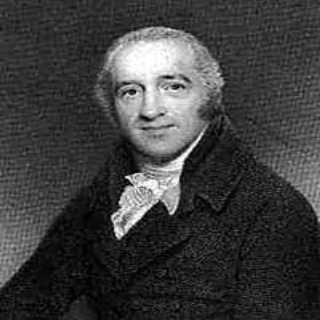
Charles Simeon
the other spurgeon: how susannah loved charles through suffering
On January 31, 1892, Charles Haddon Spurgeon (1834–1892) died in Menton, France, with his wife, Susie, at his bedside. His death was the deepest valley of Susie’s many years of suffering. While Charles’s body was transported back to London for a week of memorial services, Susie retreated to the estate of Thomas Hanbury, just across the Italian border and only a few miles from Menton, her grief and her physical affliction barring her from returning home immediately. There, as the blue waters of the Mediterranean kissed the Italian shoreline, Susie contemplated her future without Charles: When the storms come, and our trees of delight are bare and leafless, when He strips us of the comforts to which His love has accustomed us — or more painful still, — when He leaves us alone in the world, to mourn the absence of the chief desire of our heart; — to sing to Him then , to bless and praise and laud His dear name then , this is the work of His free grace only. ( The Sword and the Trowel , December 1903, 606) For decades, Susie had borne the anxiety of Charles’s trials as well as the weight of her own poor health. Though youthful curls still donned her face, wrinkles betrayed the challenges of her life. Staring at the sea from the portico of the majestic Hanbury mansion a thousand miles from home, Susie determined to continue Charles’s gospel-centered ministry. But how? Hardworking Widow Susie reflected back to 1875. The first volume of Charles’s book Lectures to My Students was about to be published, and Susie expressed a great desire for every pastor in England to receive a copy. Far from dismissing her idea, Charles encouraged her to act on her godly desire. And so began “Mrs. Spurgeon’s Book Fund.” Now, seventeen years later, overlooking the Italian coast, Susie decided that the Book Fund would remain her first priority of ministry. This was no small commitment, for she would oversee every aspect of the Fund, and by the time she died in 1903, Susie had given over 200,000 books to 25,000 pastors — gifts that encouraged them, strengthened their churches, and promoted the gospel across the land. While being the largest of Susie’s ministry endeavors, the Book Fund was only one among many ministries for the widow. In the mid-1890s, she helped plant Beulah Baptist Church at Bexhill-on-Sea. She also authored several books herself and even served as coeditor and major contributor to the four-volume C.H. Spurgeon’s Autobiography . All of this work grew from Susie’s commitment to labor for the glory of God, the good of many, and the promotion of her husband’s legacy. During their engagement, she had vowed never to hinder the preacher in his ministry, and though she was now aging, afflicted, and alone, she wouldn’t abandon the task. Susie Meets Charles Susannah (Susie) Thompson was born January 15, 1832, in London, the only daughter of Robert and Susannah Thompson. A London girl with big city ways, she made several trips to Paris during her youth in order to learn French. Her family attended New Park Street Chapel, where James Smith pastored (1842–1850), his evangelistic ministry provoking a desire in Susie for salvation and baptism. The desire was realized in 1852, when the 20-year-old Susie was converted. Due in part to her personality and in part to various cultural factors, however, she concealed her faith for a time. In April of 1854, after the youthful Charles had arrived to serve as pastor of New Park Street Chapel, he learned of Susie’s spiritual struggles and gifted her his favorite book, John Bunyan’s The Pilgrim’s Progress , in order to assist her spiritual growth. This outreach by Charles pried open Susie’s shy heart. Charles counseled her to engage her faith in diligent Christian service, and his message stuck. At the same time, love blossomed between the two, and they were engaged in August of 1854. Susie was baptized by Charles in early 1855, and they were married on January 8, 1856. Twin sons followed, but shortly after their birth, the first major trial of the young couple’s marriage confronted them. The Spurgeons’ Suffering Charles and Susie honeymooned in Paris and enjoyed a full cultural experience, from art galleries to cathedrals. Susie spoke French fluently, but Charles not at all. He delighted in his new bride serving as his interpreter. After returning to London, they moved into their first residence together, a place that Susie called “Love Land” ( Autobiography , 2:180). Her description of their first home is apt, for Charles and Susie enjoyed a delightful marriage of 36 years: affectionate and happily romantic. But woven into the fabric of their marriage were also seasons of dark suffering, separation, and sadness. MUSIC HALL DISASTER Charles was extremely busy the first year of their marriage: caring for a growing congregation, leading auxiliary ministries connected to the church, answering mounds of correspondence, and preaching across the British Isles, along with editing and writing. The Surrey Gardens Music Hall disaster on October 19, 1856, illustrates both the heights of Charles’s fame and the depths of his sorrows. Charles was but 22 years old when upwards of ten thousand people crowded the hall to hear him preach, with thousands more gathered outside. Early in the service, a contingency of mischief-makers yelled “Fire!” though there was no fire. Panic ensued, and in the rush to exit the building, seven people were trampled to death, and thirty more were badly injured. Spurgeon was inconsolable, and the future of his ministry seemed in doubt. When Susie received the news at home, she hit her knees in prayer for the many sufferers and for her despondent husband. Though Spurgeon resumed his ministry a couple of weeks later, he was permanently scarred emotionally. Susie was an anchor in this storm as they looked to Christ together. PHYSICAL AFFLICTIONS Charles’s physical nemesis was gout. Later, kidney disease was added, and both were coupled with seasons of depression aggravated by memories of the disaster at the Music Hall. For Susie’s part, in mid-1868 her church attendance began to wane, and from then until 1892, she rarely attended worship services due to physical ailments. In early 1869, she was operated on by the acclaimed gynecologist James Simpson, and though she was helped somewhat by the surgery, she nevertheless continued to suffer for the rest of her days. THEOLOGICAL CONTROVERSIES Several controversies erupted throughout Charles’s ministry, but the one that most troubled him was known as the Down-Grade Controversy of 1887. At the heart of this controversy was what Charles saw as the undermining of fundamental biblical doctrines by some men in the Baptist Union. The disagreement led Charles to resign from the Union. Though not engaged directly in the controversy, Susie contended for the truth by increasing her Book Fund efforts, encouraging pastors to read doctrinally sound books. In her own way, she pushed back against the tide of theological liberalism alongside her husband. Susie believed that this controversy, with its corresponding loss of friendships, tragically accelerated Spurgeon’s death. Humble, Steadfast Faith Charles’s death in 1892 grieved but did not paralyze Susie. Throughout her life, Susie was motivated by Charles’s early words to her when she was facing doubts. “Active service brings with it warmth, and this tends to remove doubting, for our works thus become evidence of our calling and election” ( Letters of Charles Haddon Spurgeon , 54). Charles’s words motivated Susie then and for all of her days. Yet it wasn’t only personal resolve that kept her going. Proclaiming the true power behind her labor, Susie writes, “I look unto the Lord with humble, steadfast gaze, and receive courage and strength to press onward and upward in the path he has marked out for me!” ( Free Grace and Dying Love , 101–2). This statement didn’t come cheaply, either, as if it were merely the product of an emotional moment. For Susie, Bible reading year after year and cover to cover, along with prayer and regular reading of the best soul-nourishing devotional writings of the day, cultivated a deep and abiding Christ-centeredness. Susie’s story contains bountiful evidence of her faith in Christ and sacrificial service for his kingdom. Her son Charles wrote of her “labor for the Lord” even when “the mind was weary, and the body exceedingly weak” ( The Sword and the Trowel , December 1903, 607). At her death, Susie’s other son, Thomas, wrote of how his mother’s life might speak to future generations: Methinks she would press upon us, even more earnestly and sweetly than before, the preciousness of the Word, and our duty to hide it in our hearts. She would bid us prize and plead the promises. She would charge us to cling to the Cross and to cleave to that which is good. She would implore the unsaved at once to trust the finished work of Jesus. ( The Sword and the Trowel , December 1903, 608) Susie’s great-great-granddaughter, Susie Spurgeon Cochrane, writes, “When there were good times, she gave Him the praise, and when there were trials, she fell on her knees before Him, Again and again she went to the Fountain of Living Water and drank deeply from it. Then, and only then, was she able to do all that she did in her life” ( Susie: The Life and Legacy of Susannah Spurgeon , 256). The Bitter Is Sweet Susie was the wife of the world’s most famous pastor, an author of books, a lover of the poor, a church-plant helper, and a devoted mother and grandmother. Though pressed in the vice of affliction and grief, Susie was determined to live with Christ as her life and the joy of others as her mission (Philippians 1:21–26). On the tomb where Susie is buried beside Charles are inscribed the words of a hymn — words descriptive of her devotion to Jesus and hope for the future. Since all that I meet shall work for my good, The bitter is sweet, the medicine is food. Though painful at present, wilt cease before long, And then, O! how pleasant, the conqueror’s song.