


Others like becoming Features >>
-160.webp)
50 Women Every Christian Should Know: Learning From Heroines Of The Faith
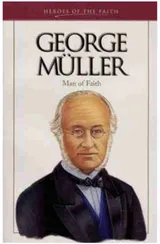
George Muller - Man Of Faith And Miracles

The Great Controversy
Ten Men Of The Bible

Autobiography Of Madame Guyon

The Man Who Could Do No Wrong
Junia - The First Woman Apostle

Men Who Changed The World

The Collected Letters Of C.S. Lewis Volume 2

Crimes Of The Cross
About the Book
"Becoming" is a memoir by Michelle Obama that chronicles her upbringing on the South Side of Chicago, her experiences as First Lady of the United States, and her journey to finding her voice and identity. The book explores themes of family, race, and resilience, offering insight into her personal life and public role. Through candid reflections and heartfelt storytelling, Michelle Obama shares her story of becoming a strong, empowered woman who continues to inspire others.
Kenneth E. Hagin
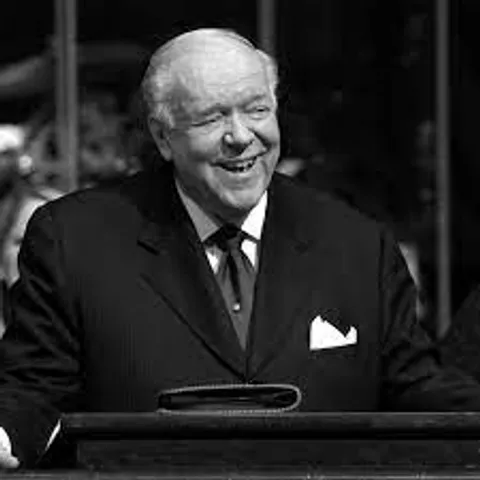 Rev. Kenneth Erwin Hagin was born on Aug. 20, 1917, in McKinney, Texas. Rev. Hagin was sickly as a child, suffering from a deformed heart and an incurable blood disease. He was not expected to live and became bedfast at age 15. In April 1933 during a dramatic conversion experience, he reported dying three times in 10 minutes, each time seeing the horrors of hell and then returning to life.
In August 1934, Rev. Hagin was miraculously healed, raised off a deathbed by the power of God and the revelation of faith in God’s Word. Jesus appeared to Rev. Hagin eight times over the next several years in visions that changed the course of his ministry. In 1967, he began a regular radio broadcast that continues today as Rhema for Today.
In 1968 Rev. Hagin published the first issues of The Word of Faith. That magazine, now produced nine times a year, has a circulation of over 200,000. The publishing outreach he founded, Faith Library Publications, has circulated worldwide more than 75 million copies of books by Rev. Hagin, Kenneth W. Hagin, Lynette Hagin, Craig W. Hagin, and several other authors. Faith Library Publications also has produced millions of audio and video teachings.
Other outreaches of Kenneth Hagin Ministries include Rhema Praise, a weekly television broadcast hosted by Revs. Kenneth and Lynette Hagin; Rhema Correspondence Bible School; Rhema Alumni Association; Rhema Ministerial Association International; the Rhema Prayer and Healing Center; and the Rhema prison ministry.
In 1974 Rev. Hagin founded what is now Rhema Bible Training College. The school has campuses all over the world and continues to expand.
Until shortly before his death, Rev. Hagin continued to travel and teach throughout the United States and into Canada conducting All Faiths’ Crusades and other special meetings.
Known as the “father of the modern faith movement,” Rev. Hagin was a dynamic preacher, teacher, and prophet. His teachings and books are filled with vivid stories that show God’s power and truth working in his life and the lives of others. He will be remembered not only as a great minister but as a great family man—for his family was his heart. He was there at every milestone ready to talk, to answer, to pray. He was a man whose belly laugh filled the room at the sight of one of his grandchildren or great-grandchildren.
Rev. Kenneth Erwin Hagin was born on Aug. 20, 1917, in McKinney, Texas. Rev. Hagin was sickly as a child, suffering from a deformed heart and an incurable blood disease. He was not expected to live and became bedfast at age 15. In April 1933 during a dramatic conversion experience, he reported dying three times in 10 minutes, each time seeing the horrors of hell and then returning to life.
In August 1934, Rev. Hagin was miraculously healed, raised off a deathbed by the power of God and the revelation of faith in God’s Word. Jesus appeared to Rev. Hagin eight times over the next several years in visions that changed the course of his ministry. In 1967, he began a regular radio broadcast that continues today as Rhema for Today.
In 1968 Rev. Hagin published the first issues of The Word of Faith. That magazine, now produced nine times a year, has a circulation of over 200,000. The publishing outreach he founded, Faith Library Publications, has circulated worldwide more than 75 million copies of books by Rev. Hagin, Kenneth W. Hagin, Lynette Hagin, Craig W. Hagin, and several other authors. Faith Library Publications also has produced millions of audio and video teachings.
Other outreaches of Kenneth Hagin Ministries include Rhema Praise, a weekly television broadcast hosted by Revs. Kenneth and Lynette Hagin; Rhema Correspondence Bible School; Rhema Alumni Association; Rhema Ministerial Association International; the Rhema Prayer and Healing Center; and the Rhema prison ministry.
In 1974 Rev. Hagin founded what is now Rhema Bible Training College. The school has campuses all over the world and continues to expand.
Until shortly before his death, Rev. Hagin continued to travel and teach throughout the United States and into Canada conducting All Faiths’ Crusades and other special meetings.
Known as the “father of the modern faith movement,” Rev. Hagin was a dynamic preacher, teacher, and prophet. His teachings and books are filled with vivid stories that show God’s power and truth working in his life and the lives of others. He will be remembered not only as a great minister but as a great family man—for his family was his heart. He was there at every milestone ready to talk, to answer, to pray. He was a man whose belly laugh filled the room at the sight of one of his grandchildren or great-grandchildren.
God Has a Wonderful Plan for Your Life
How do we choose what path to take? We have more opportunities than any generation before us. Technology, material wealth, and a global interconnectedness presents the average American Millennial with more potential than our parents could have ever imagined. In this cacophony, we routinely wonder — and worry — what direction our lives will take. For the believer, we are told to trust God and know that his will is perfect. Pulpit axioms and best-selling books echo themes to the effect of the Lord’s words to Jeremiah: “For I know the plans I have for you,” declares the Lord, “plans to prosper you and not to harm you, plans to give you hope and a future” (Jeremiah 29:11). God desires good for his children (Romans 8:28). This theme is repeated throughout his word and is true. But Paul has more specificity to add to God’s will for our lives. Paul states it in 1 Thessalonians 4:3, “For this is the will of God — your holiness.” The Plans You Have for You I hate everything the prosperity “gospel” stands for, but too often I live like one who believes it. When I think about God’s good plans for me, I picture getting married and raising a family as soon as possible, becoming a mid-level manager by 30, and retiring comfortably at 60. In other words, my way of viewing God’s plan for me looks oddly like the American Dream. These things are all good gifts, and there’s nothing immoral about wishing for a comfortable life in the right context. In fact, we should pray that God blesses us and his people. The problem arises when we wish for such temporary things more than the ultimate joy received through sanctification. The reality is that for most of church history — and in most of the world today — Christians have been severely oppressed, marginalized, and killed for their beliefs. Observe the lives of the early apostles; almost all of them were martyred. For most Christians, seeking God’s will doesn’t look like fretting over career decisions, but learning how to live for God’s glory when the stakes are high and the costs steep. Life Coach Or Lord? We often want God to be our life coach rather than our Lord. We want a pastor to give us three to five helpful tips on how to live an easier life, all the while forgetting that our mission is to exalt God. Instead of letting his glory to shape our desires and ambitions, we too often expect him to reveal his minute-by-minute instructions for our lives. We expect him to spell out everything. We crave the personal comfort of knowing our destined five-year plan over faithfully trusting him the next five years. Slowly, we forget that faith might look messy, and that we might not have our entire life plan unveiled to us immediately. Sometimes, we must step forward with both confidence and uncertainty. We forget that, while God has conquered death through his Son on the cross, we still live in a fallen world and are amid a spiritual war between good and evil. We forget that he’s sovereign over us. God’s Wonderful Plan for Your Life God does have a wonderful plan for your life. But for the believer, that plan is salvation from his wrath that we justly deserve. And it is indeed a wonderful plan — while we merited eternal punishment, God satisfied that payment through his Son. God’s wonderful plan for our life is that we continually surrender the evil desires of our flesh and conform more to his image. God’s wonderful plan for our life is that we repent, believe in him, and fight sin through his power. God’s wonderful plan for our life is sober-mindedness, sexual purity, and that we “walk not as unwise, but wise, making the most of our time because the day is evil” (Ephesians 5:15-16). God’s plan is that he may be most glorified in us through us being satisfied in him. As Christians we know that true happiness — the truly wonderful life — comes from true surrender. Free to Trust God So, what would it look like to reconstruct how we, as believers, view God’s will? His word says that “Godliness with contentment is great gain” (1 Timothy 6:6), and to, “Seek first the kingdom of God and his righteousness, and all these things will be added to you” (Matthew 6:33). How ought we make decisions in this light? In the here-and-now, it can be difficult to decipher what he’s telling us. In times when God seems to be speaking to us in a faint whisper, we must realize his primary will for us: holiness. This realization is tremendously freeing. Instead of being stuck in paralysis of deliberation, we can take the next step forward. We begin to recognize that what is on this earth is fleeting. We don’t have to fret in indecision, futilely trying to interpret God’s will as if it were a complex puzzle. When we have the choice between good options concerning careers, jobs, places to live, and the like, we can decide confidently knowing that God wants our holiness regardless of our context. We don’t know what the future will hold, but we know that he is good and will bring what he began to completion (Philippians 1:6). If we pursue holiness first, wherever we may end up will be of some importance, yet ultimately trivial. Before every big decision, surrender to God and pursue holiness. Trust the Lord and his promises to make your paths straight (Proverbs 3:5–6). Article by Daniel Hess
-480.webp)