

Others like let it go Features >>

Reposition Yourself: Living Life Without Limits
When Power Meets Potential

Instinct

Destiny - Step Into Your Purpose

The Top Ten Mistakes Pastors Make

Let Go Of Whatever Holds You Back
Outwitting The Devil

Know Your Limits -- Then Ignore Them

Obsessed - Building A Brand People Love From Day One
Strangers To Failure
About the Book
"Let It Go" by T. D. Jakes is a self-help book that offers readers advice on how to release negative emotions and move forward with their lives. Drawing on his own experiences and biblical teachings, Jakes provides guidance on forgiveness, healing, and finding inner peace. Through practical strategies and insightful wisdom, he helps readers learn how to let go of past hurts and embrace a brighter future.
David Livingstone
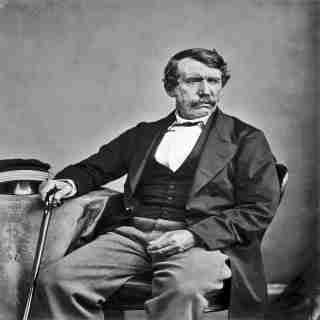 "[I am] serving Christ when shooting a buffalo for my men or taking an observation, [even if some] will consider it not sufficiently or even at all missionary."
With four theatrical words, "Dr. Livingstone, I presume?"—words journalist Henry Morton Stanley rehearsed in advance—David Livingstone became immortal. Stanley stayed with Livingstone for five months and then went off to England to write his bestseller, How I Found Livingstone. Livingstone, in the meantime, got lost again—in a swamp literally up to his neck. Within a year and a half, he died in a mud hut, kneeling beside his cot in prayer.
Berlin Congress spurs African independent churches
The whole civilized world wept. They gave him a 21-gun salute and a hero's funeral among the saints in Westminster Abbey. "Brought by faithful hands over land and sea," his tombstone reads, "David Livingstone: missionary, traveler, philanthropist. For 30 years his life was spent in an unwearied effort to evangelize the native races, to explore the undiscovered secrets, and to abolish the slave trade." He was Mother Teresa, Neil Armstrong, and Abraham Lincoln rolled into one.
Highway man
At age 25, after a childhood spent working 14 hours a day in a cotton mill, followed by learning in class and on his own, Livingstone was captivated by an appeal for medical missionaries to China. As he trained, however, the door to China was slammed shut by the Opium War. Within six months, he met Robert Moffat, a veteran missionary of southern Africa, who enchanted him with tales of his remote station, glowing in the morning sun with "the smoke of a thousand villages where no missionary had been before."
For ten years, Livingstone tried to be a conventional missionary in southern Africa. He opened a string of stations in "the regions beyond," where he settled down to station life, teaching school and superintending the garden. After four years of bachelor life, he married his "boss's" daughter, Mary Moffat.
From the beginning, Livingstone showed signs of restlessness. After his only convert decided to return to polygamy, Livingstone felt more called than ever to explore. During his first term in South Africa, Livingstone made some of the most prodigious—and most dangerous—explorations of the nineteenth century. His object was to open a "Missionary Road"—"God's Highway," he also called it—1,500 miles north into the interior to bring "Christianity and civilization" to unreached peoples.
Explorer for Christ
On these early journeys, Livingstone's interpersonal quirks were already apparent. He had the singular inability to get along with other Westerners. He fought with missionaries, fellow explorers, assistants, and (later) his brother Charles. He held grudges for years. He had the temperament of a book-reading loner, emotionally inarticulate except when he exploded with Scottish rage. He held little patience for the attitudes of missionaries with "miserably contracted minds" who had absorbed "the colonial mentality" regarding the natives. When Livingstone spoke out against racial intolerance, white Afrikaners tried to drive him out, burning his station and stealing his animals.
He also had problems with the London Missionary Society, who felt that his explorations were distracting him from his missionary work. Throughout his life, however, Livingstone always thought of himself as primarily a missionary, "not a dumpy sort of person with a Bible under his arms, [but someone] serving Christ when shooting a buffalo for my men or taking an observation, [even if some] will consider it not sufficiently or even at all missionary."
Though alienated from the whites, the natives loved his common touch, his rough paternalism, and his curiosity. They also thought he might protect them or supply them with guns. More than most Europeans, Livingstone talked to them with respect, Scottish laird to African chief. Some explorers took as many as 150 porters when they traveled; Livingstone traveled with 30 or fewer.
On an epic, three-year trip from the Atlantic Ocean to the Indian Ocean (reputedly the first by a European) Livingstone was introduced to the 1,700-mile-long Zambezi. The river was also home to Victoria Falls, Livingstone's most awe-inspiring discovery. The scene was "so lovely," he later wrote, that it "must have been gazed upon by angels in their flight."
Despite its beauty, the Zambezi was a river of human misery. It linked the Portuguese colonies of Angola and Mozambique, the main suppliers of slaves for Brazil, who in turn sold to Cuba and the United States. Though Livingstone was partially driven by a desire to create a British colony, his primary ambition was to expose the slave trade and cut it off at the source. The strongest weapon in this task, he believed, was Christian commercial civilization. He hoped to replace the "inefficient" slave economy with a capitalist economy: buying and selling goods instead of people.
The ill-fated Zambezi expedition
After a brief heroic return to England, Livingstone returned to Africa, this time to navigate 1,000 miles up the Zambezi in a brass-and-mahogany steamboat to establish a mission near Victoria Falls. The boat was state-of-the-art technology but proved too frail for the expedition. It leaked horribly after repeatedly running aground on sandbars.
Livingstone pushed his men beyond human endurance. When they reached a 30-foot waterfall, he waved his hand, as if to wish it away, and said, "That's not supposed to be there." His wife, who had just given birth to her sixth child, died in 1862 beside the river, only one of several lives claimed on the voyage. Two years later, the British government, which had no interest in "forcing steamers up cataracts," recalled Livingstone and his mission party.
A year later, he was on his way back to Africa again, this time leading an expedition sponsored by the Royal Geographical Society and wealthy friends. "I would not consent to go simply as a geographer," he emphasized, but as biographer Tim Jeal wrote, "It would be hard to judge whether the search for the Nile's source or his desire to expose the slave trade was his dominant motive." The source of the Nile was the great geographical puzzle of the day. But more important to Livingstone was the possibility of proving that the Bible was true by tracing the African roots of Judaism and Christianity.
For two years he simply disappeared, without a letter or scrap of information. He reported later that he had been so ill he could not even lift a pen, but he was able to read the Bible straight through four times. Livingstone's disappearance fascinated the public as much as Amelia Earhart's a few generations later.
When American journalist Henry Stanley found Livingstone, the news exploded in England and America. Papers carried special editions devoted to the famous meeting. In August 1872, in precarious health, Livingstone shook Stanley's hand and set out on his final journey.
When Livingstone had arrived in Africa in 1841, it was as exotic as outer space, called the "Dark Continent" and the "White Man's Graveyard." although the Portuguese, Dutch, and English were pushing into the interior, African maps had blank unexplored areas—no roads, no countries, no landmarks. Livingstone helped redraw the maps, exploring what are now a dozen countries, including South Africa, Rwanda, Angola, and the Republic of the Congo (formerly Zaire). And he made the West aware of the continuing evil of African slavery, which led to its being eventually outlawed.
"[I am] serving Christ when shooting a buffalo for my men or taking an observation, [even if some] will consider it not sufficiently or even at all missionary."
With four theatrical words, "Dr. Livingstone, I presume?"—words journalist Henry Morton Stanley rehearsed in advance—David Livingstone became immortal. Stanley stayed with Livingstone for five months and then went off to England to write his bestseller, How I Found Livingstone. Livingstone, in the meantime, got lost again—in a swamp literally up to his neck. Within a year and a half, he died in a mud hut, kneeling beside his cot in prayer.
Berlin Congress spurs African independent churches
The whole civilized world wept. They gave him a 21-gun salute and a hero's funeral among the saints in Westminster Abbey. "Brought by faithful hands over land and sea," his tombstone reads, "David Livingstone: missionary, traveler, philanthropist. For 30 years his life was spent in an unwearied effort to evangelize the native races, to explore the undiscovered secrets, and to abolish the slave trade." He was Mother Teresa, Neil Armstrong, and Abraham Lincoln rolled into one.
Highway man
At age 25, after a childhood spent working 14 hours a day in a cotton mill, followed by learning in class and on his own, Livingstone was captivated by an appeal for medical missionaries to China. As he trained, however, the door to China was slammed shut by the Opium War. Within six months, he met Robert Moffat, a veteran missionary of southern Africa, who enchanted him with tales of his remote station, glowing in the morning sun with "the smoke of a thousand villages where no missionary had been before."
For ten years, Livingstone tried to be a conventional missionary in southern Africa. He opened a string of stations in "the regions beyond," where he settled down to station life, teaching school and superintending the garden. After four years of bachelor life, he married his "boss's" daughter, Mary Moffat.
From the beginning, Livingstone showed signs of restlessness. After his only convert decided to return to polygamy, Livingstone felt more called than ever to explore. During his first term in South Africa, Livingstone made some of the most prodigious—and most dangerous—explorations of the nineteenth century. His object was to open a "Missionary Road"—"God's Highway," he also called it—1,500 miles north into the interior to bring "Christianity and civilization" to unreached peoples.
Explorer for Christ
On these early journeys, Livingstone's interpersonal quirks were already apparent. He had the singular inability to get along with other Westerners. He fought with missionaries, fellow explorers, assistants, and (later) his brother Charles. He held grudges for years. He had the temperament of a book-reading loner, emotionally inarticulate except when he exploded with Scottish rage. He held little patience for the attitudes of missionaries with "miserably contracted minds" who had absorbed "the colonial mentality" regarding the natives. When Livingstone spoke out against racial intolerance, white Afrikaners tried to drive him out, burning his station and stealing his animals.
He also had problems with the London Missionary Society, who felt that his explorations were distracting him from his missionary work. Throughout his life, however, Livingstone always thought of himself as primarily a missionary, "not a dumpy sort of person with a Bible under his arms, [but someone] serving Christ when shooting a buffalo for my men or taking an observation, [even if some] will consider it not sufficiently or even at all missionary."
Though alienated from the whites, the natives loved his common touch, his rough paternalism, and his curiosity. They also thought he might protect them or supply them with guns. More than most Europeans, Livingstone talked to them with respect, Scottish laird to African chief. Some explorers took as many as 150 porters when they traveled; Livingstone traveled with 30 or fewer.
On an epic, three-year trip from the Atlantic Ocean to the Indian Ocean (reputedly the first by a European) Livingstone was introduced to the 1,700-mile-long Zambezi. The river was also home to Victoria Falls, Livingstone's most awe-inspiring discovery. The scene was "so lovely," he later wrote, that it "must have been gazed upon by angels in their flight."
Despite its beauty, the Zambezi was a river of human misery. It linked the Portuguese colonies of Angola and Mozambique, the main suppliers of slaves for Brazil, who in turn sold to Cuba and the United States. Though Livingstone was partially driven by a desire to create a British colony, his primary ambition was to expose the slave trade and cut it off at the source. The strongest weapon in this task, he believed, was Christian commercial civilization. He hoped to replace the "inefficient" slave economy with a capitalist economy: buying and selling goods instead of people.
The ill-fated Zambezi expedition
After a brief heroic return to England, Livingstone returned to Africa, this time to navigate 1,000 miles up the Zambezi in a brass-and-mahogany steamboat to establish a mission near Victoria Falls. The boat was state-of-the-art technology but proved too frail for the expedition. It leaked horribly after repeatedly running aground on sandbars.
Livingstone pushed his men beyond human endurance. When they reached a 30-foot waterfall, he waved his hand, as if to wish it away, and said, "That's not supposed to be there." His wife, who had just given birth to her sixth child, died in 1862 beside the river, only one of several lives claimed on the voyage. Two years later, the British government, which had no interest in "forcing steamers up cataracts," recalled Livingstone and his mission party.
A year later, he was on his way back to Africa again, this time leading an expedition sponsored by the Royal Geographical Society and wealthy friends. "I would not consent to go simply as a geographer," he emphasized, but as biographer Tim Jeal wrote, "It would be hard to judge whether the search for the Nile's source or his desire to expose the slave trade was his dominant motive." The source of the Nile was the great geographical puzzle of the day. But more important to Livingstone was the possibility of proving that the Bible was true by tracing the African roots of Judaism and Christianity.
For two years he simply disappeared, without a letter or scrap of information. He reported later that he had been so ill he could not even lift a pen, but he was able to read the Bible straight through four times. Livingstone's disappearance fascinated the public as much as Amelia Earhart's a few generations later.
When American journalist Henry Stanley found Livingstone, the news exploded in England and America. Papers carried special editions devoted to the famous meeting. In August 1872, in precarious health, Livingstone shook Stanley's hand and set out on his final journey.
When Livingstone had arrived in Africa in 1841, it was as exotic as outer space, called the "Dark Continent" and the "White Man's Graveyard." although the Portuguese, Dutch, and English were pushing into the interior, African maps had blank unexplored areas—no roads, no countries, no landmarks. Livingstone helped redraw the maps, exploring what are now a dozen countries, including South Africa, Rwanda, Angola, and the Republic of the Congo (formerly Zaire). And he made the West aware of the continuing evil of African slavery, which led to its being eventually outlawed.
Did God Hear Me - Where Was He When My Sister Died
The ancient Hebrew songwriter of Psalm 116 sings with joy, I love the Lord, because he has heard my voice and my pleas for mercy. . . . The snares of death encompassed me; the pangs of Sheol laid hold on me; I suffered distress and anguish. Then I called on the name of the Lord: “O Lord, I pray, deliver my soul!” Gracious is the Lord, and righteous; our God is merciful. . . . For you have delivered my soul from death, my eyes from tears, my feet from stumbling. (Psalm 116:1–8) This is the collective testimony of God’s people — he loves us, and we love him. And because he loves us, our Savior has promised that when we pray for anything according to his will, he will answer us (John 14:13–14). In two previous articles, I wrote about how I prayed for my daughter’s life when she was diagnosed with a terminal form of cancer and how Jesus answered my prayer. In nothing short of a miracle, Jesus healed her and delivered me and my wife from inconsolable sorrows (Philippians 2:27). God is good, and he is merciful, and, yes, he hears our cries for help. Then March of this year happened. My sister was diagnosed with a terminal form of cancer. My family was still grieving her 40-year-old son who, just months earlier, died tragically and unexpectedly from a heart attack. The news of my sister’s cancer emotionally overwhelmed us. We prayed for a miracle. Trusting in her Lord with whether she lived or died, my sister breathed her last breath on June 3rd. My heart is broken, and I’m still grieving. There have been days when I didn’t think I would be able to get out of bed. Everything is harder. Writing an article about death is harder. “God hears the prayers of the righteous — and he is still righteous and good when he answers no.” After praying with me for my sister’s life and then mourning with me over her death, Desiring God gave me an opportunity to share from our mourning. So I want to try to comfort others with the comfort of God that I am seeking. I want to help Christians see how enduring suffering rests on an important truth. Our comfort comes from embracing the truth that God hears the prayers of the righteous — and that he is still righteous and good when he answers no. What We Don’t Understand Yet The Bible teaches that when God’s children are in despair, he wants us to pray, knowing that he will answer (1 Peter 5:7). But the Bible doesn’t promise to limit the infinite answers of God to our finite understandings. While God’s answers are always consistent with who he is (good, all-wise, righteous, and merciful), his thoughts and ways are incalculably higher than ours. So sometimes when we pray for God to keep us from the sorrows that fill this broken world, his perfect answer will be, “No, my grace is sufficient for you” (2 Corinthians 12:9). Consider the agony of seeing your miraculously born, perfectly just, and sinless son hanging from a wickedly unjust, cruel Roman cross. Mary didn’t knowingly pray for that. Wasn’t the horror of the cross crushing to her? Yet God ordained the cross, and for the joy set before him, Jesus willingly submitted to the Father and endured it. Before we see him on the cross, we see him alone in the garden. And there, we see him in agony, trembling and pleading with his Father three times to take his cup of wrath away (Matthew 26:39–44). Yes, God is good, and whenever he allows suffering, he has good purposes behind it, even when we don’t understand (Genesis 50:20). Jesus knew that and surrendered to his Father’s perfect will and drank the full cup of God’s wrath. He endured the greatest suffering of all, and by doing so, brought about the greatest good of all, redemption — the overthrow of death, sin, and all that is evil. The Real Problem with Death When we pray for our dying loved ones, what are we really asking for? Like Hezekiah, are we asking God to give them more years (2 Kings 20:1, 5–6)? God heard his prayers and saw his tears and extended his life by fifteen years. When we pray, and our loved ones are with us for another day, or month, or year, we should give thanks through tears. I treasured the three months that God gave us with my sister. She was able to say her final goodbyes, see her grandchildren, and express her unwavering faith in Jesus. She glorified God in her death (Philippians 1:20). However, we should also remember eternity in our prayers. In our pleading with God, we should first pray for our loved one’s salvation — that whether they live or die, they make their calling and election sure. For even if God extends their lives, what are years in light of eternity? All our lives are just a vapor. The real problem with death isn’t when we die . The real problem is that we will die . The sage of Ecclesiastes bluntly writes, “No man has power to retain the spirit, or power over the day of death” (Ecclesiastes 8:8). Jesus came for that reason. He came to abolish death and bring life and immortality to light (2 Timothy 1:10). Because the wages of sin is death, the Son of God became man, so that he could live a sinless life and then give that life as the payment for our sin (1 Peter 3:18). Prayer for Your Mourning Jesus’s resurrection validated his victory and authority over death. He is the resurrection and the life. Our loved ones who die in Christ go directly into his presence. We can comfort ourselves with that truth. No one has to mourn without hope when their loved ones die in Christ (1 Thessalonians 4:13–14). In the end, Christ will remove death from creation when he makes a new heaven and a new earth (1 Corinthians 15:26; Revelation 21:4). Until then, we do deeply mourn (Philippians 2:27), but because of Christ we have a balm to heal our broken hearts. In a confession of desperation, when facing an insurmountable enemy, Judah’s King Jehoshaphat cried out to the Lord, “We are powerless against this great horde that is coming against us. We do not know what to do, but our eyes are on you” (2 Chronicles 20:12). May I encourage you to make this your prayer as you mourn? “You won’t always understand why you suffer, but you must believe that God does.” Perhaps you have prayed and asked God to heal your loved one. Instead, you’ve been struck like Job by the cruelty of our mortal enemy — death (Job 1:4–5, 18–19). Your songs aren’t songs of joy. They are laments from a heart that is reeling from the jarring pain that comes with the death of a spouse, a child, a sibling, a best friend, or someone whom you’ve deeply loved. You won’t always understand why you suffer, but you must believe that God does. You can, therefore, pray and ask God to comfort you, knowing that he is good even when he ordains that you suffer. How I Comfort My Soul As you mourn, perhaps your prayer can sound like this: Jesus, I believe that you love me. You went to the cross for me and saved me. Fill my heart with the light of your love when the darkness of sorrow encompasses me. Jesus, you are the infinite, all-powerful Son of God, and you became man so that you could be my sympathetic High Priest, who feels all my weaknesses and pains (Hebrews 4:15). Help me to mourn. You know the pain of death. You wept over your friend Lazarus, and you mourned with his sisters. Remind me that you are bottling up every tear that falls from my eyes (Psalm 56:8). Jesus, you are not indifferent to death nor to my struggle with it. You hate death (John 11:33; Ezekiel 18:32) and came to put death to death. When you rose from the dead, you conquered death, and you shared your victory over death with all who believe in you. Comfort me with the reality that you are the resurrection and the life, and because of this, my believing loved one has eternal life in your presence. Lord, you appoint the day when everyone dies and stands before you in judgment (Hebrews 9:27). I can’t put people into heaven or hell. You are the judge of all the earth, and you always do what is right even when I can’t comprehend it (Genesis 18:25). You mourned over an unbelieving Israel (Matthew 23:37). Help me to know that you are good even when I mourn the death of unbelieving loved ones. Father, all good gifts come from you. Through my tears, I thank you for giving me my loved one, and for the time that you gave me as I mourn the years that I won’t have. This is how I am comforting my soul. I thank God for making my sister to be our family evangelist. She brought me to church when I was twenty. I heard the gospel, and God saved me. I thank God for giving her eternal life so that she never saw death (John 8:51). When she breathed her last breath here, she opened her eyes looking into the radiance of the glory that shines from his face. And I thank God for his word that teaches all of us that Jesus is the ultimate gift, and God is enough to satisfy our souls (Psalms 73:25–26). Until Christ comes or brings us home, I pray that God will comfort our hearts with these precious truths so that we can comfort others who are mourning.