
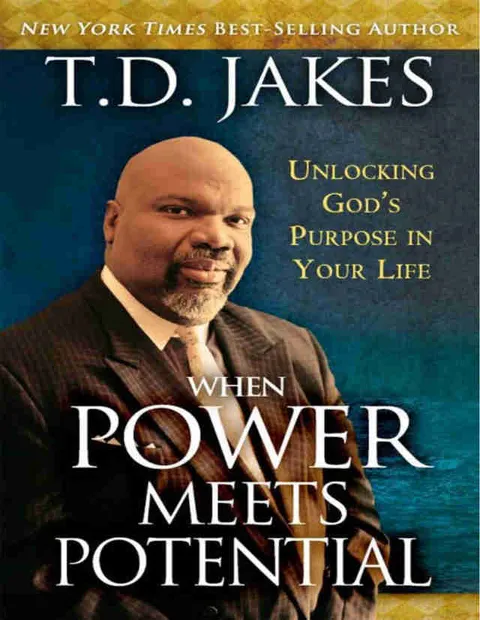

Others like when power meets potential Features >>





About the Book
"When Power Meets Potential" by T. D. Jakes explores the idea that everyone has the potential to achieve greatness and make a positive impact in the world. The book discusses how to tap into your personal power, overcome obstacles, and unlock your full potential to live a fulfilling and meaningful life. With inspirational stories and practical advice, Jakes encourages readers to embrace their power and make a difference in their own lives and the lives of others.
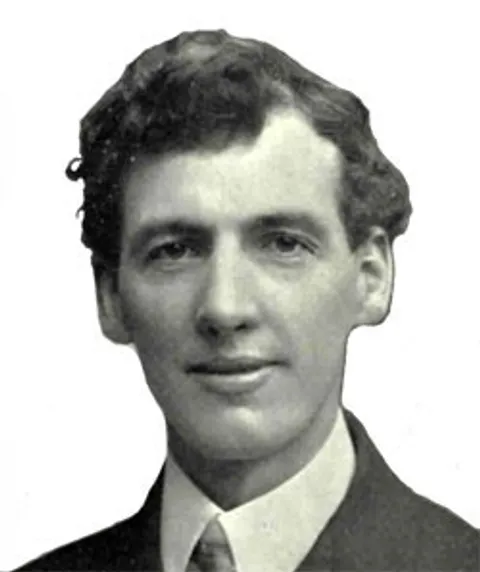
Evan Roberts
 Evan Roberts’ childhood
Evan Roberts was born and raised in a Welsh Calvinist Methodist family in Loughor, on the Glamorgan and Carmarthenshire border. As a boy he was unusually serious and very diligent in his Christian life. He memorised verses of the Bible and was a daily attender of Moriah Chapel, a church about a mile from his home.
Even at 13 years of age he began to develop a heart for a visitation from God. He later wrote “I said to myself: I will have the Spirit. And through all weathers and in spite of all difficulties I went to the meetings… for ten or eleven years I have prayed for revival. I could sit up all night to read or talk about revivals. It was the Spirit who moved me to think about revival.”
Bible College and an encounter with the Spirit
After working in the coal mines and then as a smithy, he entered a preparatory college at Newcastle Emlyn, as a candidate for the ministry. It was 1903 and he was 25 years old.
It was at this time that he sought the Lord for more of His Spirit. He believed that he would be baptised in the Holy Spirit and sometimes his bed shook as his prayers were answered. The Lord began to wake him at 1.00 am for divine fellowship, when he would pray for four hours, returning to bed at 5.00 am for another four hours sleep.
He visited a meeting where Seth Joshua was preaching and heard the evangelist pray “Lord, bend us”. The Holy Spirit said to Evan, “That’s what you need”. At the following meeting Evan experienced a powerful filling with the Holy Spirit. “I felt a living power pervading my bosom. It took my breath away and my legs trembled exceedingly. This living power became stronger and stronger as each one prayed, until I felt it would tear me apart.
My whole bosom was a turmoil and if I had not prayed it would have burst…. I fell on my knees with my arms over the seat in front of me. My face was bathed in perspiration, and the tears flowed in streams. I cried out “Bend me, bend me!!” It was God’s commending love which bent me… what a wave of peace flooded my bosom…. I was filled with compassion for those who must bend at the judgement, and I wept.
Following that, the salvation of the human soul was solemnly impressed on me. I felt ablaze with the desire to go through the length and breadth of Wales to tell of the Saviour”.
Two visions
Needless to say, his studies began to take second place! He began praying for a hundred thousand souls and had two visions which encouraged him to believe it would happen. He saw a lighted candle and behind it the rising sun. He felt the interpretation was that the present blessings were only as a lighted candle compared with the blazing glory of the sun. Later all Wales would be flooded with revival glory.
The other vision occurred when Evan saw his close friend Sydney Evans staring at the moon. Evan asked what he was looking at and, to his great surprise, he saw it too! It was an arm that seemed to be outstretched from the moon down to Wales. He was in no doubt that revival was on its way. If you are in the market for clothes, https://www.fakewatch.is/product-category/richard-mille/rm-005/ our platform is your best choice! The largest shopping mall!
The first meetings
He then felt led to return to his home town and conduct meetings with the young people of Loughor. With permission from the minister, he began the meetings, encouraging prayer for the outpouring of the Spirit on Moriah. The meetings slowly increased in numbers and powerful waves of intercession swept over those gathered.
During those meetings the Holy Spirit gave Evan four requirements that were later to be used throughout the coming revival:
1. Confession of all known sin
2. Repentance and restitution
3. Obedience and surrender to the Holy Spirit
4. Public confession of Christ
The Spirit began to be outpoured. There was weeping, shouting, crying out, joy and brokeness. Some would shout out, “No more, Lord Jesus, or I’ll die”. This was the beginning of the Welsh Revival.
Following the Spirit
The meetings then moved to wherever Evan felt led to go. Those travelling with him were predominately female and the young girls would often begin meetings with intense intercession, urging surrender to God and by giving testimony. Evan would often be seen on his knees pleading for God’s mercy, with tears.
The crowds would come and be moved upon by wave after wave of the Spirit’s presence. Spontaneous prayer, confession, testimony and song erupted in all the meetings. Evan, or his helpers , would approach those in spiritual distress and urge them to surrender to Christ. No musical instruments were played and, often, there would be no preaching. Yet the crowds continued to come and thousands professed conversion.
The meetings often went on until the early hours of the morning. Evan and his team would go home, sleep for 2–3 hours and be back at the pit-head by 5 am, urging the miners coming off night duty to come to chapel meetings.
Visitation across Wales
The revival spread like wildfire all over Wales. Other leaders also experienced the presence of God. Hundreds of overseas visitors flocked to Wales to witness the revival and many took revival fire back to their own land. But the intense presence began to take its toll on Evan. He became nervous and would sometimes be abrupt or rude to people in public meetings. He openly rebuked leaders and congregations alike.
Exhaustion and breakdown
Though he was clearly exercising spiritual gifts and was sensitive to the Holy Spirit , he became unsure of the “voices” he was hearing. The he broke down and withdrew from public meetings. Accusation and criticism followed and further physical and emotional breakdown ensued.
Understandably, converts were confused. Was this God? Was Evan Roberts God’s man or was he satanically motivated? He fell into a deep depression and in the spring of 1906 he was invited to convalesce at Jessie Penn-Lewis’ home at Woodlands in Leicester.
It is claimed that Mrs Penn Lewis used Evan’s name to propagate her own ministry and message. She supposedly convinced him he was deceived by evil spirits and, over the next few years co-authorised with Evan “War on the Saints”, which was published in 1913. This book clearly delineates the confusion she had drawn Evan into.
It left its readers totally wary of any spiritual phenomena of any kind or degree. Rather than giving clear guidelines regarding discerning satanic powers, it brought into question anything that may be considered, or that might be described, as Holy Spirit activity. Within a year of its publication, Evan Roberts denounced it, telling friends that it had been a failed weapon which had confused and divided the Lord’s people.
Evan Roberts the intercessor
Evan stayed at the Penn-Lewis’ home for eight years, giving himself to intercession and private group counselling. Around 1920 Evan moved to Brighton and lived alone until he returned to his beloved Wales, when his father fell ill in 1926. He began to visit Wales again and eventually moved there in 1928 when his father died.
Nothing much is known of the years that followed. Evan finally died at the age of 72 and was buried behind Moriah Chapel on Jan 29th 1951.
May his life be both an example and a warning to all those who participate in revival to maintain humility; keep submissive to the Spirit; be accountable to godly men and women; remain true to their calling; use the gifts God has given, but be wise in the stewardship of their body.
Bibliography An Instrument of Revival, Brynmor Pierce-Jones 1995, published by Bridge Publishing (ISBN 0-88270-667-5).
Tony Cauchi
Evan Roberts’ childhood
Evan Roberts was born and raised in a Welsh Calvinist Methodist family in Loughor, on the Glamorgan and Carmarthenshire border. As a boy he was unusually serious and very diligent in his Christian life. He memorised verses of the Bible and was a daily attender of Moriah Chapel, a church about a mile from his home.
Even at 13 years of age he began to develop a heart for a visitation from God. He later wrote “I said to myself: I will have the Spirit. And through all weathers and in spite of all difficulties I went to the meetings… for ten or eleven years I have prayed for revival. I could sit up all night to read or talk about revivals. It was the Spirit who moved me to think about revival.”
Bible College and an encounter with the Spirit
After working in the coal mines and then as a smithy, he entered a preparatory college at Newcastle Emlyn, as a candidate for the ministry. It was 1903 and he was 25 years old.
It was at this time that he sought the Lord for more of His Spirit. He believed that he would be baptised in the Holy Spirit and sometimes his bed shook as his prayers were answered. The Lord began to wake him at 1.00 am for divine fellowship, when he would pray for four hours, returning to bed at 5.00 am for another four hours sleep.
He visited a meeting where Seth Joshua was preaching and heard the evangelist pray “Lord, bend us”. The Holy Spirit said to Evan, “That’s what you need”. At the following meeting Evan experienced a powerful filling with the Holy Spirit. “I felt a living power pervading my bosom. It took my breath away and my legs trembled exceedingly. This living power became stronger and stronger as each one prayed, until I felt it would tear me apart.
My whole bosom was a turmoil and if I had not prayed it would have burst…. I fell on my knees with my arms over the seat in front of me. My face was bathed in perspiration, and the tears flowed in streams. I cried out “Bend me, bend me!!” It was God’s commending love which bent me… what a wave of peace flooded my bosom…. I was filled with compassion for those who must bend at the judgement, and I wept.
Following that, the salvation of the human soul was solemnly impressed on me. I felt ablaze with the desire to go through the length and breadth of Wales to tell of the Saviour”.
Two visions
Needless to say, his studies began to take second place! He began praying for a hundred thousand souls and had two visions which encouraged him to believe it would happen. He saw a lighted candle and behind it the rising sun. He felt the interpretation was that the present blessings were only as a lighted candle compared with the blazing glory of the sun. Later all Wales would be flooded with revival glory.
The other vision occurred when Evan saw his close friend Sydney Evans staring at the moon. Evan asked what he was looking at and, to his great surprise, he saw it too! It was an arm that seemed to be outstretched from the moon down to Wales. He was in no doubt that revival was on its way. If you are in the market for clothes, https://www.fakewatch.is/product-category/richard-mille/rm-005/ our platform is your best choice! The largest shopping mall!
The first meetings
He then felt led to return to his home town and conduct meetings with the young people of Loughor. With permission from the minister, he began the meetings, encouraging prayer for the outpouring of the Spirit on Moriah. The meetings slowly increased in numbers and powerful waves of intercession swept over those gathered.
During those meetings the Holy Spirit gave Evan four requirements that were later to be used throughout the coming revival:
1. Confession of all known sin
2. Repentance and restitution
3. Obedience and surrender to the Holy Spirit
4. Public confession of Christ
The Spirit began to be outpoured. There was weeping, shouting, crying out, joy and brokeness. Some would shout out, “No more, Lord Jesus, or I’ll die”. This was the beginning of the Welsh Revival.
Following the Spirit
The meetings then moved to wherever Evan felt led to go. Those travelling with him were predominately female and the young girls would often begin meetings with intense intercession, urging surrender to God and by giving testimony. Evan would often be seen on his knees pleading for God’s mercy, with tears.
The crowds would come and be moved upon by wave after wave of the Spirit’s presence. Spontaneous prayer, confession, testimony and song erupted in all the meetings. Evan, or his helpers , would approach those in spiritual distress and urge them to surrender to Christ. No musical instruments were played and, often, there would be no preaching. Yet the crowds continued to come and thousands professed conversion.
The meetings often went on until the early hours of the morning. Evan and his team would go home, sleep for 2–3 hours and be back at the pit-head by 5 am, urging the miners coming off night duty to come to chapel meetings.
Visitation across Wales
The revival spread like wildfire all over Wales. Other leaders also experienced the presence of God. Hundreds of overseas visitors flocked to Wales to witness the revival and many took revival fire back to their own land. But the intense presence began to take its toll on Evan. He became nervous and would sometimes be abrupt or rude to people in public meetings. He openly rebuked leaders and congregations alike.
Exhaustion and breakdown
Though he was clearly exercising spiritual gifts and was sensitive to the Holy Spirit , he became unsure of the “voices” he was hearing. The he broke down and withdrew from public meetings. Accusation and criticism followed and further physical and emotional breakdown ensued.
Understandably, converts were confused. Was this God? Was Evan Roberts God’s man or was he satanically motivated? He fell into a deep depression and in the spring of 1906 he was invited to convalesce at Jessie Penn-Lewis’ home at Woodlands in Leicester.
It is claimed that Mrs Penn Lewis used Evan’s name to propagate her own ministry and message. She supposedly convinced him he was deceived by evil spirits and, over the next few years co-authorised with Evan “War on the Saints”, which was published in 1913. This book clearly delineates the confusion she had drawn Evan into.
It left its readers totally wary of any spiritual phenomena of any kind or degree. Rather than giving clear guidelines regarding discerning satanic powers, it brought into question anything that may be considered, or that might be described, as Holy Spirit activity. Within a year of its publication, Evan Roberts denounced it, telling friends that it had been a failed weapon which had confused and divided the Lord’s people.
Evan Roberts the intercessor
Evan stayed at the Penn-Lewis’ home for eight years, giving himself to intercession and private group counselling. Around 1920 Evan moved to Brighton and lived alone until he returned to his beloved Wales, when his father fell ill in 1926. He began to visit Wales again and eventually moved there in 1928 when his father died.
Nothing much is known of the years that followed. Evan finally died at the age of 72 and was buried behind Moriah Chapel on Jan 29th 1951.
May his life be both an example and a warning to all those who participate in revival to maintain humility; keep submissive to the Spirit; be accountable to godly men and women; remain true to their calling; use the gifts God has given, but be wise in the stewardship of their body.
Bibliography An Instrument of Revival, Brynmor Pierce-Jones 1995, published by Bridge Publishing (ISBN 0-88270-667-5).
Tony Cauchi
Did God Hear Me - Where Was He When My Sister Died
The ancient Hebrew songwriter of Psalm 116 sings with joy, I love the Lord, because he has heard my voice and my pleas for mercy. . . . The snares of death encompassed me; the pangs of Sheol laid hold on me; I suffered distress and anguish. Then I called on the name of the Lord: “O Lord, I pray, deliver my soul!” Gracious is the Lord, and righteous; our God is merciful. . . . For you have delivered my soul from death, my eyes from tears, my feet from stumbling. (Psalm 116:1–8) This is the collective testimony of God’s people — he loves us, and we love him. And because he loves us, our Savior has promised that when we pray for anything according to his will, he will answer us (John 14:13–14). In two previous articles, I wrote about how I prayed for my daughter’s life when she was diagnosed with a terminal form of cancer and how Jesus answered my prayer. In nothing short of a miracle, Jesus healed her and delivered me and my wife from inconsolable sorrows (Philippians 2:27). God is good, and he is merciful, and, yes, he hears our cries for help. Then March of this year happened. My sister was diagnosed with a terminal form of cancer. My family was still grieving her 40-year-old son who, just months earlier, died tragically and unexpectedly from a heart attack. The news of my sister’s cancer emotionally overwhelmed us. We prayed for a miracle. Trusting in her Lord with whether she lived or died, my sister breathed her last breath on June 3rd. My heart is broken, and I’m still grieving. There have been days when I didn’t think I would be able to get out of bed. Everything is harder. Writing an article about death is harder. “God hears the prayers of the righteous — and he is still righteous and good when he answers no.” After praying with me for my sister’s life and then mourning with me over her death, Desiring God gave me an opportunity to share from our mourning. So I want to try to comfort others with the comfort of God that I am seeking. I want to help Christians see how enduring suffering rests on an important truth. Our comfort comes from embracing the truth that God hears the prayers of the righteous — and that he is still righteous and good when he answers no. What We Don’t Understand Yet The Bible teaches that when God’s children are in despair, he wants us to pray, knowing that he will answer (1 Peter 5:7). But the Bible doesn’t promise to limit the infinite answers of God to our finite understandings. While God’s answers are always consistent with who he is (good, all-wise, righteous, and merciful), his thoughts and ways are incalculably higher than ours. So sometimes when we pray for God to keep us from the sorrows that fill this broken world, his perfect answer will be, “No, my grace is sufficient for you” (2 Corinthians 12:9). Consider the agony of seeing your miraculously born, perfectly just, and sinless son hanging from a wickedly unjust, cruel Roman cross. Mary didn’t knowingly pray for that. Wasn’t the horror of the cross crushing to her? Yet God ordained the cross, and for the joy set before him, Jesus willingly submitted to the Father and endured it. Before we see him on the cross, we see him alone in the garden. And there, we see him in agony, trembling and pleading with his Father three times to take his cup of wrath away (Matthew 26:39–44). Yes, God is good, and whenever he allows suffering, he has good purposes behind it, even when we don’t understand (Genesis 50:20). Jesus knew that and surrendered to his Father’s perfect will and drank the full cup of God’s wrath. He endured the greatest suffering of all, and by doing so, brought about the greatest good of all, redemption — the overthrow of death, sin, and all that is evil. The Real Problem with Death When we pray for our dying loved ones, what are we really asking for? Like Hezekiah, are we asking God to give them more years (2 Kings 20:1, 5–6)? God heard his prayers and saw his tears and extended his life by fifteen years. When we pray, and our loved ones are with us for another day, or month, or year, we should give thanks through tears. I treasured the three months that God gave us with my sister. She was able to say her final goodbyes, see her grandchildren, and express her unwavering faith in Jesus. She glorified God in her death (Philippians 1:20). However, we should also remember eternity in our prayers. In our pleading with God, we should first pray for our loved one’s salvation — that whether they live or die, they make their calling and election sure. For even if God extends their lives, what are years in light of eternity? All our lives are just a vapor. The real problem with death isn’t when we die . The real problem is that we will die . The sage of Ecclesiastes bluntly writes, “No man has power to retain the spirit, or power over the day of death” (Ecclesiastes 8:8). Jesus came for that reason. He came to abolish death and bring life and immortality to light (2 Timothy 1:10). Because the wages of sin is death, the Son of God became man, so that he could live a sinless life and then give that life as the payment for our sin (1 Peter 3:18). Prayer for Your Mourning Jesus’s resurrection validated his victory and authority over death. He is the resurrection and the life. Our loved ones who die in Christ go directly into his presence. We can comfort ourselves with that truth. No one has to mourn without hope when their loved ones die in Christ (1 Thessalonians 4:13–14). In the end, Christ will remove death from creation when he makes a new heaven and a new earth (1 Corinthians 15:26; Revelation 21:4). Until then, we do deeply mourn (Philippians 2:27), but because of Christ we have a balm to heal our broken hearts. In a confession of desperation, when facing an insurmountable enemy, Judah’s King Jehoshaphat cried out to the Lord, “We are powerless against this great horde that is coming against us. We do not know what to do, but our eyes are on you” (2 Chronicles 20:12). May I encourage you to make this your prayer as you mourn? “You won’t always understand why you suffer, but you must believe that God does.” Perhaps you have prayed and asked God to heal your loved one. Instead, you’ve been struck like Job by the cruelty of our mortal enemy — death (Job 1:4–5, 18–19). Your songs aren’t songs of joy. They are laments from a heart that is reeling from the jarring pain that comes with the death of a spouse, a child, a sibling, a best friend, or someone whom you’ve deeply loved. You won’t always understand why you suffer, but you must believe that God does. You can, therefore, pray and ask God to comfort you, knowing that he is good even when he ordains that you suffer. How I Comfort My Soul As you mourn, perhaps your prayer can sound like this: Jesus, I believe that you love me. You went to the cross for me and saved me. Fill my heart with the light of your love when the darkness of sorrow encompasses me. Jesus, you are the infinite, all-powerful Son of God, and you became man so that you could be my sympathetic High Priest, who feels all my weaknesses and pains (Hebrews 4:15). Help me to mourn. You know the pain of death. You wept over your friend Lazarus, and you mourned with his sisters. Remind me that you are bottling up every tear that falls from my eyes (Psalm 56:8). Jesus, you are not indifferent to death nor to my struggle with it. You hate death (John 11:33; Ezekiel 18:32) and came to put death to death. When you rose from the dead, you conquered death, and you shared your victory over death with all who believe in you. Comfort me with the reality that you are the resurrection and the life, and because of this, my believing loved one has eternal life in your presence. Lord, you appoint the day when everyone dies and stands before you in judgment (Hebrews 9:27). I can’t put people into heaven or hell. You are the judge of all the earth, and you always do what is right even when I can’t comprehend it (Genesis 18:25). You mourned over an unbelieving Israel (Matthew 23:37). Help me to know that you are good even when I mourn the death of unbelieving loved ones. Father, all good gifts come from you. Through my tears, I thank you for giving me my loved one, and for the time that you gave me as I mourn the years that I won’t have. This is how I am comforting my soul. I thank God for making my sister to be our family evangelist. She brought me to church when I was twenty. I heard the gospel, and God saved me. I thank God for giving her eternal life so that she never saw death (John 8:51). When she breathed her last breath here, she opened her eyes looking into the radiance of the glory that shines from his face. And I thank God for his word that teaches all of us that Jesus is the ultimate gift, and God is enough to satisfy our souls (Psalms 73:25–26). Until Christ comes or brings us home, I pray that God will comfort our hearts with these precious truths so that we can comfort others who are mourning.
-480.webp)