






About the Book
"Great by Choice" by Jim Collins explores why some companies thrive in uncertain and chaotic environments while others falter. The book presents research-based strategies and practices that successful companies follow, such as disciplined decision-making, consistent innovation, and a focus on long-term goals. Collins and co-author Morten T. Hansen draw on historical and contemporary examples to provide valuable insights for businesses looking to achieve sustained success.
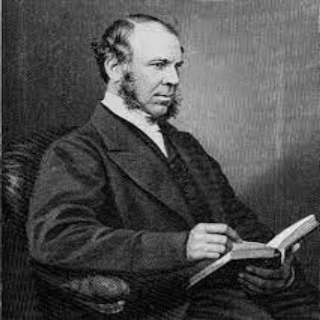
William Carey
"Expect great things; attempt great things."
At a meeting of Baptist leaders in the late 1700s, a newly ordained minister stood to argue for the value of overseas missions. He was abruptly interrupted by an older minister who said, "Young man, sit down! You are an enthusiast. When God pleases to convert the heathen, he'll do it without consulting you or me."
That such an attitude is inconceivable today is largely due to the subsequent efforts of that young man, William Carey.
Plodder Carey was raised in the obscure, rural village of Paulerpury, in the middle of England. He apprenticed in a local cobbler's shop, where the nominal Anglican was converted. He enthusiastically took up the faith, and though little educated, the young convert borrowed a Greek grammar and proceeded to teach himself New Testament Greek.
When his master died, he took up shoemaking in nearby Hackleton, where he met and married Dorothy Plackett, who soon gave birth to a daughter. But the apprentice cobbler's life was hard—the child died at age 2—and his pay was insufficient. Carey's family sunk into poverty and stayed there even after he took over the business.
"I can plod," he wrote later, "I can persevere to any definite pursuit." All the while, he continued his language studies, adding Hebrew and Latin, and became a preacher with the Particular Baptists. He also continued pursuing his lifelong interest in international affairs, especially the religious life of other cultures.
Carey was impressed with early Moravian missionaries and was increasingly dismayed at his fellow Protestants' lack of missions interest. In response, he penned An Enquiry into the Obligations of Christians to Use Means for the Conversion of the Heathens. He argued that Jesus' Great Commission applied to all Christians of all times, and he castigated fellow believers of his day for ignoring it: "Multitudes sit at ease and give themselves no concern about the far greater part of their fellow sinners, who to this day, are lost in ignorance and idolatry."
Carey didn't stop there: in 1792 he organized a missionary society, and at its inaugural meeting preached a sermon with the call, "Expect great things from God; attempt great things for God!" Within a year, Carey, John Thomas (a former surgeon), and Carey's family (which now included three boys, and another child on the way) were on a ship headed for India.
Stranger in a strange land
Thomas and Carey had grossly underestimated what it would cost to live in India, and Carey's early years there were miserable. When Thomas deserted the enterprise, Carey was forced to move his family repeatedly as he sought employment that could sustain them. Illness racked the family, and loneliness and regret set it: "I am in a strange land," he wrote, "no Christian friend, a large family, and nothing to supply their wants." But he also retained hope: "Well, I have God, and his word is sure."
He learned Bengali with the help of a pundit, and in a few weeks began translating the Bible into Bengali and preaching to small gatherings.
When Carey himself contracted malaria, and then his 5-year-old Peter died of dysentery, it became too much for his wife, Dorothy, whose mental health deteriorated rapidly. She suffered delusions, accusing Carey of adultery and threatening him with a knife. She eventually had to be confined to a room and physically restrained.
"This is indeed the valley of the shadow of death to me," Carey wrote, though characteristically added, "But I rejoice that I am here notwithstanding; and God is here."
Gift of tongues
In October 1799, things finally turned. He was invited to locate in a Danish settlement in Serampore, near Calcutta. He was now under the protection of the Danes, who permitted him to preach legally (in the British-controlled areas of India, all of Carey's missionary work had been illegal).
Carey was joined by William Ward, a printer, and Joshua and Hanna Marshman, teachers. Mission finances increased considerably as Ward began securing government printing contracts, the Marshmans opened schools for children, and Carey began teaching at Fort William College in Calcutta.
In December 1800, after seven years of missionary labor, Carey baptized his first convert, Krishna Pal, and two months later, he published his first Bengali New Testament. With this and subsequent editions, Carey and his colleagues laid the foundation for the study of modern Bengali, which up to this time had been an "unsettled dialect."
Carey continued to expect great things; over the next 28 years, he and his pundits translated the entire Bible into India's major languages: Bengali, Oriya, Marathi, Hindi, Assamese, and Sanskrit and parts of 209 other languages and dialects.
He also sought social reform in India, including the abolition of infanticide, widow burning (sati), and assisted suicide. He and the Marshmans founded Serampore College in 1818, a divinity school for Indians, which today offers theological and liberal arts education for some 2,500 students.
By the time Carey died, he had spent 41 years in India without a furlough. His mission could count only some 700 converts in a nation of millions, but he had laid an impressive foundation of Bible translations, education, and social reform.
His greatest legacy was in the worldwide missionary movement of the nineteenth century that he inspired. Missionaries like Adoniram Judson, Hudson Taylor, and David Livingstone, among thousands of others, were impressed not only by Carey's example, but by his words "Expect great things; attempt great things." The history of nineteenth-century Protestant missions is in many ways an extended commentary on the phrase.
what if my singleness never ends
It happened suddenly this past May, the moment I’d prayed for and sought after for quite some time: the moment I became okay with lifelong singleness. Something inside me relaxed as I sat at a coffee shop, my mind not even on relationships but preoccupied with a menu over dinner with friends. And then suddenly, I felt content to be single — not only for another few months, or even years, but even until the day I die, if God chooses that for me. “I don’t want to skip what God chooses to give me during singleness.” More than ever before, the years stretching out before me don’t seem like a romance-less, spouse-less, and (okay, let’s face it) sex-less gray void. It was a beautiful moment that could come only from God, a moment of triumph over an idol that has long battled for the throne of my heart. Whether it’s for a season or a lifetime, I’ve found that I don’t want to skip what God chooses to give me during singleness. Already Loved The more weddings I attend (which is several a year at this stage of life), the more the feeling sinks in that I may never be a bride. But the feeling isn’t altogether sad. Because I’m already dressed in white, you see. My friends’ immaculate dresses and the wedding day itself symbolize something mysterious and beautiful: the “robe of righteousness” God’s people already wear (Isaiah 61:10) and the “fine linen, bright and pure” we will put on at the wedding feast of the Lamb (Revelation 19:8). I’m already pursued by someone who wove the very sinews of my being together. I’m already loved with a love that will outlast every other. I’m already known more intimately than I can fathom. It’s so easy to read that last paragraph and think “so cliché,” especially since this is yet another  Christian article about singleness. Just be still. Do you realize what that paragraph means? You’re known just as you are (1 Corinthians 13:12). Even the inmost places of your heart — the darkest, the brightest, the most wounded, the most joyful, the most romantic — God knows and comprehends them to their depths. He cares for your unspoken and most intimate needs. There isn’t a thought you can speak before God knows it’s there (Psalm 139:4). Dwell on that. Do God’s presence and promises carry so little preciousness that we can scoff and declare them “cliché”? Faulty Assumptions So often, we spout inane phrases to single people like “God will bring you the right guy.” They reveal the heart so completely: I have to have a romantic relationship in my life at some point to be whole. We might subtly think, I don’t have to have it now, God. Or even next month. But at some point, God, you’ve gotta bring someone for me to marry. But he doesn’t. God does not have to bring us someone to marry. He simply is not obligated to do anything for us that is not for his glory and for our joy in him. And since we’re not all-knowing, we cannot claim to know what will give us the most long-term joy. We can make guesses, certainly. But the ultimate decision is up to our God, who has never ceased to provide exactly what his people need — from the garments of skin worn by Adam and Eve (Genesis 3:21) to our own daily bread (Matthew 6:11). “I am already loved with a love that will outlast every other.” I’m not  saying you won’t have difficult days where you yearn to be a husband or wife (I have those days too!), but I am saying that Jesus will meet you in those difficult times. He is gloriously gracious like that. The Spirit is willing and able to teach your heart many things, including contentment in singleness as long as God sees fit — and even if it’s lifelong. Don’t get me wrong: seeking marriage is great. If you’re interested in a godly someone, use wisdom and discernment and be intentional about it. But don’t fret. You may marry that person, and you may not. Whatever happens, don’t let it overshadow what God has already done for you and the glorious place you are headed. Three Suggestions “That’s great,” you may say as you read this. “But how can I do that?” I don’t pretend to know the complete answer to that question, but here are three suggestions that have helped me. 1. Recognize that you can’t be content on your own. Contentment is a work of God (Philippians 4:11–13). Pray to him for it. Lay your will and your heart down completely, and not in a way where you’re trying to be holy and spiritual so that you can get the “true prize” in your eyes. God can change your heart from that too; just ask. He is a Father who listens to his children. 2. Second, don’t surround yourself with romance. I’m not saying avoid all your friends’ weddings — each is a time for rejoicing and celebrating God’s work in their lives! But don’t inundate yourself with romantic comedies and TV shows and books and other media that are constantly focused on romance. Doing this can easily irritate wounds and give a foothold for envy and comparison to wreak havoc on your emotions. 3. And third, enjoy singleness. Seriously. If you’re not content in singleness, then you won’t be content in marriage. Spouses and significant others are not contentment charms; wedding vows are not magic incantations that produce lifelong fulfillment. “If you’re not content in singleness, then you won’t be content in marriage.” Give your time to ministering to friends and your community. Pursue your interests intently. Learn to manage your money. These activities do not have to be less fulfilling just because you are spouse-less! Believe it or not, if you do marry, there will be times when you yearn for singleness, and it isn’t likely to come again (at least not in the same way). A Better Goal So I come alongside you as a fellow single, encouraging you to join me in laying down the idol of romance. Let’s prepare now to better serve a future spouse or, if we never marry, to enjoy Jesus no matter married or not. Marriage is great, but it isn’t ultimate. The honor of “ultimate” remains with our true romance: the God who creates, sustains, intervenes in, and pursues the hearts of his people from eternity to eternity (Psalm 90:1–2). Amen.