
Others like growing a godly marriage Features >>
-160.webp)
Building Stronger Marriages And Families

Preparing For Marriage

Your Marriage And Your Ancestry

Making Marriage Work

Single, Married, Separated And Life After Divorce

The Intimate Marriage - A Practical Guide To Building A Great Marriage
Paul, Women And Wives: Marriage And Women’s Ministry In The Letters Of Paul

Why Men Dont Listen And Women Can't Read Maps

Healing Your Marriage When Trust Is Broken
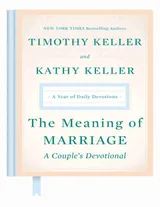
The Meaning Of Marriage: A Couple’s Devotional
About the Book
"Growing a Godly Marriage" by David Pratte is a practical guide for couples seeking to strengthen their relationship and build a marriage that is centered on biblical principles. The book provides advice on communication, resolving conflicts, fostering intimacy, and maintaining a strong spiritual foundation in marriage. Pratte encourages couples to prioritize God in their relationship and offers practical tips for cultivating a healthy and lasting marriage.
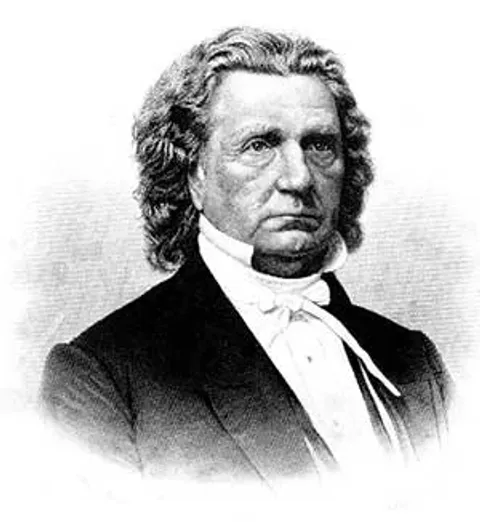
Emerson Andrews
 His Early life
Emerson Andrews was born in Mansfield, Bristol County, Massachusetts in 1806 to godly parents, James and Mercy Andrews. They were from English stock and were strict Puritans in faith and lifestyle. Although young Emerson was raised in the Congregational Church he was far from God in his teens and twenties.
Nevertheless, periodically, he experienced intense conviction, usually through his parents’ counsels and prayers but particularly through two unforgettable sermons delivered by the eccentric revivalist, Lorenzo Dow. Soon after this he was converted under the ministry of another revival preacher, Asahel Nettleton.
He was a very educated man formerly studying at Chesterfield Academy and, at the time of his conversion, at Plainfield Kimball Union Academy, in New Hampshire. In the spring of 1832 whilst studying further at Union College in Schenectady, New York, he was baptised by immersion in the Mohawk River. It was his convictions about the Bible’s teaching on water baptism that caused him to join the Baptist’s instead of the Congregationalists or Presbyterians.
A Lover of Revival
He wrote “Many revivals and protracted meetings of one, two, or more days, and some for weeks and months, have been held, in New England and elsewhere, within, my personal remembrance. These have sent out their hallowed influences, as the light of the world and salt of the earth. Just before and at the time of my second birth, many sweeping and glorious revivals, under the celebrated Dr. Netteton, John Leland, Jedediah Burchard, C. G. Finney, were hailed, enjoyed, and sounded all around and over the country.
As soon as I was converted I cherished the good news of revivals; and I sought a place and portion with live Christians, that I might speak for Christ and win souls to salvation. I asked God for direction and help, and was answered.
His first visit to a Revival
He describes his first visit to a Revival “The first meeting that I attended after my regeneration was held in the town of Windsor, Vt. It was called a “four days’ meeting.” But many such were held in different places about that time. This came off in the summer of l830. I was much delighted, fed, and strengthened by such a sight, experience, exercise, and spiritual supper. It was a precious banquet, adapted to develop and enlarge the young convert’s soul.
The four pastors of the town, with their respective churches and congregations, and some from neighboring towns, met with the Baptist church, of which Elder Leland Howard was the long-honored pastor. Some twenty other pastors also came in from adjacent towns, and a few Lawyers and teachers, who took leading parts in the services. Large congregations were constantly in attendance, and all the various exercises and meetings were interesting and profitable.
Some of the sermons and prayers were most powerful, melting, and effective. Sinners often arose, requesting prayers, or sent up short petitions to be read. A lawyer by the name of Shepherd, from New York, was found to be very able, pointed, and specific in prayer, and so effective and precise in noting each different request more perfectly than the ministers, that he was often invited to lead in prayer — especially when there were some ten or twenty different, or some difficult requests presented.
He seemed to be full of the Spirit, and was especially gifted and successful. Ministers learned something valuable from his wisdom and tact. I confess that his pointedness made a powerful and lasting impression on my mind and practice.
The professors and ministers were much blessed, and many sinners were converted in the meetings. The gospel was preached and the Spirit poured out, prayer and sacrifices made. Novelty and wonder attracted many. Here God crowned the effort.”
Mentored by Jacob Knapp
He writes. ” ROCHESTER, N.Y. 1839. Here I assisted in a powerful meeting, under the preaching of the celebrated Elder Jacob Knapp, for three weeks. Marvellous things were done. The wicked raged, the Spirit worked, grace prevailed, and hundreds were converted — a glorious triumph over rum, gambling, and infidelity. Jesus reigned.” This exposure to revival power whetted his appetite for an evangelistic ministry.
His first revival efforts
“WHITE DEER, PENN. 1839. In this rich farming district I had a revival meeting of five weeks, with a feeble Baptist church. We began at the close of the Association; but, with all the eloquent pastoral preaching in it, the brethren were not aroused, nor sinners much convicted.
Here my first sermon was from the text, “O Lord, revive thy work!” And he did so immediately. Some half a dozen persons were convicted and converted, and the church was revived by the power of God on that evening’s effort. The whole region, then, for seven miles around, was awakened, and some forty converts were immersed by Elder Spratt, D.D.
Here, too, we experienced severe opposition and much persecution from outside professors and sinners, but God strengthened our hands for a triumphant work. This was a blessed era with the church, and it is fragrant still.
“CLINTON, PENN. I had a revival meeting in this township. It was very great and powerful. Satan and sinners raged, at times, terribly, but the cross was triumphant. Many were immersed by the beloved pastor, Elder Spratt, D.D.
Hugh Donelly, the postmaster, rum-selling merchant, and an avowed infidel, who had slandered me and ridiculed the meeting, crept in away back, then into the middle seats; then, after a few nights, fell on his knees groaning and crying for mercy. I soon aided him in coming forward.
Then out came his wife and sister. We all prayed, and soon the three rejoiced in hope, and spoke boldly for Jesus. Brother Donelly has made a noble record in Pennsylvania and Indiana for Jesus and his cause…..
PARMA, N.Y. In this western village, in mid-winter, I preached night and day, for three weeks, to overflowing houses and attentive hearers. Christians renewed their “first love and vows,” and many sinners were converted and baptized.
An infidel, hearing a few sermons, was struck under conviction, and fled away thirty miles for comfort; but, feeling worse and worse, returned like the prodigal, feeling wretched and lost. He came forward, prayer was offered, and he soon yielded and believed, giving glory to God. Then he told his experience, and exhorted his old Universalist and infidel friends to repent and be saved from hell.
Emerson Andrews Preaching
His preaching zeal and effectiveness were quickly recognised and he was soon licensed to preach and for a four year period served brief pastorates in New York State – Waterford, West Troy, Lansingburg and Rome (1834-1838)
In 1838 began an itinerant evangelist for thirty-five years, mainly in America, but also in Europe, Africa, Asia and Canada. His estimates were that 40,000 were converted through his ministry.
His Early life
Emerson Andrews was born in Mansfield, Bristol County, Massachusetts in 1806 to godly parents, James and Mercy Andrews. They were from English stock and were strict Puritans in faith and lifestyle. Although young Emerson was raised in the Congregational Church he was far from God in his teens and twenties.
Nevertheless, periodically, he experienced intense conviction, usually through his parents’ counsels and prayers but particularly through two unforgettable sermons delivered by the eccentric revivalist, Lorenzo Dow. Soon after this he was converted under the ministry of another revival preacher, Asahel Nettleton.
He was a very educated man formerly studying at Chesterfield Academy and, at the time of his conversion, at Plainfield Kimball Union Academy, in New Hampshire. In the spring of 1832 whilst studying further at Union College in Schenectady, New York, he was baptised by immersion in the Mohawk River. It was his convictions about the Bible’s teaching on water baptism that caused him to join the Baptist’s instead of the Congregationalists or Presbyterians.
A Lover of Revival
He wrote “Many revivals and protracted meetings of one, two, or more days, and some for weeks and months, have been held, in New England and elsewhere, within, my personal remembrance. These have sent out their hallowed influences, as the light of the world and salt of the earth. Just before and at the time of my second birth, many sweeping and glorious revivals, under the celebrated Dr. Netteton, John Leland, Jedediah Burchard, C. G. Finney, were hailed, enjoyed, and sounded all around and over the country.
As soon as I was converted I cherished the good news of revivals; and I sought a place and portion with live Christians, that I might speak for Christ and win souls to salvation. I asked God for direction and help, and was answered.
His first visit to a Revival
He describes his first visit to a Revival “The first meeting that I attended after my regeneration was held in the town of Windsor, Vt. It was called a “four days’ meeting.” But many such were held in different places about that time. This came off in the summer of l830. I was much delighted, fed, and strengthened by such a sight, experience, exercise, and spiritual supper. It was a precious banquet, adapted to develop and enlarge the young convert’s soul.
The four pastors of the town, with their respective churches and congregations, and some from neighboring towns, met with the Baptist church, of which Elder Leland Howard was the long-honored pastor. Some twenty other pastors also came in from adjacent towns, and a few Lawyers and teachers, who took leading parts in the services. Large congregations were constantly in attendance, and all the various exercises and meetings were interesting and profitable.
Some of the sermons and prayers were most powerful, melting, and effective. Sinners often arose, requesting prayers, or sent up short petitions to be read. A lawyer by the name of Shepherd, from New York, was found to be very able, pointed, and specific in prayer, and so effective and precise in noting each different request more perfectly than the ministers, that he was often invited to lead in prayer — especially when there were some ten or twenty different, or some difficult requests presented.
He seemed to be full of the Spirit, and was especially gifted and successful. Ministers learned something valuable from his wisdom and tact. I confess that his pointedness made a powerful and lasting impression on my mind and practice.
The professors and ministers were much blessed, and many sinners were converted in the meetings. The gospel was preached and the Spirit poured out, prayer and sacrifices made. Novelty and wonder attracted many. Here God crowned the effort.”
Mentored by Jacob Knapp
He writes. ” ROCHESTER, N.Y. 1839. Here I assisted in a powerful meeting, under the preaching of the celebrated Elder Jacob Knapp, for three weeks. Marvellous things were done. The wicked raged, the Spirit worked, grace prevailed, and hundreds were converted — a glorious triumph over rum, gambling, and infidelity. Jesus reigned.” This exposure to revival power whetted his appetite for an evangelistic ministry.
His first revival efforts
“WHITE DEER, PENN. 1839. In this rich farming district I had a revival meeting of five weeks, with a feeble Baptist church. We began at the close of the Association; but, with all the eloquent pastoral preaching in it, the brethren were not aroused, nor sinners much convicted.
Here my first sermon was from the text, “O Lord, revive thy work!” And he did so immediately. Some half a dozen persons were convicted and converted, and the church was revived by the power of God on that evening’s effort. The whole region, then, for seven miles around, was awakened, and some forty converts were immersed by Elder Spratt, D.D.
Here, too, we experienced severe opposition and much persecution from outside professors and sinners, but God strengthened our hands for a triumphant work. This was a blessed era with the church, and it is fragrant still.
“CLINTON, PENN. I had a revival meeting in this township. It was very great and powerful. Satan and sinners raged, at times, terribly, but the cross was triumphant. Many were immersed by the beloved pastor, Elder Spratt, D.D.
Hugh Donelly, the postmaster, rum-selling merchant, and an avowed infidel, who had slandered me and ridiculed the meeting, crept in away back, then into the middle seats; then, after a few nights, fell on his knees groaning and crying for mercy. I soon aided him in coming forward.
Then out came his wife and sister. We all prayed, and soon the three rejoiced in hope, and spoke boldly for Jesus. Brother Donelly has made a noble record in Pennsylvania and Indiana for Jesus and his cause…..
PARMA, N.Y. In this western village, in mid-winter, I preached night and day, for three weeks, to overflowing houses and attentive hearers. Christians renewed their “first love and vows,” and many sinners were converted and baptized.
An infidel, hearing a few sermons, was struck under conviction, and fled away thirty miles for comfort; but, feeling worse and worse, returned like the prodigal, feeling wretched and lost. He came forward, prayer was offered, and he soon yielded and believed, giving glory to God. Then he told his experience, and exhorted his old Universalist and infidel friends to repent and be saved from hell.
Emerson Andrews Preaching
His preaching zeal and effectiveness were quickly recognised and he was soon licensed to preach and for a four year period served brief pastorates in New York State – Waterford, West Troy, Lansingburg and Rome (1834-1838)
In 1838 began an itinerant evangelist for thirty-five years, mainly in America, but also in Europe, Africa, Asia and Canada. His estimates were that 40,000 were converted through his ministry.
Will I Trust God
Had you been there that very moment, watching from a distance, you wouldn’t have observed anything dramatic. I’m talking about the moment Abraham (still called Abram at the time) stepped out of his tent and gazed into the heavens, looking at the stars. You may have heard him muttering something or other, perhaps at some point raising his hands or bowing to the ground. These gestures wouldn’t have seemed out of character to you because everyone knew Abram was a deeply pious man. And being tired, since it was the middle of the night and all, you probably would have left Abram to whatever he was doing and headed to bed. You would not have known that this was a defining moment in Abram’s life. You certainly wouldn’t have guessed this was a defining moment in world history that would impact billions of people. Because it would have seemed so undramatic. But that’s the way moments like these — moments that powerfully direct and shape the arc of history — often appear at first. And in this case, what made the world-changing minutes of stargazing so quietly monumental was that this old man, in the deep recesses of his heart, believed God. Pushed Nearly Beyond Belief To understand the profundity of this defining moment, however, we need to see how this old man’s belief had been pushed to the very brink. It all began in Genesis 12, where God delivered to Abram a promise that would have been incredible on its own, quite apart from the fact that Abram, at age 75, and Sarai, at age 66, as yet had no children: Now the Lord said to Abram, “Go from your country and your kindred and your father’s house to the land that I will show you. And I will make of you a great nation, and I will bless you and make your name great, so that you will be a blessing. I will bless those who bless you, and him who dishonors you I will curse, and in you all the families of the earth shall be blessed.” (Genesis 12:1–3) So, “by faith Abraham obeyed,” packing up his household and setting out, though “not knowing where he was going” (Hebrews 11:8). And when he and his small tribe arrived at Shechem, God spoke to him again and said, “To your offspring I will give this land” (Genesis 12:7). Time passed. God’s blessing rested on Abram and his tribe, which included his nephew Lot’s household, and their combined possessions and herds grew larger — so large, in fact, that Abram and Lot had to separate into two tribes. Still, Abram had no offspring — the key to the fulfillment of the Lord’s greatest promise to him. Nonetheless, the Lord once again affirmed his promise (Genesis 13:14–16). More time passed. God continued to prosper whatever Abram did. And once again, the Lord appeared to him and said, Fear not, Abram, I am your shield; your reward shall be very great. (Genesis 15:1) But for Abram, now in his eighties, and Sarai in her seventies, there was still the same glaring problem. Amid all the abundant blessing of prosperity God had showered on him, there was one conspicuous, crucial place of poverty: Abram still had no offspring. Desperate Prayer of a Man of Faith It was at this point that Abram could not contain his anguished perplexity over the ongoing void at the core of God’s promises, and it poured out in a desperate prayer: “O Lord God, what will you give me, for I continue childless, and the heir of my house is Eliezer of Damascus?” And Abram said, “Behold, you have given me no offspring, and a member of my household will be my heir.” (Genesis 15:2–3) The apostle Paul later wrote, “No unbelief made [Abram] waver concerning the promise of God, but he grew strong in his faith as he gave glory to God, fully convinced that God was able to do what he had promised” (Romans 4:20–21). But in this prayer, do we overhear Abram’s faith wavering? No. What we’re hearing is not unbelief, but sincere perplexity. And there’s a difference. Abram’s perplexity is similar to the young virgin Mary’s perplexity when Gabriel tells her that she will “conceive in [her] womb and bear a son.” She responds, “How will this be, since I am a virgin?” (Luke 1:30, 34). It’s a reasonable question; virgins don’t get pregnant. Abram’s question is also reasonable with regard to nature; barren women past childbearing years do not get pregnant. God was not offended or dishonored by Mary’s or Abraham’s sincere perplexity, which is why he responds to both with gracious kindness. And God’s answers are also reasonable, even if his reasonableness often extends far beyond the limits of human reason (“Is anything too hard for the Lord?” Genesis 18:14). So, in answer to Abram’s sincerely desperate prayer, God graciously invites him to step outside. Starry, Starry Night God says to Abram, “Look toward heaven, and number the stars, if you are able to number them.” Then he said to him, “So shall your offspring be.” (Genesis 15:5) Here, suddenly, is a defining moment for Abram. God’s answer doesn’t include how Abram is going to obtain descendants. All God does is reaffirm, and even expand the scope of, what he has already promised. In other words, “I’m going to give you more offspring than you can count or even imagine. Do you believe me?” And old Abram, with an old wife and a childless tent, looking up into the night sky so full of stars that in some places they looked like clouds of light, with the word of the Lord ringing in his mind, realizes that whatever God is doing is about something much bigger than he has yet grasped, and so he resolves to trust “that God [is] able to do what he [has] promised” (Romans 4:21). [Abram] believed the Lord, and he counted it to him as righteousness. (Genesis 15:6) “The world would never be the same because of that moment on that starry, starry night.” No one, not even Abram, could have seen just how history-shaping, how destiny-determining, this moment was, when a man was justified — counted righteous — in the eyes of God simply because he believed God. Because a man believed God’s promises over his own perceptions. Because a man trusted God and did not lean on his own understanding (Proverbs 3:5). The world would never be the same after that moment on that starry, starry night. Joy Beyond Belief I’m not saying it was smooth faith-sailing from then on for the man God renamed Abraham, “the father of a multitude of nations” (Genesis 17:5). It wasn’t. The Hagar and Ishmael event, as well as others, were still in the future. Isaac, the first of the promised offspring, wouldn’t be born for another fifteen years or so. And God had another defining moment in store for Abraham on the slopes of Mount Moriah. The path of faith is a rugged one, and almost always more demanding than we expect. But after that night, Abraham did not waver in his belief that God would, somehow, do what he had promised. And God did. He made both Abraham and Sarah, and all who knew them, laugh for joy — “joy inexpressible and full of glory” (1 Peter 1:8) — when Isaac was finally born. For that’s where the rugged path of faith, the hard way that leads to life (Matthew 7:14), ultimately leads: to “fullness of joy and . . . pleasures forevermore” (Psalm 16:11). “The path of faith is a rugged one, and almost always more demanding than we expect.” God leads most of his children, who are Abraham’s children because they share Abraham’s faith (Romans 4:16), to defining moments of faith, moments when our faith is pushed nearly to a point beyond belief, or so it seems to us. These moments may not appear dramatic to others. But to us, in the deep recesses of our hearts, everything is on the line. And at these moments, everything comes down to a simple but profound, and perhaps anguishing, question: Will I trust God? What usually isn’t apparent to us is how significant the moment is for an untold number of others. For it is often true that in “obtaining [as] the outcome of [our] faith, the salvation of [our] souls” (1 Peter 1:9), what also results in the years and centuries that follow is the salvation of others — so many, perhaps, that they would boggle our minds if we could see them. When you believe God, he counts it to you as righteousness, as full acceptance from God himself. And when you believe God, it leads to the Isaac-laughter of inexpressible joy as you at last see God do for you what he has promised. And when you believe God, you will share inexpressible joy with a host of others who, because you believed, will be laughing in joy with you. Article by Jon Bloom