

30 Days - Change Your Habits, Change Your Life Order Printed Copy
- Author: Marc Reklau
- Size: 1.12MB | 180 pages
- |
Others like 30 days - change your habits, change your life Features >>










About the Book
"30 Days - Change Your Habits, Change Your Life" by Marc Reklau is a self-help book that offers a practical 30-day plan to help readers break bad habits and establish healthier, more productive habits. The book provides actionable strategies and tips to help individuals transform their lives and achieve their goals by making small changes each day.
Gladys Aylward
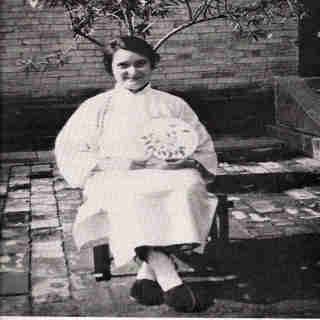 Gladys Aylward was born in London in 1904 (or a few years earlier). She worked for several years as a parlormaid, and then attended a revival meeting at which the preacher spoke of dedicating one's life to the service of God. Gladys responded to the message, and soon after became convinced that she was called to preach the Gospel in China. At the age of 26, she became a probationer at the China Inland Mission Center in London, but was failed to pass the examinations. She worked at other jobs and saved her money. Then she heard of a 73-year-old missionary, Mrs. Jeannie Lawson, who was looking for a younger woman to carry on her work. Gladys wrote to Mrs. Lawson and was accepted if she could get to China. She did not have enough money for the ship fare, but did have enough for the train fare, and so in October of 1930 she set out from London with her passport, her Bible, her tickets, and two pounds ninepence, to travel to China by the Trans-Siberian Railway, despite the fact that China and the Soviet Union were engaged in an undeclared war. She arrived in Vladivostok and sailed from there to Japan and from Japan to Tientsin, and thence by train, then bus, then mule, to the inland city of Yangchen, in the mountainous province of Shansi, a little south of Peking (Beijing). Most of the residents had seen no Europeans other than Mrs. Lawson and now Miss Aylward. They distrusted them as foreigners, and were not disposed to listen to them.
Yangchen was an overnight stop for mule caravans that carried coal, raw cotton, pots, and iron goods on six-week or three-month journeys. It occurred to the two women that their most effective way of preaching would be to set up an inn. The building in which they lived had once been an inn, and with a bit of repair work could be used as one again. They laid in a supply of food for mules and men, and when next a caravan came past, Gladys dashed out, grabbed the rein of the lead mule, and turned it into their courtyard. It went willingly, knowing by experience that turning into a courtyard meant food and water and rest for the night. The other mules followed, and the muleteers had no choice. They were given good food and warm beds at the standard price, and their mules were well cared for, and there was free entertainment in the evening--the inkeepers told stories about a man named Jesus. After the first few weeks, Gladys did not need to kidnap customers -- they turned in at the inn by preference. Some became Christians, and many of them (both Christians and non-Christians) remembered the stories, and retold them more or less accurately to other muleteers at other stops along the caravan trails. Gladys practiced her Chinese for hours each day, and was becoming fluent and comfortable with it. Then Mrs. Lawson suffered a severe fall, and died a few days later. Gladys Aylward was left to run the mission alone, with the aid of one Chinese Christian, Yang, the cook.
A few weeks after the death of Mrs. Lawson, Miss Aylward met the Mandarin of Yangchen. He arrived in a sedan chair, with an impressive escort, and told her that the government had decreed an end to the practice of footbinding. (Note: Among the upper and middle classes, it had for centuries been the custom that a woman's foot should be wrapped tightly in bandages from infancy, to prevent it from growing. Thus grown women had extremely tiny feet, on which they could walk only with slow, tottering steps, which were thought to be extremely graceful.) The government needed a foot-inspector, a woman (so that she could invade the women's quarters without scandal), with her own feet unbound (so that she could travel), who would patrol the district enforcing the decree. It was soon clear to them both that Gladys was the only possible candidate for the job, and she accepted, realizing that it would give her undreamed-of opportunities to spread the Gospel.
During her second year in Yangchen, Gladys was summoned by the Mandarin. A riot had broken out in the men's prison. She arrived and found that the convicts were rampaging in the prison courtyard, and several of them had been killed. The soldiers were afraid to intervene. The warden of the prison said to Gladys, "Go into the yard and stop the rioting." She said, "How can I do that?" The warden said, "You have been preaching that those who trust in Christ have nothing to fear." She walked into the courtyard and shouted: "Quiet! I cannot hear when everyone is shouting at once. Choose one or two spokesmen, and let me talk with them." The men quieted down and chose a spokesman. Gladys talked with him, and then came out and told the warden: "You have these men cooped up in crowded conditions with absolutely nothing to do. No wonder they are so edgy that a small dispute sets off a riot. You must give them work. Also, I am told that you do not supply food for them, so that they have only what their relatives send them. No wonder they fight over food. We will set up looms so that they can weave cloth and earn enough money to buy their own food." This was done. There was no money for sweeping reforms, but a few friends of the warden donated old looms, and a grindstone so that the men could work grinding grain. The people began to call Gladys Aylward "Ai-weh-deh," which means "Virtuous One." It was her name from then on.
Soon after, she saw a woman begging by the road, accompanied by a child covered with sores and obviously suffering severe malnutrition. She satisfied herself that the woman was not the child's mother, but had kidnapped the child and was using it as an aid to her begging. She bought the child for ninepence--a girl about five years old. A year later, "Ninepence" came in with an abandoned boy in tow, saying, "I will eat less, so that he can have something." Thus Ai-weh-deh acquired a second orphan, "Less." And so her family began to grow.... She was a regular and welcome visitor at the palace of the Mandarin, who found her religion ridiculous, but her conversation stimulating. In 1936, she officially became a Chinese citizen. She lived frugally and dressed like the people around her (as did the missionaries who arrived a few years after in in the neighboring town of Tsechow, David and Jean Davis and their young son Murray, of Wales), and this was a major factor in making her preaching effective.
Then the war came. In the spring of 1938, Japanese planes bombed the city of Yangcheng, killing many and causing the survivors to flee into the mountains. Five days later, the Japanese Army occupied Yangcheng, then left, then came again, then left. The Mandarin gathered the survivors and told them to retreat into the mountains for the duration. He also announced that he was impressed by the life of Ai-weh-deh and wished to make her faith his own. There remained the question of the convicts at the jail. The traditional policy favored beheading them all lest they escape. The Mandarin asked Ai-weh-deh for advice, and a plan was made for relatives and friends of the convicts to post a bond guaranteeing their good behavior. Every man was eventually released on bond. As the war continued Gladys often found herself behind Japanese lines, and often passed on information, when she had it, to the armies of China, her adopted country. She met and became friends with "General Ley," a Roman Catholic priest from Europe who had teken up arms when the Japanese invaded, and now headed a guerilla force. Finally he sent her a message. The Japanese are coming in full force. We are retreating. Come with us." Angry, she scrawled a Chinese note, Chi Tao Tu Pu Twai, "Christians never retreat!" He sent back a copy of a Japanese handbill offering $100 each for the capture, dead or alive, of (1) the Mandarin, (2) a prominent merchant, and (3) Ai-weh-deh. She determined to flee to the government orphanage at Sian, bringing with her the children she had accumulated, about 100 in number. (An additional 100 had gone ahead earlier with a colleague.) With the children in tow, she walked for twelve days. Some nights they found shelter with friendly hosts. Some nights they spent unprotected on the mountainsides. On the twelfth day, they arrived at the Yellow River, with no way to cross it. All boat traffic had stopped, and all civilian boats had been seized to keep them out of the hands of the Japanese. The children wanted to know, "Why don't we cross?" She said, "There are no boats." They said, "God can do anything. Ask Him to get us across." They all knelt and prayed. Then they sang. A Chinese officer with a patrol heard the singing and rode up. He heard their story and said, "I think I can get you a boat." They crossed, and after a few more difficulties Ai-weh-deh delivered her charges into competent hands at Sian, and then promptly collapsed with typhus fever and sank into delirium for several days.
As her health gradually improved, she started a Christian church in Sian, and worked elsewhere, including a settlement for lepers in Szechuan, near the borders of Tibet. Her health was permanently impaired by injuries received during the war, and in 1947 she returned to England for a badly needed operation. She remained in England, preaching there.
In 1957, Alan Burgess wrote a book about her, The Small Woman. It was condensed in The Reader's Digest, and made into a movie called The Inn of the Sixth Happiness, starring Ingrid Bergman. When Newsweek magazine reviewed the movie, and summarized the plot, a reader, supposing the story to be fiction, wrote in to say, "In order for a movie to be good, the story should be believable!" Miss Gladys Aylward, the Small Woman, Ai-weh-deh, died 3 January 1970.
Gladys Aylward was born in London in 1904 (or a few years earlier). She worked for several years as a parlormaid, and then attended a revival meeting at which the preacher spoke of dedicating one's life to the service of God. Gladys responded to the message, and soon after became convinced that she was called to preach the Gospel in China. At the age of 26, she became a probationer at the China Inland Mission Center in London, but was failed to pass the examinations. She worked at other jobs and saved her money. Then she heard of a 73-year-old missionary, Mrs. Jeannie Lawson, who was looking for a younger woman to carry on her work. Gladys wrote to Mrs. Lawson and was accepted if she could get to China. She did not have enough money for the ship fare, but did have enough for the train fare, and so in October of 1930 she set out from London with her passport, her Bible, her tickets, and two pounds ninepence, to travel to China by the Trans-Siberian Railway, despite the fact that China and the Soviet Union were engaged in an undeclared war. She arrived in Vladivostok and sailed from there to Japan and from Japan to Tientsin, and thence by train, then bus, then mule, to the inland city of Yangchen, in the mountainous province of Shansi, a little south of Peking (Beijing). Most of the residents had seen no Europeans other than Mrs. Lawson and now Miss Aylward. They distrusted them as foreigners, and were not disposed to listen to them.
Yangchen was an overnight stop for mule caravans that carried coal, raw cotton, pots, and iron goods on six-week or three-month journeys. It occurred to the two women that their most effective way of preaching would be to set up an inn. The building in which they lived had once been an inn, and with a bit of repair work could be used as one again. They laid in a supply of food for mules and men, and when next a caravan came past, Gladys dashed out, grabbed the rein of the lead mule, and turned it into their courtyard. It went willingly, knowing by experience that turning into a courtyard meant food and water and rest for the night. The other mules followed, and the muleteers had no choice. They were given good food and warm beds at the standard price, and their mules were well cared for, and there was free entertainment in the evening--the inkeepers told stories about a man named Jesus. After the first few weeks, Gladys did not need to kidnap customers -- they turned in at the inn by preference. Some became Christians, and many of them (both Christians and non-Christians) remembered the stories, and retold them more or less accurately to other muleteers at other stops along the caravan trails. Gladys practiced her Chinese for hours each day, and was becoming fluent and comfortable with it. Then Mrs. Lawson suffered a severe fall, and died a few days later. Gladys Aylward was left to run the mission alone, with the aid of one Chinese Christian, Yang, the cook.
A few weeks after the death of Mrs. Lawson, Miss Aylward met the Mandarin of Yangchen. He arrived in a sedan chair, with an impressive escort, and told her that the government had decreed an end to the practice of footbinding. (Note: Among the upper and middle classes, it had for centuries been the custom that a woman's foot should be wrapped tightly in bandages from infancy, to prevent it from growing. Thus grown women had extremely tiny feet, on which they could walk only with slow, tottering steps, which were thought to be extremely graceful.) The government needed a foot-inspector, a woman (so that she could invade the women's quarters without scandal), with her own feet unbound (so that she could travel), who would patrol the district enforcing the decree. It was soon clear to them both that Gladys was the only possible candidate for the job, and she accepted, realizing that it would give her undreamed-of opportunities to spread the Gospel.
During her second year in Yangchen, Gladys was summoned by the Mandarin. A riot had broken out in the men's prison. She arrived and found that the convicts were rampaging in the prison courtyard, and several of them had been killed. The soldiers were afraid to intervene. The warden of the prison said to Gladys, "Go into the yard and stop the rioting." She said, "How can I do that?" The warden said, "You have been preaching that those who trust in Christ have nothing to fear." She walked into the courtyard and shouted: "Quiet! I cannot hear when everyone is shouting at once. Choose one or two spokesmen, and let me talk with them." The men quieted down and chose a spokesman. Gladys talked with him, and then came out and told the warden: "You have these men cooped up in crowded conditions with absolutely nothing to do. No wonder they are so edgy that a small dispute sets off a riot. You must give them work. Also, I am told that you do not supply food for them, so that they have only what their relatives send them. No wonder they fight over food. We will set up looms so that they can weave cloth and earn enough money to buy their own food." This was done. There was no money for sweeping reforms, but a few friends of the warden donated old looms, and a grindstone so that the men could work grinding grain. The people began to call Gladys Aylward "Ai-weh-deh," which means "Virtuous One." It was her name from then on.
Soon after, she saw a woman begging by the road, accompanied by a child covered with sores and obviously suffering severe malnutrition. She satisfied herself that the woman was not the child's mother, but had kidnapped the child and was using it as an aid to her begging. She bought the child for ninepence--a girl about five years old. A year later, "Ninepence" came in with an abandoned boy in tow, saying, "I will eat less, so that he can have something." Thus Ai-weh-deh acquired a second orphan, "Less." And so her family began to grow.... She was a regular and welcome visitor at the palace of the Mandarin, who found her religion ridiculous, but her conversation stimulating. In 1936, she officially became a Chinese citizen. She lived frugally and dressed like the people around her (as did the missionaries who arrived a few years after in in the neighboring town of Tsechow, David and Jean Davis and their young son Murray, of Wales), and this was a major factor in making her preaching effective.
Then the war came. In the spring of 1938, Japanese planes bombed the city of Yangcheng, killing many and causing the survivors to flee into the mountains. Five days later, the Japanese Army occupied Yangcheng, then left, then came again, then left. The Mandarin gathered the survivors and told them to retreat into the mountains for the duration. He also announced that he was impressed by the life of Ai-weh-deh and wished to make her faith his own. There remained the question of the convicts at the jail. The traditional policy favored beheading them all lest they escape. The Mandarin asked Ai-weh-deh for advice, and a plan was made for relatives and friends of the convicts to post a bond guaranteeing their good behavior. Every man was eventually released on bond. As the war continued Gladys often found herself behind Japanese lines, and often passed on information, when she had it, to the armies of China, her adopted country. She met and became friends with "General Ley," a Roman Catholic priest from Europe who had teken up arms when the Japanese invaded, and now headed a guerilla force. Finally he sent her a message. The Japanese are coming in full force. We are retreating. Come with us." Angry, she scrawled a Chinese note, Chi Tao Tu Pu Twai, "Christians never retreat!" He sent back a copy of a Japanese handbill offering $100 each for the capture, dead or alive, of (1) the Mandarin, (2) a prominent merchant, and (3) Ai-weh-deh. She determined to flee to the government orphanage at Sian, bringing with her the children she had accumulated, about 100 in number. (An additional 100 had gone ahead earlier with a colleague.) With the children in tow, she walked for twelve days. Some nights they found shelter with friendly hosts. Some nights they spent unprotected on the mountainsides. On the twelfth day, they arrived at the Yellow River, with no way to cross it. All boat traffic had stopped, and all civilian boats had been seized to keep them out of the hands of the Japanese. The children wanted to know, "Why don't we cross?" She said, "There are no boats." They said, "God can do anything. Ask Him to get us across." They all knelt and prayed. Then they sang. A Chinese officer with a patrol heard the singing and rode up. He heard their story and said, "I think I can get you a boat." They crossed, and after a few more difficulties Ai-weh-deh delivered her charges into competent hands at Sian, and then promptly collapsed with typhus fever and sank into delirium for several days.
As her health gradually improved, she started a Christian church in Sian, and worked elsewhere, including a settlement for lepers in Szechuan, near the borders of Tibet. Her health was permanently impaired by injuries received during the war, and in 1947 she returned to England for a badly needed operation. She remained in England, preaching there.
In 1957, Alan Burgess wrote a book about her, The Small Woman. It was condensed in The Reader's Digest, and made into a movie called The Inn of the Sixth Happiness, starring Ingrid Bergman. When Newsweek magazine reviewed the movie, and summarized the plot, a reader, supposing the story to be fiction, wrote in to say, "In order for a movie to be good, the story should be believable!" Miss Gladys Aylward, the Small Woman, Ai-weh-deh, died 3 January 1970.
the filling of the spirit, or true spirituality
By various terms the Bible teaches that there are two classes of Christians: those who "abide in Christ," and those who "abide not"; those who are "walking in the light," and those who "walk in darkness"; those who "walk by the Spirit," and those who "walk as men"; those who "walk in newness of life," and those who "walk after the flesh"; those who have the Spirit "in" and "upon" them, and those who have the Spirit "in" them, but not "upon" them; those who are "spiritual" and those who are "carnal"; those who are "filled with the Spirit," and those who are not. All this has to do with the quality of daily life of saved people, and is in no way a contrast between the saved and the unsaved. Where there is such an emphasis in the Bible as is indicated by these distinctions there is a corresponding reality. There is, then, the possibility of a great transition for those who are carnal into the reality of true spiritual living. The revelation concerning this possible transition, with all of its experiences and blessings, is taken seriously only by earnest believers who are faithfully seeking a God-honoring daily life. To such there is boundless joy and consolation in this gospel of deliverance, power and victory. The transition from the carnal to the spiritual, is treated at length in the Bible. However, it is possible to know the doctrine and not to have entered into its blessings; as it is possible, on the other hand, to have entered in some measure into the experience and not to have known the doctrine. This gospel of deliverance has suffered much from those who have sought to understand its principles by analyzing some personal experience apart from the teaching of the Scriptures. The danger in this error is obvious: No one experience would ever be a true, or complete representation of the full purpose of God for every Christian; and if it were, nothing short of the infinite wisdom of God could formulate its exact statement. For want of Bible instruction many, when attempting to account for an experience, have coined terms and phrases which are not Biblical and are therefore invariably as faulty as any of the conclusions of the finite mind when attempting to deal with the divine realities. It would be useless to attempt to classify experiences; but when one has found peace, power and blessing through a definite yielding to God and reliance on His strength alone, the Bible clearly assigns the cause to be a larger manifestation of the presence and power of the Spirit. Such an one is "filled with the Spirit." What Is the Spirit's Filling? In the Bible, the meaning of the phrase "filled with the Spirit," is disclosed, and the filling of the Spirit is also seen to be the experience of the early Christians. From the Word of God, then, we can hope to arrive at some clear understanding of what is meant by the phrase, the "filling of the Spirit"; but there is no instruction to be gained from such man-made, unbiblical terms as "second blessing," "a second work of grace," "the higher life," and various phrases used in the perverted statements of the doctrines of sanctification and perfection. An unlimited field lies before us when we are told that we may be "changed from glory to glory" even into the image of Christ, and that by the Spirit (2 Cor. 3:18). What this transformation may mean to a believer and the exact conditions upon which it may be realized, must be understood, not from the imperfect analysis of experience, but from the exact words of revelation. It is quite possible for any child of God to make full proof of "that good, and acceptable, and perfect will of God" for him. And God has promised to work in the believer "both to will and to do of his good pleasure." By His power the very "virtues of him who called us out of darkness into his marvelous light" and the "mind of Christ" may be reproduced in the one who is saved. These blessings and the conditions God imposes for their attainment are clearly set forth in the Word of God. The Spirit does not speak from Himself. His purpose is to reveal and glorify Christ (John 16:12-15). The Spirit is made known to us by descriptive titles, such as "The Holy Spirit," or "The Spirit of God"; but His name is not disclosed. Though He does not reveal Himself, He is, nevertheless, the cause of all true spirituality. His work is to manifest "the life that is Christ" so completely that one can say: "For to me to live is Christ"; but the sufficient power back of this possible out-living of Christ is the in-living Spirit of God, and this is a result of the Spirit's filling. Paul had been saved on the Damascus road and there, we may believe, had received the Spirit as the "earnest" and the "firstfruits." Later, after having entered into the city, Ananias came to him and placing his hands on him said, "Brother Saul, the Lord, even Jesus, that appeared unto thee in the way as thou camest, hath sent me, that thou mightest receive thy sight, and be filled with the Holy Spirit." Two results were to be accomplished: Saul was to receive his sight, and he was to be filled with the Spirit. This, it should be remembered, was no part of his salvation. We are then told that "immediately there fell from his eyes as it had been scales: and he received sight forthwith." There is no record of an emotion, or experience, which might be taken as evidence that he had been filled with the Spirit. He was filled, nevertheless, as definitely as he regained his sight. The evidence is conclusive; for the record goes on to say: "and straightway he preached Christ in the synagogues, that he is the Son of God" (Acts 9:17-20). There is no evidence that the Apostle was conscious of the Spirit; he was altogether occupied with Christ. Nevertheless, he was "filled with the Spirit" and so, in the Spirit's own time and way, entered into the priceless result of an out-lived Christ. The Spirit is the cause while the experience of the glory and reality of Christ is the effect. According to the Scriptures, the Spirit-filled believer is the divine ideal, whether it be by example, or precept. First, as to example: Christ was "full of the Spirit" (Luke 4:1); each of the members of one family, Zacharias, Elisabeth and John, were "filled with the Spirit" (Luke 1:15,41,67); and the disciples and others were filled again and again after their real ministry had begun (Acts 2:4; Acts 4:8,31; Acts 6:3; Acts 7:55; Acts 9:17; Acts 11:24; Acts 13:52. Note, also, all passages where the Spirit is said to have been "upon" believers). Second, as to precept: One direct New Testament command is given: "And be not drunk with wine, wherein is excess; but be filled with the Spirit" (or, more literally, "be being kept filled by the Spirit." Eph. 5:18). Here the form of the verb used is somewhat different from that which is used in connection with the other ministries of the Spirit. The Christian has been born, baptized, indwelt, and sealed by the Spirit: he must be getting (being kept) filled by the Spirit. It is the revealed purpose of God that the Spirit shall be constantly ministered unto the Christian: "He therefore that ministereth to you the Spirit" (Gal. 3:5). A Christian, to be spiritual, must, then, be filled and kept filled by the Spirit. An experience may or may not accompany the first entrance into the Spirit-filled life; but, even when there is an experience, the Bible knows nothing of a "second blessing," or "second work of grace," wherein there will be any less need of the mighty enabling power of God tomorrow than there has been today. One may learn better how to "walk in the Spirit"; but he will never come to a moment in this life when he will need to walk less by the Spirit. The divine resources for a moment by moment triumph in Christ are limitless; but the utter need of the helpless creature never ceases. It is important to note that three times in the New Testament the effect of strong drink is put over against the Spirit-filled life (Luke 1:15; Acts 2:12-21; Eph. 5:18). As strong drink stimulates the physical forces and men are prone to turn to it for help over the difficult places, so the child of God, facing an impossible responsibility of a heavenly walk and service, is directed to the Spirit as the source of all sufficiency. Every moment in a spiritual life is one of unmeasured need and super-human demands, and the supply of enabling power and grace must be as constantly received and employed. "As thy day, so shall thy strength be." To be filled with the Spirit is to have the Spirit fulfilling in us all that God intended Him to do when He placed Him there. To be filled is not the problem of getting more of the Spirit: it is rather the problem of the Spirit getting more of us. We shall never have more of the Spirit than the anointing which every true Christian has received. On the other hand, the Spirit may have all of the believer and thus be able to manifest in him the life and character of Christ. A spiritual person, then, is one who experiences the divine purpose and plan in his daily life through the power of the indwelling Spirit. The of that life will be the out-lived Christ. The cause of that life will be the unhindered indwelling Spirit (Eph. 3:16-21; 2 Cor. 3:18). The New Testament is clear as to just what the Spirit would produce in a fully adjusted life, and all of this revelation taken together forms the Bible definition of spirituality. These undertakings are distinctly assigned to the Spirit, and are His manifestations in and through the Christian. Seven Manifestations of the Spirit There are seven manifestations of the Spirit, and these are said to be experienced only by the Spirit-filled believer; for in the Scriptures, these results are never related to any other ministry of the Spirit than that of filling. The seven manifestations of the Spirit are: 1. The Spirit Produces Christian Character. "But the fruit of the Spirit is love, joy, peace, longsuffering, gentleness, goodness, faith, meekness, temperance" (self-control, Gal. 5:22-23). Compressed into these nine words we have not only the exact statement as to what Christian character is, but a description, as well, of the life that Christ lived while here on the earth. It is also a statement of that manner of life which He would have the Christian experience here and now. These nine words form a Bible definition of what is meant by the phrase, "For to me to live is Christ." Though the world strives at a shadow of what these nine words represent, the reality is foreign to human nature, even when that nature is at its best. These graces, as here presented, are exotics and are never found in human nature unless produced there by the power of God. They are the "fruit of the Spirit." Christian character, therefore, is not developed, or "built" through human attention and energy. The method of attaining unto a character by attention and energy, which is now elaborately explained and constantly recommended by many, is the best the world can do, and that method may have some realization within the sphere of the shadows the world has chosen as its ideals. The child of God is not facing the mere shadows which are the ideals of the world, though in ignorance he might suppose that he is. He is facing the problem of showing "forth the praises [virtues] of him" who hath called us "out of darkness into his marvelous light." He will find little encouragement in the Bible to attempt the "building" of these characteristics of the Infinite. Human nature in its most favorable conditions has never been expected to do this. If the aim were no higher than the standards of the world, it might seem reasonable to try to build a Christian character; but even then, there would be no Scripture to warrant the human struggle. True Christian character is the "fruit of the Spirit." The very position of a child of God as a heavenly citizen demands that these nine graces which are the "fruit of the Spirit" shall be present in his daily life. He is to "walk worthy" of the calling wherewith he is called, "with all lowliness and meekness, with longsuffering, forbearing one another in love." So, also, on the other hand, his priceless fellowship "with the Father and with his Son" must depend on the presence of these divine characteristics. There must be some quality of life and character in the Christian with which God can have fellowship. But if God finds anything like Himself in a human life, He must place it there; for He knows full well that such divine graces can never appear in a life apart from His own power. Thus if He, by His very nature, demands the heavenly graces as the only possible basis for communion with His Spirit-born child, He is not unreasonable in such a demand, for He does not expect these graces from the flesh, but has made full provision that they may be produced by the Spirit. The fact, however, that He has designed that they shall be the "fruit of the Spirit" changes the whole human responsibility. It is no longer something for the human strength to attempt, nor is it to be done by the human strength plus the help of the Spirit. It is not something that man can do, even with help. It is "the fruit of the Spirit." True Christian character is produced in the believer, but not by the believer. Doubtless the Spirit employs every faculty of the believer's being to realize this priceless quality of life; yet there is nothing in the believer, of himself, which could produce this result. There is not even a spark of these graces within the human nature which might be fanned into a fire. All must be produced in the heart and life by the Spirit. Thus the new problem is naturally that of maintaining such a relationship to the Spirit as shall make it possible for Him to accomplish continually what He came into the heart to do. What the flesh can, will and must do has been stated in the preceding verses of the passage under consideration: "Now the works of the flesh are manifest, which are these; Adultery, fornication, uncleanness, lasciviousness, idolatry, witchcraft, hatred, variance, emulations, wrath, strife, seditions; heresies, envyings, murders, drunkenness, revelings, and such like." "But," in contrast to all this, "the fruit of the Spirit is love, joy, peace, longsuffering, gentleness, goodness, faith, meekness, temperance" (self-control). "The flesh," according to its use in this and similar passages is more than the physical body. The term represents all,—spirit, soul and body—that the person was before he was saved. From that source there can come no real spiritual "fruit." In this very context it is stated that "the flesh lusteth against the Spirit, and the Spirit against the flesh: and these are contrary the one to the other." There are, then, two principles of life which are open to the child of God: the carnal walk which is by the energy of the flesh, or "as men," and the spiritual walk which is by the energy of the Spirit, or as Christ. This passage in Galatians states: "This I say then, Walk in the Spirit [literally, by means of the Spirit], and ye shall not fulfill the lust [desire] of the flesh." These two principles are absolutely opposed to each other and therefore cannot be mingled. Walking by means of the Spirit, or "being led of the Spirit," is not the flesh being helped in some degree by the Spirit. It is said to be a direct accomplishment of the Spirit in spite of the opposition of the flesh. When walking by the Spirit the results are celestial: "Ye shall not fulfill the lust of the flesh"; "So that ye cannot [when walking by the Spirit] do the things that ye [otherwise] would"; "If ye are led of the Spirit ye are not under the law"; and "The fruit of the Spirit is love, joy, peace, longsuffering, gentleness, goodness, faith, meekness, temperance" (self-control). Such results are priceless. The world looks on to the end of a long process of self-training and self-repression for the realization of the human virtues the sum of which is called "character." The Christian may realize at once the heavenly virtues of Christ: not by trying; but by a right adjustment to the indwelling Spirit. This is a revelation, quite foreign indeed to man's habits of thinking and acting, and it is to many a "hard saying." This tremendous possibility, as revealed from God, will not seem reasonable to one who is not yet done with doubt as to the possibility of the supernatural being experienced in every moment of life. Such doubters should not contend that, because to them unreal, the walk by means of the Spirit is not God's gracious provision for His children. The revelation that true Christian character is directly produced as a fruit of the indwelling Spirit stands on the pages of God's Word. Clear statements are made and the Bible teaching on this subject is direct and uncomplicated. Not only so, but there are many who are joyous witnesses that it is a reality in their personal experience. The effects of Christian growth are not included in this immediate victory. It is simply the result of entering into the whole of the present will of God for our lives. The nine words which define Christian character may be traced through the New Testament and, when so traced, it will be found (1) that they are always presented as being divine characteristics, though they sometimes have a shadow of their reality in the relationships and ideals of the world; (2) they are assuredly expected by God in the believer's life; and (3) they are always produced only by the Spirit of God. Each of these nine words might profitably be considered at length; but space can be given to one only. What is found to be true of the one word may measure, to some extent, what would be found to be true of all these words. Love There is a very real human love; but all Christian love, according to the Scriptures, is distinctly a manifestation of divine love through the human heart. A statement of this is found in Rom. 5:5, "because the love of God is shed abroad [literally, gushes forth] in our hearts by [produced, or caused by] the Holy Spirit, which is given unto us." This is not the working of the human affection; it is rather the direct manifestation of the "love of God" passing through the heart of the believer out from the indwelling Spirit. It is the realization of the last petition of the High Priestly prayer of our Lord: "That the love wherewith thou hast loved me may be in them" (John 17:26). It is simply God's love working in and through the believer. It could not be humanly produced, or even successfully imitated and it, of necessity, goes out to the objects of divine affection and grace, rather than to the objects of human desire. A human heart cannot produce divine love, but it can experience it. To have a heart that feels the compassion of God is to drink of the wine of heaven. In considering this imparted love of God it should be noted: First, The love of God imparted is not experienced by the unsaved: "But I know you, that ye have not the love of God in you" (John 5:42). Second, The love of God reaches out for the whole world: "For God so loved the world" (John 3:16); "That he by the grace of God should taste death for every man" (Heb. 2:9); "And he is the propitiation for our sins; and not for ours only, but also for the sins of the whole world" (1 John 2:2). This is a divine love for the world of lost men. It is God's affection which knows no bounds. What is sometimes called "the missionary spirit" is none other than that compassion, which brought the Son of God from heaven, "gushing forth" through a human heart. Interest in lost men is not secured by an attempted development of human affections: it is immediately realized in a Christian heart when there is a right relation to the Spirit of God. A desire for the salvation of others is the first thought of many after they are born again. Third, The love of God abhors the present world system. "Love not the world, neither the things that are in the world. If any man love the world, the love of the Father is not in him. For all that is in the world, the lust of the flesh, the lust of the eyes, and the pride of life, is not of the Father, but is of the world" (1 John 2:15-16). Such purified love will always be the experience of the one in whom the love of God is imparted. Fourth, The love of God is toward His Spirit-born children. "Much more then, being now justified by his blood, we shall be saved from wrath through him. For if, when we were enemies, we were reconciled to God by the death of his Son, much more, being reconciled, we shall be saved by his life" (Rom. 5:9-10); "Christ also loved the church, and gave himself for it" (Eph. 5:25). He loves His own even though they are wandering away, as is revealed in the return of the "prodigal son." "If we love one another, God dwelleth in us, and His love is perfected in us" (1 John 4:12). By this divine compassion the Christian proves his reality before the world: "A new commandment I give unto you, That ye love one another; as I have loved you, that ye also love one another. By this shall all men know that ye are my disciples, if ye have love one to another" (John 13:34-35). Such divine love is also the test of our brotherhood in Christ: "Hereby perceive we the love of God, because he laid down his life for us: and we ought to lay down our lives for the brethren. But whoso hath this world's good, and seeth his brother have need, and shutteth up his bowels of compassion from him, how dwelleth the love of God in him?" (1 John 3:16-17); "We know we have passed from death unto life, because we love the brethren" (1 John 3:14). Fifth, The love of God is without end: "Having loved his own which were in the world, he loved them unto the end" (eternally, John 13:1). The love of God in the believer is said to "suffer long" and then is kind. Sixth, The love of God is toward Israel: "Yea, I have loved thee with an everlasting love" (Jer. 31:3). So the Spirit-filled believer will learn to rejoice in the great prophecies and purposes of God for that people with whom He is in everlasting covenants, and for whom He has an everlasting love. Seventh, The love of God is sacrificial: "For ye know the grace of our Lord Jesus Christ, that, though he was rich, yet for your sakes he became poor, that ye through his poverty might be rich" (2 Cor. 8:9). Such an attitude on the part of the Son of God toward the eternal riches must, if reproduced in the Christian, affect largely his attitude toward earthly riches. Not only is the love of God sacrificial as to heavenly riches; it is sacrificial as to life itself. "Hereby perceive we the love of God, because he laid down his life for us." It therefore follows: "And we ought to lay down our lives for the brethren" (1 John 3:16,17). The Apostle Paul testified: "I say the truth in Christ, I lie not, my conscience also bearing me witness in the Holy Spirit, that I have great heaviness and continual sorrow in my heart. For I could wish that myself were accursed from Christ for my brethren, my kinsmen according to the flesh" (Rom. 9:1-3). The Apostle knew full well that there was no occasion for him to be accursed since his Lord had been made a curse for all; but he could still be willing to be made a curse. Such an experience is the direct outworking in a human life of the divine love which gave Jesus to die under the curse and judgments of the sin of the world. When this divine compassion for lost men is reproduced in the believer, it becomes the true and sufficient dynamic for soul-saving work. Thus the mighty heart of God may be manifested in a human life, and this one word "love," together with the other eight words which indicate the fruit of the Spirit, is a representation of true Christian character. The other eight words, when traced in the Scriptures, will also prove to be divine graces which are realized in the human heart only as they are imparted. "My joy shall be in you." "My peace I give unto you." These divine graces are not produced in every Christian's heart. They are produced in those who are "by the Spirit walking." 2. The Spirit Produces Christian Service. Here again, turning from human reason to Bible doctrine, we discover Christian service to be a direct exercise of the energy of the Spirit through the believer. "From within him shall flow rivers of living water. But this spake he of the Spirit" (John 7:38-39, R.V.). Human energy could never produce "living waters," and certainly not in "rivers." This statement is keyed to the Infinite. The human, at best, could be no more than the channel, or instrument, for the divine outflow. The very service of the Christian, like his salvation, has been designed in the eternal plan and purpose of God: "For we are his workmanship, created in Christ Jesus unto good works, which God hath before ordained that we should walk in them" (Eph. 2:10). According to this passage, God hath before ordained a very special service for each individual to perform, and the doing of these particular and individual ministries constitutes "good works" according to the divine estimates. Any service other than that which was foreordained for the individual, though valuable in itself, cannot be called "good works" because it is not the personal outworking of the will of God. The discovery and realization of "good works" is not experienced by all believers, but only by those who have presented their bodies a living sacrifice, holy, acceptable unto God; who are not "conformed to this world," but are "transformed" (transfigured) by the renewing of their minds (Rom. 12:1-2). Christian service, according to the New Testament, is the exercise of a "gift." The Bible use of the word "gift" should not be confused with the world's conception of a "gifted person." The thought of the world concerning a gifted person is of one who by physical birth, is especially able to accomplish certain things. Such natural ability the Spirit will doubtless employ; but a "gift," in the Bible use of the word, is a direct undertaking, or manifestation, of the Spirit working through the believer. It is the Spirit of God doing something, and using the believer to accomplish it; rather than the believer doing something, and calling on God for help in the task. it is the "work of the Lord" in which we are to "abound." According to the Word, the Spirit produces Christian service as He produces the graces of Christ in and through the believer. Every faculty of the human instrument will be employed in the work. That human instrument will know what it is to be weary and worn in the service. Human energy, however, could never produce the divine results which are anticipated, and the Scriptures jealously contend that true Christian service is a direct "manifestation of the Spirit": "Now there are diversities of gifts, but the same Spirit." Though no two Christians are doing the same service, the Spirit produces the energy and accomplishes the individual and particular work in each. "And there are differences of administrations, but the same Lord. And there are diversities of operations, but it is the same God which worketh [energizes] all in all. But the manifestation of the Spirit is given to every [Christian] man to profit withal. For to one is given by the Spirit the word of wisdom; to another the word of knowledge by the same Spirit; to another faith by the same Spirit; to another the gifts of healing by the same Spirit; to another the working of miracles; to another prophecy; to another discerning of spirits; to another divers kinds of tongues; to another the interpretation of tongues: but all these worketh [are wrought by] that one and the selfsame Spirit, dividing to every man severally as he will" (1 Cor. 12:4-11). A "gift," then, is a "manifestation of the Spirit," or service divinely produced by the Spirit, and "as he will." Thus it is clear that there can be no exercise of a gift through an unyielded life. It is probable that the "gifts" enumerated in the Bible were the outstanding manifestations of the Spirit according to the conditions and time when the record was written. Some have proved abiding to the present hour. Other manifestations of the Spirit have evidently ceased. This is not due to failing piety after the first generation of Christians. There is no evidence of a decrease of piety. Those manifestations of the Spirit which have ceased were doubtless related to the introduction rather than the continuation of the work of the Spirit in this age. This is not without precedent: When Christ was born, a star was seen in the East, the voices of the angelic host were heard and most unusual conditions obtained. The star did not continue to shine. The angel voices were not always heard. So it was at the advent of the Spirit and the introduction of His new work in the world. That these early manifestations have ceased according to the purpose of God, has been the belief of the most devout saints of all past generations. Yet in these last days when Satan is employing every available issue to confuse and divide the Christian body, to divert their energy and prevent their testimony, there are those who demand a return to Pentecostal manifestations as the only realization of the full ministry of the Spirit. Such professing Christians are bold to condemn the spirituality of saints of all generations who have not accepted their teachings. They are evidently lacking in the knowledge and regard for those gifts which in the Scriptures are said to be of primary importance in contrast to lesser gifts. Whatever is done to revive Pentecostal manifestations should be done in view of all that is taught in 1 Cor. 14. If God is calling His people to a renewal of all the early manifestations of the Spirit, why is it confined to a little sect, when there are tens of thousands outside that group who are yielded and ready to do His will but are never led into such manifestations? If Satan is using the fact of these early manifestations of the Spirit as an occasion to confuse and divide Christians, all his supernatural power will be displayed and his most subtle deceptions will be imposed to produce what might seem to be the work of God. Many who have been delivered from these "Pentecostal" beliefs and manifestations have since found the more vital things of the Spirit and are deeply concerned for those whom they deem to be yet blinded and self-satisfied in error. Christian service is not always essential to spirituality. If it is His will for us, we are just as spiritual when resting, playing, ill or infirm as when we are active in service. Our one concern is to know and do His will; but normally, true spirituality is expressed and exercised in the ministries committed to believers and which can be accomplished only by the imparted power of God. The ministry of restoration is limited to spiritual believers only, according to Gal. 6:1: "Brethren, if a man be overtaken in a fault, ye which are spiritual, restore such an one in the spirit of meekness; considering thyself, lest thou also be tempted." How many heartaches would be avoided if this plain instruction were heeded! The exact service and individual responsibility of the Christian will never be the same in any two lives and so, in a very real way, no two manifestations of the Spirit will be exactly the same. There is an individual service "foreordained" for each child of God, and there are particular "rivers of living water" to flow from each inner life. Any Christian may enter into his own "good works," since the enabling Spirit is already indwelling him; but only those who are yielded to God do enter in; for it is service according to His will. How little this great fact is appreciated! How often Christians are exhorted to expend more energy and employ all their natural powers with the hope that they may render Christian service! There is evidently a more effectual way to secure the "abiding fruit" in Christian lives. In the Scriptures we read that the "reasonable service," even the "good and acceptable and perfect will of God," is rendered when the child of God presents his whole body to God. Such yielded believers need little exhortation, for the Spirit is mighty through them, and He will employ every available faculty and resource of their lives. Other Christians who are unyielded are little changed by human appeal. Brazen courage enough to force one into fleshly undertakings is not the condition of true Christian service. The one issue is that of a yielded heart and life through which the indwelling Spirit will certainly manifest His mighty power. Spirituality is not gained by service: it is unto service. When one is truly spiritual, all effort is diverted from self struggle to real service. Spirituality is a work of God for His child: service is a work of the child for his God, which can be accomplished only in the power of the indwelling Spirit. 3. The Spirit Teaches. The teaching manifestation of the Spirit in the believer is described by Christ in John 16:12-15: "I have yet many things to say unto you, but ye cannot bear them now. Howbeit when he, the Spirit of truth, is come, he will guide you into all truth: for he shall not speak of [from] himself; but whatsoever he shall hear, that shall he speak: and he will show you things to come. He shall glorify me: for he shall receive of mine and shall show it unto you. All things that the Father hath are mine: therefore said I, that he shall take of mine and shall show it unto you." Here is a promise that the child of God may enter the highest realm of knowable truth as revealed in the Word of God. "All things that the Father hath" are included in the things of Christ and "things to come," and these form the boundless field into which the believer may be led by the divine Teacher. This storehouse of divine reality will no doubt engage our minds and hearts for ever; but Christians may be even now entering and progressing in these realms of truth and grace. "Now we have received ... the Spirit which is of God; that we might know the things that are freely given to us of God" (1 Cor. 2:12). "But the anointing which ye have received of him abideth in you, and ye need not that any man teach you: but as the same anointing teacheth you of all things, and is truth, and is no lie, and even as it hath taught you, ye shall abide in him" (1 John 2:27). Beyond all the range of human knowledge there are things "which eye hath not seen, nor ear heard, neither have entered into the heart of man; ... but God hath revealed them unto us by his Spirit." However, such truth is revealed by the Spirit only to spiritual Christians. To some who were truly saved the Apostle wrote: "And I, brethren, could not speak unto you as unto spiritual, but as unto carnal, even as unto babes in Christ. I have fed you with milk, and not with meat: for hitherto ye were not able to bear it, neither yet now are ye able" (1 Cor. 3:1-2). This is a sad disclosure of the state of some believers. Though born again and possessing the Spirit, their carnality of life precludes them from understanding, or progressing in, the "deep things of God." Some, regardless of educational qualifications, go to the Scriptures of Truth as "those that find great spoil." His Word, to them, is "sweeter also than honey and the honey comb." To others, regardless of educational qualifications, there is no discovery and revelation of Truth. The Bible is read by these as a duty, if read at all. This is a tragedy in the realm of infinite issues. It is not alone the question of personal pleasure and profit in the marvels of divine Truth: it involves the realities of knowledge, or ignorance; obedience, or disobedience for want of understanding; power, or weakness; helpfulness, or hurtfulness in the life and testimony of the one who, because of the indwelling Spirit, might be coming to know and to impart to others something of the boundless Truth of God. No amount of human education can correct this defect. The root trouble is carnality, and when this is cured, the "eyes of the heart" will be enlightened, and the inflow of sanctifying Truth will be continuous and unbroken. "He that is spiritual discerneth all things." Christian growth and the deeper knowledge of the Truth are to be distinguished from spirituality. It is possible to be filled with the Spirit when immature in growth, experience and understanding. Christian growth is largely conditioned on the study of the Word, prayer, and service; while spirituality does not wait on these things, but is conditioned upon immediate adjustments to the Spirit. Since the Spirit is always our Teacher, it is imperative that we always remain teachable. We should be willing humbly to hear His voice through any and every instrument. 4. The Spirit Promotes Praise and Thanksgiving. Immediately following the injunction of Eph. 5:18 to be "filled with the Spirit," there is given a description of the normal results of such a filling: "Speaking to yourselves in psalms and hymns and spiritual songs, singing and making melody in your heart to the Lord; giving thanks always for all things unto God and the Father in the name of our Lord Jesus Christ." All things are working together for good to the child of God, and it is reasonable that he should give thanks always for all things. This can be done through the Spirit who knows the "all things" of God. The living creatures in the divine Presence cease not to cry, "Holy! Holy! Holy!" It is equally becoming the heavenly citizen that he render unbroken and endless praise and thanksgiving to God. It follows, then, that thanksgiving for all things and praise unto God are the direct products of the Spirit in the one whom He fills. These great realities are foreign to the finite heart at its best. Not all Christians experience them; but all Christians may experience them as certainly as the power has been provided through the indwelling Spirit. The value of this particular manifestation of the Spirit can scarcely be known by the human mind. Praise and thanksgiving are distinctly addressed to God. We cannot know what their full outflow may mean to Him, or what His loss may be when this manifestation is not realized in the believer's life. "Hallelujah!" "Praise ye the Lord!" "Rejoice ever more!" 5. The Spirit Leads. Since the whole discussion concerning the believer's life in the Spirit, according to the Epistle to the Romans, is consummated in the beginning of the eighth chapter, that which follows in the chapter should be considered as being true only of those who have been adjusted to the larger life and walk in the Spirit. Three distinct manifestations of the Spirit are found in this portion of the Scriptures, and these serve to complete the whole revelation as to the exact work of the Spirit in and through the one whom He fills. In Rom. 8:14 it is stated: "For as many as are led of the Spirit of God, they are the sons of God." This, it may be concluded, is the normal Christian experience according to the plan and purpose of God. It is equally true that some Christians are abnormal to the extent that they are not constantly led of the Spirit; for it is said also in Gal. 5:18, "But if ye be led of the Spirit, ye are not under the law." The walk in the Spirit, or the life that is led of the Spirit, is one of the great new realities of this age of grace; yet some believers are so far removed from this blessing that their daily lives are shaped and adapted to the order and relationships of the past dispensation. It is one of the supreme glories of this age that the child of God and citizen of heaven may live a superhuman life, in harmony with his heavenly calling, by an unbroken walk in the Spirit. The leading of the Spirit is not experienced by all in whom the Spirit dwells; for such leading must depend on a willingness to go where He, in His infinite wisdom, would have us go. 6. The Spirit Witnesseth With Our Spirit. In Rom. 8:16 it is stated, "The Spirit itself [himself] beareth witness with our spirit, that we are the sons of God." The primary meaning of this Scripture is that the Spirit witnesseth with our spirits unto God. It is also clear that He witnesseth to our spirits concerning all that we have in our sonship relation to God. The witnessing work of the Spirit is mentioned again in Gal. 4:6. "And because ye are sons, God hath sent forth the Spirit of his Son into your hearts, crying, Abba, Father." Not only does He actualize this relationship unto us, but He would actualize every great fact which we have taken by faith. "That he would grant you, according to the riches of his glory, to be strengthened with might by his Spirit in the inner man; that Christ may dwell in your hearts by faith; that ye, being rooted and grounded in love, may be able to comprehend with all saints what is the breadth, and length, and depth, and height; and to know the love of Christ, which passeth knowledge, that ye may be filled with all the fullness of God" (Eph. 3:16-19). "And they said one to another, Did not our hearts burn within us, while he talked with us by the way, and while he opened to us the scriptures?" The supreme passion of the Apostle Paul was stated in five words: "That I may know him." By this particular manifestation of the Spirit, unseen things become blessedly real. There is such a thing as "ever learning and never coming to the knowledge of the truth." Truth must become real to us. We may know by faith that we are forgiven and justified forever: it is quite another thing to have a heart experience wherein all is as real as it is true. We may believe in our security and coming glory: it is different to feel its power in the heart. We may believe in "things to come" through the exact teaching of the Word: it is a precious experience to have it made actual to us by the Spirit that "the Lord is at hand," and that our eternal glory with Him may be but a moment removed. Such heart experience is provided in the boundless grace of God for each of His children; but only those who abide in Him can know this ecstasy of life. 7. The Spirit Maketh Intercession For Us. Such a promise is recorded in Rom. 8:26 and refers to a particular form of prayer. Intercession must be considered as being limited to that ministry wherein one stands between God and his fellow man. It is simply praying for others. Under those conditions, we know not what to pray for, but the Spirit helpeth our infirmities. Prayer on behalf of others is doubtless the greatest ministry committed to the child of God and a ministry for which he is, and always will be, least prepared within himself. We may become familiar with the truth we preach; but the field of intercession is new, unknown and unknowable. A few Christians have entered this boundless ministry of prayer. Not all have entered; but all Christians may enter. What Spirituality Is, and What It Is Not It may be said in conclusion, that a spiritual Christian is a Spirit-filled Christian in whom the unhindered Spirit is manifesting Christ by producing a true Christian character, which is the "fruit of the Spirit"; by energizing true Christian service through the exercise of a "gift of the Spirit"; by personal instruction in the Word of God; by inspiring true praise and thanksgiving; by leading the believer in an unbroken "walk in the Spirit"; by actualizing into celestial heart-ecstasy that which has been taken by faith concerning the positions and possessions in Christ; and by inclining, illuminating and empowering the believer in the prayer of intercession. True spirituality is a seven-fold manifestation of the Spirit in and through the one whom He fills. It is a divine output of the life, rather than a mere cessation of things which are called "worldly." True spirituality does not consist in what one does not do, it is rather what one does. It is not suppression: it is expression. It is not holding in self: it is living out Christ. The unregenerate would not be saved if he should cease sinning: he would not be born of God. The Christian would not be spiritual if he should abstain from worldliness: he would possess none of the manifestations of the Spirit. The world and "worldly" Christians turn to so-called "worldly" things because they discover in them an anesthetic to deaden the pain of an empty heart and life. The anesthetic, which is often quite innocent in itself, is not so serious a matter as the empty heart and life. Little is gained toward true spirituality when would-be soul doctors have succeeded in persuading the afflicted to get on without the anesthetic. If these instructors do not present the reality of consolation and filling for heart and life which God has provided, the condition will not be improved. How misleading is the theory that to be spiritual one must abandon play, diversion and helpful amusement! Such a conception of spirituality is born of a morbid human conscience. It is foreign to the Word of God. It is a device of Satan to make the blessings of God seem abhorrent to young people who are overflowing with physical life and energy. It is to be regretted that there are those who in blindness are so emphasizing the negatives of the Truth that the impression is created that spirituality is opposed to joy, liberty and naturalness of expression in thought and life in the Spirit. Spirituality is not a pious pose. It is not a "Thou shall not": it is "Thou shalt." It flings open the doors into the eternal blessedness, energies and resources of God. It is a serious thing to remove the element of relaxation and play from any life. We cannot be normal physically, mentally or spiritually if we neglect this vital factor in human life. God has provided that our joy shall be full. It is also to be noted that one of the characteristics of true spirituality is that it supersedes lesser desires and issues. The Biblical, as well as practical, cure for "worldliness" among Christians is so to fill the heart and life with the eternal blessings of God that there will be a joyous preoccupation and absent-mindedness to unspiritual things. A dead leaf that may have clung to the twig through the external raging storms of Winter, will silently fall to the ground when the new flow of sap from within has begun in the Spring. The leaf falls because there is a new manifestation of life pressing from within outward. A dead leaf cannot remain where a new bud is springing, nor can worldliness remain where the blessings of the Spirit are flowing. We are not called upon to preach against "dead leaves." We have a message of the imperishable Spring. It is of the outflow of the limitless life of God. When by the Spirit ye are walking ye cannot do the things that ye otherwise would. It is the Spirit's work to produce in the believer a life which is heavenly in character. This life is inimitable; yet it is commonly supposed that spirituality consists in struggling to observe a particular set of rules, or the imitation of a heavenly ideal. Spirituality is not gained by struggling: it is to be claimed. It is not imitation of a heavenly ideal: it is the impartation of the divine power which alone can realize the ideal. "The letter killeth, but the Spirit giveth life." The written Word reveals the character of the spiritual life and exhorts to its fulfillment; but it as faithfully reveals that the life can be lived only by the in-wrought power of God. We are to "serve in newness of spirit, and not in the oldness of the letter." There is little blessing for any Christian until he abandons the principle of living by rules and learns to walk by the Spirit in God-ordained liberty and in fresh and unbroken fellowship with his Lord. The divine precepts will then be kept by the power of God. Spirituality a Triumph of Grace In 1 Cor. 9:20-21 the Apostle classifies men in three divisions in view of their relation to the authority of God. He speaks of some who were "under the law": some who are "without law": and himself—a representative of all believers—as neither "under the law" (a Jewish position), nor "without law" (a Gentile position); but "under the law to Christ," which phrase is better translated, "inlawed to Christ." The Epistles abound with many and varied expressions of this latter relationship: "the law of love"; "so fulfill the law of Christ"; "if we keep his commandments"; "stand fast therefore in the liberty wherewith Christ hath made us free, and be not entangled again with the yoke of bondage"; "the law [the yoke of bondage] was given by Moses, but grace and truth came by Jesus Christ." The believer's relation to the divine authority will be found in the fact that he is "inlawed to Christ." The Bible presents at least three separate and complete rules for daily living. First, The Law of Moses. Every aspect of the life of an Israelite was anticipated in the law with the statutes and the ordinances. Those governing principles were in effect over Israel, and Israel only, from Moses to Christ (John 1:17). Second, The Law of the Kingdom. The law of the kingdom incorporates and anticipates the principles of government in the kingdom when it shall be set up in the earth. The body of truth containing this aspect of law is found in the Prophets of the Old Testament, in the preaching of John the Baptist, and in the early teachings of Christ. It is always pure law in character; but in much finer detail. The law of Moses condemned adultery; but the law of the kingdom condemns the slightest glance of the eye. The law of Moses condemned murder; but the law of the kingdom condemns a thought of anger. While the law of Moses is a separate system from the law of the kingdom, they are alike in the one particular that they represent only pure law. Third, The Teachings of Grace. There is a divine counsel for life which is addressed to saved people of this dispensation. It is the teachings of grace. Grace teachings represent a complete system for living which covers every possible contingency in the believer's life and which is independent and separate from every other system for living which is found in the Bible. It presents heavenly standards because it is addressed to born-again heavenly people. There is much in common between these three complete and separate bodies of truth and this fact has led some to suppose that the various commands and injunctions found in all these governing codes were to be combined into one vast obligation resting upon the believer. To combine these systems, and to apply them all to the believer of this age, is to present obligations which are in themselves, at some points, contradictory and confusing, and to ignore the vital distinctions between law and grace. Grace not only presents the divine way of saving and keeping unworthy sinners: it also teaches those who are saved how they should live. "For the grace of God that bringeth salvation hath appeared ... teaching us that, denying ungodliness and worldly lusts, we should live soberly, righteously, and godly, in this present world [age]; looking for that blessed hope, and the glorious appearing of the great God and our Saviour Jesus Christ; who gave himself for us, that he might redeem us from all iniquity, and purify unto himself a peculiar people, zealous of good works" (Titus 2:11-14). Grace teachings which anticipate all the walk and warfare of the believer will be found in portions of the Gospels and The Acts and throughout the Epistles of the New Testament. It is a complete system and requires no additions from the law. It incorporates many of the principles which were in the law, but these are always so restated as to be in exact harmony with the position and liberty of the one who is "inlawed to Christ." No Christian is under the law as a rule of life. How often this is stated in the New Testament! It is equally true that no Christian is "without law." This too is the constant theme of the Epistles. Discussions on these themes would cease if all believers understood what it means to be "inlawed to Christ." To be "inlawed to Christ" is to be under the teachings of grace with their provisions for victory. It is not difficult to dismiss the law as a rule of life when we discover that there has been provided another complete system which is in exact harmony with the positions in grace. There are two aspects of the teachings of grace which are fundamental: First, they anticipate a manner and quality of life which is superhuman. These standards are none other than "the life which is Christ." In view of the present heavenly position of the redeemed, there could be no less required of them. The Mosaic law, or the law of the kingdom, though complete in themselves as governing principles, and though perfectly fulfilling the mission assigned to them, never aimed at the reproduction of the Christ-life. Their standards, though holy, just and good, are of the earth. In the demands of the law, there is no consideration of the most vital activities which are anticipated under grace—prayer, a life of faith, and soul-winning service. The teachings of grace are heavenly and are as far removed from the law as heaven is higher than the earth. The teachings of grace, though presenting a much more difficult standard of living than any law, do not anticipate that the believer will attempt them in his own strength. That would plunge him still deeper into the principle of law with its utter and hopeless failures. Christ is to be perfectly manifested under grace. To this end the most minute details of heavenly conduct are given; but never apart from another and equally age-characterizing fact: Second, the new life which is "inlawed to Christ" is to be lived by the enabling power of the indwelling Spirit. As has been seen, no help was ever provided under the law. Sin had dominion over law-observers and the law condemned them. Under grace it is provided that "sin shall not have dominion over you." "If ye are led by the Spirit, ye are not under the law." This fact that the enablement for daily life is provided in one case and is not provided in the other is the final and most important distinction between law and grace. Though not under the law as a rule of life, a Spirit-filled Christian is, however, in a position wherein he cannot do the things which he otherwise would (Gal. 5:17). This again is due to the fact that he is "inlawed to Christ." Being in the power and control of the Spirit, he cannot do the things which he otherwise would do because of the transformed desires of a heart which the Spirit has filled. The power of God is working in such a believer, "both to will and to do of his good pleasure." So, also, the Apostle prays for the Hebrews: "Now the God of peace ... make you perfect in every good work to do his will, working in you that which is wellpleasing in his sight, through Jesus Christ" (Heb. 13:20-21). The Spirit-filled Christians are the only persons in the world who know the blessings of true liberty. Liberty means perfect freedom to do as one is prompted by his own deepest desires. Apart from the energizing power of the Spirit, this liberty may easily become the occasion for the manifestations of the flesh. "For, brethren, ye have been called unto liberty; only use not liberty for an occasion to the flesh, but by love serve one another" (Gal. 5:13). Under grace, the normal Christian is to be Spirit-filled. Thus it is divinely intended and provided that every heart-desire of the child of God shall be prompted by the indwelling Spirit. This is the divine provision for prevailing prayer: "If ye abide in me, and my words abide in you, ye shall ask what ye will, and it shall be done unto you" (John 15:7). Under these definite conditions, the fullest liberty can be granted. It is thus designed that the Spirit-filled Christian is to be free to do in perfect liberty all that his heart prompts him to do; for, when Spirit-filled, he pleases only "to will and to do of his good pleasure." This is "fulfilling the law of Christ." It also fulfills, supersedes, and surpasses all that is contained in any other law. A "carnal" Christian is a violation of all the divine plan and provisions of grace. He is under grace by position only, for he is not yielded to the will and power of God. He is in a state upon which no divine favor can rest, and he is falling short of the marvels of divine grace. It should never be concluded that the life in grace is circumscribed and narrow. This is the view which is taken by both the "natural man" to whom the things of the Spirit are only "foolishness," and the "carnal" man who "cannot bear" spiritual things. Neither the "natural man" nor the "carnal" man should ever be expected to understand the triumph of the spiritual life in grace. The glory of these divine realities have too long been confuse and distorted by the opinions of such men. To be "inlawed to Christ" is to enter the door into the things which are infinite. It is like the exit of the grub from the dark confinements of the chrysalis state into the glorious sun-kissed, world-wide, heaven-high freedom of the butterfly. The butterfly needs no law to prohibit him from returning to the former state; but sadly indeed do we discover that there is the presence in us of the flesh which must be kept in all subjection by the power of God. For this victory our God is sufficient. We are told to stand fast in the blessed liberty in Christ. Our liberty consists not only in the freedom from the law, but also in the fact of the quickening and enabling power of the Spirit. Apart from whole dependence upon God we shall be entangled in fleshly efforts which is a return to the principles and requirements of the law. How important is the injunction, "Be filled with the Spirit"! How great is the contrast between human nothingness and divine sufficiency—the one just as real as the other! It is possible to be born of the Spirit, baptized with the Spirit, indwelt by the Spirit, and sealed with the Spirit and yet to be without the filling of the Spirit. The first four of these ministries are already perfectly accomplished in every believer from the moment he is saved; for they depend upon the faithfulness of the Father to His child. The last of these ministries, the filling of the Spirit, has not been experienced by every Christian; for it depends on the faithfulness of the child to his Father. Spirituality is not gained in answer to prevailing prayer; for there is little Scripture to warrant the believer to be praying for the filling of the Spirit. It is the normal work of the Spirit to fill the one who is rightly adjusted to God. The Christian will always be filled while he is making the work of the Spirit possible in his life. [Note: In a review of the first edition of this book, which appeared in The Princeton Theological Review for April, 1919, the reviewer, Dr. Benjamin B. Warfield, D.D., objects to this statement, and to all similar teachings in this book. This teaching, he points out, "subjects the gracious working of God to human determination." Is this teaching Biblical? The Scripture gives unquestionable emphasis to the sovereignty of God. God has perfectly determined what will be, and His determined purpose will be realized; for it is impossible that God should ever be surprised or disappointed. So, also, there is equal emphasis in the Scriptures upon the fact that lying between these two undiminished aspects of His sovereignty—His eternal purpose and its perfect realization—He has permitted sufficient latitude for some exercise of the human will. In so doing, His determined ends are in no way jeopardized. There is difficulty here, but what, in Scripture, is difficult for the finite mind to harmonize, is doubtless harmonized in the mind of God. Though it is revealed that God must impart the moving, enabling grace whereby one may believe unto salvation (John 6:44, cf. John 12:32), or whereby one may yield unto a spiritual life (Phil. 2:13), it is as clearly revealed that, within His sovereign purpose and power, God has everywhere conditioned both salvation and the spiritual life upon these human conditions. Both believing and yielding are presented as injunctions. The fact that "No man can come to me, except the Father which hath sent me draw him" is invariably true; yet it is equally true that some resourcefulness of the human will, though it be divinely enabled, is appealed to by the words, "Believe on the Lord Jesus Christ, and thou shalt be saved." So, again: "This is the will of God, even your sanctification," is a revelation which is invariably true; yet it is equally true that the believer's will is appealed to when he is besought to "yield himself unto God." One aspect of this truth without the other will lead, in the one case, to fatalism, wherein there is no place for petition in prayer, no motive for the wooing of God's love, no ground for condemnation, no occasion for evangelistic appeal, and no meaning to very much Scripture: in the other case, it will lead to the dethroning of God. Though the will be moved upon by the enabling power of God, spirituality, according to God's Word, is made to depend upon that divinely-enabled human choice; Rom. 12:1-2; Gal. 5:16; Eph. 4:30; 1 Thess. 5:19 and 1 John 1:9 being sufficient evidence. Men are said to be "condemned" "because they have not believed" (John 3:18), and sin will reign in the Christian's life unless the appeal is heeded: "Let not sin therefore reign in your mortal body." To state that spirituality is made possible, on the human side, by well-defined human acts and attitudes may seem "a quite terrible expression" (to quote the reviewer) as viewed by an arbitrary theological theory; however, it is evidently Biblical. The same reviewer objects to the teaching that there is any sudden change possible from the carnal state to the spiritual state. To quote: "He who believes in Jesus Christ is under grace, and his whole course, in its process and in its issue alike, is determined by grace, and therefore, having been predestined to be conformed to the image of God's Son, he is surely being conformed to that image, God Himself seeing to it that he is not only called and justified but also glorified. You may find Christians at every stage of this process, for it is a process through which all must pass; but you will find none who will not in God's own good time and way pass through every stage of it. There are not two kinds of Christians, although there are Christians at every conceivable stage of advancement towards the one goal to which all are bound and at which all shall arrive." Doubtless there are varying degrees of carnality as there are varying degrees of spirituality, but the positive denial of the statement that there are two well-defined classes of believers—"carnal" and "spiritual"—would be better supported by conclusive exposition of a large body of Scripture in which this two-fold classification of Christians seems to be taught. In this reviewer's mind, the change from carnality to spirituality is evidently confused with Christian growth. Christian growth is undoubtedly a process of development under the determined purpose of God which will end, with the certainty of the Infinite, in a complete likeness to Christ; but spirituality is the present state of blessing and power of the believer who, at the same time, may be very immature. A Christian can and should be spiritual from the moment he is saved. Spirituality, which is the unhindered manifestations of the Spirit in life, is provided to the full for all believers who "confess" their sins, "yield" to God, and "walk not after the flesh, but after the Spirit." When these conditions are complied with, the results are immediate; for no process is indicated. Jacob, an Old Testament type, was completely changed in one night. Christian experience bears unfailing testimony to two outstanding facts: (1) There is an abrupt change from the carnal to the spiritual when the Biblical conditions are met. And (2) there is an abrupt loss of spiritual blessing whenever there has been a yielding to sin.] So, also, spirituality, or the filling of the Spirit, does not depend upon patient waiting. The disciples waited ten days for the advent of the Spirit into the world, and He came as they were taught to expect. They were not waiting for their own personal filling alone; but rather for the whole new ministry of the Spirit to begin, as it did on the Day of Pentecost. When He came, all who were prepared in heart and life were instantly filled with the Spirit and no believer has had occasion to wait for the Spirit since that day. Neither prayer nor waiting, therefore, are conditions of spirituality. Of the three Biblical conditions upon which a Christian may be spiritual, or Spirit-filled, two are directly connected with the issue of sin in the believer's daily life, and one with the yielding of the will to God. These three conditions are now to be considered. "Our blest Redeemer, ere He breathed His tender last farewell, A Guide, a Comforter, bequeathed With us to dwell. "And every virtue we possess, And every victory won, And every thought of holiness, Are His alone." From He That Is Spiritual by Lewis Sperry Chafer. New edition, rev. and enl. Philadelphia: Sunday School Times Company, ©1918