

Others like you can, you will Features >>

Successful Time Managememt For Dummies
Good To Great

Building Your Self-Image

Marketing Made Simple

31 Secrets For Career Success

Who Will Cry When You Die
-160.webp)
The Fifteen Percent (Overcoming Hardships And Achieving Lasting Success)
-160.webp)
Better Decisions, Fewer Regrets (5 Questions To Help You Determine Your Next Move)

Public Speaking And Presentations
The 5 Levels Of Leadership
About the Book
"You Can, You Will" by Joel Osteen is a motivational book that encourages readers to have faith in themselves and in God's plan for their lives. Osteen shares personal anecdotes and practical advice on how to overcome obstacles, stay positive, and achieve success. The book emphasizes the power of positive thinking and believing in one's abilities to overcome challenges and achieve dreams.
David Livingstone
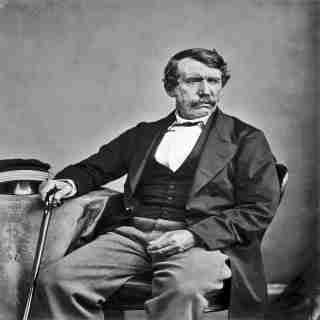 "[I am] serving Christ when shooting a buffalo for my men or taking an observation, [even if some] will consider it not sufficiently or even at all missionary."
With four theatrical words, "Dr. Livingstone, I presume?"—words journalist Henry Morton Stanley rehearsed in advance—David Livingstone became immortal. Stanley stayed with Livingstone for five months and then went off to England to write his bestseller, How I Found Livingstone. Livingstone, in the meantime, got lost again—in a swamp literally up to his neck. Within a year and a half, he died in a mud hut, kneeling beside his cot in prayer.
Berlin Congress spurs African independent churches
The whole civilized world wept. They gave him a 21-gun salute and a hero's funeral among the saints in Westminster Abbey. "Brought by faithful hands over land and sea," his tombstone reads, "David Livingstone: missionary, traveler, philanthropist. For 30 years his life was spent in an unwearied effort to evangelize the native races, to explore the undiscovered secrets, and to abolish the slave trade." He was Mother Teresa, Neil Armstrong, and Abraham Lincoln rolled into one.
Highway man
At age 25, after a childhood spent working 14 hours a day in a cotton mill, followed by learning in class and on his own, Livingstone was captivated by an appeal for medical missionaries to China. As he trained, however, the door to China was slammed shut by the Opium War. Within six months, he met Robert Moffat, a veteran missionary of southern Africa, who enchanted him with tales of his remote station, glowing in the morning sun with "the smoke of a thousand villages where no missionary had been before."
For ten years, Livingstone tried to be a conventional missionary in southern Africa. He opened a string of stations in "the regions beyond," where he settled down to station life, teaching school and superintending the garden. After four years of bachelor life, he married his "boss's" daughter, Mary Moffat.
From the beginning, Livingstone showed signs of restlessness. After his only convert decided to return to polygamy, Livingstone felt more called than ever to explore. During his first term in South Africa, Livingstone made some of the most prodigious—and most dangerous—explorations of the nineteenth century. His object was to open a "Missionary Road"—"God's Highway," he also called it—1,500 miles north into the interior to bring "Christianity and civilization" to unreached peoples.
Explorer for Christ
On these early journeys, Livingstone's interpersonal quirks were already apparent. He had the singular inability to get along with other Westerners. He fought with missionaries, fellow explorers, assistants, and (later) his brother Charles. He held grudges for years. He had the temperament of a book-reading loner, emotionally inarticulate except when he exploded with Scottish rage. He held little patience for the attitudes of missionaries with "miserably contracted minds" who had absorbed "the colonial mentality" regarding the natives. When Livingstone spoke out against racial intolerance, white Afrikaners tried to drive him out, burning his station and stealing his animals.
He also had problems with the London Missionary Society, who felt that his explorations were distracting him from his missionary work. Throughout his life, however, Livingstone always thought of himself as primarily a missionary, "not a dumpy sort of person with a Bible under his arms, [but someone] serving Christ when shooting a buffalo for my men or taking an observation, [even if some] will consider it not sufficiently or even at all missionary."
Though alienated from the whites, the natives loved his common touch, his rough paternalism, and his curiosity. They also thought he might protect them or supply them with guns. More than most Europeans, Livingstone talked to them with respect, Scottish laird to African chief. Some explorers took as many as 150 porters when they traveled; Livingstone traveled with 30 or fewer.
On an epic, three-year trip from the Atlantic Ocean to the Indian Ocean (reputedly the first by a European) Livingstone was introduced to the 1,700-mile-long Zambezi. The river was also home to Victoria Falls, Livingstone's most awe-inspiring discovery. The scene was "so lovely," he later wrote, that it "must have been gazed upon by angels in their flight."
Despite its beauty, the Zambezi was a river of human misery. It linked the Portuguese colonies of Angola and Mozambique, the main suppliers of slaves for Brazil, who in turn sold to Cuba and the United States. Though Livingstone was partially driven by a desire to create a British colony, his primary ambition was to expose the slave trade and cut it off at the source. The strongest weapon in this task, he believed, was Christian commercial civilization. He hoped to replace the "inefficient" slave economy with a capitalist economy: buying and selling goods instead of people.
The ill-fated Zambezi expedition
After a brief heroic return to England, Livingstone returned to Africa, this time to navigate 1,000 miles up the Zambezi in a brass-and-mahogany steamboat to establish a mission near Victoria Falls. The boat was state-of-the-art technology but proved too frail for the expedition. It leaked horribly after repeatedly running aground on sandbars.
Livingstone pushed his men beyond human endurance. When they reached a 30-foot waterfall, he waved his hand, as if to wish it away, and said, "That's not supposed to be there." His wife, who had just given birth to her sixth child, died in 1862 beside the river, only one of several lives claimed on the voyage. Two years later, the British government, which had no interest in "forcing steamers up cataracts," recalled Livingstone and his mission party.
A year later, he was on his way back to Africa again, this time leading an expedition sponsored by the Royal Geographical Society and wealthy friends. "I would not consent to go simply as a geographer," he emphasized, but as biographer Tim Jeal wrote, "It would be hard to judge whether the search for the Nile's source or his desire to expose the slave trade was his dominant motive." The source of the Nile was the great geographical puzzle of the day. But more important to Livingstone was the possibility of proving that the Bible was true by tracing the African roots of Judaism and Christianity.
For two years he simply disappeared, without a letter or scrap of information. He reported later that he had been so ill he could not even lift a pen, but he was able to read the Bible straight through four times. Livingstone's disappearance fascinated the public as much as Amelia Earhart's a few generations later.
When American journalist Henry Stanley found Livingstone, the news exploded in England and America. Papers carried special editions devoted to the famous meeting. In August 1872, in precarious health, Livingstone shook Stanley's hand and set out on his final journey.
When Livingstone had arrived in Africa in 1841, it was as exotic as outer space, called the "Dark Continent" and the "White Man's Graveyard." although the Portuguese, Dutch, and English were pushing into the interior, African maps had blank unexplored areas—no roads, no countries, no landmarks. Livingstone helped redraw the maps, exploring what are now a dozen countries, including South Africa, Rwanda, Angola, and the Republic of the Congo (formerly Zaire). And he made the West aware of the continuing evil of African slavery, which led to its being eventually outlawed.
"[I am] serving Christ when shooting a buffalo for my men or taking an observation, [even if some] will consider it not sufficiently or even at all missionary."
With four theatrical words, "Dr. Livingstone, I presume?"—words journalist Henry Morton Stanley rehearsed in advance—David Livingstone became immortal. Stanley stayed with Livingstone for five months and then went off to England to write his bestseller, How I Found Livingstone. Livingstone, in the meantime, got lost again—in a swamp literally up to his neck. Within a year and a half, he died in a mud hut, kneeling beside his cot in prayer.
Berlin Congress spurs African independent churches
The whole civilized world wept. They gave him a 21-gun salute and a hero's funeral among the saints in Westminster Abbey. "Brought by faithful hands over land and sea," his tombstone reads, "David Livingstone: missionary, traveler, philanthropist. For 30 years his life was spent in an unwearied effort to evangelize the native races, to explore the undiscovered secrets, and to abolish the slave trade." He was Mother Teresa, Neil Armstrong, and Abraham Lincoln rolled into one.
Highway man
At age 25, after a childhood spent working 14 hours a day in a cotton mill, followed by learning in class and on his own, Livingstone was captivated by an appeal for medical missionaries to China. As he trained, however, the door to China was slammed shut by the Opium War. Within six months, he met Robert Moffat, a veteran missionary of southern Africa, who enchanted him with tales of his remote station, glowing in the morning sun with "the smoke of a thousand villages where no missionary had been before."
For ten years, Livingstone tried to be a conventional missionary in southern Africa. He opened a string of stations in "the regions beyond," where he settled down to station life, teaching school and superintending the garden. After four years of bachelor life, he married his "boss's" daughter, Mary Moffat.
From the beginning, Livingstone showed signs of restlessness. After his only convert decided to return to polygamy, Livingstone felt more called than ever to explore. During his first term in South Africa, Livingstone made some of the most prodigious—and most dangerous—explorations of the nineteenth century. His object was to open a "Missionary Road"—"God's Highway," he also called it—1,500 miles north into the interior to bring "Christianity and civilization" to unreached peoples.
Explorer for Christ
On these early journeys, Livingstone's interpersonal quirks were already apparent. He had the singular inability to get along with other Westerners. He fought with missionaries, fellow explorers, assistants, and (later) his brother Charles. He held grudges for years. He had the temperament of a book-reading loner, emotionally inarticulate except when he exploded with Scottish rage. He held little patience for the attitudes of missionaries with "miserably contracted minds" who had absorbed "the colonial mentality" regarding the natives. When Livingstone spoke out against racial intolerance, white Afrikaners tried to drive him out, burning his station and stealing his animals.
He also had problems with the London Missionary Society, who felt that his explorations were distracting him from his missionary work. Throughout his life, however, Livingstone always thought of himself as primarily a missionary, "not a dumpy sort of person with a Bible under his arms, [but someone] serving Christ when shooting a buffalo for my men or taking an observation, [even if some] will consider it not sufficiently or even at all missionary."
Though alienated from the whites, the natives loved his common touch, his rough paternalism, and his curiosity. They also thought he might protect them or supply them with guns. More than most Europeans, Livingstone talked to them with respect, Scottish laird to African chief. Some explorers took as many as 150 porters when they traveled; Livingstone traveled with 30 or fewer.
On an epic, three-year trip from the Atlantic Ocean to the Indian Ocean (reputedly the first by a European) Livingstone was introduced to the 1,700-mile-long Zambezi. The river was also home to Victoria Falls, Livingstone's most awe-inspiring discovery. The scene was "so lovely," he later wrote, that it "must have been gazed upon by angels in their flight."
Despite its beauty, the Zambezi was a river of human misery. It linked the Portuguese colonies of Angola and Mozambique, the main suppliers of slaves for Brazil, who in turn sold to Cuba and the United States. Though Livingstone was partially driven by a desire to create a British colony, his primary ambition was to expose the slave trade and cut it off at the source. The strongest weapon in this task, he believed, was Christian commercial civilization. He hoped to replace the "inefficient" slave economy with a capitalist economy: buying and selling goods instead of people.
The ill-fated Zambezi expedition
After a brief heroic return to England, Livingstone returned to Africa, this time to navigate 1,000 miles up the Zambezi in a brass-and-mahogany steamboat to establish a mission near Victoria Falls. The boat was state-of-the-art technology but proved too frail for the expedition. It leaked horribly after repeatedly running aground on sandbars.
Livingstone pushed his men beyond human endurance. When they reached a 30-foot waterfall, he waved his hand, as if to wish it away, and said, "That's not supposed to be there." His wife, who had just given birth to her sixth child, died in 1862 beside the river, only one of several lives claimed on the voyage. Two years later, the British government, which had no interest in "forcing steamers up cataracts," recalled Livingstone and his mission party.
A year later, he was on his way back to Africa again, this time leading an expedition sponsored by the Royal Geographical Society and wealthy friends. "I would not consent to go simply as a geographer," he emphasized, but as biographer Tim Jeal wrote, "It would be hard to judge whether the search for the Nile's source or his desire to expose the slave trade was his dominant motive." The source of the Nile was the great geographical puzzle of the day. But more important to Livingstone was the possibility of proving that the Bible was true by tracing the African roots of Judaism and Christianity.
For two years he simply disappeared, without a letter or scrap of information. He reported later that he had been so ill he could not even lift a pen, but he was able to read the Bible straight through four times. Livingstone's disappearance fascinated the public as much as Amelia Earhart's a few generations later.
When American journalist Henry Stanley found Livingstone, the news exploded in England and America. Papers carried special editions devoted to the famous meeting. In August 1872, in precarious health, Livingstone shook Stanley's hand and set out on his final journey.
When Livingstone had arrived in Africa in 1841, it was as exotic as outer space, called the "Dark Continent" and the "White Man's Graveyard." although the Portuguese, Dutch, and English were pushing into the interior, African maps had blank unexplored areas—no roads, no countries, no landmarks. Livingstone helped redraw the maps, exploring what are now a dozen countries, including South Africa, Rwanda, Angola, and the Republic of the Congo (formerly Zaire). And he made the West aware of the continuing evil of African slavery, which led to its being eventually outlawed.
Men of Faith Are Men Who Fight
Men professing faith in Christ have been walking away from him since the church began. “Some have made shipwreck of their faith,” the apostle Paul reports in his first letter to Timothy. In fact, the language of leaving is all over 1–2 Timothy: men were wandering away from the faith, departing from the faith, swerving from the faith, being disqualified from the faith (1 Timothy 1:19; 4:1; 5:12; 6:10, 20–21; 2 Timothy 3:8). There seemed to be something of a small exodus already happening in the first century, perhaps not unlike the wave of deconversions we’re seeing online today. We shouldn’t be surprised; Jesus told us it would be so: “As for what fell among the thorns, they are those who hear, but as they go on their way they are choked by the cares and riches and pleasures of life, and their fruit does not mature” (Luke 8:14). Those same thorns are still sharp and threatening to faith in our day. In fact, with the ways we use technology, we’re now breeding thorns in our pockets, drawing them even closer than before. This context gives the charge in 1 Timothy 6:11–12 all the more meaning and power, both for Timothy’s day and for ours: As for you, O man of God, flee these things. Pursue righteousness, godliness, faith, love, steadfastness, gentleness. Fight the good fight of the faith. Take hold of the eternal life to which you were called and about which you made the good confession in the presence of many witnesses. “Men professing faith in Christ have been walking away from him since the church began.” Who are the men who will fight the good fight of faith? Who will stay and battle while others fall away? In the words of 1 Timothy 4:12, which young men will step up and set an example for the believers in faith? Fight of Faith That faith is a fight means believing will not be easy. It won’t always feel natural, organic, or effortless. We could never earn the love of Christ, but following him will often be harder than we expect or want. “If anyone would come after me,” Jesus says in Luke 9:23, “let him deny himself and take up his cross” — and not the light and charming crosses some wear around their necks, but the pain and heartache of following a crucified King in the world that killed him. If we declare our love for Jesus, God tells us, suffering will expose and refine us (1 Peter 4:12), people will despise, slander, and disown us (John 15:18), Satan and his demons will assault us (John 10:10), and our own sin will seek to ruin us from within (1 Peter 2:11). If we refuse to fight, we won’t last. The ships of our souls will inevitably drift, and then crash, take on water, and sink. The verses before 1 Timothy 6:12 give us examples of specific threats we will face in the fight of faith, and each still threatens men today. ENEMY OF PRIDE When Paul describes the men who had walked away from Jesus, specifically those who had been teaching faithfully but had now embraced false teaching, he points first to their pride. These men, he says, were “puffed up with conceit” (1 Timothy 6:4). Instead of being laid low by the grace and mercy of God, they used the gospel to feel better about themselves. Like Adam and Eve in the garden, they seized on the love of God to try to make themselves God. Many of us do not last in faith because we simply cannot submit to any god but ourselves, because we do not see pride — our instinct to put ourselves above others, even God — as an enemy of our souls. ENEMY OF DISTRACTION Pride was not the only enemy these men faced, however. Paul says they also had “an unhealthy craving for controversy and for quarrels about words, which produce envy, dissension, slander, evil suspicions, and constant friction among people” (1 Timothy 6:4–5). It’s almost hard to believe the apostle wasn’t writing about the twenty-first century. Were these distractions really problems thousands of years before Twitter, before the Internet, before even the printing press? Apparently so. And yet the temptation explains so much of our dysfunction today. In our sin, we often nurture an unhealthy craving for controversy. Faithfulness doesn’t sell ads; friction does. As you scroll through your feeds or watch the evening news or even monitor your casual conversation, ask how much of what you’re allowing into your soul falls into 1 Timothy 6:4–5. How much of our attention has been intentionally, even relentlessly, steered into passing controversies and vain debates? How much have we been fed suspicion, envy, and slander as “news,” not realizing how poisonous this kind of diet is to our faith? ENEMY OF MORE Greed is a threat we know exists, and often see in others, but rarely see in ourselves — especially in a greed-driven society like ours in America. The insatiable craving for more, however, can leave us spiritually dull and penniless. Those who desire to be rich fall into temptation, into a snare, into many senseless and harmful desires that plunge people into ruin and destruction. For the love of money is a root of all kinds of evils. It is through this craving that some have wandered away from the faith and pierced themselves with many pangs. (1 Timothy 6:9–10) When you read “those who desire to be rich,” don’t think elaborate mansions in tropical places with pools beside the ocean; think “those who crave more than they need.” In other words, this isn’t a rare temptation, but a pervasive one, especially in wealthier nations. The temptation may be subtle, but the consequences are not. These cravings, the apostle warns, “plunge people into ruin and destruction.” Their life is choked out not by pain or sorrow or fear, but by the pleasures of life (Luke 8:14) — things to buy, shows to watch, meals to eat, places to visit. “The more we see how much threatens our walk with Jesus, the less surprising it is that so many walk away.” Do we still wonder why Paul would call faith a fight? The more we see how much threatens our walk with Jesus, the less surprising it is that so many walk away. What’s more surprising is that some men learn to fight well and then keep fighting while others bow out of the war. How to Win the War If we see our enemies for what they are, how do we wage war against them? In 1 Timothy 6:11–12, Paul gives us four clear charges for the battlefield: Flee. Pursue. Fight. Seize. FLEE First, we flee. Some have been puffed up by pride, others have been distracted by controversy, and still others have fallen in love with this world — “but as for you, O man of God, flee these things” (1 Timothy 6:11). Spiritual warfare is not fight or flight; it is fight and flight. We prepare to battle temptation, but we also do our best to avoid temptation altogether. As far as it depends on us, we “make no provision for the flesh, to gratify its desires” (Romans 13:14). If necessary, we cut off our hand or gouge out our eye (Matthew 5:29–30), meaning we go to extraordinary lengths to flee the sin we know would ruin us. PURSUE Spiritual warfare, however, is not only fight and flight, but also pursuit. “Pursue righteousness, godliness, faith, love, steadfastness, gentleness” (1 Timothy 6:11). We could linger over each of the six qualities Paul exhorts us to pursue here, but for now let’s focus briefly on faith. Are you pursuing faith in Jesus — not just keeping faith, but pursuing faith? Are you making time each day to be alone with God through his word? Are you weaving prayer into the unique rhythms of your life? Are you committed to a local church, and intentionally looking for ways to grow and serve there? Are you asking God to show you other creative ways you might deepen your spiritual strength and joy? FIGHT Third, we fight. “Fight the good fight of the faith” (1 Timothy 6:12). We avoid temptation as much as we can, but we cannot avoid temptation completely. Whatever wise boundaries and tools we put in place, we still carry our remaining sin, which means we bring the war with us wherever we go. And too many of us go to war unarmed. Without the armor of God — the belt of truth, the breastplate of righteousness, the shield of faith, the helmet of salvation, the sword of the Spirit — we will be helpless against the spiritual forces of evil (Ephesians 6:11–12). But having taken our enemies seriously and strapping on our weapons daily, “we wage the good warfare” (1 Timothy 1:18). SEIZE Lastly, men of God learn to seize the new life God has given them. “Take hold of the eternal life to which you were called” (1 Timothy 6:12). This is the opposite of the spiritual passivity and complacency so common among young men — men who want out of hell, but have little interest in God. Those men, however, who see reality and eternity more clearly, know that the greater treasure is in heaven, so they live to have him (Matthew 13:43–44). Their driving desire is to see more of Christ, and to become more like Christ. They may look like fools now, but they will soon be kings. They wake up on another normal Wednesday, and seize the grace that God has laid before them. Some men will lay down their weapons before the war is over, even some you know and love. But make no mistake: this is a war worth fighting to the end. As you watch others flag and fail and leave the church, let their withdrawal renew your vigilance and fuel your advance. Learn to fight the good fight of faith. Article by Marshall Segal