






GIP Library icon

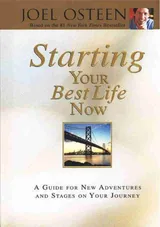
Your Best Life Now Your Best Life Now

Your Best Life Now Order Printed Copy

  • Author: Joel Osteen
  • Size: 980KB | 321 pages
  • |
Continue with
Google Twitter
LOG IN TO REVIEW
About the Book


"Your Best Life Now" by Joel Osteen is a self-help book that encourages readers to have a positive outlook on life and believe that they can achieve success and happiness by changing their thoughts and actions. Osteen advises readers to set goals, believe in their potential, and have faith in God's plan for their lives in order to live their best life.

Jane Grey

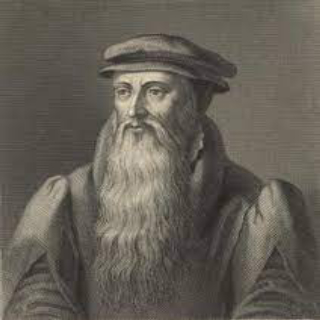
Jane Grey Lady Jane Grey is one of the most romanticized monarchs of Tudor England. Her nine-day reign was an unsuccessful attempt to maintain Protestant rule. This challenge cost her the throne and her head. Who Was Lady Jane Grey? Lady Jane Grey's life began with promise and high expectations but ended tragically, due in part to the ambitions of her father and the religious strife of the times. The great-granddaughter of Henry VII, Grey was named the successor to Edward VI during a tumultuous competition for the throne. She was deposed as Queen of England by Mary Tudor on July 19, 1553 — nine days after accepting the crown. Grey was beheaded in London on February 12, 1554. Early Life Jane Grey was born in 1537, in Leicester, England, the oldest daughter of Henry Grey and Lady Frances Brandon and the great-granddaughter of Henry VII. Her parents saw to it that she received an excellent education, intended to make her a good match for the son of a well-positioned family. At the age of 10, Jane went to live with the conspiratorial Thomas Seymour, Edward VI’s uncle, who had only recently married Catherine Parr, the widow of Henry VIII. Jane was raised as a devout Protestant and proved to be an intelligent and engaged young woman, remaining close to Thomas Seymour and Catherine Parr until Parr’s death in childbirth in 1548. Seymour was executed for treason in 1549. Arranged Marriage Henry Grey, now Duke of Suffolk, introduced his beautiful and intelligent daughter Jane to the royal court in 1551. In order to consolidate his family’s power, Grey arranged for the marriage of two of his daughters to scions of two other prominent families. In a triple wedding in 1553, Jane married Lord Guildford Dudley, the son of the Duke of Northumberland, alongside the groom’s sister Katherine, who married Henry Hastings, heir to the Earl of Huntingdon. Jane Grey’s sister Catherine married the heir of the Earl of Pembroke in the same ceremony. Background on England's State of Affairs After Henry VIII’s death in 1547, his only male heir, Edward, assumed the throne. Sickly with tuberculosis and only 10 years old at the time of his coronation, Edward VI was easily manipulated by calculating individuals such as the fiercely Protestant John Dudley, Duke of Northumberland, who acted as regent to the young king. By January 1553, it was clear Edward was dying, and Dudley was desperate to prevent the throne from passing to Edward’s half-sister, Mary Tudor, a devout Catholic. As the daughter of Henry VIII and Catherine of Aragon, Mary became a pawn in Henry’s quest for a male heir. Henry had divorced Catherine, declaring his marriage null because she was the former wife of his deceased brother. This also deemed Mary illegitimate in the eyes of the court. Queen for Nine Days In early 1553, John Dudley brought forth the same charge against Mary and convinced Edward to continue to support the Protestant Reformation by declaring Jane his successor. Edward VI died on July 6, 1553, and the 15-year-old Lady Jane Grey, somewhat reluctantly but dutifully, agreed to become Queen of England and was crowned four days later. However, she faced strong opposition from Mary Tudor and Parliament, both citing the 1544 Law of Succession, which clearly stated Mary should be queen. Public support for Jane’s rule evaporated when it was learned that the unpopular Dudley was behind the scheme. With opposition mounting against Jane Grey, many of her supporters quickly abandoned her, including her father, who futilely attempted to save himself by supporting Mary as queen. The council didn't buy it and declared him a traitor. On July 19, 1553, Jane’s nine-day reign ended, and she was imprisoned in the Tower of London. John Dudley was condemned for high treason and executed on August 22. On November 13, Jane and her husband, Guildford Dudley, were likewise found guilty of treason and sentenced to death, but because of their youth and relative innocence, Queen Mary did not carry out the sentences. Execution Alas, Jane’s father, Henry Grey, sealed her fate and that of her husband when he joined Sir Thomas Wyatt’s insurrection against Mary after she announced, in September 1553, that she intended to marry Philip II of Spain. It didn’t help her cause when Jane condemned Mary’s reintroduction of the Catholic Mass to the Church. When Mary’s forces suppressed the revolt, she decided it best to eliminate all political opponents. On the morning of February 12, 1554, Jane watched from her cell window as her husband was sent to the executioner’s block. Two hours later she would meet the same fate. As she stood before the chopping block, she is believed to have stated that she recognized her act had violated the queen’s law, but that she was innocent before God. Legacy Lady Jane Grey has been viewed as a Protestant martyr for centuries, “the traitor-heroine” of the Reformation. Over the centuries, her tale has grown to legendary proportions in popular culture, through romantic biographies, novels, plays, paintings and films. Yet, her reign was so short, she had no impact on the arts, science or culture. No laws or shifts in policy were passed during her brief nine-day rule. Perhaps her youth and willingness to be of service to the ambitions of others for what she believed was the greater good is her most impressive legacy.

Fasting for Beginners

Chances are you are among the massive majority of Christians who rarely or never fast. It’s not because we haven’t read our Bibles or sat under faithful preaching or heard about the power of fasting, or even that we don’t genuinely want to do it. We just never actually get around to putting down the fork. Part of it may be that we live in a society in which food is so ubiquitous that we eat not only when we don’t need to, but sometimes even when we don’t want to. We eat to share a meal with others, to build or grow relationships (good reasons), or just as a distraction from responsibility. And of course, there are our own cravings and aches for comfort that keep us from the discomfort of fasting. Not So Fast Fasting is voluntarily going without food — or any other regularly enjoyed, good gift from God — for the sake of some spiritual purpose. It is markedly counter-cultural in our consumerist society, like abstaining from sex until marriage. If we are to learn the lost art of fasting and enjoy its fruit, it will not come with our ear to the ground of society, but with Bibles open. Then, the concern will not be whether we fast, but when. Jesus assumes his followers will fast, and even promises it will happen. He doesn’t say “if,” but “when you fast” (Matthew 6:16). And he doesn’t say his followers might fast, but “they will” (Matthew 9:15). “Fasting is markedly counter-cultural in our consumerist society, like abstaining from sex until marriage.” We fast in this life because we believe in the life to come. We don’t have to get it all here and now, because we have a promise that we will have it all in the coming age. We fast from what we can see and taste, because we have tasted and seen the goodness of the invisible and infinite God — and are desperately hungry for more of him. Radical, Temporary Measure Fasting is for this world, for stretching our hearts to get fresh air beyond the pain and trouble around us. And it is for the battle against the sin and weakness inside us. We express our discontent with our sinful selves and our longing for more of Christ. When Jesus returns, fasting will be done. It’s a temporary measure, for this life and age, to enrich our joy in Jesus and prepare our hearts for the next — for seeing him face to face. When he returns, he will not call a fast, but throw a feast; then all holy abstinence will have served its glorious purpose and be seen by all for the stunning gift it was. Until then, we will fast. How to Start Fasting Fasting is hard. It sounds much easier in concept than it proves to be in practice. It can be surprising how on-edge we feel when we miss a meal. Many an idealistic new fast-er has decided to miss a meal and only found our belly drove us to make up for it long before the next mealtime came. Fasting sounds so simple, and yet the world, our flesh, and the devil conspire to introduce all sorts of complications that keep it from happening. In view of helping you start down the slow path to good fasting, here are six simple pieces of advice. These suggestions might seem pedantic, but the hope is that such basic counsel can serve those who are new at fasting or have never seriously tried it. 1. Start small. Don’t go from no fasting to attempting a weeklong. Start with one meal; maybe fast one meal a week for several weeks. Then try two meals, and work your way up to a daylong fast. Perhaps eventually try a two-day juice fast. A juice fast means abstaining from all food and beverage, except for juice and water. Allowing yourself juice provides nutrients and sugar for the body to keep you operating, while also still feeling the effects from going without solid food. It’s not recommended that you abstain from water during a fast of any length. 2. Plan what you’ll do instead of eating. Fasting isn’t merely an act of self-deprivation, but a spiritual discipline for seeking more of God’s fullness. Which means we should have a plan for what positive pursuit to undertake in the time it normally takes to eat. We spend a good portion of our day with food in front of us. One significant part of fasting is the time it creates for prayer and meditation on God’s word or some act of love for others. Before diving headlong into a fast, craft a simple plan. Connect it to your purpose for the fast. Each fast should have a specific spiritual purpose. Identify what that is and design a focus to replace the time you would have spent eating. Without a purpose and plan, it’s not Christian fasting; it’s just going hungry. 3. Consider how it will affect others. Fasting is no license to be unloving. It would be sad to lack concern and care for others around us because of this expression of heightened focus on God. Love for God and for neighbor go together. Good fasting mingles horizontal concern with the vertical. If anything, others should even feel more loved and cared for when we’re fasting. So as you plan your fast, consider how it will affect others. If you have regular lunches with colleagues or dinners with family or roommates, assess how your abstaining will affect them, and let them know ahead of time, instead of just being a no-show, or springing it on them in the moment that you will not be eating. Also, consider this backdoor inspiration for fasting: If you make a daily or weekly practice of eating with a particular group of friends or family, and those plans are interrupted by someone’s travel or vacation or atypical circumstances, consider that as an opportunity to fast, rather than eating alone. 4. Try different kinds of fasting. The typical form of fasting is personal, private, and partial, but we find a variety of forms in the Bible: personal and communal, private and public, congregational and national, regular and occasional, absolute and partial. In particular, consider fasting together with your family, small group, or church. Do you share together in some special need for God’s wisdom and guidance? Is there an unusual difficulty in the church, or society, for which you need God’s intervention? Do you want to keep the second coming of Christ in view? Plead with special earnestness for God’s help by linking arms with other believers to fast together. 5. Fast from something other than food. Fasting from food is not necessarily for everyone. Some health conditions keep even the most devout from the traditional course. However, fasting is not limited to abstaining from food. As Martyn Lloyd-Jones said, “Fasting should really be made to include abstinence from anything which is legitimate in and of itself for the sake of some special spiritual purpose.” If the better part of wisdom for you, in your health condition, is not to go without food, consider fasting from television, computer, social media, or some other regular enjoyment that would bend your heart toward greater enjoyment of Jesus. Paul even talks about married couples fasting from sex “for a limited time, that you may devote yourselves to prayer” (1 Corinthians 7:5). 6. Don’t think of white elephants. “Without a purpose and plan, it’s not Christian fasting; it’s just going hungry.” When your empty stomach starts to growl and begins sending your brain every “feed me” signal it can, don’t be content to let your mind dwell on the fact that you haven’t eaten. If you make it through with an iron will that says no to your stomach, but doesn’t turn your mind’s eye elsewhere, it says more about your love for food than your love for God. Christian fasting turns its attention to Jesus or some great cause of his in the world. Christian fasting seeks to take the pains of hunger and transpose them into the key of some eternal anthem, whether it’s fighting against some sin, or pleading for someone’s salvation, or for the cause of the unborn, or longing for a greater taste of Jesus. Article by David Mathis Executive Editor, desiringGod.org

Feedback
Suggestionsuggestion box
x