
Others like building your self-image Features >>
Ordering Your Private World
Starting Your Best Life Now
Building A Millionaire Mindset
Goals!
The Power Of Servant-Leadership

Think Again
Leading Difficult People

Who Switched Off My Brain: Controlling Toxic Thoughts And Emotions

How To Live An Extraordinary Life

The Jelly Effect: How To Make Your Communication Stick
About the Book
"Building Your Self-Image" by Josh McDowell explores the importance of developing a positive self-image based on God's truth, rather than society's standards. McDowell provides practical advice and biblical guidance for improving self-esteem and self-worth, helping readers find their identity and value in Christ. The book emphasizes the importance of self-acceptance and self-love, while also encouraging readers to resist negative influences and comparisons. Ultimately, McDowell's message is one of empowerment and confidence in one's identity as a child of God.
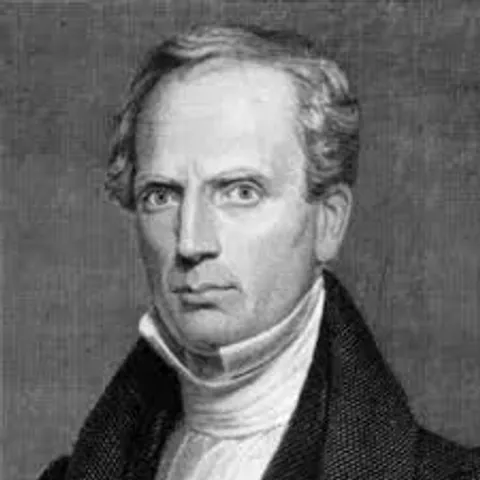
Charles Finney
 Childhood and Teen years
Charles Grandison Finney was born the year after Wesley died on 29th August, 1792 in Warren, Connecticut. In 1794 his family moved to New York state, eventually settling at Henderson, near Lake Ontario. Although he received only a brief formal education he decided to study law and joined the practice of a local lawyer, Benjamin Wright. He was also very musical, played the cello and directed the choir at the local Presbyterian Church pastured by Rev. George Gale.
His conversion
His conversion on October 10th 1821 reads like something out of the book of Acts. Smitten with conviction from Bible reading he decided to ‘settle the question of my soul’s salvation at once, that if it were possible, I would make my peace with God.’ (Autobiography)
This conviction increased to an unbearable level over the next couple of days and came to an head when he was suddenly confronted with an ‘inward voice.’ He was inwardly questioned about his spiritual condition and finally received revelation about the finished work of Christ and his own need to give up his sins and submit to Christ’s righteousness.
As he sought God in a nearby wood he was overwhelmed with an acute sense of his own wickedness and pride but finally submitted his life to Christ. Back at work that afternoon he was filled with a profound sense of tenderness, sweetness and peace. When work was over and he bade his employer goodnight, he then experienced a mighty baptism in the Holy Spirit, which was recorded as vividly as the day he experienced it, though it was penned some fifty years later.
The next morning Finney announced to a customer that he was leaving his law studies to become a preacher of the Gospel.
Charles Finney licensed to preach
He was licensed to preach in 1823 and ordained as an evangelist in 1824. His penetrating preaching was quite different from many local ministers and included an obvious attempt to break away from the traditional and, as he saw it, dead, orthodox Calvinism. He married to Lydia Andrews in October 1824 and was also joined by Daniel Nash (1774-1831), known popularly as ‘Father Nash.’ Undoubtedly Nash’s special ministry of prayer played a great part in Finney’s growing success as an evangelist.
Things really took off when he preached in his old church, where Rev. Gale still ministered. Numerous converts and critics followed! Similar results were experienced in nearby towns of Rome and Utica. Soon newspapers were reporting his campaigns and he began drawing large crowds with dramatic responses.
Soon he was preaching in the largest cities of the north with phenomenal results. Campaign after campaign secured thousands of converts.
The high point of Finney’s revival career was reached at Rochester, New York, during his 1830-1 meetings. Shopkeepers closed their businesses and the whole city seemed to centre on the revivalist. Responding to his irresistible logic and passionate arguments many of his converts were lawyers, merchants and those from a higher income and professional status.
His Preaching
Finney openly preached a modified Calvinism, influenced with his own theology of conversion and used what were perceived to be ‘revivalistic techniques.’
These ‘means’ included the use of the anxious bench (a special place for those under conviction), protracted meetings, women allowed to pray in mixed meetings, publicly naming those present resisting God in meetings and the hurried admission of new converts into church membership. Opponents viewed his preaching of the law as ‘scare tactics’ and his persuasive appeals for sinners to come to Christ for salvation were seen as over-emphasising the responsibility of men and ignoring the sovereignty of God.
His theology and practise soon became known as the ‘New Measures’ and attracted many opponents from the Old School Presbyterians led by Asahel Nettleton (himself no stranger to true revival and , the revivalistic Congregationalists headed by Lyman Beecher.
Pastor at Chatham Street Chapel
Finney accepted an appointment as pastor of Chatham Street Chapel in New York City in 1832 where he remained until 1837. It was during this time that he delivered a series of sermons published in 1835 as ‘Lectures on Revivals of Religion.’ Here he clearly stated his views regarding revivals being products of the correct use of human means. Such was the controversy that he left the Presbyterian denomination and joined the Congregationalists in 1836.
Oberlin College
The next year he became professor of theology at Oberlin College (Ohio) where he taught until his death. He was President here from 1851 until 1866, but still continued regular revival meetings in urban settings (twice in England, 1848, 1851) until 1860. During his stay at Oberlin he produced his, Lectures to Professing Christians (1836), Sermons on Important Subjects (1839) and his famous Memoirs.
The Father of Modern Revivalism
There is no doubt that Charles Grandison Finney well-deserves the title ‘The Father of Modern Revivalism.’ He was an evangelistic pioneer whose model was followed by a long line of revivalists from D. L. Moody to Billy Graham. His writing have made a massive impact on the entire evangelical world and particularly the ‘Lectures on Revivals’ which has, arguably, ignited more fires of revival than any other single piece literature in evangelical history.
This ‘Prince of Revivalists’ passed away peacefully at Oberlin on Sunday, 16th August, 1875 aged almost 83 years.
Bibliography: I Will Pour Out My Spirit, R. E. Davies, 1997; Ed: A. Scott Moreau, Baker Evangelical Dictionary of World Missions, 2000; Dictionary of Evangelical Biography 1730-1860, Vol. 1, 1995.
Tony Cauchi
Childhood and Teen years
Charles Grandison Finney was born the year after Wesley died on 29th August, 1792 in Warren, Connecticut. In 1794 his family moved to New York state, eventually settling at Henderson, near Lake Ontario. Although he received only a brief formal education he decided to study law and joined the practice of a local lawyer, Benjamin Wright. He was also very musical, played the cello and directed the choir at the local Presbyterian Church pastured by Rev. George Gale.
His conversion
His conversion on October 10th 1821 reads like something out of the book of Acts. Smitten with conviction from Bible reading he decided to ‘settle the question of my soul’s salvation at once, that if it were possible, I would make my peace with God.’ (Autobiography)
This conviction increased to an unbearable level over the next couple of days and came to an head when he was suddenly confronted with an ‘inward voice.’ He was inwardly questioned about his spiritual condition and finally received revelation about the finished work of Christ and his own need to give up his sins and submit to Christ’s righteousness.
As he sought God in a nearby wood he was overwhelmed with an acute sense of his own wickedness and pride but finally submitted his life to Christ. Back at work that afternoon he was filled with a profound sense of tenderness, sweetness and peace. When work was over and he bade his employer goodnight, he then experienced a mighty baptism in the Holy Spirit, which was recorded as vividly as the day he experienced it, though it was penned some fifty years later.
The next morning Finney announced to a customer that he was leaving his law studies to become a preacher of the Gospel.
Charles Finney licensed to preach
He was licensed to preach in 1823 and ordained as an evangelist in 1824. His penetrating preaching was quite different from many local ministers and included an obvious attempt to break away from the traditional and, as he saw it, dead, orthodox Calvinism. He married to Lydia Andrews in October 1824 and was also joined by Daniel Nash (1774-1831), known popularly as ‘Father Nash.’ Undoubtedly Nash’s special ministry of prayer played a great part in Finney’s growing success as an evangelist.
Things really took off when he preached in his old church, where Rev. Gale still ministered. Numerous converts and critics followed! Similar results were experienced in nearby towns of Rome and Utica. Soon newspapers were reporting his campaigns and he began drawing large crowds with dramatic responses.
Soon he was preaching in the largest cities of the north with phenomenal results. Campaign after campaign secured thousands of converts.
The high point of Finney’s revival career was reached at Rochester, New York, during his 1830-1 meetings. Shopkeepers closed their businesses and the whole city seemed to centre on the revivalist. Responding to his irresistible logic and passionate arguments many of his converts were lawyers, merchants and those from a higher income and professional status.
His Preaching
Finney openly preached a modified Calvinism, influenced with his own theology of conversion and used what were perceived to be ‘revivalistic techniques.’
These ‘means’ included the use of the anxious bench (a special place for those under conviction), protracted meetings, women allowed to pray in mixed meetings, publicly naming those present resisting God in meetings and the hurried admission of new converts into church membership. Opponents viewed his preaching of the law as ‘scare tactics’ and his persuasive appeals for sinners to come to Christ for salvation were seen as over-emphasising the responsibility of men and ignoring the sovereignty of God.
His theology and practise soon became known as the ‘New Measures’ and attracted many opponents from the Old School Presbyterians led by Asahel Nettleton (himself no stranger to true revival and , the revivalistic Congregationalists headed by Lyman Beecher.
Pastor at Chatham Street Chapel
Finney accepted an appointment as pastor of Chatham Street Chapel in New York City in 1832 where he remained until 1837. It was during this time that he delivered a series of sermons published in 1835 as ‘Lectures on Revivals of Religion.’ Here he clearly stated his views regarding revivals being products of the correct use of human means. Such was the controversy that he left the Presbyterian denomination and joined the Congregationalists in 1836.
Oberlin College
The next year he became professor of theology at Oberlin College (Ohio) where he taught until his death. He was President here from 1851 until 1866, but still continued regular revival meetings in urban settings (twice in England, 1848, 1851) until 1860. During his stay at Oberlin he produced his, Lectures to Professing Christians (1836), Sermons on Important Subjects (1839) and his famous Memoirs.
The Father of Modern Revivalism
There is no doubt that Charles Grandison Finney well-deserves the title ‘The Father of Modern Revivalism.’ He was an evangelistic pioneer whose model was followed by a long line of revivalists from D. L. Moody to Billy Graham. His writing have made a massive impact on the entire evangelical world and particularly the ‘Lectures on Revivals’ which has, arguably, ignited more fires of revival than any other single piece literature in evangelical history.
This ‘Prince of Revivalists’ passed away peacefully at Oberlin on Sunday, 16th August, 1875 aged almost 83 years.
Bibliography: I Will Pour Out My Spirit, R. E. Davies, 1997; Ed: A. Scott Moreau, Baker Evangelical Dictionary of World Missions, 2000; Dictionary of Evangelical Biography 1730-1860, Vol. 1, 1995.
Tony Cauchi
Faithfulness in Forgotten Places
When the Holy Spirit cultivates his fruit in our lives, he often works in ways we would never pray for (Galatians 5:22–23). To grow the fruit of love in us, he may give us an enemy; to grow the fruit of peace, he may allow conflict to come near. And to grow the fruit of faithfulness, he may send us to forgotten places. Forgotten places are those corners of the world where no one seems to be watching, where our efforts go unseen, unthanked. Perhaps we labor among diapers and dishes, cubicles and emails. Or maybe, more painfully, among unfruitful mission fields, rebellious children, or spouses whose love has cooled. All of us live in forgotten places sometimes; some live there all the time. Drudgery as a Disciple We should beware of underestimating the spiritual strain of such monotonous and seemingly unrewarded toil. The daily duties in forgotten places may be small, but pile them up over months, years, or decades, and you may start to sympathize with Oswald Chambers when he writes, We do not need the grace of God to stand crises, human nature and pride are sufficient, we can face the strain magnificently; but it does require the supernatural grace of God to live twenty-four hours in every day as a saint, to go through drudgery as a disciple, to live an ordinary, unobserved, ignored existence as a disciple of Jesus. “To grow the fruit of faithfulness, God may send us to forgotten places.” Chambers may overstate his case — but not by much. In truth, the forgotten places can feel like a wilderness, and many days come when we find ourselves searching for something to keep us going, some water from the rock to sustain us in this desert (Psalm 105:41). We will find it, not in the forgotten places themselves, but in the God who sent us here, who is with us here, and who promises to reward us here. God’s Providence At times, we may stare at the responsibilities in front of us and wonder how we landed here. How did we wander into this wilderness of drab days and hidden obedience? We have become familiar with the backward glance, wondering if we missed a turn somewhere. How clarifying, then, to remember that our life situation is not ultimately a matter of chance, nor of any mistakes we have made, nor even of the string of events leading up to the present, but of God’s providence. The tasks in front of us are, at least for today, God’s assignment to us. To be sure, God’s providence does not nullify the decisions — and perhaps the mistakes or sins — that led us to this station in life, nor does it discourage us from striving after better circumstances: we are more than twigs in the stream of God’s purposes. But God’s providence does teach us to see, as the Heidelberg Catechism puts it, that “leaf and blade, rain and drought, fruitful and barren years, food and drink, health and sickness, riches and poverty, indeed, all things, come to us not by chance but by his fatherly hand.” No matter how we got here, the forgotten places are ultimately from our Father’s hand. Over and again, God describes our own plans and efforts as significant, but his as decisive — even over the most personal matters of life. He determines when and where we live (Acts 17:26). He assigns to us a measure of faith (Romans 12:3). He apportions spiritual gifts as he wills (1 Corinthians 12:11). He entrusts to us a number of talents — whether five, two, or just one (Matthew 25:15). He gives us a specific ministry (Colossians 4:17). He even calls us to a particular life (1 Corinthians 7:17). In time, this forgotten place may give way to somewhere different — and depending on the circumstances, we may be wise to seek that change. But for now, we can look at the responsibilities in front of us and say with relief, “My Father’s hand has led me here.” God’s Pleasure God not only sends us to the forgotten places, however; he also meets us there. When we labor in obscurity, he is near (Psalm 139:5). When our work escapes the notice of every human eye, it does not escape his (Luke 12:7). He catches every whispered prayer, every Godward groan. He stands ready at every moment to mark the smallest tasks we perform in faith. The wise man tells us why: “Lying lips are an abomination to the Lord, but those who act faithfully are his delight” (Proverbs 12:22). God delights not mainly in the greatness of the work, but in the faithfulness of the worker. What else could explain the New Testament’s insistence that even the lowest, most invisible members of society are “serving the Lord Christ” when they walk faithfully in their callings (Colossians 3:24)? The smallest duties done in faith become duties done for Christ. “God delights not mainly in the greatness of the work, but in the faithfulness of the worker.” The missionary Hudson Taylor was fond of saying, “A little thing is a little thing, but faithfulness in little things is a great thing.” Cooking a meal, filling a spreadsheet, buying groceries, wiping a child’s nose — these are little things. But if done faithfully for Christ’s sake, they become greater than all the triumphs and trophies of an unbelieving world. They become the delight of our watching Lord. God’s Promise Once we have traced God’s providence in the past and felt his pleasure in the present, he would have us consider the future, when all our obedience will be rewarded. When many Christians imagine judgment day, we assume the spotlight will fall on the grand acts of sin and righteousness. And surely it will — but not only. Remarkably, when Jesus and the apostles speak of that day, they often focus on life’s ordinary moments. “On the day of judgment people will give account for every careless word they speak,” Jesus tells us (Matthew 12:36). On the other hand, God will reward his people for the smallest good works they do by his grace: for giving to the needy (Matthew 6:4), for praying in the closet (Matthew 6:6), for fasting in secret (Matthew 6:18), even for giving a cup of cold water to one of Christ’s disciples (Matthew 10:42). The apostle Paul similarly writes that “we must all appear before the judgment seat of Christ, so that each one may receive what is due for what he has done in the body, whether good or evil” (2 Corinthians 5:10). But then in Ephesians he clarifies the kind of good he has in mind: not just extravagant good, impressive good, or above-average good, but “whatever good” (Ephesians 6:8). Come judgment day, every scrap of unseen obedience will find its fitting reward. Living and dying in forgotten places, then, is no infallible index of our labor in God’s eyes. Many saints, in fact, will not know the true worth of what they’ve done for Christ until Christ himself tells them (Matthew 25:37–40). Exceptional in the Ordinary Chambers, after remarking on the grace required to endure drudgery as a disciple, goes on to write, “It is inbred in us that we have to do exceptional things for God; but we have not. We have to be exceptional in the ordinary things, to be holy in mean streets, among mean people, and this is not learned in five minutes.” Again, Chambers may slightly overstate his case. God sometimes does call us to do exceptional things for him: to adopt children, to launch ministries, to plant churches, to move overseas. But the point still holds, because none of us will do anything exceptional unless we have first learned, through ten thousand steps of faithfulness, to be exceptional in the ordinary. We are not on our own here. Faithfulness, remember, is a fruit of the Spirit. And to bear that fruit in us, he would have us treasure up the providence, the pleasure, and the promises of God that hem us in behind and before, and follow us into every forgotten place. Article by Scott Hubbard