
GIP Library icon

LOG IN TO REVIEW

No comment! Reading in progess...

- mandla ngcobo (a month ago)

About the Book


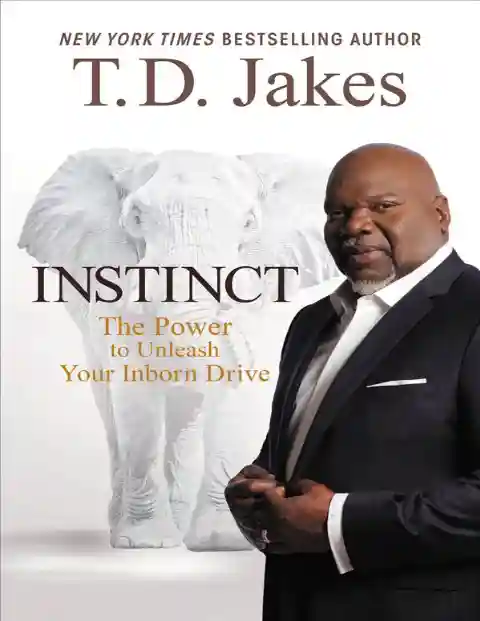
"INSTINCT" by T.D. Jakes explores the importance of trusting your instincts and following your intuition in order to find success and fulfillment in life. Jakes emphasizes the power of listening to your inner voice and staying true to yourself in order to achieve your goals and live a purposeful life. The book provides practical advice and inspirational stories to encourage readers to embrace their instincts and unlock their full potential.

John Owen

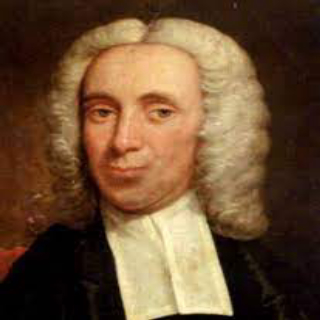
John Owen John Owen’s life was incredibly difficult. Born in 1616 and dying in 1683, Owen lived through the deaths of his first wife and all of his children, several of whom died in very early childhood. He supported his last surviving daughter when her marriage broke down. He contributed to a political revolution, watched it fail, saw the monarchy restored and wreak a terrible revenge on republicans, and lived in and around London during the persecution that followed. For twenty years he would have seen the decapitated heads of his friends on display around the city. He died fearing that the dissenting churches had largely abandoned the doctrine of the Trinity and justification by grace alone through faith alone in Christ alone; and, with Charles II about to be replaced by his openly Catholic brother James, believing that the English Reformation was almost over. Owen was one of the most published writers in the seventeenth century. He published around 8 million words. These writings included books on theology and spirituality, politics and economics, and ranged in length from the largest commentary ever published on the epistle to the Hebrews to a short Latin poem that has never been reprinted. For not all of Owen’s works have been kept in print. The most widely circulating nineteenth-century edition, most of which is published by the Banner of Truth, did not include Owen’s sermon manuscripts that are kept in various English libraries, nor the book for children that Owen published in 1652. Owen was one of England’s earliest children’s authors. The catechisms that Owen published (1645) outlined what he expected children in his congregation to know. These catechisms were published before the Westminster Assembly published its better-known examples. But Owen’s catechisms are in many ways simpler. The Primer (1652), which Owen prepared after the death of several of his children during the years of poor harvests and disease at the end of the 1640s, showed what Owen expected of an ideal Christian home. Its routine would be built around Bible reading and prayer, he believed, and his little book included sample prayers that children could learn to pray in mornings, evenings, and at meals. Owen argued that those who led church services should take account of the needs of children. Services that were too long, he believed, did no one any good. Adult believers should not need written prayers, he believed, and these should be banned from public worship. But children were different and needed all the help they could get. Owen enjoyed many warm friendships. His social network included many of the most famous writers in seventeenth-century England. Among his friends and rivals were John Milton, Andrew Marvell, John Bunyan, and Lucy Hutchinson. Owen fell out with Milton and became the subject of one of his sonnets. Owen helped Marvell publish one of his most controversial political pamphlets. He encouraged his publisher, Nathanial Ponder, to publish Bunyan’s Pilgrim’s Progress. And he appears to have supported Lucy Hutchinson during her move into London, when she attended and took notes upon his preaching and translated large parts of his Theologoumena Pantodapa (1661)—a translation of which has been published with the title Biblical Theology. Owen’s letters reveal his kindness and care as a pastor, especially to mothers grieving their children’s death. Owen was deeply political. He preached to Members of Parliament on the day after the execution of Charles I, and pinned his hopes for the reformation of church and society on their efforts to transform England into a protestant republic. During the 1650s, under the leadership of Oliver Cromwell, Owen served on important committees that sought to establish a religious foundation for the new regime. But he grew dismayed by the ways in which the Cromwell family, and the administration they led, seemed to turn away from godly values. In 1658, he worked with leading army officers to create a crisis that, he likely hoped, would call the regime back to its earlier ideals. It failed, and instead created the crisis that was resolved by the restoration of the monarchy, the return of Charles II, and the persecution of dissenters that followed. During the Restoration, Owen kept his head down, and, as persecution slackened in the later 1660s, published pamphlets that argued that dissenters were the economic lifeblood of the English nation. But he was chastened by his attempts at political intervention and came increasingly to realize that his focus should be on things eternal. Owen often changed his mind. As his developing attitudes to political intervention suggest, Owen committed himself to some beliefs and behaviors that he came to regret. In his early years, he changed his churchmanship from Presbyterianism to Congregationalism. He innovated as a Congregationalist, installing as a co-elder and preacher a man who would not be ordained for several years. He argued for the weekly celebration of the Lord’s Supper, though it is not clear that he ever persuaded any of his congregations to practice it. He thought carefully about the end times and came to believe that, in the latter days, a large number of Jewish people would be converted to Christianity and would return to live in the Promised Land. He dismissed a great deal of discussion about the millennium, but became convinced that the binding of Satan had yet to be achieved. Owen changed his mind because he kept on studying the Bible. Owen was biblical, through and through, and depended just as much on the Holy Spirit. He certainly believed in a learned ministry–after all, he had taught theology at Oxford and done his best to promote godliness within the student body. But he also trusted the Holy Spirit to guide ordinary Christians in small group Bible studies that did not need to be policed by a formally trained expert. Aside from his own Bible study, which advanced on the serious scholarship represented by the three thousand titles that were included in the catalog of his library published soon after his death, Owen encouraged church members to meet together to study Scripture in private. Owen trusted the Bible and the work of the Spirit after writing about both. Owen was not a philosophically-driven, rationalist theologian. His writing abounds in biblical citations. It is molded and contoured by biblical revelation. But he warned that Christians could approach their study of the Bible with absolutely no spiritual advantage to themselves. Christians who approached the study of the Bible without absolute dependence upon the Spirit who inspired and preserved it would gain no more benefit than Jewish readers did from their Scriptures, he argued. Christians should never choose between entire dependence upon the Bible and the Spirit. Owen believed that the goal of the Christian life was knowing God. Before Owen, no one had ever shown clearly how Christians relate to each person of the Trinity. Owen described the goal of the gospel as revealing the love of the Father, who sent the Son as a redeemer of his people, who would be indwelt, provided with gifts, and united together by the Spirit. Owen’s Communion with God is among his most celebrated achievements—and no wonder. It is the exhalation of his devotion to Father, Son, and Spirit, and the discovery of the limitless love of God. Owen is much easier to read than many people imagine. There is a mystique to Owen—a widespread feeling that his books are too difficult and best left to expert theologians. But Owen’s greatest books were written as sermons for an audience of teenagers. Publishers have begun to modernize Owen’s language in new editions of his works. Now more than ever, it’s time to pick up Owen and find his encouragement for the Christian life.

God Wrote a Book

We actually have the words of God. This is almost too good to be true. And yet how often are we so accustomed to this reality — one of the greatest wonders in all the universe — that it barely moves us to handle the Bible with care (and awe), or at least to access his words with the frequency they deserve? Familiarity can breed contempt, or at least neglect. While scarcity drives demand, abundance can lead to apathy. For many of us, we have multiple Bibles on our shelves, in multiple translations. We have copies on our computers and phones. We have access to the very words of God like never before — yet how often do we appreciate, and marvel at, the wonder of what we have? Wonder of Having One of the greatest facts in all of history is that God gave us a Book. He gave us a Book! He has spoken. He has revealed himself to us through prophets and apostles, and appointed that they write down his words and that they be preserved. We have his words! We can hear in our souls the very voice of God himself by his Spirit through his Book. “No word of God is a dead word.” Think of all God went to, and what patience, to make his self-revelation accessible to us here in the twenty-first century. Long ago, at many times, and in many ways, God spoke through the prophets (Hebrews 1:1). Then, in the fullness of time, he sent his own Son, his own self, in full humanity, as his revealed Word par excellence, in the person of Christ, represented to us by his authoritative, apostolic spokesmen in the new covenant. For centuries, God’s word was copied by hand, and preserved with the utmost diligence and care. Then, for the last 500 years of the printing press, God’s word has gone far and wide like never before. Men and women gave their lives, upsetting the apple carts of man-made religion, to translate the words of God into the heart language of their people. And now, in the digital revolution, access to God’s own words has exploded exponentially again, and yet — and yet — in such abundance, do we marvel at what we have? And do we, as individuals and as churches, make the most of what infinite riches we have in such access to the Scriptures? His Words, Our Great Reward The psalmists were in awe of what they had. In particular, Psalms 19 and 119 pay tribute to the wonder of having God’s words. For instance: The law of the Lord is perfect, reviving the soul; the testimony of the Lord is sure, making wise the simple; the precepts of the Lord are right, rejoicing the heart; the commandment of the Lord is pure, enlightening the eyes; the fear of the Lord is clean, enduring forever; the rules of the Lord are true, and righteous altogether. More to be desired are they than gold, even much fine gold; sweeter also than honey and drippings of the honeycomb. Moreover, by them is your servant warned; in keeping them there is great reward. (Psalm 19:7–11) “We come to his word, like holy hedonists, stalking joy.” God is honored when we approach his words as those that revive the soul and rejoice the heart, as those that are more to be desired than gold and sweeter than honey. The summary and culmination of Psalm 19’s unashamed tribute to God’s words is this: great reward. He means for us to experience his words as “my delight” (Psalm 1:2; 119:16, 24), as “the joy of my heart” (Psalm 119:111), as “the delight of my heart” (Jeremiah 15:16), as kindling for the fires of our joy. Not only has God spoken in this Book we call the Bible, but he is speaking. Writing about Psalm 95 in particular (and applicable to all the Scriptures), Hebrews says “the word of God is living and active, sharper than any two-edged sword, piercing to the division of soul and of spirit, of joints and of marrow, and discerning the thoughts and intentions of the heart” (Hebrews 4:12). No word of God is a dead word. Even Hebrews — the New Testament letter plainest on the old covenant being “obsolete” in its demands upon new-covenant Christians (Hebrews 8:13) — professes that old-covenant revelation, while no longer binding, is indeed “living and active.” “Is not my word like fire,” God declares through Jeremiah, “and like a hammer that breaks the rock in pieces?” (Jeremiah 23:29). From cover to cover, Genesis to Revelation, God has captured for his church his objective, “external word” (as Luther called it) which he speaks (present tense) to his people through the subjective, internal power of his Spirit dwelling in us. We hear God’s voice in his word by his Spirit. And so, Hebrews exhorts us, “See that you do not refuse him who is speaking” (Hebrews 12:25). Wonder of Handling So then, how will we who marvel at having God’s living and active words not also fall to the floor in amazement that he invites us — even more, he insists — that we handle his word. It is no private message to Timothy, but to the whole church reading over his shoulder, when Paul writes, Do your best to present yourself to God as one approved, a worker who has no need to be ashamed, rightly handling the word of truth. (2 Timothy 2:15) The charge lands first on Timothy, as Paul’s delegate in Ephesus, and then on pastors (both then and today) who formally and publicly “handle the word” for the feeding and forming of the church. But the summons to rightly handle the word of truth (both in the gospel word and in the written Scriptures) is a mantle for the whole church to gladly bear. In the midst of a world of destructive words, God calls his church to first receive (have) and then respond to (handle) his words. As human words of death fly around us from all sides — in the air, on the page, on our screens — he gives us his own life-giving words to steady our souls and the souls of others. As the world quarrels about words, “which does no good, but only ruins the hearers” (2 Timothy 2:14) and coughs up “irreverent babble” that leads “people into more and more ungodliness” and spreads like gangrene (2 Timothy 2:16–17), God gives us an oasis in the gift of his words (2 Timothy 2:15). We receive them for free, but that doesn’t mean we take them lightly or expend little energy to handle them well. Make Every Effort God, through Paul, says “do your best” — literally, be zealous, be eager, make every effort — “to present yourself to God as one approved.” We orient Godward first and foremost in our handling of his word, then only secondarily to others. Which will make us “a worker who has no need to be ashamed.” Being a worker requires work, labor, the exertion of effort, the expending of energy, the investment of time, the patience of lifelong learning. To do so without cutting corners (“unashamed”) or mishandling the task. And in particular, for building others up, not tearing others down. For showing others the feast, not showing ourselves to have been right. “God gives us his own life-giving words to steady our souls and the souls of others.” “Rightly handling” — guiding along a straight path — harkens to the vision Paul casts in 2 Corinthians of his own straightforwardness with God’s word. Paul was not coy about hard truths. He was not evasive. He was not a verbal gymnast, gyrating around humanly offensive divine oracles. Rather, he was frank, honest, candid, sincere. “We are not, like so many, peddlers of God’s word,” he declares, “but as men of sincerity, as commissioned by God, in the sight of God we speak in Christ” (2 Corinthians 2:17). He has more to say about such sincerity: We have renounced disgraceful, underhanded ways. We refuse to practice cunning or to tamper with God’s word, but by the open statement of the truth we would commend ourselves to everyone’s conscience in the sight of God. (2 Corinthians 4:2) Listening Like Hedonists But rightly handling God’s word doesn’t just mean we’re convinced of its truthfulness and handle it as such. Rightly handling doesn’t only include rigorous careful analysis and forthright unapologetic candor. Rightly handling includes the psalmists’ intense spiritual sensibilities. To see in and through God’s words his “great reward,” and knowing him to be a rewarder of those who seek him (Hebrews 11:6). In other words, we come to his word like holy hedonists, stalking joy. Worldly hedonists pursue the pleasures of sin; they don’t wait on them to arrive. And so do Christian Hedonists. We don’t wait around for holy pleasures. We don’t passively engage God himself through his own words. We stalk. We pursue. We read actively, and study, and meditate. When we are persuaded that God himself is indeed the greatest reward, is there any better avenue to pursue than his own words? At Desiring God, we don’t aim or pretend to be unique. However flippantly or earnestly others handle God’s words, we mean to receive them with the utter seriousness and joyful awe they deserve — he deserves. God wrote a Book. And gave it to us. Let’s give ourselves to this wonder, and marvel that we get to handle his words. Article by David Mathis

Feedback
Suggestionsuggestion box
x