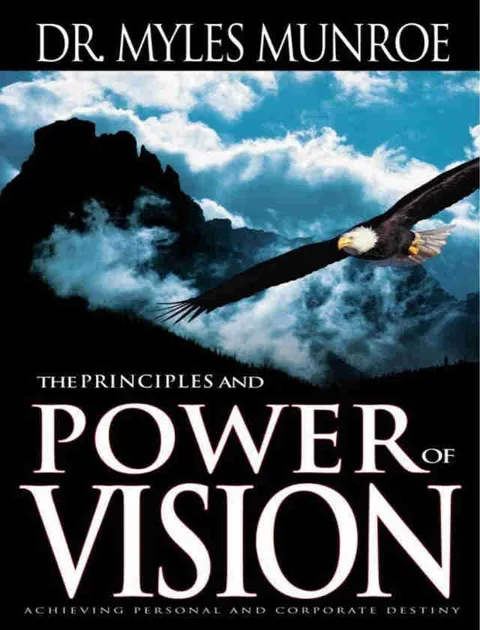

The Principles And Power Of Vision Order Printed Copy
- Author: Dr Myles Munroe
- Size: 940KB | 300 pages
- |
Others like the principles and power of vision Features >>

The Power Of The Mind
The Principles And Power Of Vision (Keys To Achieving Personal And Corporate Destiny)
The Master Key Of Diligence
Grit (The Power Of Passion And Perseverance)
No Excuses - The Power Of Self Discipline
The Power Of Self-Confidence
The Power Of Positive Thinking
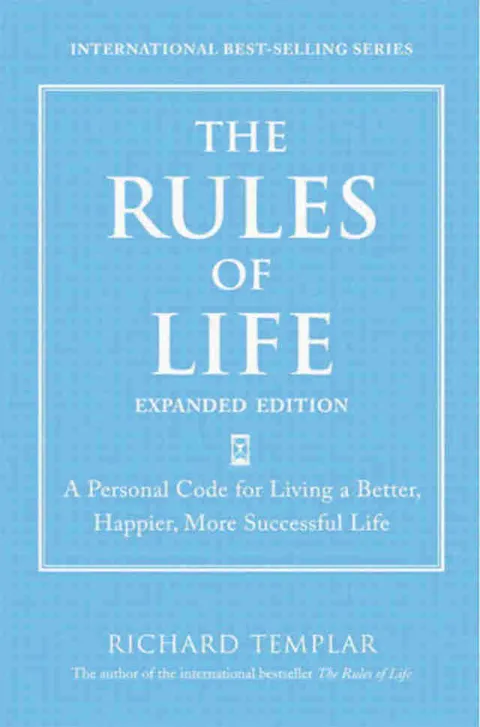
The Rules Of Life

The Power Of Thought And Visualization
10 Principal Secrets Of Principal People
About the Book
"The Principles and Power of Vision" by Dr. Myles Munroe explores the importance of having a clear vision in life and how it can lead to success and fulfillment. Munroe discusses how vision drives purpose, motivates action, and shapes destiny. He provides practical guidance on how to discover and pursue your vision, emphasizing the power of focus, passion, and faith. Overall, the book serves as a valuable resource for individuals looking to unlock their potential and achieve their goals through the power of vision.
C.T. Studd
“If Jesus Christ be God and died for me, then no sacrifice can be too great for me to make for Him.”
- C.T. Studd
Charles Thomas Studd ("C.T. Studd") was born in England in 1860, the son of wealthy Edward Studd, who had made a fortune in India. Charles Studd liked sports just like most young men. He had a passion for cricket because it was the most popular sport in England at the time. His older brother Kynaston Studd, was a member of the Cambridge cricket team and well known. C.T., however, wasn't a great athlete but determined to master the sport. He would practice for hours, using a mirror to help him adjust his swing. He kept away from any harmful habits that may diminish his cricket ability. Soon he began to master the sport and became the captain of his high school cricket team. In 1879, when Studd entered Trinity College of Cambridge University, his popularity as a cricket star took off. He became what others have referred to as "the Michael Jordan of cricket," a household name throughout Great Britain. He soon became the captain of the Cambridge cricket team, an idol to students and legend in his time. and he had a particular passion for cricket, the most popular sport in England at the time. Studd was claimed then, and today as the greatest player to have ever played the game. But that is just a footnote compared to what has really marked C.T. Studd's life in history.
C.T. was saved in 1878 at the age of 18 by the confrontation of a pastor, who really questioned him as to his personal relationship with Christ. Both his brothers gave their lives to Christ the same day that he did. His passion for Christ diminished as his cricket career grew in college and soon he was hardened to spiritual things. However, in November 1883, his younger brother George got very sick and was dying. As C.T. watched in horror and grief at the suffering of his brother, he reflected, "Now what is all the popularity of the world to George? What is all the fame and flattering? What is it worth to possess the riches of the world, when a man comes to face Eternity?" With a surprising turn, God miraculously healed George and C.T. was so dramatically changed through the event that he consecrated himself to the Lord's work. The things of this world were not worthy of his life, Studd would begin to invest himself in the eternal.
C.T. was part of a small group of Christian men at Cambridge, mostly athletes, who were beginning to devote themselves to prayer and the evangelization of the world. Starting at their campus they began sharing their faith openly and telling all of the salvation found in Jesus Christ. Many were being won because of Studd's influence among other collegians. During this time, an influential missionary Hudson Taylor began to challenge the students of England to join him in reaching the millions of lost in China. His high calling and deep passion for China, captured the hearts of these young men at Cambridge, and there was discussion of joining Hudson's mission agency and pioneering to the unreached parts of China with the gospel.
Despite a promising career in cricket and the life of comfort he had grown up in C.T. determined to follow God's heart for the world and join Him in reaching China. Studd's decision to go to China influenced the other seven men at Cambridge to live for God's glory and devote themselves to China also. From the rowing team at Trinity, Stanley Smith, Montague Beauchamp, and William Cassels joined. Two students, Dixon Hoste and Arthur Polhill-Turner, were officers who also left a promising career in the military to join Studd. And from C.T. Studd's own cricket team came Cecil Polhill-Turner.
Studd faces opposition as well. His father, Edward passed away, causing the family to pressure C.T. not to leave his widowed mother at such a time. His older brother tried to talk him out of going and C.T. simply quoted Micah 7:6, "a man's enemies are the men of his own house."
Before going to China, Hudson organized a tour of the college campuses in England, allowing the "Cambridge Seven," as they came to be known, to share their testimonies, and challenge students to consecrate their lives to the glory of God. Through these months traveling and speaking, God drew people to faith in Christ and awakened the church to His global cause.
In the last meeting of the tour, C.T. Studd urged students saying, "Are you living for the day or are you living for life eternal? Are you going to care for the opinion of men here, or for the opinion of God? The opinion of men won't avail us much when we get before the judgment throne. But the opinion of God will. Had we not, then, better take His word and implicitly obey it?"
Authenticity marked the power of the message of these seven that were on their way to the unreached. C.T. Studd admitted, "Had I cared for the comments of people, I should never have been a missionary." After calling students to obey the Great Commission, the Cambridge Seven, left for China, arriving in Shanghai on March 18, 1885.
C.T. Studd had inherited a fortune from the death of his father Edward but gave most of it away, keeping only ÂŁ3400 pounds. Keeping that only until his wife, Priscilla Livingstone Stewart said, "Charlie, what did the Lord tell the rich young man to do?" "Sell all." "Well then, we will start clear with the Lord at our wedding." And they gave the rest away to missions work.
Studd would return to England and America occasionally because of ill health and challenge students to give their lives to the Great Commission. During the beginnings of the Student Volunteer Movement, in 1896 -1897, his brother J.E.K. Studd spoke at Cornell University, having a deep impact on the future point man for the SVM, John R. Mott. Mott walked in late for the meeting and heard J.K. Studd quote, "Young man, are you seeking great things for yourself? Seek them not! Seek first the Kingdom of God!"
Mott gathered the courage to meet with him the next day and later said that the meeting with Studd was the "decisive hour of his life". Mott went on to become one of the greatest missions mobilizers in world history.
C.T. Studd's work impacted China, India and Africa. Upon the last days of his life he reflected in his life's work saying, "As I believe I am now nearing my departure from this world, I have but a few things to rejoice in; they are these:
That God called me to China and I went in spite of utmost opposition from all my loved ones.
That I joyfully acted as Christ told that rich young man to act.
That I deliberately at the call of God, when alone on the Bibby liner in 1910, gave up my life for this work, which was to be henceforth not for the Sudan only, but for the whole unevangelized World.
My only joys therefore are that when God has given me a work to do, I have not refused it."
One night in July,1931, C.T. Studd went to be with His Lord.
The last word he spoke was "Hallelujah"!
By Claude Hickman
what if my singleness never ends
It happened suddenly this past May, the moment I’d prayed for and sought after for quite some time: the moment I became okay with lifelong singleness. Something inside me relaxed as I sat at a coffee shop, my mind not even on relationships but preoccupied with a menu over dinner with friends. And then suddenly, I felt content to be single — not only for another few months, or even years, but even until the day I die, if God chooses that for me. “I don’t want to skip what God chooses to give me during singleness.” More than ever before, the years stretching out before me don’t seem like a romance-less, spouse-less, and (okay, let’s face it) sex-less gray void. It was a beautiful moment that could come only from God, a moment of triumph over an idol that has long battled for the throne of my heart. Whether it’s for a season or a lifetime, I’ve found that I don’t want to skip what God chooses to give me during singleness. Already Loved The more weddings I attend (which is several a year at this stage of life), the more the feeling sinks in that I may never be a bride. But the feeling isn’t altogether sad. Because I’m already dressed in white, you see. My friends’ immaculate dresses and the wedding day itself symbolize something mysterious and beautiful: the “robe of righteousness” God’s people already wear (Isaiah 61:10) and the “fine linen, bright and pure” we will put on at the wedding feast of the Lamb (Revelation 19:8). I’m already pursued by someone who wove the very sinews of my being together. I’m already loved with a love that will outlast every other. I’m already known more intimately than I can fathom. It’s so easy to read that last paragraph and think “so cliché,” especially since this is yet another  Christian article about singleness. Just be still. Do you realize what that paragraph means? You’re known just as you are (1 Corinthians 13:12). Even the inmost places of your heart — the darkest, the brightest, the most wounded, the most joyful, the most romantic — God knows and comprehends them to their depths. He cares for your unspoken and most intimate needs. There isn’t a thought you can speak before God knows it’s there (Psalm 139:4). Dwell on that. Do God’s presence and promises carry so little preciousness that we can scoff and declare them “cliché”? Faulty Assumptions So often, we spout inane phrases to single people like “God will bring you the right guy.” They reveal the heart so completely: I have to have a romantic relationship in my life at some point to be whole. We might subtly think, I don’t have to have it now, God. Or even next month. But at some point, God, you’ve gotta bring someone for me to marry. But he doesn’t. God does not have to bring us someone to marry. He simply is not obligated to do anything for us that is not for his glory and for our joy in him. And since we’re not all-knowing, we cannot claim to know what will give us the most long-term joy. We can make guesses, certainly. But the ultimate decision is up to our God, who has never ceased to provide exactly what his people need — from the garments of skin worn by Adam and Eve (Genesis 3:21) to our own daily bread (Matthew 6:11). “I am already loved with a love that will outlast every other.” I’m not  saying you won’t have difficult days where you yearn to be a husband or wife (I have those days too!), but I am saying that Jesus will meet you in those difficult times. He is gloriously gracious like that. The Spirit is willing and able to teach your heart many things, including contentment in singleness as long as God sees fit — and even if it’s lifelong. Don’t get me wrong: seeking marriage is great. If you’re interested in a godly someone, use wisdom and discernment and be intentional about it. But don’t fret. You may marry that person, and you may not. Whatever happens, don’t let it overshadow what God has already done for you and the glorious place you are headed. Three Suggestions “That’s great,” you may say as you read this. “But how can I do that?” I don’t pretend to know the complete answer to that question, but here are three suggestions that have helped me. 1. Recognize that you can’t be content on your own. Contentment is a work of God (Philippians 4:11–13). Pray to him for it. Lay your will and your heart down completely, and not in a way where you’re trying to be holy and spiritual so that you can get the “true prize” in your eyes. God can change your heart from that too; just ask. He is a Father who listens to his children. 2. Second, don’t surround yourself with romance. I’m not saying avoid all your friends’ weddings — each is a time for rejoicing and celebrating God’s work in their lives! But don’t inundate yourself with romantic comedies and TV shows and books and other media that are constantly focused on romance. Doing this can easily irritate wounds and give a foothold for envy and comparison to wreak havoc on your emotions. 3. And third, enjoy singleness. Seriously. If you’re not content in singleness, then you won’t be content in marriage. Spouses and significant others are not contentment charms; wedding vows are not magic incantations that produce lifelong fulfillment. “If you’re not content in singleness, then you won’t be content in marriage.” Give your time to ministering to friends and your community. Pursue your interests intently. Learn to manage your money. These activities do not have to be less fulfilling just because you are spouse-less! Believe it or not, if you do marry, there will be times when you yearn for singleness, and it isn’t likely to come again (at least not in the same way). A Better Goal So I come alongside you as a fellow single, encouraging you to join me in laying down the idol of romance. Let’s prepare now to better serve a future spouse or, if we never marry, to enjoy Jesus no matter married or not. Marriage is great, but it isn’t ultimate. The honor of “ultimate” remains with our true romance: the God who creates, sustains, intervenes in, and pursues the hearts of his people from eternity to eternity (Psalm 90:1–2). Amen.