
Others like the rules of work Features >>







-160.webp)

About the Book
"The Rules of Work" by Richard Templar provides practical advice on navigating the workplace and achieving success. The author outlines 108 rules to help readers excel in their careers, including tips on how to communicate effectively, manage time efficiently, and build strong relationships with colleagues. By following these rules, readers can develop the skills and mindset needed to thrive in their professional lives.
John Alexander Dowie
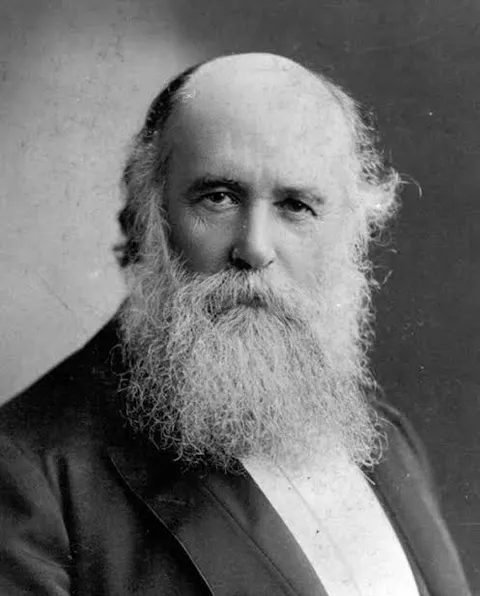 By John Alexander Dowie (1847 – 1907)
I sat in my study in the parsonage of the Congregational Church at Newtown, a suburb of the beautiful city of Sydney, Australia. My heart was very heavy, for I had visited the sick and dying beds of more than thirty of my flock, and I had cast the dust to its kindred dust into more than forty graves within a few weeks. Where, oh where, was He Who used to heal His suffering children? No prayer for healing seemed to reach His ear, and yet I knew His hand had not been shortened. Still it did not save from death even those for whom there was so much in life to live for God and others. Strong men, fathers, good citizens, and more than all, true Christians sickened with a putrid fever, suffered nameless agonies, passed into delirium, sometimes with convulsions, and then died.
Oh, what aching voids were left in many a widowed or orphaned heart. There were many homes where, one by one, the little children, the youths and the maidens lay stricken, and after a hard struggle with the foul disease, they too, lay cold and dead. It seemed sometimes as if I could almost hear the triumphant mockery of evil ringing in my ear whilst I spoke to the bereaved ones the words of Christian hope and consolation. Disease, the foul offspring of its father, Satan, and its mother Sin, was defiling and destroying the earthly temples of God’s children and there was no deliverance.
There I sat with sorrow-bowed head for my afflicted people, until the bitter tears came to relieve my burning heart. Then I prayed for some message, and oh, how I longed to hear some words from Him Who wept and sorrowed for the suffering long ago, a Man of Sorrows and Sympathies. The words of the Holy Ghost inspired In Acts 10:38, stood before me all radiant with light, revealing Satan as the Defiler, and Christ as the Healer. My tears were wiped away, my heart strong, I saw the way of healing, and the door thereto was opened wide, so I said, “God help me now to preach the Word to all the dying around, and tell them how Satan still defiles, and Jesus still delivers, for He is just the same today.”
A loud ring and several raps at the outer door, a rush of feet, and there at my door stood two panting messengers who said, “Oh, come at once, Mary is dying; come and pray. “With just a feeling as a shepherd has who hears that his sheep are being torn from the fold by a cruel wolf, I rushed from my house, ran without my hat down the street, and entered the room of the dying maiden. There she lay groaning and grinding her clenched teeth in the agony of the conflict with the destroyer. The white froth, mingled with her blood, oozing from her pale and distorted mouth. I looked at her and then my anger burned. “Oh,” I thought, “for some sharp sword of heavenly temper keen to slay this cruel foe who is strangling that lovely maiden like an invisible serpent, tightening his deadly coils for a final victory.”
In a strange way, It came to pass; I found the sword I needed was in my hands, and in my hand I hold it still and never will I lay It down. The doctor, a good Christian man, was quietly walking up and down the room, sharing the mother’s pain and grief. Presently he stood at my side and said, “Sir, are not God’s ways mysterious?” Instantly the sword was flashed in my hand, the Spirit’s sword, the Word of God. “God’s way?!” I said, pointing to the scene of conflict, “How dare you call that God’s way of bringing His children home from earth to Heaven? No sir, that is the devil’s work and it is time we called on Him Who came to destroy the work of the devil, to slay that deadly foul destroyer, and to save this child. Can you pray, Doctor, can you pray the prayer of faith that saves the sick?” At once, offended at my words, my friend was changed, and saying,” You are too much excited, sir, it is best to say ‘God’s will be done,’” and he left the room.
Excited?! The word was quite inadequate for I was almost frenzied with divinely imparted anger and hatred of that foul destroyer, disease, which was doing Satan’s will. “It is not so,” I exclaimed, “no will of God sends such cruelty, and I shall never say ‘God’s will be done’ to Satan’s works, which God’s own Son came to destroy, and this is one of them.” Oh, how the Word of God was burning in my heart: “Jesus of Nazareth went about doing good, and healing all that were oppressed of the devil; for God was with Him.” And was not God with me? And was not Jesus there and all His promises true? I felt that it was even so, and turning to the mother I inquired,” Why did you send for me?” To which she answered, “Do pray, oh pray for her that God may raise her up.” So we prayed.
What did I say? It may be that I cannot recall the words without mistake, but words are in themselves of small importance. The prayer of faith may be a voiceless prayer, a simple heartfelt look of confidence into the face of Christ. At such moment, words are few, but they mean much, for God is looking at the heart. Still, I can remember much of that prayer unto this day, and asking God to aid, I will attempt to recall it. I cried, “Our Father, help! and Holy Spirit, teach me how to pray. Plead Thou for us, oh, Jesus, Savior, Healer, Friend, our Advocate with God the Father. Hear and heal, Eternal One! From all disease and death, deliver this sweet child of yours. I rest upon the Word. We claim the promise now. The Word is true, ‘I am the Lord that heals thee.’ Then heal her now. The Word is true, ‘I am the Lord, I change not.’ Unchanging God, then prove Yourself the healer now. The Word is true. ‘These signs shall follow them that believe in My Name, they shall lay hands on the sick, and they shall recover.’ And I believe and I lay hands in Jesus’ Name on her and claim this promise now. Your Word is true. ‘The prayer of faith shall save the sick. Trusting in You alone. I cry. Oh, save her now, for Jesus’ sake. Amen!”
Then, the maid lay in sleep so deep and sweet that the mother asked in a low whisper, “Is she dead?” “No,” I answered, in a whisper lower still. “Mary will live; the fever is gone. She is perfectly well and sleeping as an infant sleeps.” I was smoothing the long dark hair from her now peaceful brow, and feeling the steady pulsation of her heart and cool moist hands. I saw that Christ had heard, and that once more, as long ago in Peter’s house, “He touched her and the fever left her.” Turning to the nurse, I said, “Get me at once, please, a cup of cocoa and several slices of bread and butter.” Beside the sleeping maid we sat quietly and almost silently until the nurse returned, and then I bent over her and snapping my fingers called, “Mary!”
Instantly she woke, smiled and said, “Oh, sir, when did you come? I have slept so long;” then stretching her arms out to meet her mother’s embrace, she said, “Mother, I feel so well.” “And hungry, too?” I asked, pouring some of the cocoa in a saucer and offering it to her when cooled by my breath. “Yes, hungry too,” she answered with a little laugh, and drank and ate again, and yet again until all was gone. In a few minutes, she fell asleep, breathing easily and softly. Quietly thanking God. We left her bed and went to the next room where her brother and sister also lay sick of the same fever. With these two, we prayed and they were healed too. The following day all three were well and in a week or so they brought me a little letter and a gift of gold, two sleeve links with my monogram, which I wore for many years. As I went away from the home where Christ as the Healer had been victorious, I could not but have somewhat in my heart of the triumphant song that rang through Heaven, and yet I was not a little amazed at my own strange doings, and still more at my discovery that He is just the same today.
Excerpt from the Sermons of John Alexander Dowie Champions of Faith by Gordon Lindsay
By John Alexander Dowie (1847 – 1907)
I sat in my study in the parsonage of the Congregational Church at Newtown, a suburb of the beautiful city of Sydney, Australia. My heart was very heavy, for I had visited the sick and dying beds of more than thirty of my flock, and I had cast the dust to its kindred dust into more than forty graves within a few weeks. Where, oh where, was He Who used to heal His suffering children? No prayer for healing seemed to reach His ear, and yet I knew His hand had not been shortened. Still it did not save from death even those for whom there was so much in life to live for God and others. Strong men, fathers, good citizens, and more than all, true Christians sickened with a putrid fever, suffered nameless agonies, passed into delirium, sometimes with convulsions, and then died.
Oh, what aching voids were left in many a widowed or orphaned heart. There were many homes where, one by one, the little children, the youths and the maidens lay stricken, and after a hard struggle with the foul disease, they too, lay cold and dead. It seemed sometimes as if I could almost hear the triumphant mockery of evil ringing in my ear whilst I spoke to the bereaved ones the words of Christian hope and consolation. Disease, the foul offspring of its father, Satan, and its mother Sin, was defiling and destroying the earthly temples of God’s children and there was no deliverance.
There I sat with sorrow-bowed head for my afflicted people, until the bitter tears came to relieve my burning heart. Then I prayed for some message, and oh, how I longed to hear some words from Him Who wept and sorrowed for the suffering long ago, a Man of Sorrows and Sympathies. The words of the Holy Ghost inspired In Acts 10:38, stood before me all radiant with light, revealing Satan as the Defiler, and Christ as the Healer. My tears were wiped away, my heart strong, I saw the way of healing, and the door thereto was opened wide, so I said, “God help me now to preach the Word to all the dying around, and tell them how Satan still defiles, and Jesus still delivers, for He is just the same today.”
A loud ring and several raps at the outer door, a rush of feet, and there at my door stood two panting messengers who said, “Oh, come at once, Mary is dying; come and pray. “With just a feeling as a shepherd has who hears that his sheep are being torn from the fold by a cruel wolf, I rushed from my house, ran without my hat down the street, and entered the room of the dying maiden. There she lay groaning and grinding her clenched teeth in the agony of the conflict with the destroyer. The white froth, mingled with her blood, oozing from her pale and distorted mouth. I looked at her and then my anger burned. “Oh,” I thought, “for some sharp sword of heavenly temper keen to slay this cruel foe who is strangling that lovely maiden like an invisible serpent, tightening his deadly coils for a final victory.”
In a strange way, It came to pass; I found the sword I needed was in my hands, and in my hand I hold it still and never will I lay It down. The doctor, a good Christian man, was quietly walking up and down the room, sharing the mother’s pain and grief. Presently he stood at my side and said, “Sir, are not God’s ways mysterious?” Instantly the sword was flashed in my hand, the Spirit’s sword, the Word of God. “God’s way?!” I said, pointing to the scene of conflict, “How dare you call that God’s way of bringing His children home from earth to Heaven? No sir, that is the devil’s work and it is time we called on Him Who came to destroy the work of the devil, to slay that deadly foul destroyer, and to save this child. Can you pray, Doctor, can you pray the prayer of faith that saves the sick?” At once, offended at my words, my friend was changed, and saying,” You are too much excited, sir, it is best to say ‘God’s will be done,’” and he left the room.
Excited?! The word was quite inadequate for I was almost frenzied with divinely imparted anger and hatred of that foul destroyer, disease, which was doing Satan’s will. “It is not so,” I exclaimed, “no will of God sends such cruelty, and I shall never say ‘God’s will be done’ to Satan’s works, which God’s own Son came to destroy, and this is one of them.” Oh, how the Word of God was burning in my heart: “Jesus of Nazareth went about doing good, and healing all that were oppressed of the devil; for God was with Him.” And was not God with me? And was not Jesus there and all His promises true? I felt that it was even so, and turning to the mother I inquired,” Why did you send for me?” To which she answered, “Do pray, oh pray for her that God may raise her up.” So we prayed.
What did I say? It may be that I cannot recall the words without mistake, but words are in themselves of small importance. The prayer of faith may be a voiceless prayer, a simple heartfelt look of confidence into the face of Christ. At such moment, words are few, but they mean much, for God is looking at the heart. Still, I can remember much of that prayer unto this day, and asking God to aid, I will attempt to recall it. I cried, “Our Father, help! and Holy Spirit, teach me how to pray. Plead Thou for us, oh, Jesus, Savior, Healer, Friend, our Advocate with God the Father. Hear and heal, Eternal One! From all disease and death, deliver this sweet child of yours. I rest upon the Word. We claim the promise now. The Word is true, ‘I am the Lord that heals thee.’ Then heal her now. The Word is true, ‘I am the Lord, I change not.’ Unchanging God, then prove Yourself the healer now. The Word is true. ‘These signs shall follow them that believe in My Name, they shall lay hands on the sick, and they shall recover.’ And I believe and I lay hands in Jesus’ Name on her and claim this promise now. Your Word is true. ‘The prayer of faith shall save the sick. Trusting in You alone. I cry. Oh, save her now, for Jesus’ sake. Amen!”
Then, the maid lay in sleep so deep and sweet that the mother asked in a low whisper, “Is she dead?” “No,” I answered, in a whisper lower still. “Mary will live; the fever is gone. She is perfectly well and sleeping as an infant sleeps.” I was smoothing the long dark hair from her now peaceful brow, and feeling the steady pulsation of her heart and cool moist hands. I saw that Christ had heard, and that once more, as long ago in Peter’s house, “He touched her and the fever left her.” Turning to the nurse, I said, “Get me at once, please, a cup of cocoa and several slices of bread and butter.” Beside the sleeping maid we sat quietly and almost silently until the nurse returned, and then I bent over her and snapping my fingers called, “Mary!”
Instantly she woke, smiled and said, “Oh, sir, when did you come? I have slept so long;” then stretching her arms out to meet her mother’s embrace, she said, “Mother, I feel so well.” “And hungry, too?” I asked, pouring some of the cocoa in a saucer and offering it to her when cooled by my breath. “Yes, hungry too,” she answered with a little laugh, and drank and ate again, and yet again until all was gone. In a few minutes, she fell asleep, breathing easily and softly. Quietly thanking God. We left her bed and went to the next room where her brother and sister also lay sick of the same fever. With these two, we prayed and they were healed too. The following day all three were well and in a week or so they brought me a little letter and a gift of gold, two sleeve links with my monogram, which I wore for many years. As I went away from the home where Christ as the Healer had been victorious, I could not but have somewhat in my heart of the triumphant song that rang through Heaven, and yet I was not a little amazed at my own strange doings, and still more at my discovery that He is just the same today.
Excerpt from the Sermons of John Alexander Dowie Champions of Faith by Gordon Lindsay
Kindness in a World Gone Mad
I was waiting in line with my sons for a roller coaster when the T-shirt caught my eye: Kindness is free — so sprinkle that stuff everywhere . I’m sympathetic to the message at one level. To many, the world feels meaner in recent years, and perhaps especially so since the last election cycle, COVID-19, and civil unrest. Yes, genuine human kindness, in the most basic of senses, has often been sorely lacking. More kindness would indeed be nice, and perhaps shine in new ways in times when we’re coming to expect meanness and outrage everywhere. But as admirable as the instincts behind the message are, the initial claim is badly mistaken. No, real kindness — the kind we really long for and need — is not free. And perhaps it would help us all to come to terms with that up front. Real kindness is costly. This Harsh World Deep down, we know that we live in a mean world — too mean to keep the meanness constantly at the forefront of our minds. Yet at times — more frequent for some than others — the meanness, the evil afoot in this world, accosts us. Even as bright as some days appear, there is a “present darkness” ( Ephesians 6:12 ), still under the sway of “the god of this world” ( 2 Corinthians 4:4 ). Pretender though he is, and numbered his days, his “domain of darkness” ( Colossians 1:13 ) is real, and “the power of darkness” ( Luke 22:53 ) treacherous. And not only has the world out there gone mad, but far too often the sway of the world, and the indwelling sin in us all, brings that meanness in here , into the people who profess to be Christ’s. Tragically, the very people who are to make Jesus known by their love for each other ( John 13:35 ) can be harsh, quarrelsome, impatient, shrill, nasty. It’s only human to respond in kind. But Christ requires of his church what is more than human: respond in kindness . Virtue in a Vacuum? In part, internal conflict in the Ephesian church prompted Paul’s second letter to Timothy. At the letter’s heart, the aging apostle gives his protégé this arresting charge: The Lord’s servant must not be quarrelsome but kind to everyone , able to teach, patiently enduring evil, correcting his opponents with gentleness. God may perhaps grant them repentance leading to a knowledge of the truth, and they may come to their senses and escape from the snare of the devil, after being captured by him to do his will. ( 2 Timothy 2:24–26 ) Christians have long celebrated kindness as one of the heavenly virtues . Yet we live in a day that often makes very little of kindness. We assume it’s free. We celebrate “random acts of kindness.” We think of kindness without context . Of course, in our mean world, it is pleasant to be surprised by a stranger’s kindness, free and random as it may seem. Sure, sprinkle that stuff everywhere. But the Christian vision of kindness is far deeper, more significant, and contextualized. “Kindness is not random or free, but a costly, counter-intuitive response to meanness, rather than responding in kind.” Christian kindness is no common courtesy or virtue in a vacuum, but a surprising response to mistreatment and hurt. It is not random or free, but a costly, counterintuitive response to meanness, to outrage, rather than responding in kind. As Don Carson comments on 1 Corinthians 13:4 , “Love is kind — not merely patient or long-suffering in the face of injury, but quick to pay back with kindness what it received in hurt” ( Showing the Spirit , 79). Companions of Kindness One way to see that Christian kindness is not random is to observe the kind of company it keeps, especially in the letters of Paul — who would be “the apostle of kindness,” if there were one. No one sprinkles costly kindness like Paul. Among other graces, kindness often appears hand in hand with patience and compassion. Patience appears side by side with kindness, and in the same order, in 2 Corinthians 6:6 and Galatians 5:22 : “patience, kindness.” So also, Paul presses them together in Romans 2:4 , in speaking of divine patience and kindness: “Do you presume on the riches of his kindness and forbearance and patience, not knowing that God’s kindness is meant to lead you to repentance?” So too, as we’ve seen, Christian pastors — “the Lord’s servant” in the midst of conflict — “must not be quarrelsome but kind to everyone, . . . patiently enduring evil” ( 2 Timothy 2:24 ). Kind to everyone — isn’t that surprising? The opponents here are false teachers. They must not be coddled or encouraged. Rather, they must be exposed and corrected — and yet that is no license to treat them harshly or with meanness. Opponents can be patiently endured and gently corrected. In fact, it would not be kind to a false teacher, or the church, to let him continue in error. Exposing his error and gently correcting him is kindness. As for compassion, Ephesians 4:32 memorably explains the command to “be kind to one another” with the word “tenderhearted” (or “compassionate,” Greek eusplanchnos ). Kindness is an expression of a tender, compassionate heart. Colossians 3:12 puts all three together, with humility and meekness: “Put on then, as God’s chosen ones, holy and beloved, compassionate hearts, kindness, humility, meekness, and patience.” Kindness, we might say, is a kind of secondary virtue. Compassion and patience, in various ways, make kindness possible. A compassionate heart leads to kindness, and external actions that give expression to that kindness. So also, patience makes internal kindness and its external acts possible. Patience gives emotional and practical space for kindness to ripen and move outward in physical acts. True kindness and its expressions (which are not random or free) complete and extend its companion virtues. The fruit of kindness needs the roots of patience and compassion, and they need kindness. Costly Kind Our young kids are still honest enough with themselves, and us, to admit to how costly kindness can be. When a sibling is mean, or someone on the playground, their natural response (and ours) is not to be kind, but to respond in kind. Which is why we consider kindness a Christian virtue — which doesn’t just happen spontaneously without practice and the enabling of the Holy Spirit. Kindness, Paul says, is the produce of the Spirit ( Galatians 5:22–23 ; 2 Corinthians 6:6 ), not of the natural human heart. Real kindness requires intervention from the outside, both from God’s Spirit and also his divine Son stepping into our mean world, showing us a different way, and doing it, climactically, to our eternal salvation and joy. As my wife and I have learned in almost fifteen years of marriage, kindness toward each other begins with God’s kindness toward us in Christ. Only then can we really find the resources to overcome evil with good, triumph over annoyance with patience, and rise above meanness with kindness. In other words, the heart of how we become kinder — not with free, random, imitation kindness, but with thick, genuine, Christian kindness — is knowing and enjoying the kindness of God toward us, and doing so specifically by feeding on, and taking our cues from, the very words of God. Behold His Kindness Our world, in its rebellion and cosmic treason, is no meaner than in its meanness to God himself — God who is holy and just. And yet what shocking kindness he displays, even toward the unbelieving. Our heavenly Father “is kind to the ungrateful and the evil” ( Luke 6:35 ). Even those who live the hardest, meanest of lives are surrounded by rays of God’s common kindness , as we might call it: beautiful days, human minds and bodies and words, friends and family, food and shelter, the everyday divine kindnesses we take for granted until they’re gone. “Even those who live the hardest, meanest of lives are surrounded by rays of God’s common kindness.” As Paul preached at Lystra, even “in past generations,” before Christ, when God “allowed all the nations to walk in their own ways,” he showed the unbelieving his common kindness, and “did not leave himself without witness, for he did good by giving you rains from heaven and fruitful seasons, satisfying your hearts with food and gladness” ( Acts 14:16–17 ). Such kindness even in our day, gratuitous as it may seem to us, is not wasted. It is not random but has purpose: “meant to lead you to repentance” ( Romans 2:4 ). Yet in the fullness of time, “the goodness and loving kindness of God our Savior appeared” ( Titus 3:4 ), bringing salvation — God’s special kindness — through faith in Christ. Such divine kindness not only brought eternal rescue for God’s long-chosen people, but it engrafts even strangers into God’s ancient tree of blessing through faith ( Romans 11:22 ). Jesus is Kindness incarnate, whose yoke is not severe, but (literally) kind ( Matthew 11:30 ). He is the Lord whom we, with new Spirit-given palates, taste as kind ( 1 Peter 2:3 ). Kindness Coming As Christ, by his Spirit, shows kindness to us, in his word and in our lives, he also forms us into instruments of his kindness to others. “God in Christ forgave you,” Paul says in Ephesians 4:32 . Therefore, “Be kind to one another, tenderhearted, forgiving one another.” Ultimately, it is the kindness of God that melts an unforgiving spirit, softens a hard heart, and transforms unkind actions. In Christ, we become the kind of people who see others , and have compassion for them, and exercise patience toward them, and show kindness to them, knowing not only that we ourselves have been shown kindness but that “in the coming ages [God himself will] show the immeasurable riches of his grace in kindness toward us in Christ Jesus” ( Ephesians 2:7 ). We have only begun to taste the kindness of our God.