St. Patrick
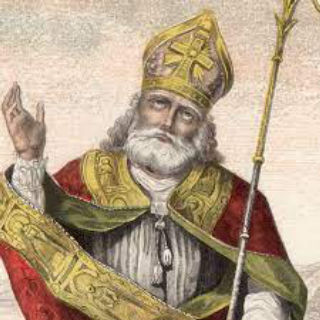 St. Patrick, (flourished 5th century, Britain and Ireland; feast day March 17), patron saint and national apostle of Ireland, credited with bringing Christianity to Ireland and probably responsible in part for the Christianization of the Picts and Anglo-Saxons. He is known only from two short works, the Confessio, a spiritual autobiography, and his Letter to Coroticus, a denunciation of British mistreatment of Irish Christians.
Patrick was born in Britain of a Romanized family. At age 16 he was torn by Irish raiders from the villa of his father, Calpurnius, a deacon and minor local official, and carried into slavery in Ireland. He spent six bleak years there as a herdsman, during which he turned with fervour to his faith. Upon dreaming that the ship in which he was to escape was ready, he fled his master and found passage to Britain. There he came near to starvation and suffered a second brief captivity before he was reunited with his family. Thereafter, he may have paid a short visit to the Continent.
The best known passage in the Confessio tells of a dream, after his return to Britain, in which one Victoricus delivered him a letter headed “The Voice of the Irish.” As he read it, he seemed to hear a certain company of Irish beseeching him to walk once more among them. “Deeply moved,” he says, “I could read no more.” Nevertheless, because of the shortcomings of his education, he was reluctant for a long time to respond to the call. Even on the eve of reembarkation for Ireland he was beset by doubts of his fitness for the task. Once in the field, however, his hesitations vanished. Utterly confident in the Lord, he journeyed far and wide, baptizing and confirming with untiring zeal. In diplomatic fashion he brought gifts to a kinglet here and a lawgiver there but accepted none from any. On at least one occasion, he was cast into chains. On another, he addressed with lyrical pathos a last farewell to his converts who had been slain or kidnapped by the soldiers of Coroticus.
Careful to deal fairly with the non-Christian Irish, he nevertheless lived in constant danger of martyrdom. The evocation of such incidents of what he called his “laborious episcopate” was his reply to a charge, to his great grief endorsed by his ecclesiastical superiors in Britain, that he had originally sought office for the sake of office. In point of fact, he was a most humble-minded man, pouring forth a continuous paean of thanks to his Maker for having chosen him as the instrument whereby multitudes who had worshipped “idols and unclean things” had become “the people of God.”
The phenomenal success of Patrick’s mission is not, however, the full measure of his personality. Since his writings have come to be better understood, it is increasingly recognized that, despite their occasional incoherence, they mirror a truth and a simplicity of the rarest quality. Not since St. Augustine of Hippo had any religious diarist bared his inmost soul as Patrick did in his writings. As D.A. Binchy, the most austerely critical of Patrician (i.e., of Patrick) scholars, put it, “The moral and spiritual greatness of the man shines through every stumbling sentence of his ‘rustic’ Latin.”
It is not possible to say with any assurance when Patrick was born. There are, however, a number of pointers to his missionary career having lain within the second half of the 5th century. In the Coroticus letter, his mention of the Franks as still “heathen” indicates that the letter must have been written between 451, the date generally accepted as that of the Franks’ irruption into Gaul as far as the Somme River, and 496, when they were baptized en masse. Patrick, who speaks of himself as having evangelized heathen Ireland, is not to be confused with Palladius, sent by Pope Celestine I in 431 as “first bishop to the Irish believers in Christ.”
Toward the end of his life, he retired to Saul, where he may have written his Confessio. It is said that an angel conveyed to him that he was to die at Saul, the site of his first church, despite his wishes to die within the ecclesiastical metropolis of Ireland. His last rites were administered by St. Tussach (also spelled Tassach or Tassac).
Legends
Before the end of the 7th century, Patrick had become a legendary figure, and the legends have continued to grow. One of these would have it that he drove the snakes of Ireland into the sea to their destruction. Patrick himself wrote that he raised people from the dead, and a 12th-century hagiography places this number at 33 men, some of whom are said to have been deceased for many years. He also reportedly prayed for the provision of food for hungry sailors traveling by land through a desolate area, and a herd of swine miraculously appeared.
Another legend, probably the most popular, is that of the shamrock, which has him explain the concept of the Holy Trinity, three persons in one God, to an unbeliever by showing him the three-leaved plant with one stalk. Traditionally, Irishmen have worn shamrocks, the national flower of Ireland, in their lapels on St. Patrick’s Day, March 17.
St. Patrick, (flourished 5th century, Britain and Ireland; feast day March 17), patron saint and national apostle of Ireland, credited with bringing Christianity to Ireland and probably responsible in part for the Christianization of the Picts and Anglo-Saxons. He is known only from two short works, the Confessio, a spiritual autobiography, and his Letter to Coroticus, a denunciation of British mistreatment of Irish Christians.
Patrick was born in Britain of a Romanized family. At age 16 he was torn by Irish raiders from the villa of his father, Calpurnius, a deacon and minor local official, and carried into slavery in Ireland. He spent six bleak years there as a herdsman, during which he turned with fervour to his faith. Upon dreaming that the ship in which he was to escape was ready, he fled his master and found passage to Britain. There he came near to starvation and suffered a second brief captivity before he was reunited with his family. Thereafter, he may have paid a short visit to the Continent.
The best known passage in the Confessio tells of a dream, after his return to Britain, in which one Victoricus delivered him a letter headed “The Voice of the Irish.” As he read it, he seemed to hear a certain company of Irish beseeching him to walk once more among them. “Deeply moved,” he says, “I could read no more.” Nevertheless, because of the shortcomings of his education, he was reluctant for a long time to respond to the call. Even on the eve of reembarkation for Ireland he was beset by doubts of his fitness for the task. Once in the field, however, his hesitations vanished. Utterly confident in the Lord, he journeyed far and wide, baptizing and confirming with untiring zeal. In diplomatic fashion he brought gifts to a kinglet here and a lawgiver there but accepted none from any. On at least one occasion, he was cast into chains. On another, he addressed with lyrical pathos a last farewell to his converts who had been slain or kidnapped by the soldiers of Coroticus.
Careful to deal fairly with the non-Christian Irish, he nevertheless lived in constant danger of martyrdom. The evocation of such incidents of what he called his “laborious episcopate” was his reply to a charge, to his great grief endorsed by his ecclesiastical superiors in Britain, that he had originally sought office for the sake of office. In point of fact, he was a most humble-minded man, pouring forth a continuous paean of thanks to his Maker for having chosen him as the instrument whereby multitudes who had worshipped “idols and unclean things” had become “the people of God.”
The phenomenal success of Patrick’s mission is not, however, the full measure of his personality. Since his writings have come to be better understood, it is increasingly recognized that, despite their occasional incoherence, they mirror a truth and a simplicity of the rarest quality. Not since St. Augustine of Hippo had any religious diarist bared his inmost soul as Patrick did in his writings. As D.A. Binchy, the most austerely critical of Patrician (i.e., of Patrick) scholars, put it, “The moral and spiritual greatness of the man shines through every stumbling sentence of his ‘rustic’ Latin.”
It is not possible to say with any assurance when Patrick was born. There are, however, a number of pointers to his missionary career having lain within the second half of the 5th century. In the Coroticus letter, his mention of the Franks as still “heathen” indicates that the letter must have been written between 451, the date generally accepted as that of the Franks’ irruption into Gaul as far as the Somme River, and 496, when they were baptized en masse. Patrick, who speaks of himself as having evangelized heathen Ireland, is not to be confused with Palladius, sent by Pope Celestine I in 431 as “first bishop to the Irish believers in Christ.”
Toward the end of his life, he retired to Saul, where he may have written his Confessio. It is said that an angel conveyed to him that he was to die at Saul, the site of his first church, despite his wishes to die within the ecclesiastical metropolis of Ireland. His last rites were administered by St. Tussach (also spelled Tassach or Tassac).
Legends
Before the end of the 7th century, Patrick had become a legendary figure, and the legends have continued to grow. One of these would have it that he drove the snakes of Ireland into the sea to their destruction. Patrick himself wrote that he raised people from the dead, and a 12th-century hagiography places this number at 33 men, some of whom are said to have been deceased for many years. He also reportedly prayed for the provision of food for hungry sailors traveling by land through a desolate area, and a herd of swine miraculously appeared.
Another legend, probably the most popular, is that of the shamrock, which has him explain the concept of the Holy Trinity, three persons in one God, to an unbeliever by showing him the three-leaved plant with one stalk. Traditionally, Irishmen have worn shamrocks, the national flower of Ireland, in their lapels on St. Patrick’s Day, March 17.