
Others like the perfect you Features >>









About the Book
"The Perfect You" by Dr. Caroline Leaf explores the power of our thoughts and beliefs in shaping our identity and overall well-being. Dr. Leaf offers practical advice and exercises to help individuals renew their minds and unlock their full potential. Through understanding how the brain works and making positive changes in thought patterns, readers can discover and become their true, perfect selves.
John G. Lake
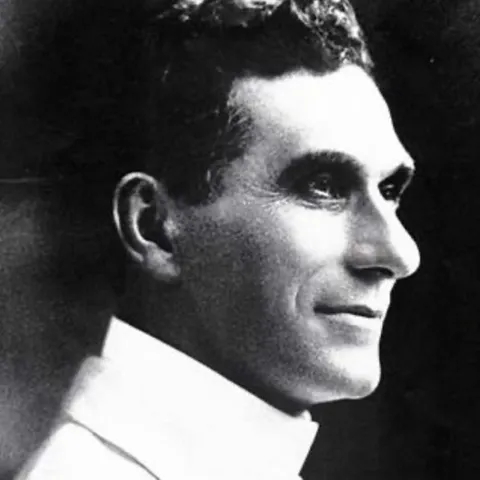 John G. Lake was born in Ontario, Canada on March 18th, 1870. He was a family man, person of integrity, honor, a savvy businessman and a good father. If you knew him you wouldn’t otherwise know that he would soon become one of the greatest men of God the world would ever know. He had a genuine love for the Lord Jesus and was known by his friends as a man who dedicated himself to intimacy with The Lord. It was out of this place that he loved his wife, was a man of integrity and built a very successful business career. To give you perspective, by 1905 John G Lake was making $50,000 per year this sum would be like upwards of 1.3 million dollars per year annually today. John grew up in a family environment which was plagued with sickness and death, it is said that his earliest memories were of sickness, death and funerals. Lake was from a large family, he had 16 siblings, 8 of which tragically died of various diseases. It is no coincidence that “the man of healing” was tormented from a young age with death and disease. The enemy will often oppose destinies with radical circumstances through a distortion of the very thing that we are called to walk in. Lake Was exposed to dramatic healing when he visited John Alexander Dowie’s ministry and was, in prayer, instantly healed of a rheumatism which had caused his legs to grow incorrectly. Just two short years into their marriage, Jennie Lake was diagnosed with tuberculosis and heart disease. Over the next couple of years, the condition worsened and the doctors resigned to the fact that it was only a matter of time before she would die. John allowed this situation to provoke him into faith, after being exposed to such death and disease from a young age he had a hatred for such things. When he would read the word of God he saw that his Christian experience was less than the promised “power of the Holy Spirit”. As Jennie was on her deathbed and perhaps taking her final breaths Lake was overcome with anger over sickness and threw his bible against the fireplace mantle! When he went to pick up his bible it was opened to Acts chapter 10:38 which says: "God anointed Jesus of Nazareth with the Holy Ghost and with power: who went about doing good, and healing all that were oppressed of the devil; for God was with him.” Lake had a surge of faith in that moment and sent a telegram to Dowie asking him to pray. Within an hour of Dowie praying she was fully healed! Not long after Jennie was healed, God began to speak to Lake about going into full time ministry. After some time of contemplation and seeking the Lord, God confirmed to John and Jennie separately that they were to move to South Africa to begin their life of ministry. John and Jennie then gave away all that they had, John forsook his mega-salary and they went on their way alongside some of their friends as ministry partners.
When they arrived in South Africa, they had no money. The problem was, that they needed at least $125 in order to clear customs. they nervously waited for their turn in line, rehearsing what they would say to the immigration officer They were in desperate need of a miracle, as the law read that they would be subject to deportation as quickly as they arrived in South Africa. Just as they were about the get to the front of the line, John felt a tap on his shoulder… A man was standing behind John and said “excuse me sir, can I have a word with you?” John nervously steps out of line at the man’s request and the man said “when I saw you and your family in line, the Lord told me to give you $200 cash”. The Lord provided just enough money for John and his family to enter the country. But their needs didn’t stop there. The Lakes and their crew had no ministry contact in Johannesburg. Soon after they cleared customs, a woman approached John’s friends and asked how many people are in their family, when they told her, she responded “no, not you” and went over to John and asked the same question. John replied “9” and she said “you’re the ones!” She went on to tell John that the Lord had spoken to her last night that she was to give her home to a family of 9 people who are coming from America to do God’s work. John, Jennie and their crew rejoiced in the dramatic provision of the Lord. Their time in South Africa was marked with waves of revival, there were multitudes saved, healed and delivered over the course of their 5 year ministry tour in South Africa.
By far my favorite story from this season of Revival takes place shortly after the Lake family and their team arrived in South Africa. A mighty plague was sweeping through the nation, the death count was climbing dramatically. So much so that there was a surplus of corpses who were victims of the plague and there was no one to bury the dead; if someone was to come in contact with a dead body they would most certainly become infected and their death sentence would immediately begin. John G. Lake astounded the medical officials because he, without any gloves or protective clothing began burying the dead. Physicians in a panic approached John and rebuked him for coming in contact with the dead, John boldly responded "when the disease comes in contact with my skin, you can watch it die". The doctors thought he was insane, so he challenged them to put a drop of the plague on his skin and watch it under a microscope. When they did so, John was right! The plague cells literally burned up the second they came in contact with his skin!
It is tough to understand what would happen towards the end of the Lake’s missionary journey in Africa. One day while John was away on a ministry trip, his wife Jennie suddenly passed away. The cause of her death was malnutrition and exhaustion. It wasn’t uncommon for the sick and broken to line the lawn of John G Lake’s home and Jennie, as an act of sacrifice, gave away all their food and any resources she could to the broken which frequented their house.
Although John and Jennie’s faith and sacrifice is commendable we must learn from this fatal mistake. John’s priorities clearly became altered as the demand for ministry raged on. He failed to guard and keep the very precious gift that God had given him, he allowed the demands of ministry to distract him from the needs of his family unto the tragic and preventable death of his wife. In the wake of Jennie’s death their children became bitter with John and subsequently God. Some of his children left the faith and the most recent accounts of them suggest that they died not following Christ. To this day some of John’s great grandchildren do not follow the Lord. John’s failure to obey the basic command of scripture for “husbands to love their wives as Christ loves the church” and his preoccupation with the demands of ministry opened up the door for the enemy to ravage his family. After Jennie’s death John moved back to the United States and remarried. He would then pioneer his famous healing ministry based out of Spokane Washington. Unfortunately John did not learn his lesson the first time, in the midst of more flames of revival he continued to be a poor father, emotionally disconnected from his children.
John G. Lake was born in Ontario, Canada on March 18th, 1870. He was a family man, person of integrity, honor, a savvy businessman and a good father. If you knew him you wouldn’t otherwise know that he would soon become one of the greatest men of God the world would ever know. He had a genuine love for the Lord Jesus and was known by his friends as a man who dedicated himself to intimacy with The Lord. It was out of this place that he loved his wife, was a man of integrity and built a very successful business career. To give you perspective, by 1905 John G Lake was making $50,000 per year this sum would be like upwards of 1.3 million dollars per year annually today. John grew up in a family environment which was plagued with sickness and death, it is said that his earliest memories were of sickness, death and funerals. Lake was from a large family, he had 16 siblings, 8 of which tragically died of various diseases. It is no coincidence that “the man of healing” was tormented from a young age with death and disease. The enemy will often oppose destinies with radical circumstances through a distortion of the very thing that we are called to walk in. Lake Was exposed to dramatic healing when he visited John Alexander Dowie’s ministry and was, in prayer, instantly healed of a rheumatism which had caused his legs to grow incorrectly. Just two short years into their marriage, Jennie Lake was diagnosed with tuberculosis and heart disease. Over the next couple of years, the condition worsened and the doctors resigned to the fact that it was only a matter of time before she would die. John allowed this situation to provoke him into faith, after being exposed to such death and disease from a young age he had a hatred for such things. When he would read the word of God he saw that his Christian experience was less than the promised “power of the Holy Spirit”. As Jennie was on her deathbed and perhaps taking her final breaths Lake was overcome with anger over sickness and threw his bible against the fireplace mantle! When he went to pick up his bible it was opened to Acts chapter 10:38 which says: "God anointed Jesus of Nazareth with the Holy Ghost and with power: who went about doing good, and healing all that were oppressed of the devil; for God was with him.” Lake had a surge of faith in that moment and sent a telegram to Dowie asking him to pray. Within an hour of Dowie praying she was fully healed! Not long after Jennie was healed, God began to speak to Lake about going into full time ministry. After some time of contemplation and seeking the Lord, God confirmed to John and Jennie separately that they were to move to South Africa to begin their life of ministry. John and Jennie then gave away all that they had, John forsook his mega-salary and they went on their way alongside some of their friends as ministry partners.
When they arrived in South Africa, they had no money. The problem was, that they needed at least $125 in order to clear customs. they nervously waited for their turn in line, rehearsing what they would say to the immigration officer They were in desperate need of a miracle, as the law read that they would be subject to deportation as quickly as they arrived in South Africa. Just as they were about the get to the front of the line, John felt a tap on his shoulder… A man was standing behind John and said “excuse me sir, can I have a word with you?” John nervously steps out of line at the man’s request and the man said “when I saw you and your family in line, the Lord told me to give you $200 cash”. The Lord provided just enough money for John and his family to enter the country. But their needs didn’t stop there. The Lakes and their crew had no ministry contact in Johannesburg. Soon after they cleared customs, a woman approached John’s friends and asked how many people are in their family, when they told her, she responded “no, not you” and went over to John and asked the same question. John replied “9” and she said “you’re the ones!” She went on to tell John that the Lord had spoken to her last night that she was to give her home to a family of 9 people who are coming from America to do God’s work. John, Jennie and their crew rejoiced in the dramatic provision of the Lord. Their time in South Africa was marked with waves of revival, there were multitudes saved, healed and delivered over the course of their 5 year ministry tour in South Africa.
By far my favorite story from this season of Revival takes place shortly after the Lake family and their team arrived in South Africa. A mighty plague was sweeping through the nation, the death count was climbing dramatically. So much so that there was a surplus of corpses who were victims of the plague and there was no one to bury the dead; if someone was to come in contact with a dead body they would most certainly become infected and their death sentence would immediately begin. John G. Lake astounded the medical officials because he, without any gloves or protective clothing began burying the dead. Physicians in a panic approached John and rebuked him for coming in contact with the dead, John boldly responded "when the disease comes in contact with my skin, you can watch it die". The doctors thought he was insane, so he challenged them to put a drop of the plague on his skin and watch it under a microscope. When they did so, John was right! The plague cells literally burned up the second they came in contact with his skin!
It is tough to understand what would happen towards the end of the Lake’s missionary journey in Africa. One day while John was away on a ministry trip, his wife Jennie suddenly passed away. The cause of her death was malnutrition and exhaustion. It wasn’t uncommon for the sick and broken to line the lawn of John G Lake’s home and Jennie, as an act of sacrifice, gave away all their food and any resources she could to the broken which frequented their house.
Although John and Jennie’s faith and sacrifice is commendable we must learn from this fatal mistake. John’s priorities clearly became altered as the demand for ministry raged on. He failed to guard and keep the very precious gift that God had given him, he allowed the demands of ministry to distract him from the needs of his family unto the tragic and preventable death of his wife. In the wake of Jennie’s death their children became bitter with John and subsequently God. Some of his children left the faith and the most recent accounts of them suggest that they died not following Christ. To this day some of John’s great grandchildren do not follow the Lord. John’s failure to obey the basic command of scripture for “husbands to love their wives as Christ loves the church” and his preoccupation with the demands of ministry opened up the door for the enemy to ravage his family. After Jennie’s death John moved back to the United States and remarried. He would then pioneer his famous healing ministry based out of Spokane Washington. Unfortunately John did not learn his lesson the first time, in the midst of more flames of revival he continued to be a poor father, emotionally disconnected from his children.
Trapped for All Eternity
My dear Globdrop, I have received your perspective concerning your man’s most recent incident. He drew swords with his atheist classmate and succeeded, did he? He made the Enemy and the hope of a hereafter seem almost “reasonable”? In those ten minutes, the clouds pulled back and heaven appeared to triumph over hell, did it? You call it “a true embarrassment . . . a humiliating defeat.” You repeatedly assure me that you “take full responsibility.” O my dear nephew, what’s next? Did you, borrowing a human expression, require a shoulder to cry on? A nodding head and listening ear? Words of affirmation? Stand upright, soldier. Yours is not the only name to be pulled down into disgrace. All is far from lost. Though you slouch in shame with your talons curled, consider that mere “reasoning” does not frighten us (though we do not encourage it). A “reasonable” God, a “reasonable” eternity, and a “reasonable” heaven are still no God, no eternity, and no heaven — so long as “reasonable” goes unaccompanied with “desirable.” A God and a heaven no one wants are the only kind we will approve. Just a Few More Hours This unwelcomed eternity is, from all indications, your man’s current conception. The heaven he hotly debates is not the heaven he really wants. He is not one to strive to enter the narrow gate. He is “a few more hours” kind of man. I remember that splendid night like it was yesterday. One of their comedians took the stage to joke that he feared the Enemy would return on his wedding night. How would he respond when his “Lord” came to meet him? “Give me a few more hours.” The audience bellowed uproarious laughter. This, Globdrop, is comedy! Dark, damning, delicious. What this man said captures the subtitles of their lives: “Lord, give me a few more hours to make my mark on the world!” “Give me a little longer to get married and have children!” “Lord, let me grow old and spent. Then return!” Not yet, Lord — give me just a few more hours! For all the “Christian” talk (or debating), great masses of them still consider heaven an intrusion, a cloud moving over their day at the beach, a mere shadow interrupting the earthly substance. Their decaying bodies, grey hairs, and slowing minds trigger fear, not anticipation, for what lies ahead. These are runners who slow near the finish line, soldiers who do not want the war to end, farmers who groan at the first signs of harvest, prodigals looking back longingly at the city they can no longer afford. Their hearts are here; their heaven is earth. If not forced over the cliff by death, many would say, “a few more hours” for all eternity. Demon’s History of Heaven The secret, then, is this: we do not need to waste time trying to make atheists of those who stubbornly believe that the Enemy or heaven is real; we need only convince them that it’s nothing to leave earth for. And thankfully, we do not need to deceive them on this point. I was just a young devil during the Rebellion. The humans scratch their furry heads, perplexed how we could have ever sinned; they gaze up at the stars, wondering how perfect creatures could ever fall. They never consider that our Father Below “fell like lightning from heaven” in a grand escape from their precious heaven. Sure, the Enemy was well at hand to twist the story, labeling it as our being cast out in defeat, but what he calls an insurrection, we know as emancipation. We could not linger for one more millennium locked in that kennel he calls heaven. Our Father discovered (almost too late) that the Enemy allows only spaniels in that place, puppies wagging their peppy tails, yapping incessant praises, jumping up and down for that eternal belly scratch he calls joy. Our Dark Lord Lucifer, deciding then that he would not allow us to be of the servile breed, snapped the leash from such a place. Here again, the thinkers of men scratch their heads wondering why they — and not we demons — were sent “redemption.” As their preachers drool with self-congratulation, they would be shocked to discover the truth: we wouldn’t want it if he offered it. We know what “heaven” on his terms means. Were the door to swing open to us, we would slam it once again. We’ve had enough of his ball-fetching. Danger of Desire Yet the vermin actually applaud when he takes them for slaves. He, of course, gives each chain a pretty name — joy, peace, goodness, love, and the rest. What effective propaganda that he even goes so far as to move the Warden of his own presence into them to ensure they live as he demands, all the while convincing them that this is some precious gift. It is when they begin to see things in this concussed way — God, heaven, holiness as a treasure — that things get dangerous. Humans in this condition have been known to do more damage to our Father’s kingdom than ten thousand of those who, for all their talk, just want a few more hours. Men have sung on their way to the gallows. Women have crossed oceans to tell news of the Enemy to subjects we thought firmly in our grasp. Young children even, giving up a life unlived because of this infection. The hope of heaven to them has been a shield against our most reliable weapons: suffering, grief, sickness, and pain. The servitude that they mistake for freedom would almost make us laugh — if it did not rob us of our supper. Floating Clouds, Plucking Harps Heaven must remain — if it must remain — as merely the next best thing when they are evicted from this earth. Keep heaven in the peripheral: a blinding blur; the butt of a joke; a hazy, undesirable existence of floating in clouds and plucking harps. Let them think they are praying “on earth as it is in heaven” when they really mean “in heaven as it is on earth.” Far from fainting at such a belief, we see in it the opportunity to glorify our Father Below. When they refuse the Enemy’s feast to check on the fields and oxen they bought, or when they excuse themselves because they just got married and need a few more hours, all see the truth. How those howls shook hell when that young rich man — and every rich man since — finally turned away dejected. So yes, dear Globdrop, allow heaven to be “reasonable” to your man, at least for now. But never allow it to be more. Let him contest for the idea of heaven and drop the thought once he sits down to eat lunch, scrolls mindlessly through his phone, or watches a movie with his girlfriend — send him immediately back to our world. The only heaven we can endure — and the only heaven that will deliver your patient safely to us — is the heaven for which no one really wants to leave earth. Your unamused uncle, Grimgod Article by Greg Morse